Historians have found references to "first sleep" and "second sleep" in historical documents as well as evidence that activities like chores and socialization took place in the middle of the night between these two blocks.
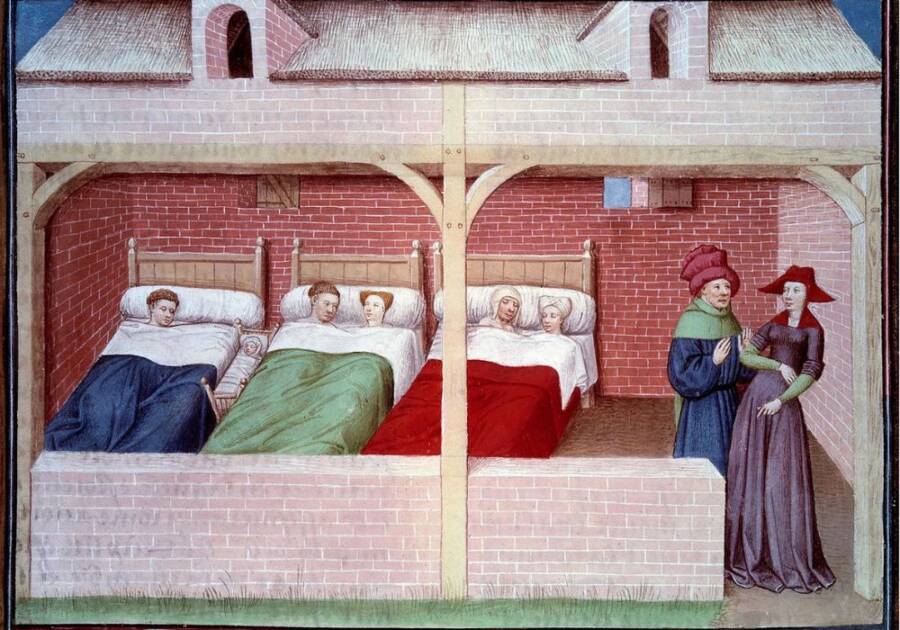
Public DomainIn medieval times, families often shared beds — and seemingly woke up in the middle of the night to socialize and do chores.
In the modern world, the average person sleeps for roughly seven to nine hours each night before waking up, going about their day, and heading back to bed. But that may not have always been the case. Some experts believe that “biphasic sleep” — sleep that is broken up into two separate phases — was common throughout history.
In a video with over 2.6 million views, TikTok user Lexi Natoli (@yolkfather) states, “If you slept for eight hours straight in the medieval times, people would probably think there’s something wrong with you.”
Inside The Theory Of Biphasic Sleep
According to Natoli, “Sleeping straight through the night was not a normal thing to do.” Instead, she says that sleep in the medieval period was biphasic, “which basically just means instead of one long stretch, the night was split into two different sleeps.”
“People would go to bed early — I’m talking right after sunset — and then sleep for about four hours,” she says. “And then, around midnight, everyone would just wake up. People would read or pray or talk to their families. It was such a normal thing that some people would even go visit their neighbors next door.”
“Many people saw this time as their quiet, sacred period in the middle of the night,” Natoli states. “It was much needed after being busy all day and not having any time to relax.”
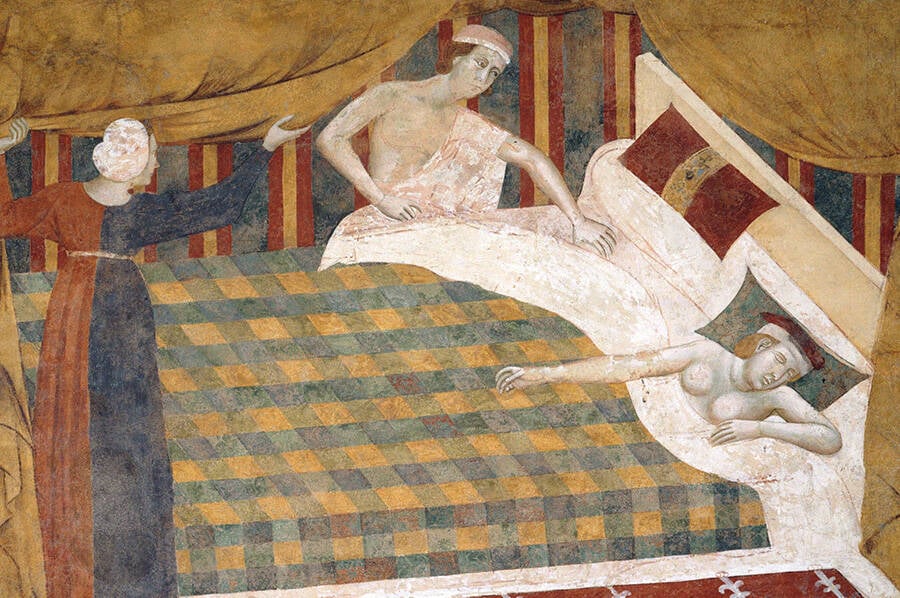
Public DomainAccording to some scholars, biphasic sleep was common and socially accepted during the medieval period.
In the caption, she adds, “Can we bring back biphasic sleep? That actually sounds nice.”
This idea is based on a theory by historian Roger Ekirch. Beginning in the early 1990s, Ekirch scoured historical documents like letters, diaries, books, legal testimonies, medical textbooks, and newspapers and found countless references to a “first sleep” and a “second sleep.” Additionally, he found evidence that various activities took place between these two phases, indicating that sleep was occurring in two separate blocks.
In the years since his initial theory was published, other scholars have found evidence that indicates biphasic sleep was common and socially accepted. Some claim that one single stretch of sleep only became normal during the Industrial Revolution, when mechanization meant that people converted their schedules to clock time.
So, without industrialization, would humans be natural biphasic sleepers? A study from 1992 sought to answer this question by limiting participants to just 10 hours of light per day. The experiment found that participants naturally shifted into a biphasic sleep pattern.
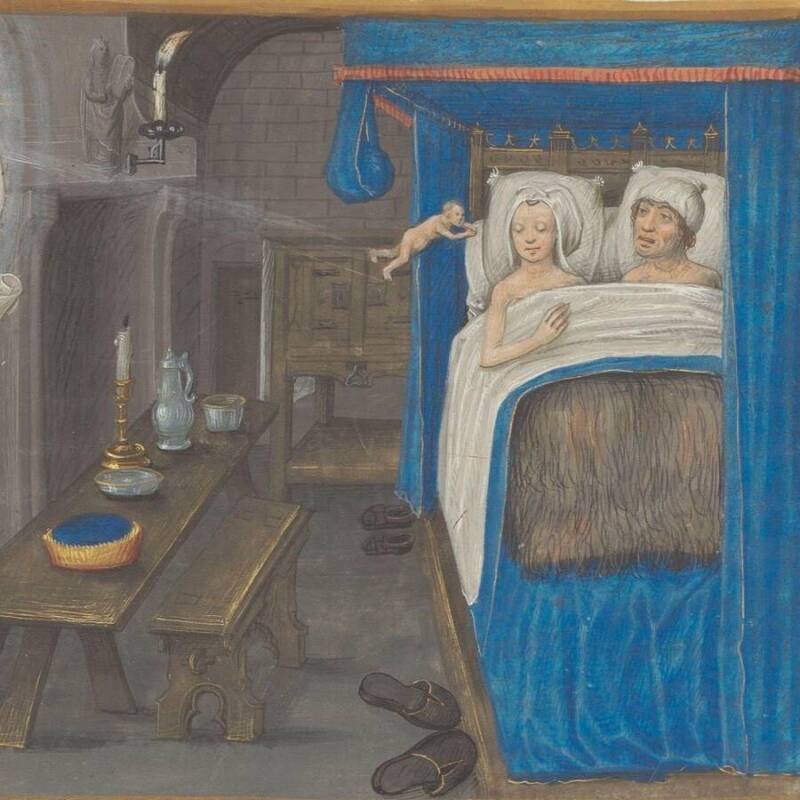
Public DomainCouples likely used the period between sleep cycles to conceive children, as depicted in this 15th-century painting of newlyweds on their wedding night.
However, the theory that this is “natural” is a bit controversial. The 1992 study had just 16 participants, so it wasn’t the best indicator of general human behavior. Furthermore, the experiment was criticized for having unnatural conditions. In 2023, Dr. Niall Boyce wrote in the journal Medical History, “The extent to which this experimental regime can be considered a simulation of sleeping conditions in the pre-industrial — and specifically the early modern — world is dubious.”
In fact, later studies that were repeated in more natural environments found that, while circadian rhythms were affected, biphasic sleep was not reported.
So, was biphasic sleep actually a widespread phenomenon throughout history?
Is This The Way We’re Supposed To Sleep?
In his paper, Boyce noted that reports of biphasic sleep may have been the result of restlessness, not ideal slumber. Other literary references to “first” and “second” sleep, he stated, may have non-biphasic explanations.
For example, they could have referred to peculiar sleeping circumstances, such as needing to wake in the middle of the night to perform a household task like stoking the fire or checking on livestock. They also may have been recording normal phases of sleep that we now categorize as Rapid Eye Movement (REM) or non-REM.
Furthermore, historians have not found consistent references to biphasic sleep across the globe. If this were truly a natural phenomenon, it’s likely that it would appear in records from different cultures throughout history.
All of this is not to say that biphasic sleep did not happen. Instead, it simply calls into question whether it was natural or cultural — and, in places where it did occur, how widespread it really was. Still, it’s certainly fair to say that some people in the Middle Ages were probably awake during the night and may have engaged in social activities during that time.
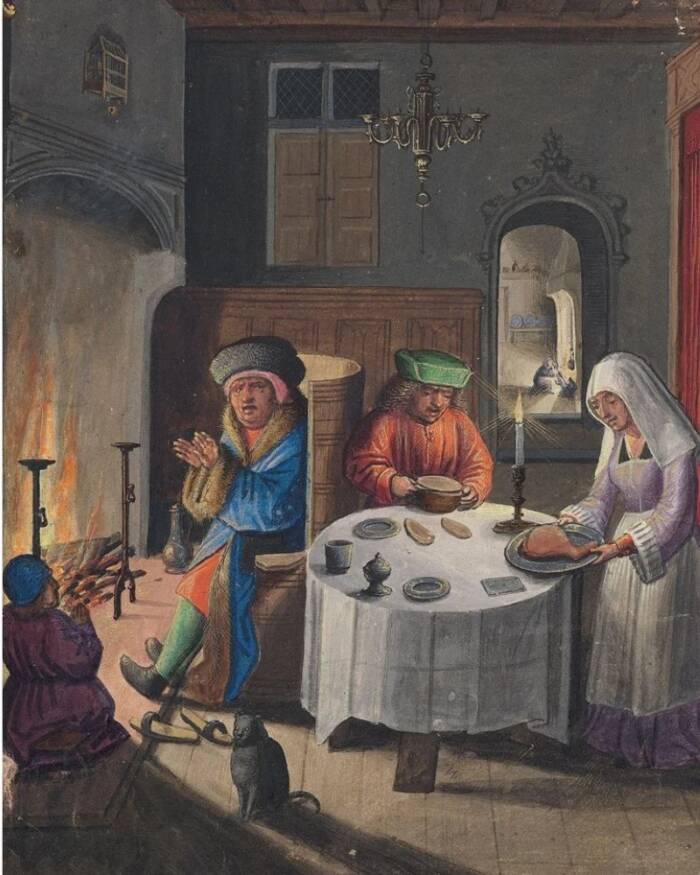
The Morgan Library & MuseumDuring the Middle Ages, families may have risen around midnight to add wood to the fire or pray.
However, this doesn’t mean that modern humans should convert their own sleep to a biphasic schedule. Some studies have even shown that the sleep pattern can have detrimental health effects.
Still, viewers of Natoli’s video were enthusiastic about the idea. “I was definitely surprised by the amount of people who said they already practice some form of segmented sleep in their daily lives,” Natoli told All That’s Interesting in an email. “I thought it was much less common! Many of those commenters also mentioned how this style of sleeping actually helps their insomnia and leads to them feeling more rested throughout the day.”
Natoli noted that when she “came across the idea of biphasic sleep, and especially how it was believed to be common during the medieval period,” she was “fascinated.”
“Learning how industrialization and changing lifestyles contributed to its decline made me want to learn more and understand how a segmented sleep pattern benefited people throughout history, and whether or not it still has relevance today,” Natoli said.
She also echoed expert opinion that biphasic sleep was not something practiced by everyone throughout history. “I think one thing that often gets misunderstood is that this style of sleeping was not universal,” Natoli explained. “While there is strong historical evidence that segmented sleep was common in many societies, it wasn’t practiced by everyone or in every culture.”
@yolkfather Can we bring back biphasic sleep? That actually sounds nice 😴 #medievalhistory #biphasicsleep #historytime #medievaltiktok #TikTokLearningCampaign
After reading about the theory of biphasic sleep, explore these 21 bizarre facts about sleep. Then, learn about the Hat Man who haunts people’s dreams.