The Chichijima incident took place in the Bonin Islands in September 1944, and only one of the nine airmen — future president George H.W. Bush — survived.
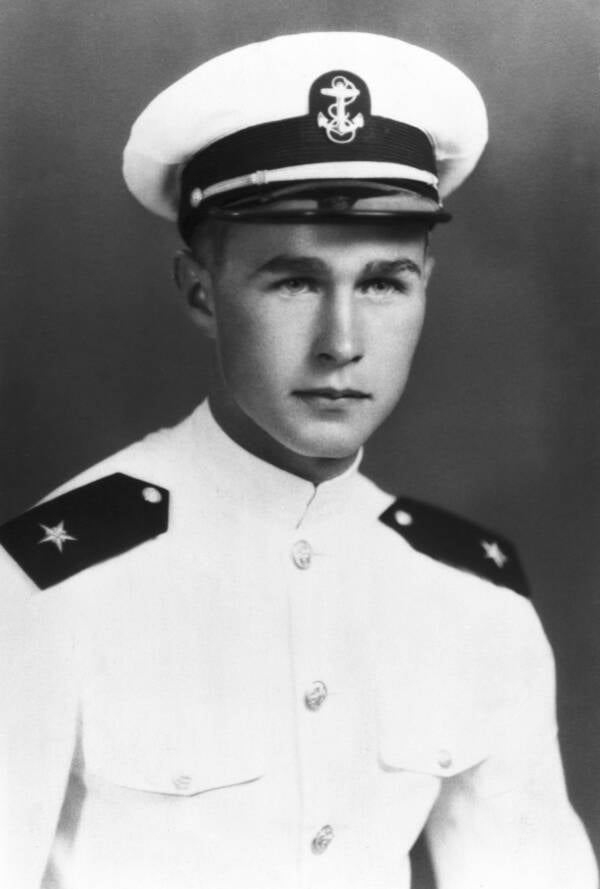
George Bush Presidential Library and MuseumAfter he was shot down in World War II, George H.W. Bush narrowly avoided the Chichijima incident.
At dawn on Sept. 2, 1944, a group of American pilots fighting in the Pacific theater of World War II took to the skies. Only one would survive their bombing mission to the Bonin Islands — the rest would be tortured, killed, and cannibalized in the so-called Chichijima incident.
For years, the U.S. Navy obscured the horrifying truth of what happened at Chichijima. One lawyer involved in the episode remarked, “The Navy didn’t want people back home to know that their sons were eaten.”
As for the survivor? The sole man to escape the awful fate of the Chichijima incident was a 20-year-old pilot. His name was George H.W. Bush.
A World War II Bombing Mission Gone Awry
The U.S. Navy had had its eye on the island of Chichijima for quite some time. Located some 500 miles from Japan, Chichijima was tiny — only about twice the size of Central Park — but strategically significant. War History Online reports that the island held 25,000 troops, and its mountaintop radio towers allowed the Japanese to send long-range messages.
The Americans wanted to take it out.
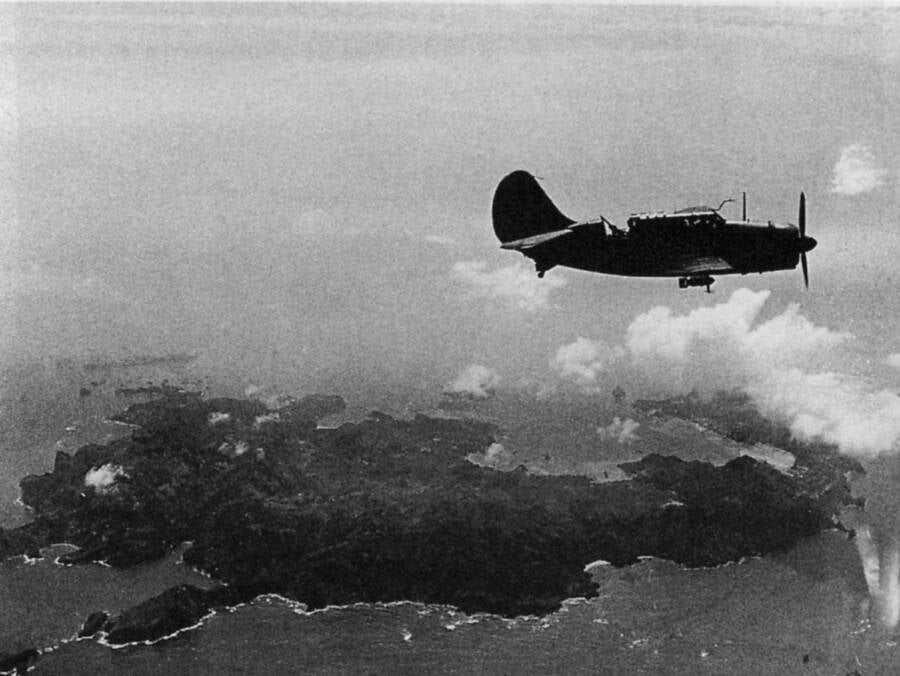
U.S. NavyAn American warplane flies over the Japanese island of Chichijima during World War II.
According to Flyboys by James Bradley, the Americans first attacked Chichijima in June 1944. But the Japanese put up a ferocious fight. Not only was Chichijima more heavily guarded than Iwo Jima, but its power anti-aircraft defense system could tear the American planes to pieces.
On Sept. 2, 1944, the Americans geared up to try again. The group of nine men slated to fly that morning included one of the youngest pilots in the U.S. Navy, a 20-year-old named George H.W. Bush. They took off at 7:15 a.m. — hoping, this time, to succeed in taking out Chichijima’s radio towers.
As Bush and the other pilots dropped bombs on Chichijima, the Japanese fought back. The island’s anti-aircraft defense system fired into the sky and, before long, Bush’s Avenger plane was hit.
“The plane was burning,” Bush recalled to CNN. “The cockpit was beginning to fill up with smoke. The plane was — I thought it was going to explode.”
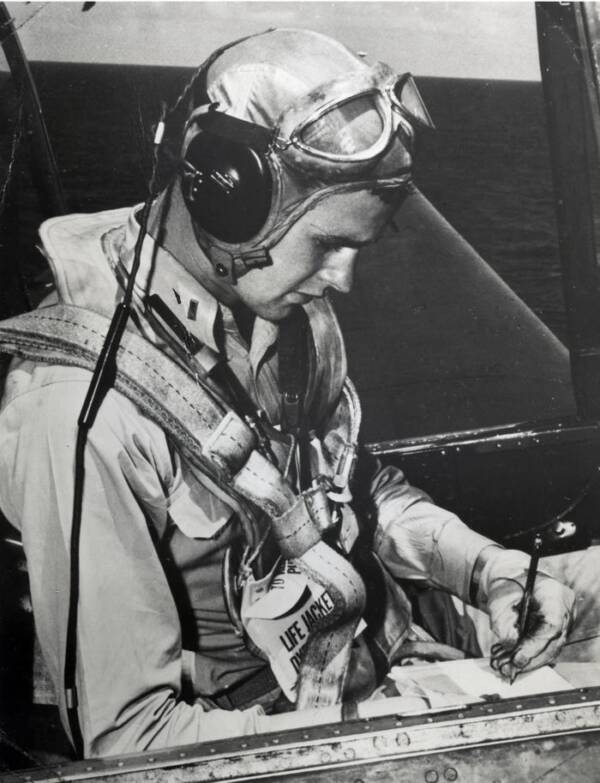
U.S. NavyGeorge H.W. Bush was one of the youngest pilots to serve in World War II.
Bush wanted to get as far away from Chichijima as he could before jumping out of his burning plane. When he couldn’t wait any longer, Bush ordered his radio operator and gunner to jump, shouting: “Hit the silk!”
But only Bush escaped. One of the other men couldn’t get his parachute to inflate; the other went down with the aircraft. Bush watched in horror as their plane crashed into the ocean. Then he crashed into the ocean too.
“For a while there I thought I was done,” Bush told Jon Meacham in Destiny and Power: The American Odyssey of George Herbert Walker Bush.
Instead, George H.W. Bush escaped the fate of eight other pilots that day — the horrific Chichijima incident.
Inside The Horrors Of The Chichijima Incident
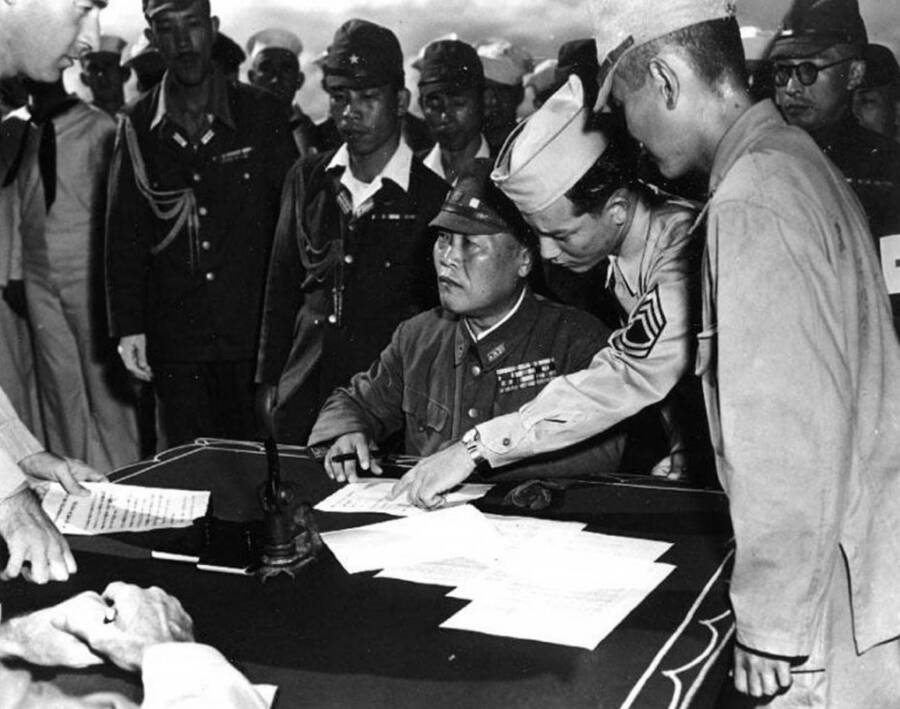
Wikimedia CommonsGeneral Yoshio Tachibana, seated at center, originally suggested cannibalizing the remains of the American soldiers.
Like George H.W. Bush, the other American pilots were forced to ditch their planes. Unlike Bush, they were immediately captured by the Japanese.
Brought to the island of Chichijima, the airmen were tortured, beaten, and executed. As Bradley uncovered in his book, one man was blindfolded, marched to a grave, and beheaded. Others were clubbed to death. But the horror of the Chichijima incident didn’t start until after the men were dead.
According to Bradley, Japanese General Yoshio Tachibana was the first to drunkenly suggest cannibalism. One of the Americans had just been executed; he proposed consuming his liver. Tachibana declared that “one had to have enough fighting spirit to eat human flesh” and, on the orders of Major Sueo Matoba, Japanese troops cut the liver out of the dead man’s chest and removed “about six pounds” of flesh from his thigh.
Later, the Japanese also consumed the liver of another soldier. Matoba told another officer that he “had it pierced with bamboo sticks and cooked with soy sauce and vegetables” and that the liver was consumed in “very small pieces” as “good medicine for the stomach.”
Of the eight executed pilots, four of them were cannibalized.
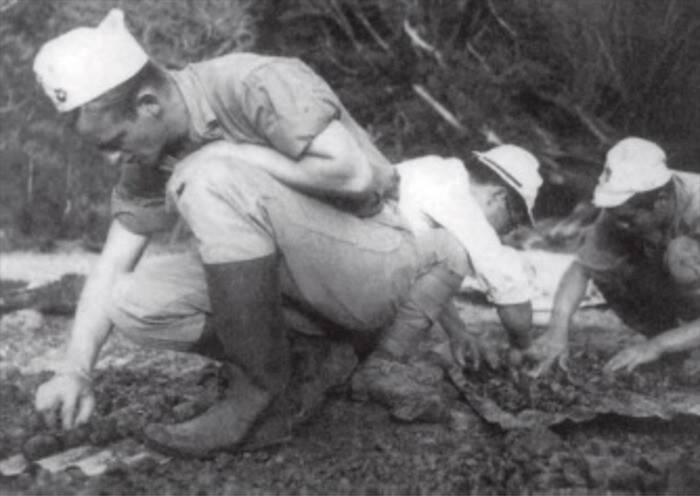
Public DomainU.S. Marines searching Chichijima for the remains of the executed airmen after the end of World War II.
“These incidents occurred when Japan was meeting defeat after defeat,” Matoba later testified in his defense. “The personnel became excited, agitated and seething with uncontrollable rage. We were hungry. We tried every eatable animal and plant, like rats, mice, dogs and lizards. I hardly know what happened after that. We really were not cannibals.”
During war crimes trials in 1947, however, Tachibana, Matoba, and several other officers were found guilty and hanged.
The Legacy Of The Chichijima Incident
As his fellow soldiers were plucked from the ocean and brought to Chichijima, George H.W. Bush fought for his life in the middle of the sea. As Japanese boats searched for him nearby, Bush swam as fast as he could.
“I was crying, throwing up, and swimming like hell,” Bush told CNN. “I could have made the Olympics that day because we had to get out of there.”
Then, a submarine suddenly roared out of the water.
“I saw this thing coming out of the water and I said to myself, ‘Jeez, I hope it’s one of ours’,” Bush remembered.
Bush’s lucky streak had continued — the submarine was the USS Finback. After he was pulled from the ocean, the exhausted future president uttered just four words: “Happy to be aboard.”
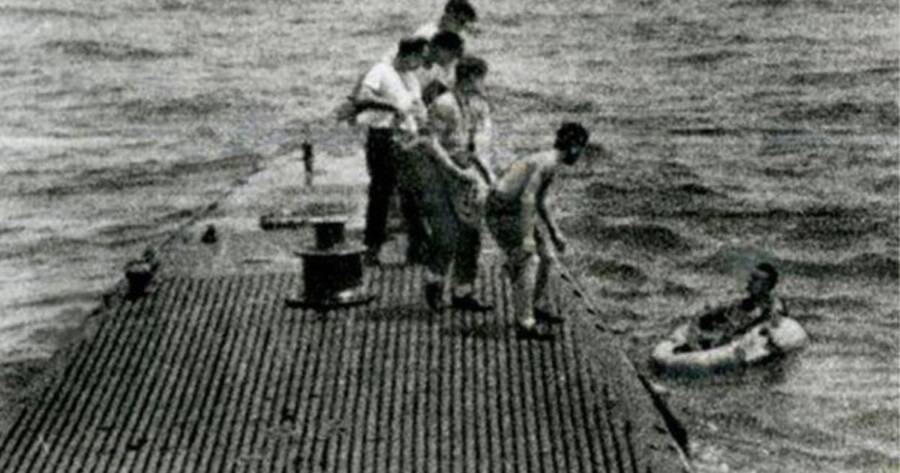
U.S. NavyGeorge H.W. Bush rescued by the USS Finback, escaping the horrors of the Chichijima incident.
Bush’s side of the story is well-known. But what happened to his fellow airmen long remained a secret.
Although the Japanese officers responsible for the Chichijima incident later admitted their actions at war crime trials in Guam, the American soldiers’ families didn’t know what had happened to their sons. Concerned that a true account would inflict further trauma on already grieving families, the U.S. decided to label the files recounting the soldiers’ last days as “top secret.”
In fact, the heart-wrenching truth of their deaths did not come out until Bradley published his 2003 book. Then, as the Telegraph reports, Bradley contacted their surviving family to tell them the truth.
The families weren’t the only ones in the dark. Even Bush didn’t know about the Chichijima incident until Bradley told him.
“There was a lot of head-shaking, a lot of silence,” Bradley recalled. “There was no disgust, shock, or horror. He’s a veteran of a different generation.”
Still, Bush’s brush with death — and perhaps worse — conjured a web of hypotheticals for the former president. Prior to his death in 2018, Bush mused about what-ifs.
“Why am I blessed?” he asked. “Why am I still alive? That has plagued me.”
After reading about the Chichijima incident, go inside the full story of the atomic bombings of Hiroshima and Nagasaki at the end of World War II. Or, look through these colorized World War II photos.