While statues of Hecate were often used in ancient Greece to ward off evil spirits, the goddess also had connections to death, darkness, and hellhounds.
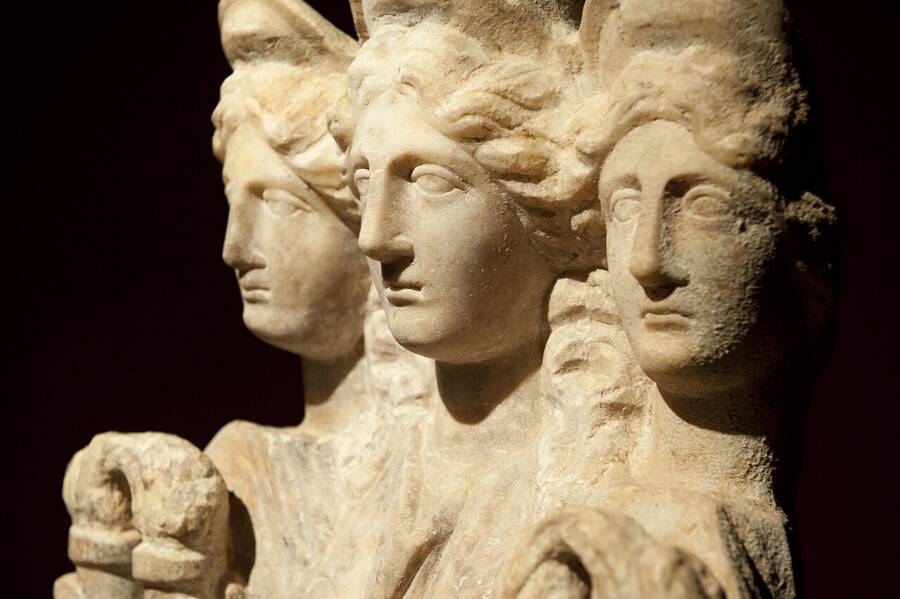
Dosseman/Wikimedia CommonsHecate was often depicted as a triple-bodied figure who could see in all directions at once.
There are many powerful deities in the Greek pantheon. From Zeus, the king of the gods, to Athena, the goddess of wisdom, the people of ancient Greece worshipped these immortal beings for millennia, calling upon them to aid in everything from warfare to crop growth. Indeed, many of these deities reigned over a wide variety of virtues, elements, and activities — but perhaps none more so than Hecate.
While Hecate wasn’t one of the traditional Twelve Olympians, she was said to hold power over the seas, the heavens, and the Earth. She was originally seen as a kind and helpful protector, but over time, she transformed into something more sinister.
By the fifth century B.C.E., Hecate was associated with magic, darkness, witchcraft, and hellhounds. Followers of her cult left offerings for her each month on the night of the new Moon. They sometimes included dog meat.
Today, the goddess survives in ancient depictions of a woman with three bodies standing back-to-back, looking in all directions at once. Such figures were placed at crossroads or on thresholds to ward off malevolent spirits — even though Hecate often invited evil herself.
Who Was The Greek Goddess Hecate?
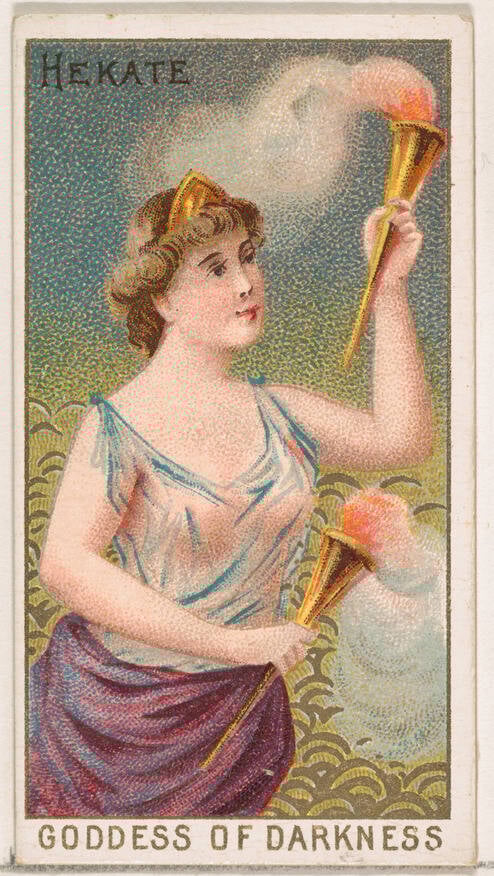
Metropolitan Museum of ArtA trading card from 1889 describing Hecate as the “Goddess of Darkness.”
Hecate first appeared in literature around the eighth century B.C.E., when the Greek poet Hesiod introduced her in his Theogony as the daughter of Titans Perses and Asteria. Hesiod wrote that Zeus “honored [Hecate] above all”:
“He gave her splendid gifts, to have a share of the Earth and the unfruitful sea. She received honor also in starry Heaven, and is honored exceedingly by the deathless gods. For to this day, whenever any one of men on Earth offers rich sacrifices and prays for favor according to custom, he calls upon Hecate. Great honor comes full easily to him whose prayers the goddess receives favorably, and she bestows wealth upon him; for the power surely is with her.”
This image of Hecate as a benevolent goddess can be seen in the story of Hades and Persephone. In the myth, Hecate is the only witness to the abduction of Persephone by Hades, the god of the Underworld.
She tells Demeter, Persephone’s mother, what she saw and helps in Demeter’s desperate search for her daughter. Because of this aid, Hecate was honored during the Eleusinian Mysteries, a secretive initiation ceremony into the cult of Demeter and Persephone held in ancient Greece each year.
Over time, however, Hecate became associated with much darker aspects of life — and death.
The Darker Side Of The Greek Goddess Of Magic
Within 300 years of Hesiod’s immaculate description of Hecate, the goddess had gained a more menacing reputation. She eventually came to be known as the patron goddess of witches, and she was even worshipped by various covens into the Middle Ages.
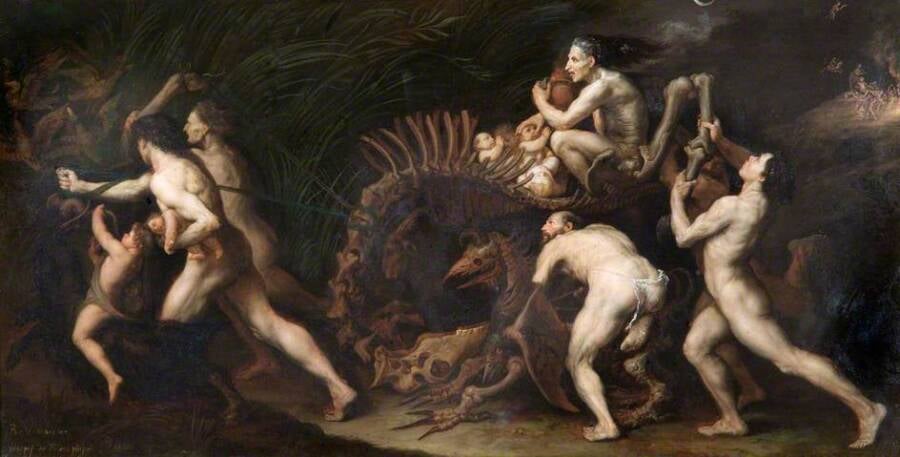
Public DomainJusepe de Ribera’s 17th-century painting Hecate: Procession to a Witches’ Sabbath.
Hecate’s name has been found on curse tablets, thin metal sheets on which residents of ancient Greece and Rome engraved messages asking various gods to bring punishment or harm to their enemies. She also appeared on “Magic Papyri” from Egypt that contained magical spells and rituals.
Stories about Hecate became more ominous over time. One tale describes how the polecat was created when a powerful witch named Gale incited the fury of the goddess with her abnormal sexual desires and was transformed into the weasel-like creature.
The rituals surrounding the cult of Hecate grew darker, too. The goddess was said to wander around accompanied by packs of howling dogs, so her followers began sacrificing puppies. In the second century B.C.E., a poem mentioned “the dog-slaying goddess’s cave.”
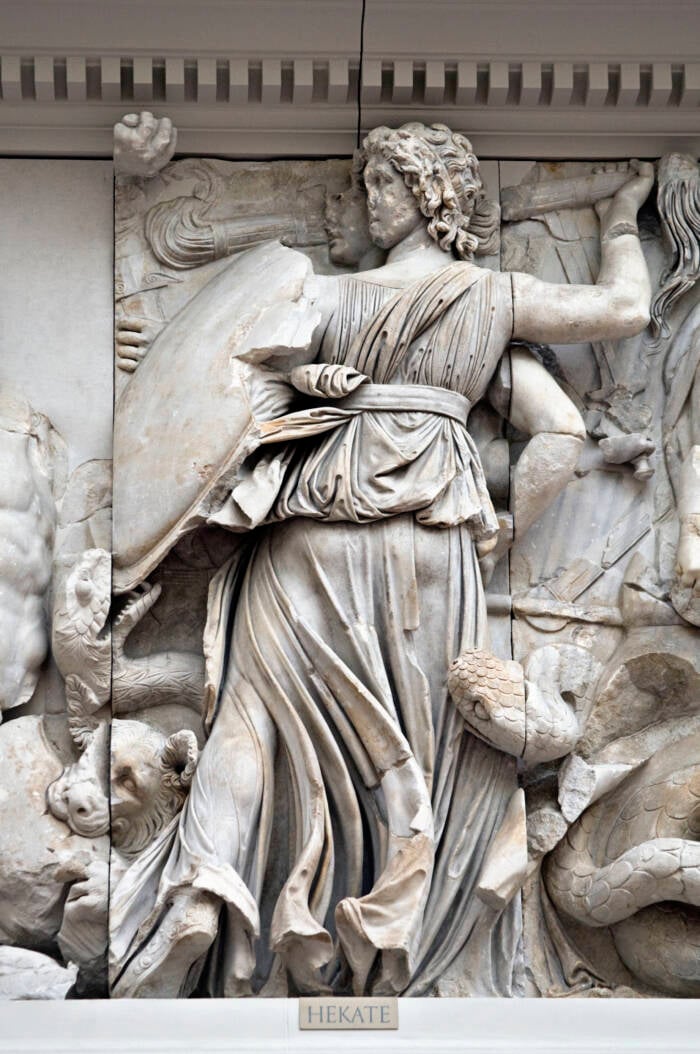
Ealdgyth/Wikimedia CommonsA frieze featuring Hecate from the Pergamon Altar, which was built in modern-day Turkey in the second-century B.C.E.
Each month on the night of the new Moon, the goddess’s followers left a “supper of Hecate” at crossroads or in the thresholds of homes. This meal included Hecate’s favorite foods, such as cheese, bread, cakes topped with miniature torches, and, of course, dog meat.
But despite these sinister connections, Hecate was often called upon to repel evil, too.
The Enduring Legacy Of Hecate
The earliest art depicting Hecate typically featured a single figure carrying a torch, but just as her nature changed over time, so did her appearance.
Later statues and figurines gave the goddess three bodies standing back-to-back, so she could see in all directions at once. Like her offerings, these heketaia were placed at crossroads and thresholds, perhaps to ward off evil. This association with the “liminal” extended beyond physical boundaries into the border between the mortal and divine realms.
As such, Hecate was sometimes pictured with keys that were said to unlock the gates to the Underworld. Not only was she a guardian of earthly journeys; she could help guide the dead into the afterlife, too.
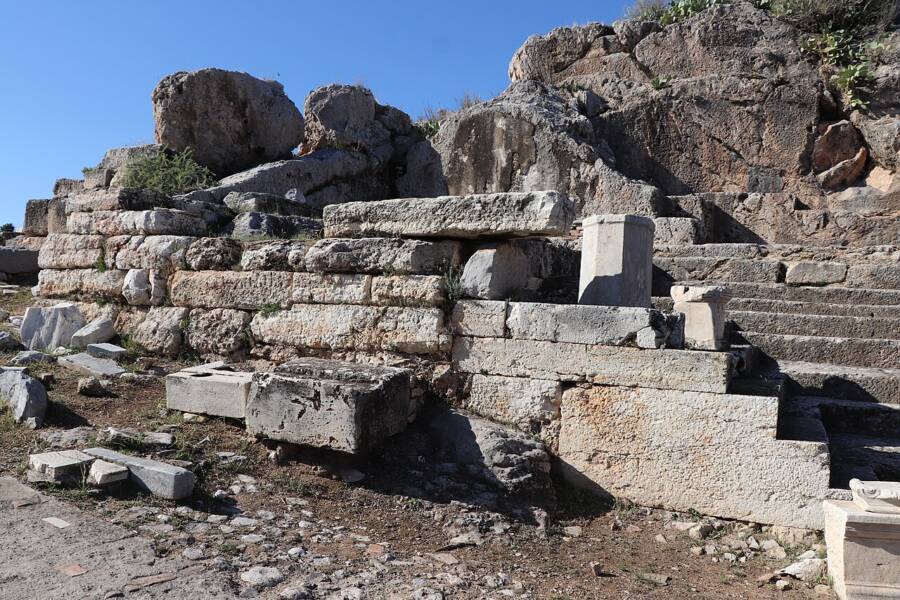
Furius/Wikimedia CommonsThe ruins of the Temple of Hecate at Eleusis.
With such a wide domain, it’s clear why sanctuaries dedicated to Hecate have been found across the ancient world. One of her primary centers of worship was in Caria, located in southwestern Turkey today. Indeed, Hecate may have originated as a goddess in this region before she was adopted into the Greek pantheon.
A temple to Hecate stood in the Carian town of Lagina, where feasts were held in her honor each year. Her importance in Athens was equally great: A statue of Hecate guarded the entrance to the Acropolis.
Aside from works of art, Hecate survives today in renowned literature from ancient times and beyond. She’s mentioned in the Greek tragedy Medea by Euripides, and she plays a key role in Virgil’s Aeneid. Hecate is the one who grants Sibyl, Aeneas’ guide, access to the Underworld so they can begin their journey.
“Then earth began to bellow, trees to dance,
And howling dogs in glimm’ring light advance,
Ere Hecate came.”
Her name also comes up in five of Shakespeare’s plays, including Macbeth, in which she delivers a monologue to the three witches referring to herself as the “mistress of [their] charms” and “the close contriver of all harms.”
Even today, Hecate continues to be a popular figure in pop culture, recently appearing in Netflix’s Chilling Adventures of Sabrina. As such, the ancient Greek goddess of magic is still making her mark on the world after nearly 3,000 years.
After learning about the Greek goddess Hecate, go inside the stories of these ancient goddesses of death. Then, read more about the history of witches.