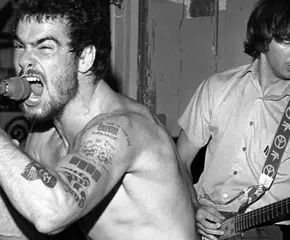
Although prison officials insisted that Kenneth Trentadue had hanged himself, he had injuries inconsistent with suicide — and his family believes he was beaten to death by guards after being mistaken for an Oklahoma City bombing suspect.

Jesse Trentadue/Associated Press/YouTubeKenneth Trentadue’s mysterious prison death in 1995 has sparked theories that he was killed by prison guards in a case of mistaken identity related to the Oklahoma City bombing.
On August 21, 1995, Kenneth Trentadue was found dead in his cell at Oklahoma City’s Federal Transfer Center. Officially, his death was ruled a suicide. But the blood, bruises, and cuts covering his body suggested otherwise.
The investigation into Trentadue’s final moments was suspicious from the beginning. Officers reportedly refused to let the coroner into the cell until they had cleaned it, and more than one federal agent was later found to have made false statements under oath regarding the incident.
Prison officials also revealed that Trentadue had asked to be placed in protective custody the day before his death, purportedly muttering something about “mistaken identity.”
And when Jesse Trentadue, Kenneth’s brother, started asking questions of his own, an even more bizarre story emerged — one that involved Timothy McVeigh and the Oklahoma City bombing.
The Early Life And Crimes Of Kenneth Trentadue
Kenneth Michael Trentadue’s troubles started early in life. He was born into a family of poor coal miners, and although he became a promising athlete after moving to California as a child, he dropped out of high school. He then enlisted in the military, where he became addicted to heroin.
After returning to civilian life, he started robbing banks, and he was ultimately arrested and spent six years behind bars. He was released in 1988, and just as he was turning his life around, he was detained on a parole violation.
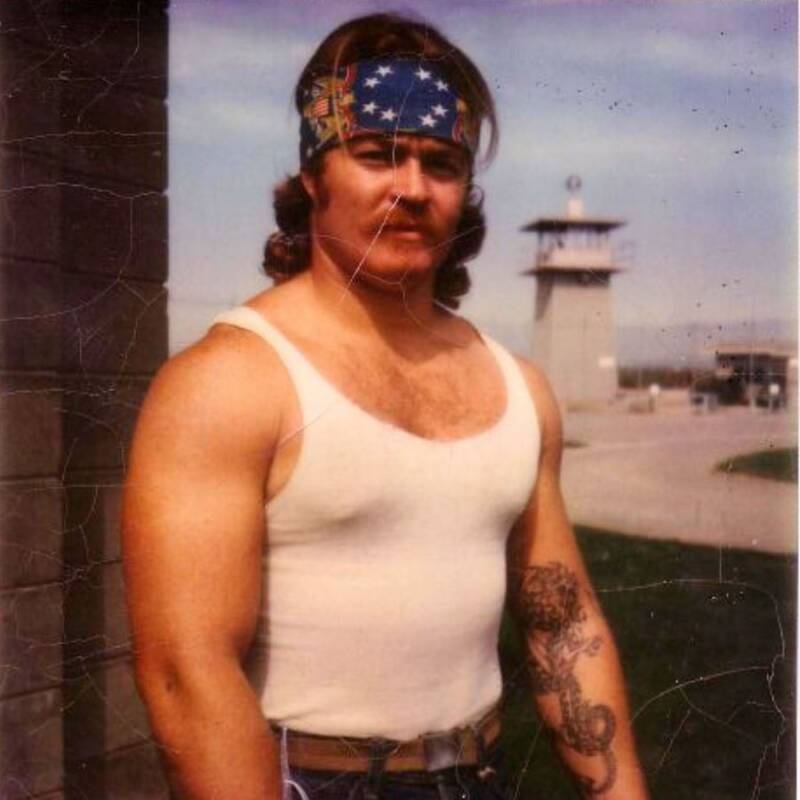
kennethtrentadue.comKenneth Trentadue was 44 years old at the time of his death.
Several weeks after his arrest, on August 18, 1995, he was incarcerated at the Federal Transfer Center in Oklahoma City. According to the Office of the Inspector General, shortly after arriving at the penitentiary, Trentadue asked a lieutenant if he could be moved into the closely guarded Special Housing Unit (SHU).
The lieutenant wrote, “Inmate requested admission to SHU for his own protection. Inmate believes other inmates are out to get him.” Trentadue had purportedly said that he’d “stepped into some sh—t” and that “things aren’t quite right,” perhaps due to a case of mistaken identity. The officer never clarified these concerns — and Kenneth Trentadue would never get the chance to explain what he’d meant.
A Suspicious Prison Suicide
Trentadue was transferred to his own cell in the SHU on August 20. All seemed well that evening, and when two guards checked on him at 2:38 a.m. on August 21, he appeared to be asleep in his bunk. Just 24 minutes later, he was dead.
At 3:02 a.m., the guards looked into Trentadue’s cell to see him hanging from a ceiling grate by his bed sheets. Prison guards claimed he’d died by suicide, but the coroner wasn’t convinced.
There was blood all over the cell, and Trentadue was covered in bruises and cuts, including to his throat. The prison insisted that the wounds were self-inflicted. Their official story was that Trentadue had fallen while trying to secure his makeshift noose, hitting his head several times. Dismayed, he’d then slit his own throat with a toothpaste tube before succeeding in his second attempt to hang himself.
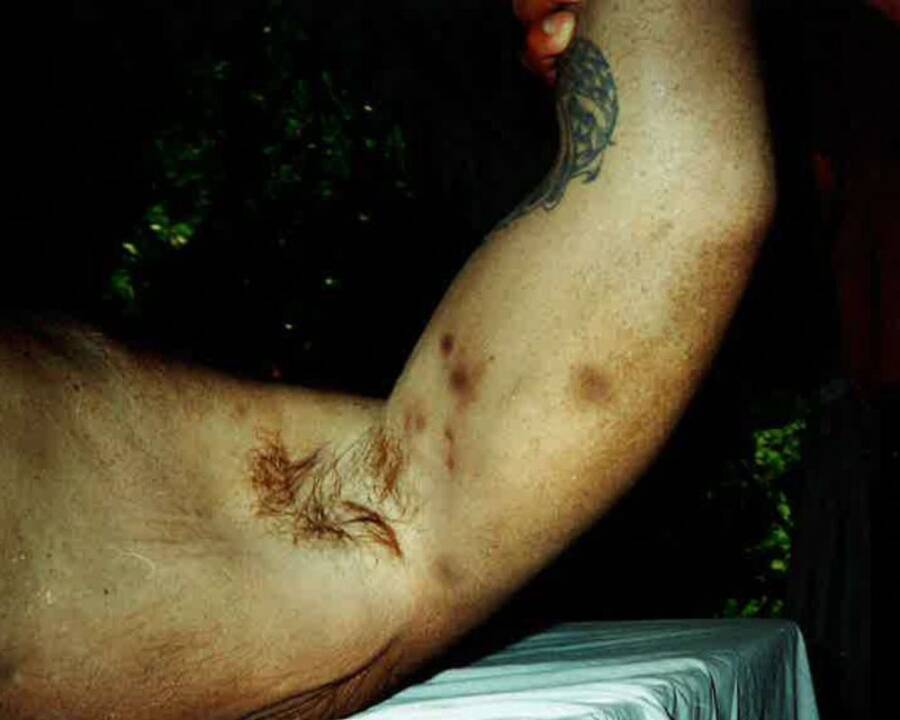
kennethtrentadue.comUnexplained injuries, like these bruises on Kenneth Trentadue’s arms, have his family convinced that his death wasn’t a suicide.
Both the coroner and Trentadue’s family found this version of events absurd. In 1997, Chief Medical Examiner Fred Jordan told FOX 25 News, “I think it’s very likely he was murdered. I’m not able to prove it… You see a body covered with blood, removed from the room as Mr. Trentadue was, soaked in blood, covered with bruises, and you try to gain access to the scene and the government of the United States says no, you can’t.”
“[T]here are still questions about the death of Kenneth Trentadue that will never be answered because of the actions of the U.S. government,” Jordan continued. “Whether those actions were intentional, whether they were incompetence, I don’t know… It was botched. Or worse, it was planned.”
But why would the government have wanted Kenneth Trentadue dead? This was the mystery that Trentadue’s brother, Jesse, set out to solve.
Was Kenneth Trentadue Murdered In A Case Of Mistaken Identity?
Two months before Kenneth Trentadue was arrested in June 1995, Timothy McVeigh had blown up the Alfred P. Murrah Federal Building in Oklahoma City, killing 168 people, including 19 children.
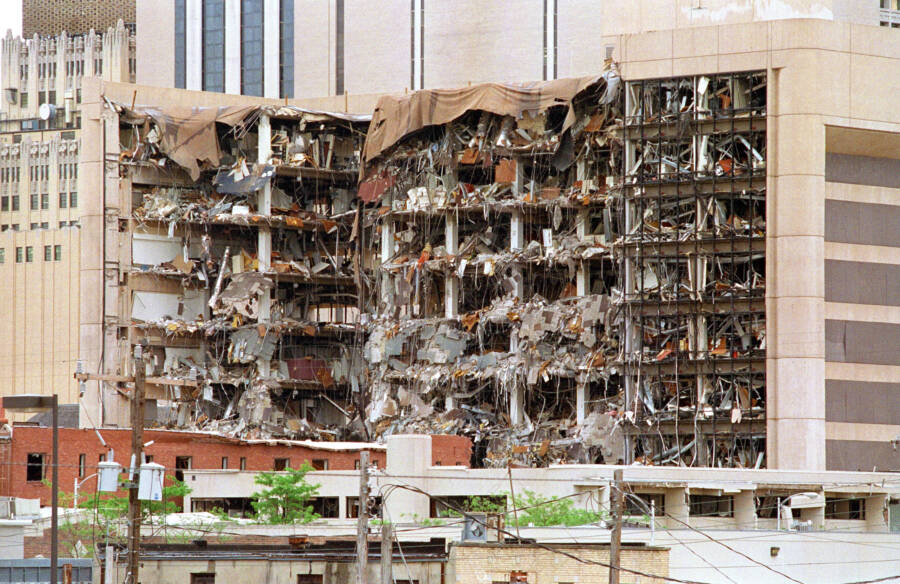
BOB DAEMMRICH/AFP via Getty ImagesThe Oklahoma City bombing on April 19, 1995, was the deadliest domestic terrorist attack in U.S. history.
After the tragic attack and McVeigh’s arrest, authorities started searching for a mysterious man called John Doe #2. He was thought to be a possible co-conspirator. Witnesses reportedly described him as a muscular man with dark hair and a dragon tattoo on his arm.
The FBI circulated a composite sketch based on these eyewitness accounts, but the suspect was never identified. However, he looked a lot like a known criminal named Richard Lee Guthrie.
Kenneth Trentadue also bore a striking resemblance to Guthrie, dragon tattoo and all.
As Jesse Trentadue launched his own investigation into his brother’s death, he stumbled across this potential link. Jesse was assisted by a man named David Hammer, a convicted murderer who knew McVeigh and had read about Trentadue’s case. As reported by The Independent in 2004, when Hammer showed McVeigh a photo of Kenneth Trentadue, McVeigh stated, “Now I know why Trentadue was killed, because they thought he was Richard Guthrie.”
Trentadue’s family became convinced that prison guards had beaten Kenneth to death because they mistook him for Guthrie and then tried to cover their tracks. Eerily, Guthrie was also found hanging in his prison cell less than a year after Kenneth Trentadue’s death. And he wasn’t the only one.
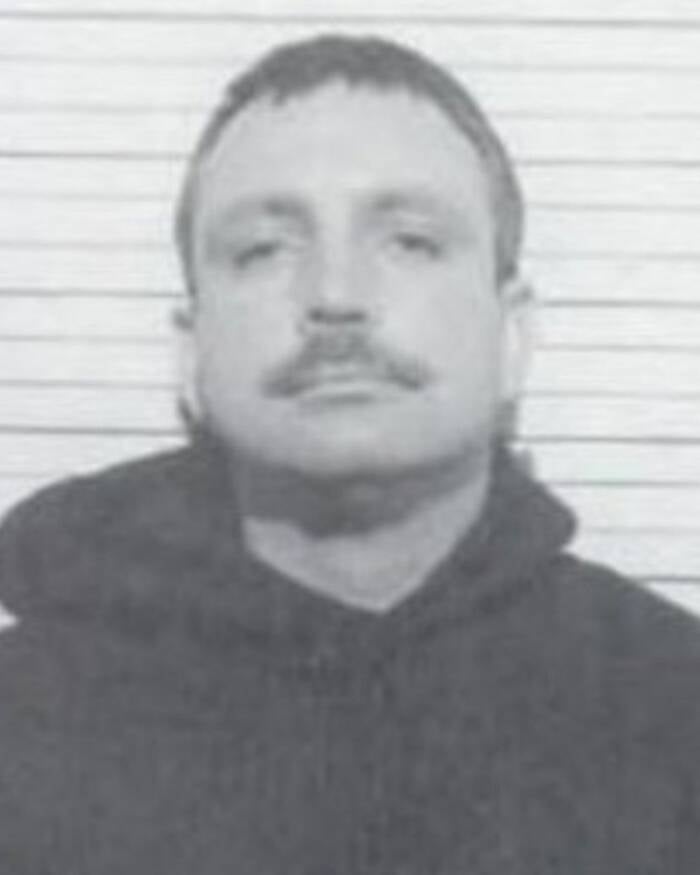
Public DomainSome believe that Kenneth Trentadue was killed by prison guards who thought he was Richard Lee Guthrie, pictured here.
Alden Gillis Baker, another inmate at the federal penitentiary where Trentadue died, testified in 1999 that he had witnessed guards murder Trentadue. However, a judge found that he wasn’t a credible witness. A year later, he also hanged himself in his cell — at least, that was the official story.
In the end, the truth about what happened to Kenneth Trentadue may never come to light. The investigation was mishandled from the beginning, and a federal grand jury determined that there was no evidence of foul play.
More than two decades later, countless questions remain: Did Trentadue really take his own life? Or was he tortured and murdered in a case of mistaken identity? And if so, why did the government cover it up?
These are the answers the Jesse Trentadue — and amateur sleuths across the country — are still trying to find.
After reading about Kenneth Trentadue, go inside serial killer Robert Pickton’s murder behind bars. Then, learn about nine heartbreaking wrongful convictions.