Experts have now confirmed that the coin, featuring the god Melqart on one side and a pair of tuna on the other, was minted by Phoenicians in the Spanish city of Cadiz in the first century B.C.E.
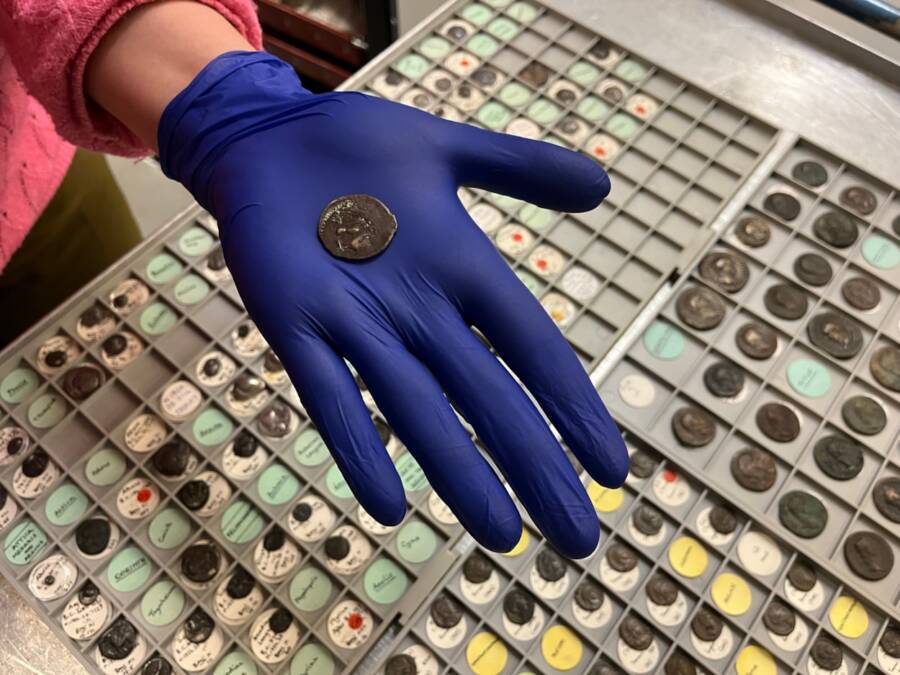
Leeds City CouncilThe Phoenician coin that someone used as bus fare in 1950s Leeds.
In the 1950s, a passenger in Leeds, England, boarded a bus and paid for their fare with a coin, as usual — or so it seemed. This particular coin later proved, in fact, to be most unusual. When the fares were eventually counted up, this strange, rather old-looking coin was set off to the side by the chief cashier, who gave it to his grandson as an odd little collectible.
Now, more than 70 years later, researchers have taken a closer look at the coin — and realized that it was minted 2,000 years ago.
More specifically, the coin was created by the ancient Phoenicians and originates from a Carthaginian settlement in Spain. While many questions about the coin remain, including how it ended up as bus fare in 1950s England, the discovery remains as exciting as it is unexpected.
The Discovery Of A 2,000-Year-Old Phoenician Coin Among Bus Fare In England
According to a statement from the Leeds City Council, the Phoenician coin was picked out of the fare pile sometime in the 1950s by James Edwards, the chief cashier with Leeds City Transport. His job was to count the total bus fare at the end of the day and pick out any non-British coins. He would often come across coins that were ineligible, fake, or foreign, some of which he then gifted to his young grandson, Peter Edwards.
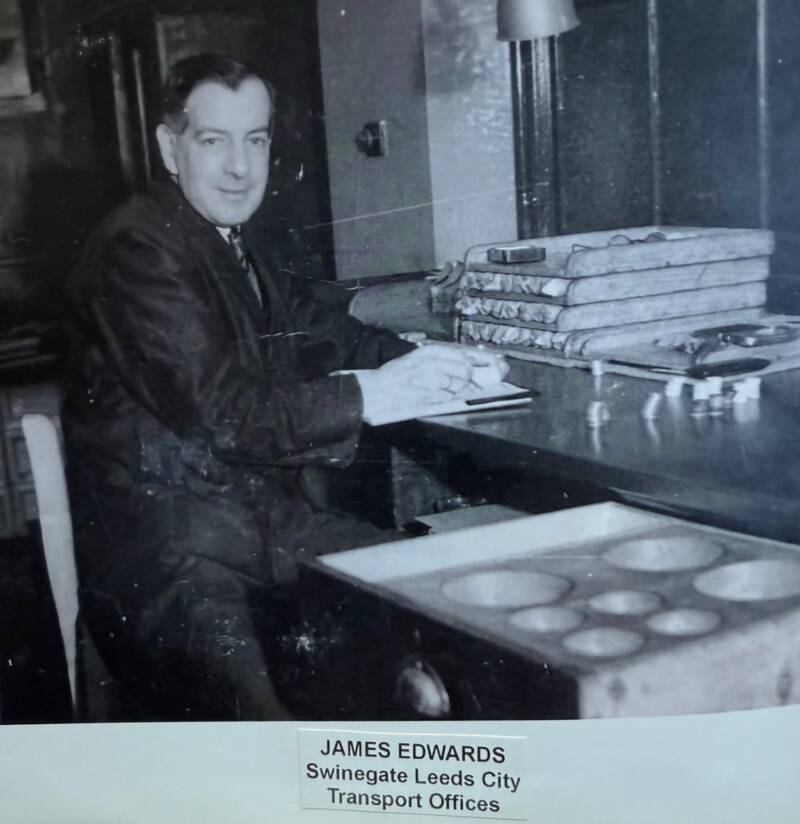
Leeds City CouncilJames Edwards, the chief cashier with Leeds City Transport, who picked the coin out of a pile and gifted it to his grandson, Peter.
“My grandfather would come across coins which were not British and put them to one side, and when I went to his house, he would hand me a few,” Peter Edwards recalled. “It was not long after [World War II], so I imagine soldiers returned with coins from countries they had been sent to. Neither of us were coin collectors but we were fascinated by their origin and imagery – to me they were treasure.”
Out of all the coins that Peter had been given by his grandfather, one stood out. Decades after he first received it, Peter decided to do some research — and discovered that it was a 2,000-year-old Phoenician coin.
The Astounding History Behind This Ancient Phoenician Coin
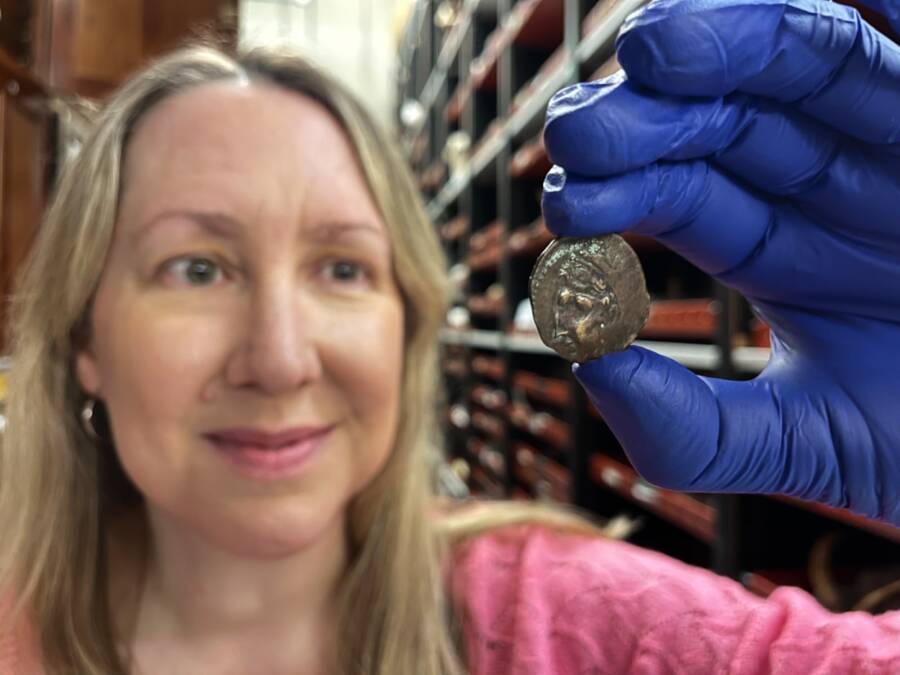
Leeds City CouncilKat Baxter, Leeds Museums and Galleries’ curator of archaeology and numismatics, holding up the Phoenician coin.
The Phoenician coin caught Peter Edwards’ eye for a reason. On one side, it features an impressive figure that we now know is the powerful Phoenician god Melqart, depicted as the Greek hero Hercules, wearing his famed lion skin headdress. On the other side, it depicts a pair of bluefin tuna.
After Edwards uncovered some information about the coin’s age and provenance, he donated the coin to the Leeds Museums and Galleries. Researchers have since determined that it was minted in the the Spanish city of Cadiz, then part of Carthage, a Phoenician city-state, in the first century B.C.E. According to the museum, some Phoenician coins at the time used Greek imagery, in order to appear more appealing to traders.
“It’s incredible to imagine how this tiny piece of history created by an ancient civilization thousands of years ago has somehow made its way to Leeds and into our collection,” said Leeds City Councillor Salma Arif. “Museums like ours are not just about preserving objects, they’re also about telling stories like this one and inspiring visitors to think about the history that’s all around us, sometimes in the most unlikely of places.”
Indeed, it’s a mystery how the Phoenician coin made its way from ancient Carthage, into the pocket of a 20th-century English citizen who, perhaps unknowingly, deposited it as bus fare. But whatever the case may be, Peter Edwards is happy that the coin has now ended up in the hands of the museum, where it can be preserved and displayed for generations to come.
“The coin always fascinated me because it was hard to decipher where it came from,” Peter Edwards said. “My grandfather would be proud to know, as I am, that the coin is coming back to Leeds.”
He added: “However, how it got there will always be a mystery.”
After reading about the 2,000-year-old Phoenician coin that was surprisingly discovered among old bus fare in England, discover the story of Tyrian purple, the luxurious dye coveted by wealthy elites in antiquity. Then, learn about Queen Dido, the legendary founder of the empire of Carthage.