Pennhurst State School and Hospital outside Philadelphia operated for almost 80 years, but was shut down in 1987 after its overcrowded condition and abuse of patients came to light.
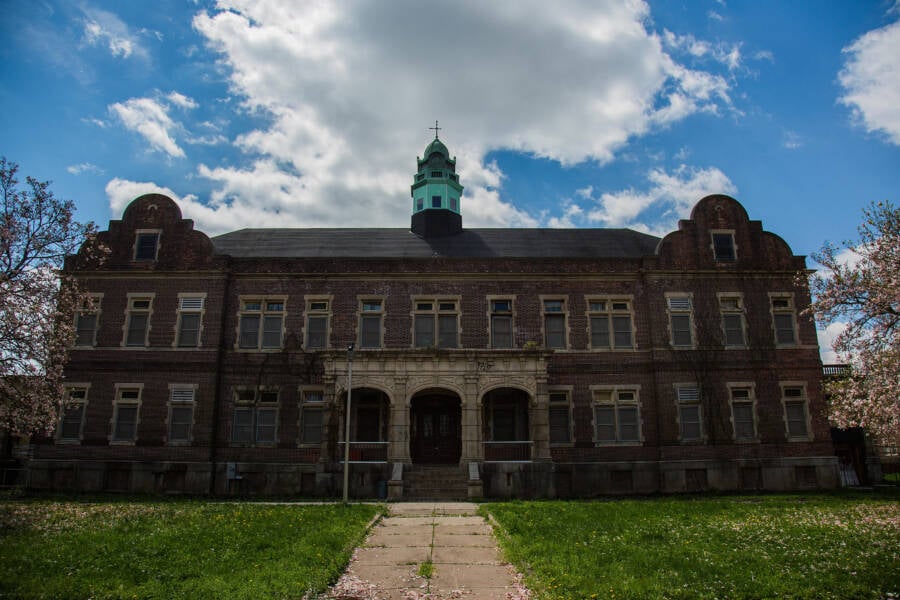
AmityPhotosPennhurst Asylum is abandoned today.
Nestled amid the rolling hills of Chester County, Pennsylvania, Pennhurst State School and Hospital was once heralded as a progressive solution, a modern haven for society’s most vulnerable. Instead, it became a nightmarish center of neglect, abuse, and systemic cruelty.
For nearly 80 years, Pennhurst Asylum, as it’s come to be known, operated as a human warehouse. Thousands of children and adults with disabilities were hidden away from the world, and subjected to conditions that, when later exposed, shocked the nation. Indeed, reports about the rampant abuse at Pennhurst helped usher in the era of deinstitutionalization in the United States.
In the years since, some have come to believe that the spirits of those poor souls never left. And indeed, Pennhurst Asylum is haunted, if not by ghosts then by its long, dark history – one that should never be forgotten.
The Optimistic Early Years Of Pennhurst State School and Hospital
The story of Pennhurst Asylum, as it’s often called today, began in 1903, when it was first authorized by the Pennsylvania Legislature. Five years later, in 1908, the institution opened its doors as the Eastern Pennsylvania Institution for the Feeble Minded and Epileptic.
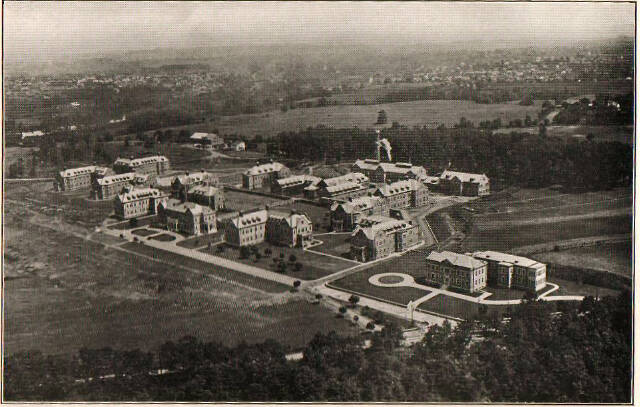
Wikimedia CommonsAn aerial view of Pennhurst Asylum’s campus.
It was just one of many such institutions that emerged at the beginning of the 20th century, meant to segregate and care for individuals deemed “defective”, “degenerate”, and “unfit” at the time. These descriptions most commonly referred to people with intellectual and developmental disabilities, as well as people with physical conditions such as epilepsy.
The stated goal of the campus was to be a self-sufficient community, complete with farms, a power plant, a theater, and various workshops. It was driven by a philosophy of providing a “humane” environment where residents could live and work, separate from the general population, but the institution was plagued by serious issues from the start. Designed to house around 500 people, Pennhurst Asylum quickly became hopelessly overcrowded.
And that was just the beginning.
“Pennhurst was a mistake from day one,” a former assistant to Pennhurst’s Superintendent reflected, per the Pennhurst Memorial & Preservation Alliance, “but it was a mistake made by all of us, following the dictates of the ‘best minds’ of its time.”
Institutionalization, Overcrowding, And Neglect
For decades, Pennhurst operated in near-isolation, throughout which the institution was frequently overcrowded and understaffed. This alone would be problematic enough, but there was a much larger issue at Pennhurst, one that had been there since its inception: eugenics.
Eugenics is a now-discredited pseudoscientific movement that seeks to improve the genetic quality of a human population by selectively promoting “desired” traits and eliminating “undesirable” ones through controlled reproduction. Historically, methods of doing so ranged from forced sterilization and segregation to marriage restrictions – the very same concepts that helped give rise to the Nazi regime.
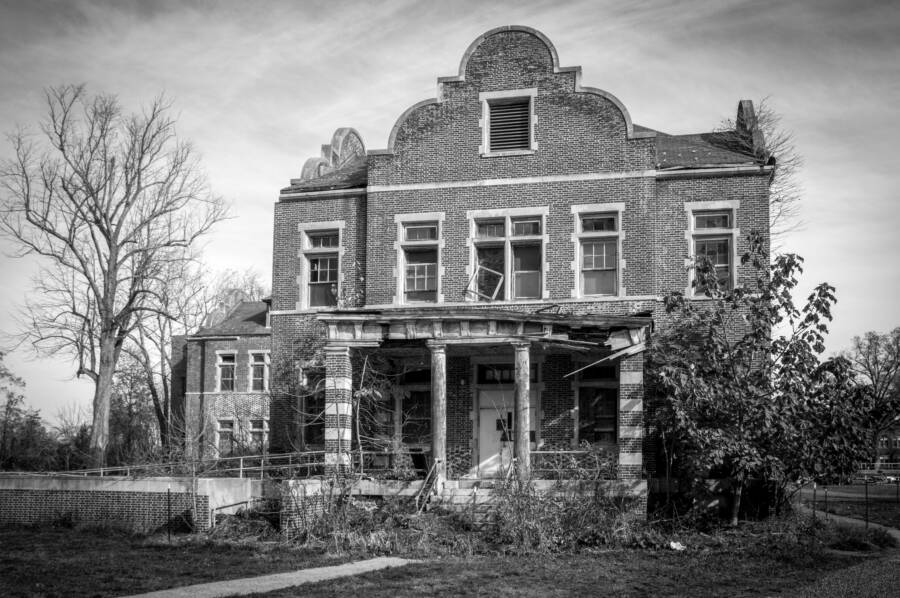
Thomas/Flickr Creative CommonsThe exterior of the rundown Pennhurst Asylum.
Indeed, Pennhurst’s 198 biennial report to the Pennsylvania legislature included a quote from prominent American eugenicist Dr. Henry H. Goddard that read, “Every feeble-minded person is a potential criminal.”
But it wasn’t just “feeble-minded” people that Pennhurst sought to remove from society. According to the Pennhurst Memorial & Preservation Alliance, the institution was under “tremendous pressure to admit many different persons whom society, steeped in the eugenics movement, wanted removed from the gene pool.” These included immigrants, orphans, criminals, and epileptics.
With thousands of residents and a fraction of the necessary staff, individual care was impossible. People were denied basic education, meaningful therapy, or any semblance of a normal life. The staff, who were often poorly trained and paid, were unable to cope with the demands, leading to a culture of neglect and abuse. “Patients” at Pennhurst, including children, lived in squalor. They were often left naked in unheated rooms, physically and sexually abused by staff and other residents, and subjected to cruel “restraints” and punishments. It became, in many ways, a human warehouse.
All the while, the public largely remained unaware of the conditions inside Pennhurst’s walls. That changed in 1968.
The ‘Suffer The Little Children’ Report
In 1968, local news reporter Bill Baldini produced a five-part television news report for WCAU-TV in Philadelphia entitled “Suffer The Little Children.”
The series secretly filmed inside Pennhurst, exposing the deplorable and inhumane conditions to the world for the first time. Footage showed residents tied to beds and chairs, living in filth, and exhibiting signs of severe trauma from abuse and neglect.
“We ship them 25 miles out of town to an institution and forget them, while they decay from neglect,” Baldini remarked in the introduction to the series. “Zoos spend more on their wild animals than Pennsylvania spends on its 2,800 patients at Pennhurst.”
Baldini’s report caused a national outrage and galvanized the disability rights movement. One of the children he interviewed was Roland Johnson, who was sent to Pennhurst at the age of 12 because of an intellectual disability. There, Johnson was bullied, abused, and raped, and contracted HIV. He left Pennhurst in 1971 and ultimately became an advocate, and is sometimes referred to as “the MLK of the disability rights movement.”
Indeed, the tide turned against Pennhurst in the 1970s and 1980s. In 1974, a class action lawsuit known as Halderman vs. Pennhurst State School (named for Teri Lee Halderman, a young patient who was horrifically abused at the school) was filed on behalf of Pennhurst residents. The case argued that the residents’ constitutional rights were being violated under the 14th Amendment, which guarantees equal protection and due process.
In 1977, U.S. District Judge Raymond J. Broderick ruled in favor of the residents. He declared that the forced institutionalization of people with disabilities was unconstitutional, and, in 1984, a final settlement agreement called for the closure of Pennhurst.
Closure Of The ‘Shame Of Pennsylvania’
The legal battle over the closure was long and contentious, but Pennhurst Asylum officially closed its doors in between 1986 and 1987.
It was a monumental victory for the disability rights movement – helped greatly by activists like Johnson and the group Speaking for Ourselves. “We have to make some changes!” Johnson had shouted at the first Speaking for Ourselves meeting he attended. “We’re tired of the old system!” Johnson’s speeches and courtroom testimony, according to his obituary in The New York Times, “played a significant part in the shutting down of Pennhurst.”

Wikimedia CommonsRoland Johnson with U.S. President George H.W. Bush.
The closing of Pennhurst and the disability civil rights movement had also helped to propel the creation of the Americans with Disabilities Act, which was signed by President George H.W. Bush on July 26, 1990, with Johnson in attendance on the South Lawn. Meanwhile, the old asylum fell into disrepair.
It was all but abandoned until 2010, when the partially renovated administration building reopened as the somewhat controversial Pennhurst Asylum, a haunted attraction which operates during the Halloween season.
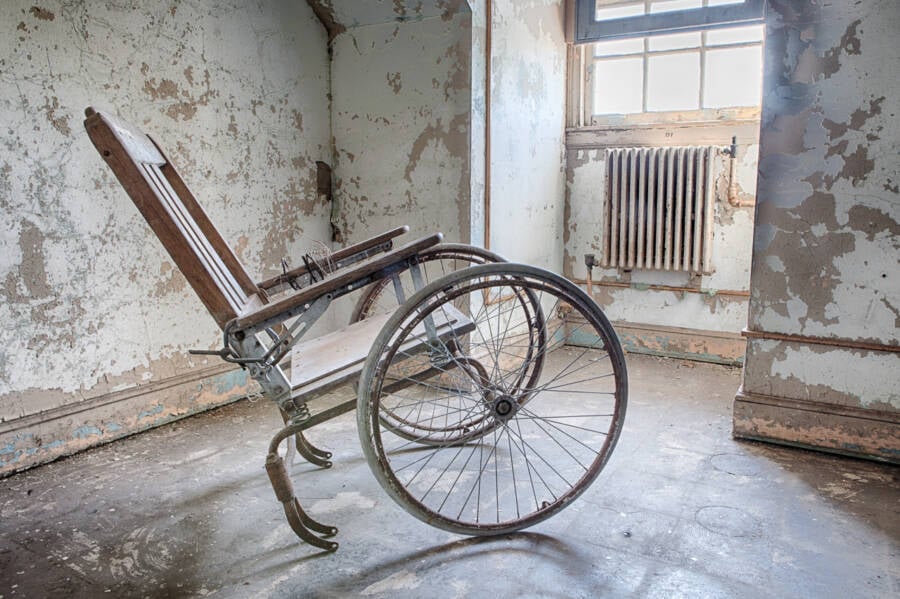
Fred Dunn/Flickr Creative CommonsAn old wheelchair at the abandoned Pennhurst.
The decision drew criticism – and has continued to do so – from both former residents and disability advocates, who feel the haunted attraction commercializes and trivializes the immense suffering that occurred on the grounds. Given that some of the scare actors used historic items as props and explicitly mimicked those with disabilities, it would be hard to justify any “artistic merits” the original operators may have claimed.
Management changed hands in the mid-2010s, after which the more offensive elements of the haunt were toned down.
Recently, however, Bloomberg reported that a new future might be in store for the infamous historical site – one as an AI data center that “may require as much electricity as needed to power some 400,000 homes.”
As such, even decades after it closed its doors, it seems that Pennhurst’s controversial legacy continues.
After exploring the dark, morbid history of Pennhurst asylum, learn about nine more of history’s most infamous insane asylums. Or, see 44 disturbing photographs from inside these asylums that highlight just how awful the conditions truly were.