Measuring four inches wide and just over one inch thick, this charred loaf was found among the ruins of a Roman military camp known as Vindonissa that dates back to at least the first century C.E.
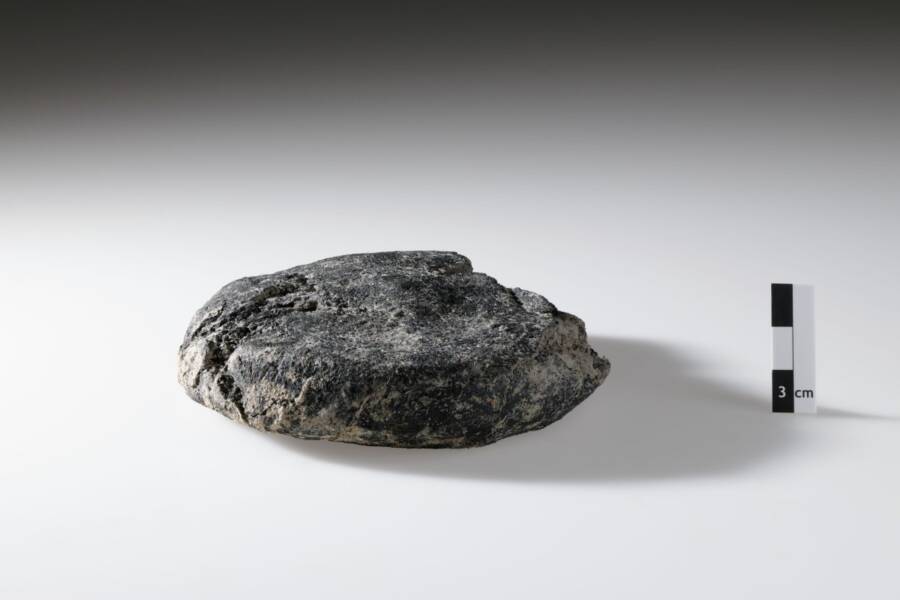
Kanton AargauThe charred hunk of Roman bread is quite small, and was perhaps originally baked as flatbread.
During excavations ahead of a new housing development in Windisch, Switzerland, near the site of a former Roman military camp known as Vindonissa, archaeologists noticed a “black, charred, round object” in the earth. Their interest piqued, they carefully excavated the object and brought it to a lab. Further research revealed that this small black chunk was a piece of ancient Roman bread — the first ever found in Switzerland.
Though ancient bread has been found before, it’s an exceedingly rare archaeological discovery. Both it, and other new discoveries related to the Vindonissa camp, may now help shed light on what life was like in Roman Switzerland.
The Charred Loaf Of Ancient Roman Bread Unearthed In Windisch, Switzerland
According to a statement from the Canton of Aargau, the Roman bread was discovered during a preventative archaeological project ahead of the construction of a housing development in Windisch. Excavations at the site, which took place near the previously discovered Vindonissa military camp, turned up a number of exciting Roman objects, and offered new insights about Vindonissa. But the most spectacular find was the Roman bread.
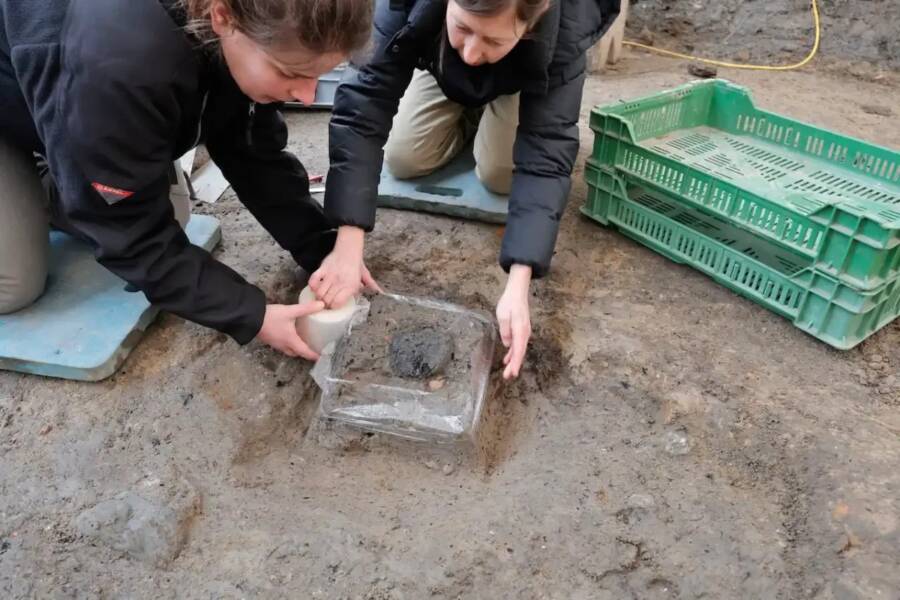
Kanton AargauArchaeologists recovering the chunk of charred, 2,000-year-old Roman bread.
After noticing the small black chunk during excavations in Windisch, archaeologists recovered the object and sent it to a lab, where it was studied by an archaeobotanist from the University of Basel. They determined that it was indeed a rare chunk of Roman bread, one that has remarkably survived over the past 2,000 years because it was so burnt.
The bread has a diameter of roughly four inches and is just over one inch thick. Archaeologists suspect that it was probably baked as a small flatbread, though further scientific analysis is needed to determine the bread’s exact composition.
Whatever its composition, this ancient bread constitutes an exceedingly rare find. Roman bread has never been found in Switzerland before, and Roman bread rarely appears in the archaeological record. Only burnt pieces of bread, or bread from the bakeries of Pompeii, have been recovered before.
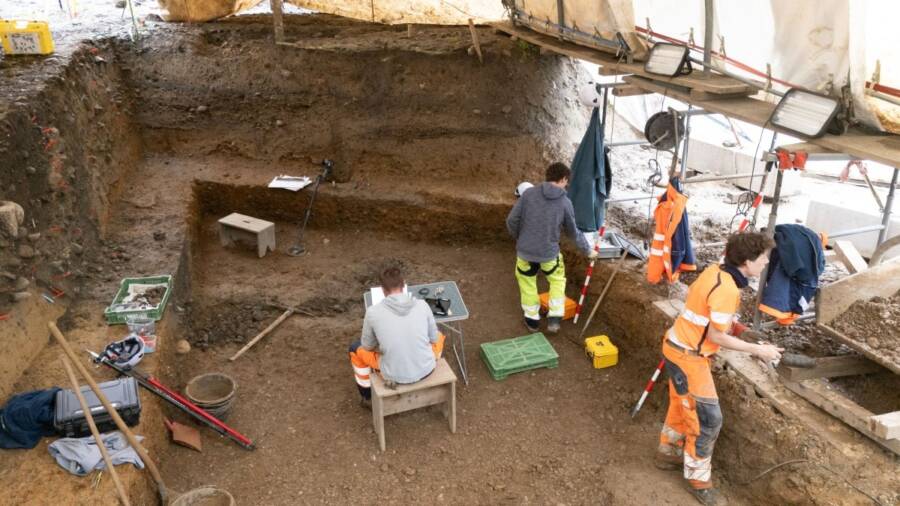
Kanton AargauArchaeologists working in Windisch, Switzerland, where they found the chunk of charred Roman bread.
That said, archaeologists have found even older chunks of bread, like the 5,300-year-old loaf found at a Bronze Age settlement in Turkey, or the even older 8,600-year-old loaf found at a Neolithic site elsewhere in Turkey.
But the Roman bread wasn’t the only thing that archaeologists found during their excavations in Windisch.
The Sprawling Roman Military Camp Known As Vindonissa
The excavations in Windisch took place directly in front of Vindonissa, a previously discovered Roman military camp from the first century C.E. And during their project, archaeologists found further evidence of military activity.
To the south and west, they uncovered evidence of a fortification, possibly older than the defensive system of the camp, the ruins of a “timber-and-earth” wall, and a V-shaped ditch, which mirrors another V-shaped ditch discovered 90 years ago. This has given archaeologists a new idea of Vindonissa’s size, and they now believe that the camp grew to be some 1,300 feet long as it evolved from a temporary military base into a permanent camp.
Indeed, archaeologists are unsure if the camp grew during the reign of Augustus, or if its expansion only took place after he died in 14 C.E.
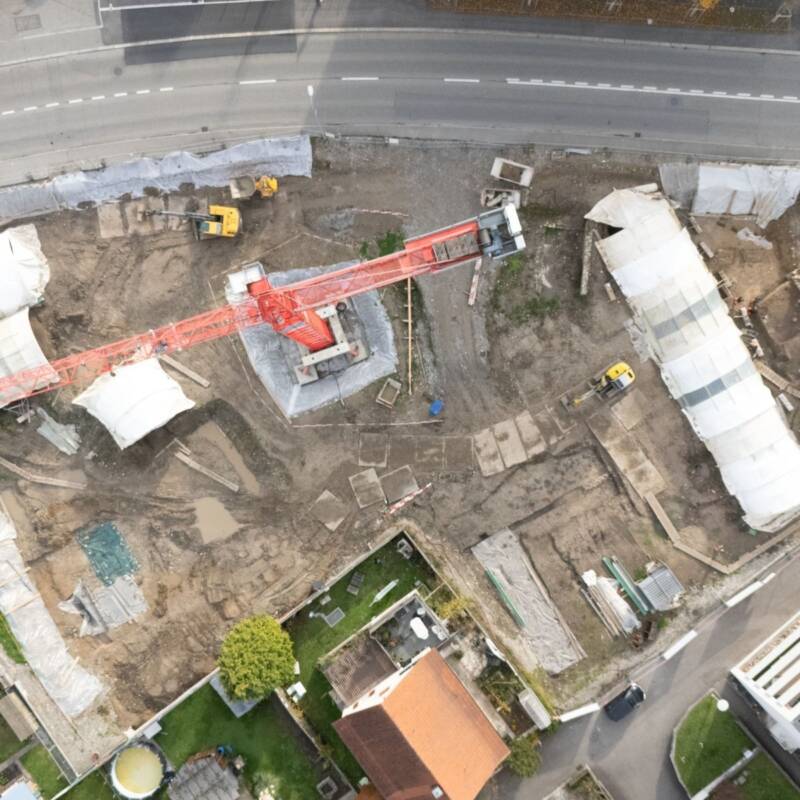
Kanton AargauA bird’s eye view of the archaeological site in Windisch.
During their excavations, they also found evidence of interior rooms — again, possibly predating the Roman camp — as well as “craft activities” from the time of Vindonissa. Archaeologists uncovered metal tools, blacksmith waste, spearheads and projectile points, and a large clay oven.
As such, the excavations in Windisch have helped shed new light on what Roman life was like in and around Vindonissa some 2,000 years ago. But the most remarkable discovery of the excavation is certainly the chunk of bread. Though small and burnt, it’s a rare and remarkable artifact from the days of ancient Rome.
After reading about the charred piece of Roman bread that was found during excavations in Switzerland, discover the impressive size of the Roman Empire at its peak. Then, untangle the question of when exactly the Roman Empire fell.