Aretha Franklin Had Three Outfit Changes For Her Viewings And Funeral
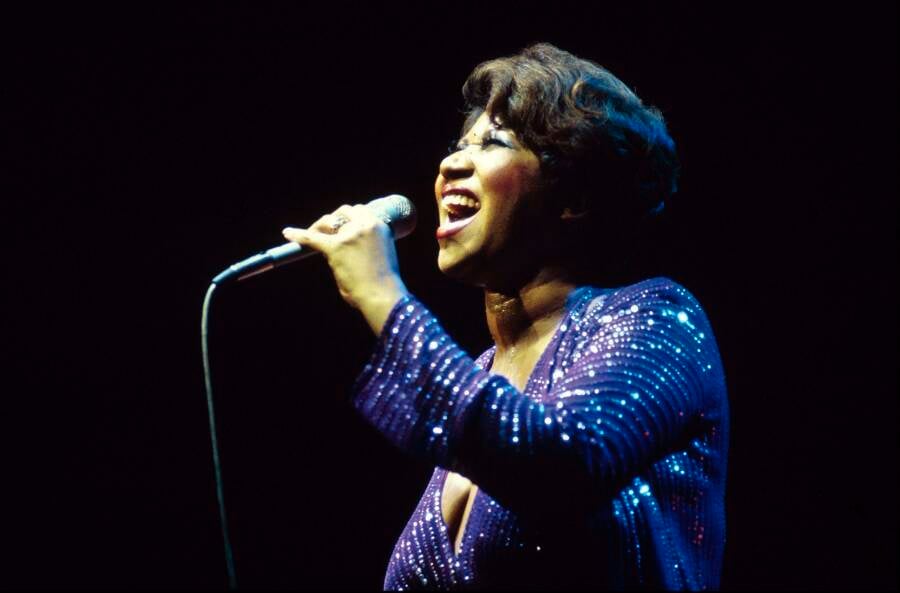
David Redfern/RedfernsAretha Franklin had one of history’s most star-studded celebrity funerals.
Aretha Franklin wasn’t called the “Queen of Soul” for nothing. After skyrocketing to fame with hits like “Respect” and “(You Make Me Feel Like) A Natural Woman,” the singer made a name for herself as both an artist and an activist.
When she died in 2018, it was clear that her funeral would not be any ordinary affair.
As the New Yorker reported, Franklin’s funeral was billed as “A Celebration Fit for the Queen.” It began at the Greater Grace Temple in Detroit, where Franklin had performed at the funeral of Rosa Parks in 2005.
More than 100 pink Cadillacs flooded the streets before lining up outside of the megachurch. Franklin’s body was carried to and from the service in a vintage 1940 hearse that had previously carried both Rosa Parks and Franklin’s own father, the Reverend C.L. Franklin.
With a litany of guest speakers and singers including Ariana Grande, Bill Clinton, Chaka Khan, Faith Hill, Jennifer Hudson, Tyler Perry, and Stevie Wonder, Franklin’s funeral was one of the biggest events of the year, as was befitting of the late singer.
But it was the days leading up to the funeral that stood out, as Franklin was dressed in four different outfits for her open-casket viewings. In the end, she was buried in a gold dress and sparkling pumps.
Fred Baur, The Inventor Of Pringles, Wanted To Be Buried In A Pringles Can
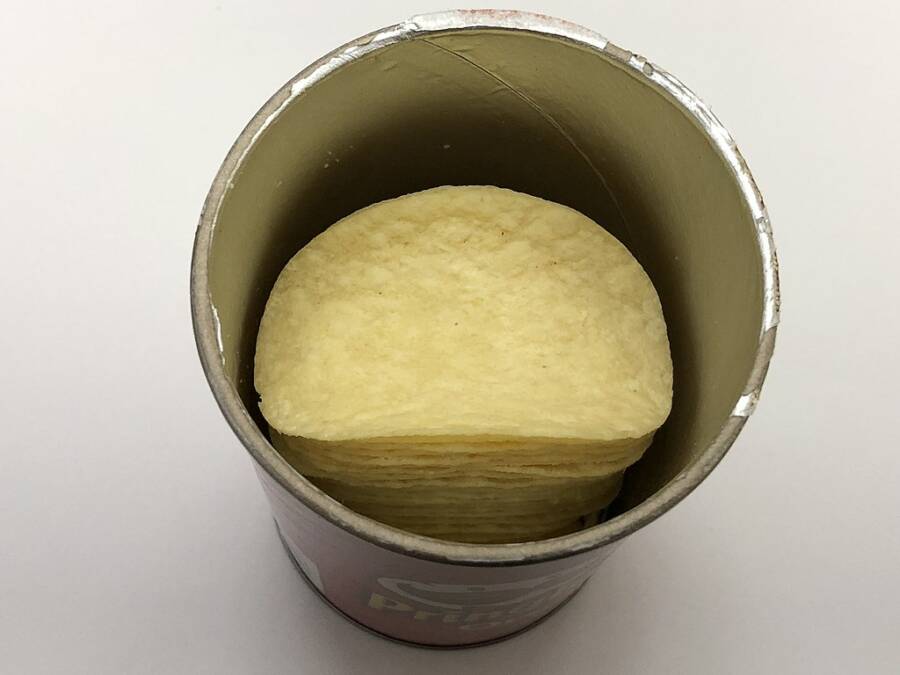
Wikimedia CommonsFrederic J. Baur was so proud of his design for Pringles cans, he wanted to be buried in one.
Pringles are some of the most well-known potato chips in the world, in part for the distinctly tall, cylindrical cans they’re packaged in and the multitude of jokes about how difficult it can be to fit your entire hand inside the can.
But although memes (and Bo Burnham) have poked fun at the Pringles can, the man who designed it was reportedly so proud of the design that he had a portion of his ashes buried inside one after he died.
As The Guardian reported, when Fred Baur of Cincinnati, Ohio, died on May 4, 2008 at the age of 89, his family honored his wish and placed a portion of his cremated remains in a Pringles container and set in his grave. The rest of his remains were placed inside a typical urn and buried alongside the Pringles can.
Baur had first patented the Pringles can design back in 1966. At the time, he had been working as an organic chemist and food storage technician specializing in research and development and quality control for the company Procter & Gamble.
Baur retired from the company in the early 1980s, but kept the Pringles can design in his heart until his death.