The cities of Pompeii and Herculaneum were destroyed when Mount Vesuvius erupted on August 24, 79 C.E. — but could new evidence call that date into question?
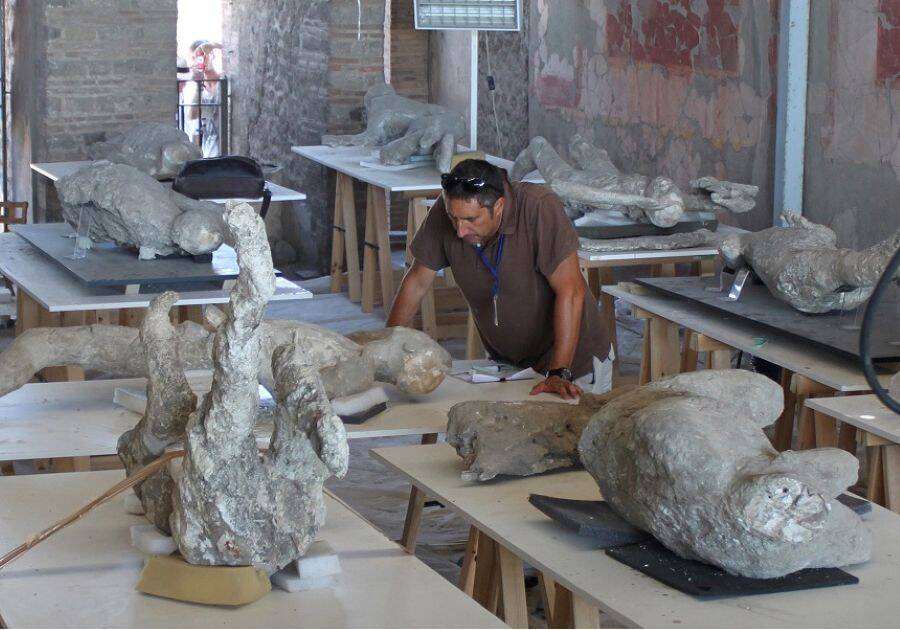
University of ValenciaLlorenç Alapont with some of the plaster casts made of Pompeii’s victims.
A new analysis of 14 plaster casts of the victims of Pompeii revealed that some people were wearing heavy wool clothing when the eruption of Mount Vesuvius took place.
It’s generally agreed that the eruption occurred on August 24, 79 C.E. — a time of year that would typically be much too hot for wool cloaks and tunics. However, scientists are split as to what exactly the discovery of this clothing suggests.
Some believe it means that that August simply happened to be unusually cold, or perhaps that people wore wool year-round at the time because of its durability and relatively low cost, no matter the weather. Others, however, believe that this discovery supports the idea that Mount Vesuvius actually erupted later in the year, contrary to Pliny the Younger’s written record of the event.
So, when did Mount Vesuvius erupt and destroy Pompeii? Here’s what the latest evidence says.
Researchers Discover That Some People Were Wearing Wool When Mount Vesuvius Erupted
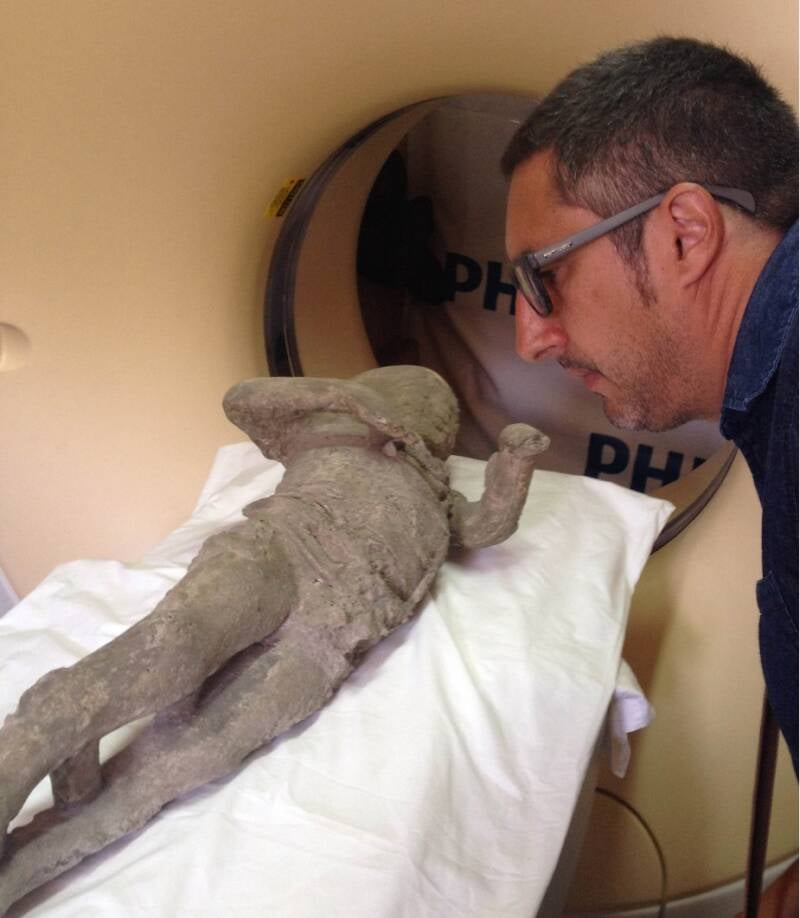
University of ValenciaBy examining the casts, researchers were able to conclude that some Pompeii victims were wearing wool when they died.
The research, which was led by archaeologist Llorenç Alapont, was presented in November at an archaeological conference held near the ancient Roman city. It has not yet been peer-reviewed or published.
After re-examining 14 plaster casts of victims at Pompeii, the team of researchers found that at least four of them, who were both inside and outside of their homes on that fateful day, were wearing wool clothing.
“From a study of the casts, we can learn how people dressed on a specific day in history,” Alapont said in a statement from the University of Valencia. “We can also determine the type of fabric they wore and the weave of the threads, which in this case is thick.”
Most of the people wearing wool wore both a wool tunic and a wool cloak. Alapont posits that the wool could have been worn to protect themselves from the gasses or heat that came from the eruption, a theory that remains unconfirmed as of now.
Wool wasn’t a rare clothing material at the time. In fact, it was very common and would have been relatively affordable and appealingly durable.
Pedar Foss, a historian and archaeologist at DePauw University, told Live Science, “They were wearing wool because that’s what people wore at that time. About 90% of all clothing anywhere was wool.”
However, it’s possible that there’s another reason why some people were wearing two pieces of heavy wool.
The Significance Of The Wool Cloaks Being Worn When Pompeii Was Destroyed
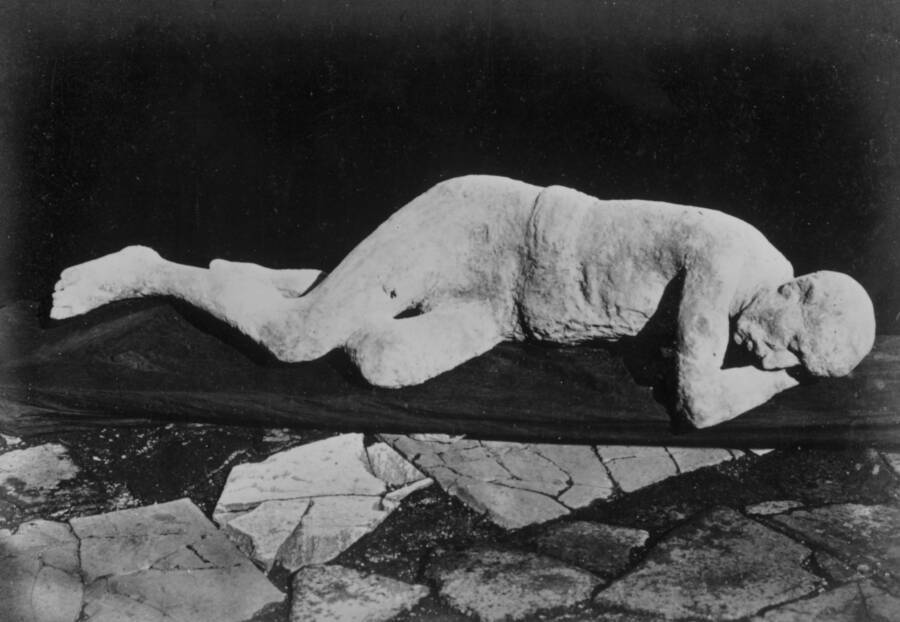
Hulton Archive/Getty ImagesMany victims of Vesuvius were found lying face down.
Experts are currently split on what the evidence of wool clothing worn by Pompeii victims actually signifies. It is possible, for one, that these people may have put on wool clothing during the course of the 18-hour eruption in order to shield themselves from ash and debris.
On the other hand, the discovery of the wool clothing adds to the existing dispute about when Mount Vesuvius erupted.
Based on a contemporaneous written account of the disaster by the prominent Roman author and statesman Pliny the Younger, the most widely accepted date of the eruption is August 24, 79 C.E.
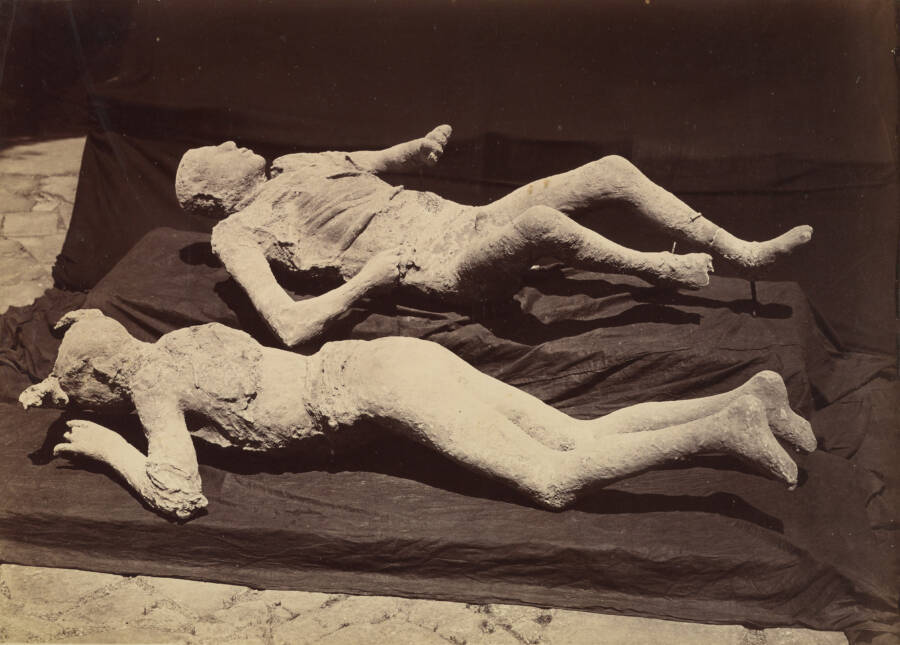
Heritage Art/Heritage Images via Getty ImagesOver the years, 104 casts of Pompeii victims have been made.
This account was copied poorly during the Middle Ages, leading to speculation about its accuracy. However, more recent research has confirmed that Pliny did record the date of the eruption as being “Nonum Kalendas Septembres,” “the ninth day before the first of September,” in a letter to Roman historian Tacitus.
But, there are still proponents of the theory that the eruption actually occurred at a later date. They point to evidence of autumnal fruits found at Pompeii, an inscription scrawled in charcoal on a wall, and a coin that was found in the ancient city that may actually be from after August of 79 C.E.
No matter the reason why people were wearing wool, the research completed by Alapont’s team at least adds to the haunting picture of victims’ experiences at the moment that this historic disaster occurred.
After reading about what some victims wore when Mount Vesuvius erupted, discover how a Pompeii construction site has revealed the secrets of Roman concrete. Then, take a look at 33 of Pompeii’s stunning frescos.