These infants were interred in York some 1,700 years ago, but who exactly they were and why they were buried with such expensive cloth remain a mystery.
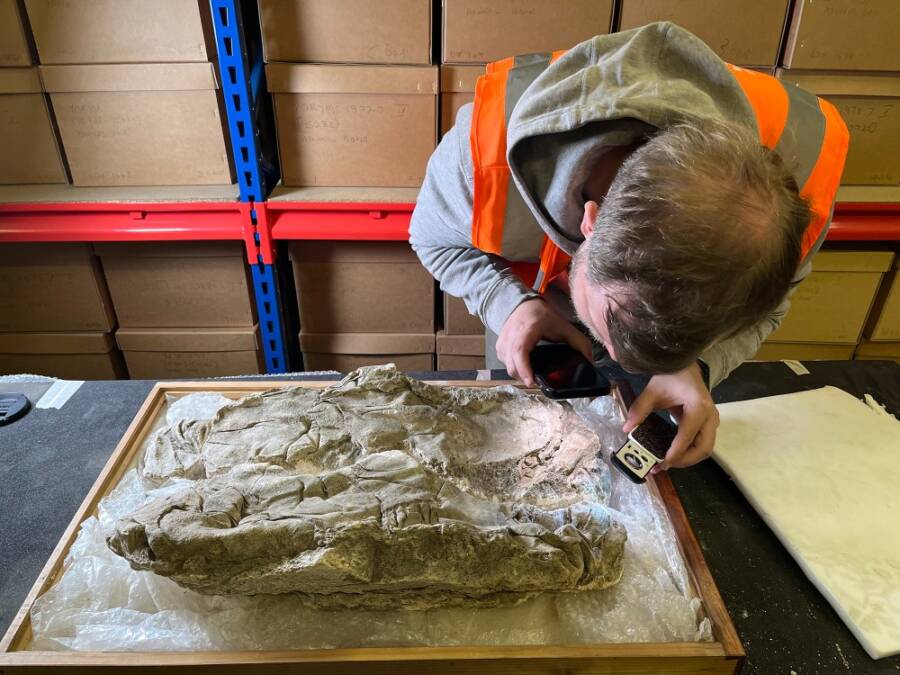
University of YorkThe infants were encased in gypsum, a common burial practice in the Roman era.
During the Roman era, there was perhaps no surer way to display wealth and importance than wearing a garment made with Tyrian purple, the ancient Mediterranean’s most expensive dye. Researchers were thus surprised to find traces of this dye, extracted from sea snails, on cloth from the burials of two unknown infants uncovered in York, England.
This discovery is astounding for two reasons. For one thing, it’s the first time that traces of Tyrian purple have ever been found on textiles in York. For another, historians largely believe that Romans did not mourn babies who died young and, indeed, it was forbidden for parents to mourn babies publicly.
But the Roman infants wrapped in Tyrian purple challenge this theory. The characteristics of their burials suggest that they were not only mourned after their deaths, but that they were also given the highest honor that their families could afford.
The Roman-Era Infants Found In York, Wrapped In Tyrian Purple
According to a statement from the University of York, the discovery of the Roman-era infants wrapped in Tyrian purple was made during an examination of 1,700-year-old gypsum burials held in the collections of York Museums Trust. In Roman times, gypsum was often poured over the shrouded dead before burial. It would gradually harden, preserving chemical traces of dyes, as well as impressions and fragments of fabric.
In this case, this process preserved traces of Tyrian purple dye, which researchers with the Seeing the Dead project found in two gypsum burials. In one, an infant was wrapped in textiles and placed between the legs of two adults in a stone sarcophagus. In the other, an infant was wrapped in a cloak or a shawl, overlaid with “a fine textile of Tyrian purple and gold threads” and buried in a lead coffin. According to the researchers, the Tyrian purple cloth would have been visible before the lid of the coffin was closed.
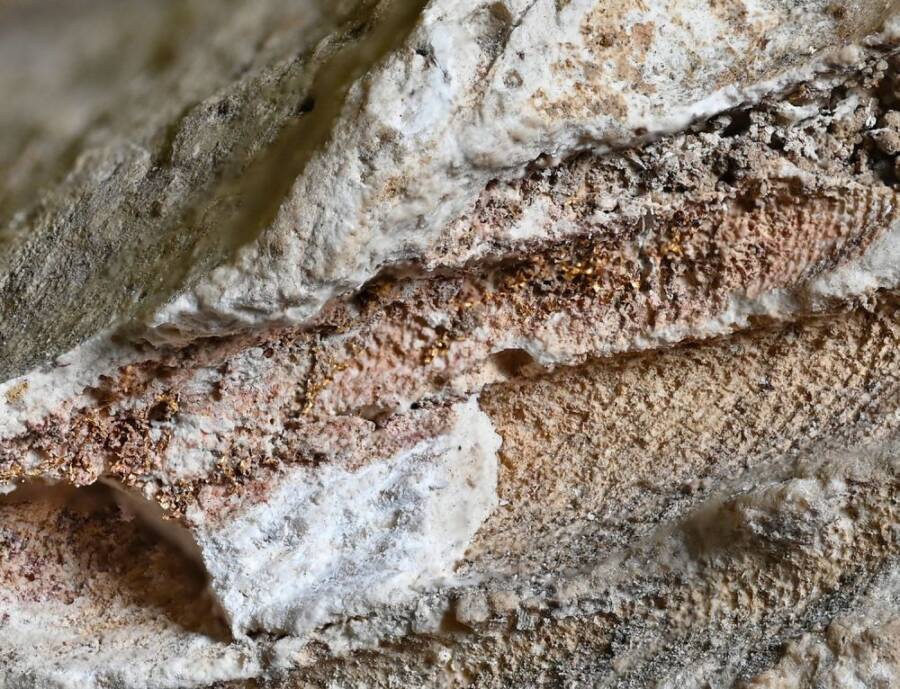
Seeing the Dead/University of YorkTraces of Tyrian purple dye are still visible, as are the golden threads that once adorned the textile.
This discovery is astounding on several levels. As the Seeing the Dead project noted, “the combination of purple and gold means that [the textile] is of the highest possible status and luxury in the Roman empire.” Not only is it the first time that Tyrian purple has been found in York, but it’s also exceeding rare to find it in the context of an infant burial. While Tyrian purple was found at the burial of a 10-year-old child in Naintré, France, historians have long believed that Romans did not mourn children who died in infancy.
But the Tyrian purple in this instance both suggests that Roman families did mourn their very young and, even in the far-flung reaches of the Roman Empire, they had access to expensive luxurious goods.
“This remarkable discovery tells us a lot about the importance of children in Roman York,” said Maureen Carroll, Project Director from the Department of Archaeology at the University of York, “and the willingness of the family to give their baby the best possible send-off in tragic circumstances.”
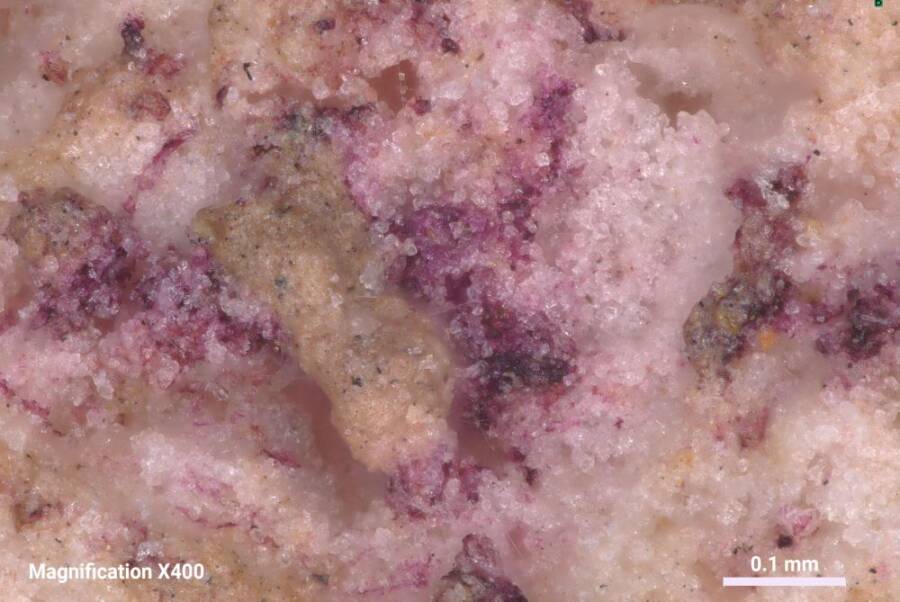
Sarah Hitchens/Seeing the Dead/University of YorkA close-up of the Tyrian purple remnants found at the burial in York.
This find also gives experts a greater understanding of Tyrian purple, the most elusive and coveted dye in ancient Rome.
The Astonishing Story Of Tyrian Purple In The Ancient Mediterranean
According to Greek myth, Tyrian purple was first discovered by Hercules, whose dog bit a sea snail at a beach, and emerged with a purple muzzle. When a nymph saw the dog’s stained fur, she demanded a cloak of the same hue — and Tyrian purple was born.
Focusing on history as opposed to myth, Tyrian purple was produced in the Phoenician city of Tyre (in present-day Lebanon) starting around the 16th century B.C.E. It was produced by collecting thousands of murex sea snails, then crushing them whole or painstakingly cutting out their mucous glands. The snails were then salted, fermented, cooked, and reduced for 10 days, at which points the dye-makers would test the color. According to Pliny the Elder, the best quality of Tyrian purple had the “color of clotted blood, and is of a blackish hue to the sight.”
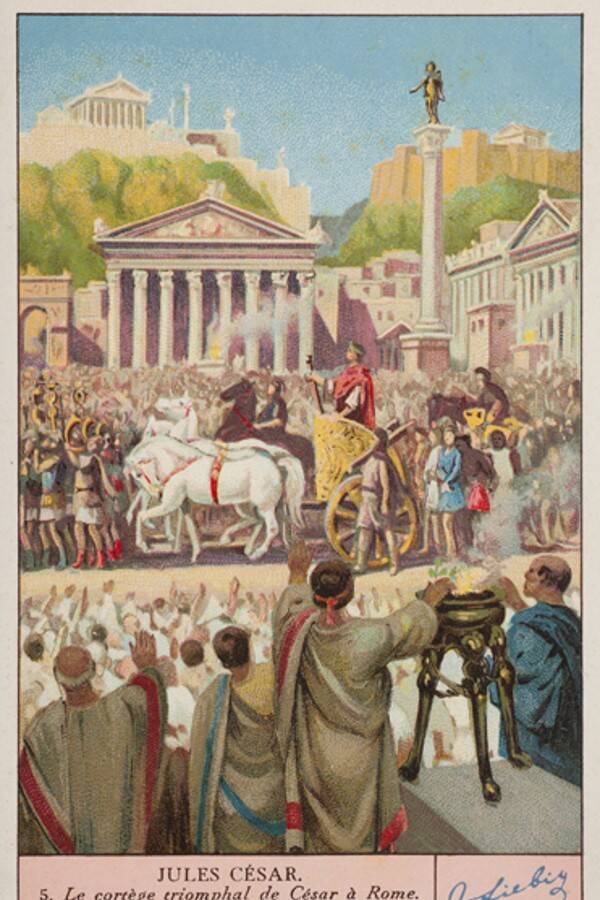
PMRMaeyaert/Wikimedia CommonsJulius Caesar in Tyrian purple.
The dye was coveted by elites across the ancient world, from ancient Greece to ancient Egypt. In Rome, Julius Caesar was said to have worn a Tyrian purple toga, or toga purpurea, and the Roman emperor Caligula purportedly had the king of Mauretania killed after he dared wear purple in his presence during a visit in 40 C.E.
Unsurprisingly, this dye was incredibly expensive, sometimes clocking at three times the price of gold. It thus signified social standing and wealth.
And for families in Roman York, it was a fitting way to honor the loss of two children who died in infancy. Though their stories have been lost to time, the gypsum poured over their remains has preserved this final loving act for 1,700 years.
After reading about the Roman-era infants who were found wrapped in burial cloths made with Tyrian purple, go inside the many factors that led to the fall of the Roman Empire. Then, learn about the Catacombs of Rome, the snaking underground tunnels where Jewish and early Christian people buried their dead.