The Polissya Hotel In Ukraine: A Victim Of The Chernobyl Disaster
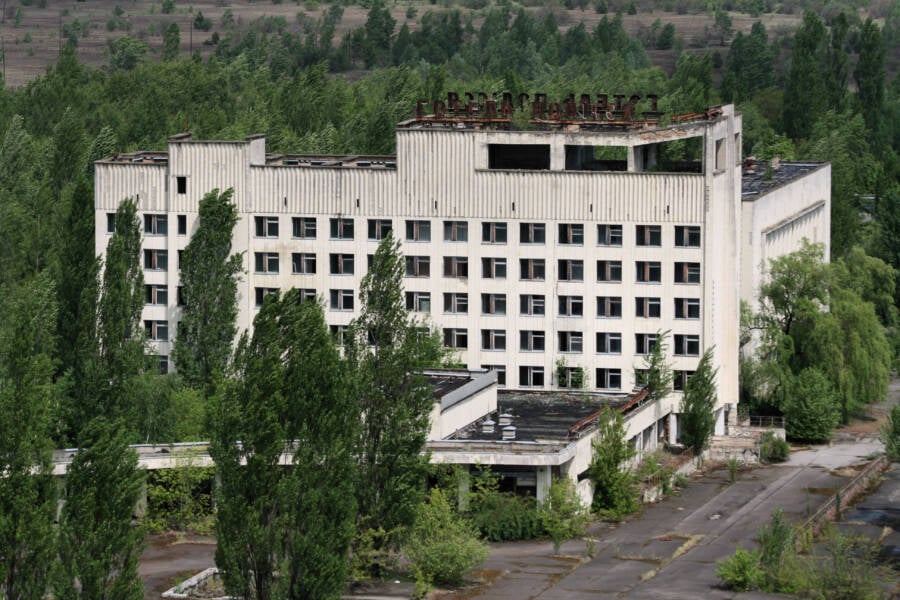
Wikimedia CommonsThe Polissya Hotel in Pripyat.
The Polissya Hotel was once a relatively successful, Soviet-era hotel in Pripyat, Ukraine, located near the Chernobyl Nuclear Power Plant.
According to news.com.au, it was built in the 1970s and designed to accommodate delegations and guests who were visiting the growing population of workers at the nuclear facility and their families.
As one of Pripyat’s tallest buildings, the Polissya Hotel represented the pinnacle of Soviet modernist architecture in an atomic city. The building featured a restaurant, café, and various amenities typical of Soviet hotels serving those connected to the nuclear industry. Its rooftop became an unofficial gathering spot, offering views of Pripyat and the power plant.
The Polissya Hotel was considered relatively upscale by Soviet standards, a symbol of prosperity and the promise of the “peaceful atom.”
Everything changed on April 26, 1986, when a reactor at Chernobyl exploded. The Polissya Hotel then became an impromptu command center during the immediate crisis response. Government officials, emergency personnel, and liquidators gathered there to coordinate evacuation efforts and assess the catastrophe, hoping to minimize the consequences of the nuclear accident.
It’s rumored that even Soviet president Mikhail Gorbachev himself stayed at the hotel while overseeing the liquidation process.
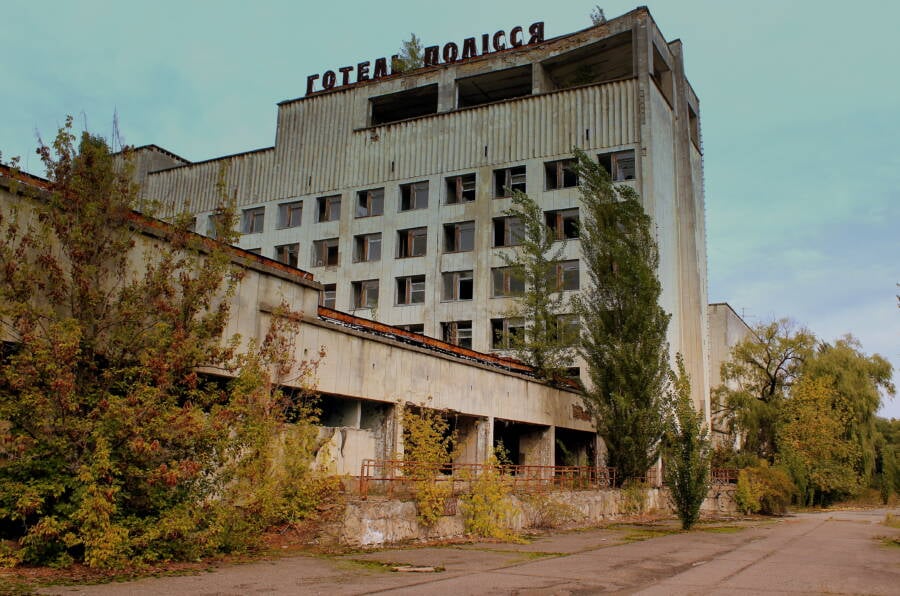
Wikimedia CommonsThe Polissya Hotel in modern times, fallen into disrepair after years of being abandoned.
But once the dust settled, Polissya Hotel was promptly abandoned like the rest of the radioactive city. Though the residents of Pripyat expected to return to their homes eventually, most of them never did.
And so like the rest of Pripyat, Polissya Hotel was left frozen in time. Over the years, it has become one of the most striking sights in the Chernobyl Exclusion Zone. The building’s interior has decayed dramatically, and collapsing ceilings, peeling wallpaper, and scattered Soviet-era furniture create a haunting atmosphere. Radiation levels vary throughout the structure, with some areas remaining much more contaminated than others.
Today, the Polissya Hotel is a decaying reminder of the Chernobyl disaster. Surprisingly, it’s also a popular destination for curious visitors who want to explore the Chernobyl Exclusion Zone.