Known as tulas, these woodworking tools found near Boulia, Queensland were used to carve everything from dishes to shields to boomerangs.

Yinika PerstonArchaeologists found dozens of these Aboriginal tulas, which were usually attached to a handle and used for woodworking.
In 1988, a cache of stone tools made by Aboriginal people was discovered in Queensland, Australia. Now, researchers have found a second, much larger, cache of Aboriginal stone tools just a few miles from the first one.
These stone tools, known as tulas, were customarily attached to a wooden handle and used for woodworking. But they were also an important item for trade between Aboriginal groups.
It’s unknown why the more recent cache of tulas was buried, and not traded, but researchers suspect that it might have something to do with the arrival of Europeans to the area in the 19th century.
The Cache Of Aboriginal Stone Tools Found In Queensland
According to a statement from Griffith University, the tulas were first discovered in 2023, when a group of researchers spotted them sticking out of the soil north of Boulia in Central West Queensland, Australia.
Upon excavation, the researchers uncovered 60 tulas, flaked stone tools made by Aboriginal groups. Tulas were important tools, used across Australia to make boomerangs, wooden coolamon dishes, shields, and clapsticks. Because the Pitta Pitta Aboriginal group holds the Native Title for the land where the tulas were found, researchers suspect that the tools were originally constructed and buried by Pitta Pitta ancestors.
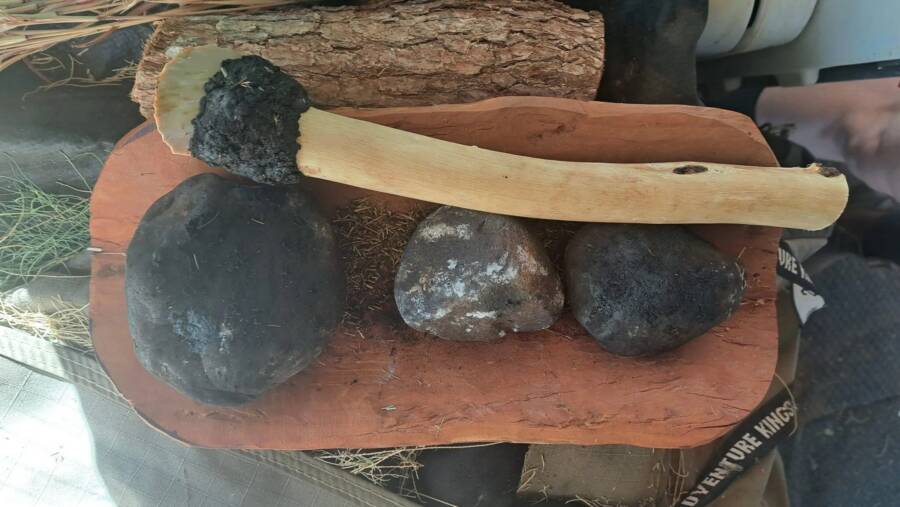
Griffith UniversityAboriginal groups would affix tulas to wooden handles, as seen here.
This is the second cache of tulas found on Pitta Pitta land. As the researchers explained in their study concerning the 2023 discovery, published in the journal Archaeology in Oceania, another cache was discovered nearby in 1988. That cache contained 34 tulas, whereas this second cache contains 60.
So why were the tulas buried?
“We think the Pitta Pitta ancestors were likely planning to trade the tools in these caches when the time came,” the study’s lead author Yinika Perston remarked, “but for some reason never retrieved them.”
The Mystery Of The Buried Tula Cache Unearthed Near Boulia
Indeed, Perston explained that while the tulas were important tools for woodworking, they were also valuable objects for trade — especially for the Pitta Pitta, who lived in a harsh environment.
“This region’s climate is harsh,” Perston explained in the statement, noting that the excavation of the tulas was challenging because of the threat of bushfires and floods. “Innovation and connection helped the Pitta Pitta people survive the region’s harsh climates. If they could not find resources locally, they bartered along vast trade routes. It’s possible this cache was a bundle of specially-made artifacts that were intended for trading.”
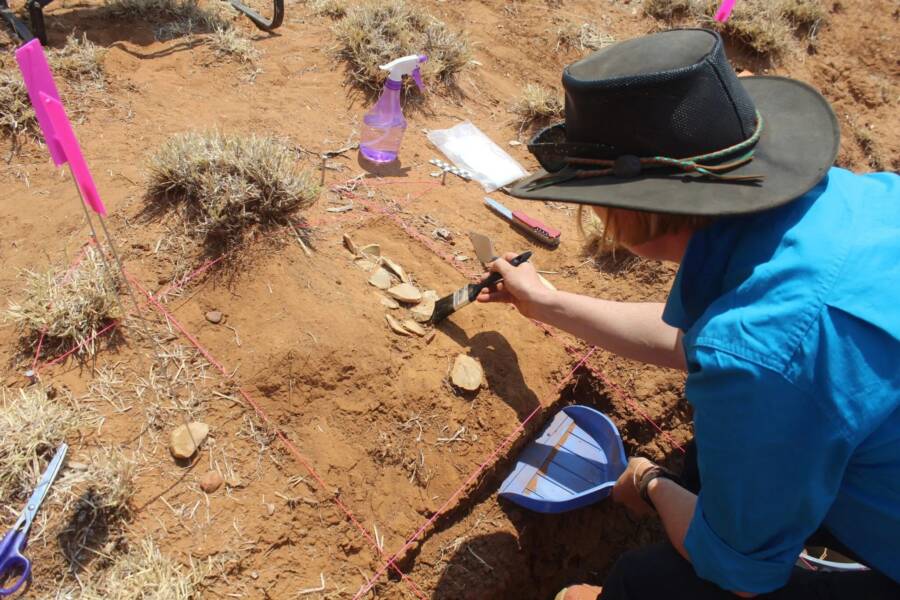
Griffith UniversityThe excavation of the tulas was threatened by both floods and bushfires.
So if the tulas were intended for trading, why weren’t they traded?
To make an educated guess, the researchers set out to determine the age of the tools, which they did by studying quartz grains in the soil. After collecting samples, they determined, with a 95 percent probability, that the tulas were buried between 1793 and 1913.
This is a long period of time, to be sure, and one that includes an important shift for the region: the arrival of Europeans. The nearby town of Boulia was established around 1879, for instance, which may have disrupted the Pitta Pitta’s trade.
“One possible reason for this may be due to disruption caused by European arrival,” Perston said, “but the dates aren’t precise enough to be sure.”
Though while the exact story behind the newly-uncovered cache of 60 tulas is unknown, it remains an exciting discovery nevertheless. These types of tools, which first appear in the historical record around 3,700 years ago, played an important role in Aboriginal life as both woodworking instruments and objects for trade. And the cache of tulas found on Pitta Pitta land also offers insights into how this Aboriginal group navigated their largely inhospitable environment in modern-day Queensland.
“What we can say,” Perston remarked, “is that this cache reveals how planning, resource management and collective cooperation allowed Aboriginal people to not only survive, but thrive, in this harsh environment.”
After reading about the Aboriginal stone tools found in Australia, discover the story of the Yowie, the Bigfoot-like cryptid that’s said to roam the wilds of Australia. Then, go inside the strange saga of the Great Emu War, when Australians fought against the local emu population — and lost.