Aleksandr Akimov was a night shift supervisor at the Chernobyl Nuclear Power Plant, and his attempts to mitigate the effects of the reactor explosion in April 1986 left him with such severe radiation sickness that he was dead within two weeks.
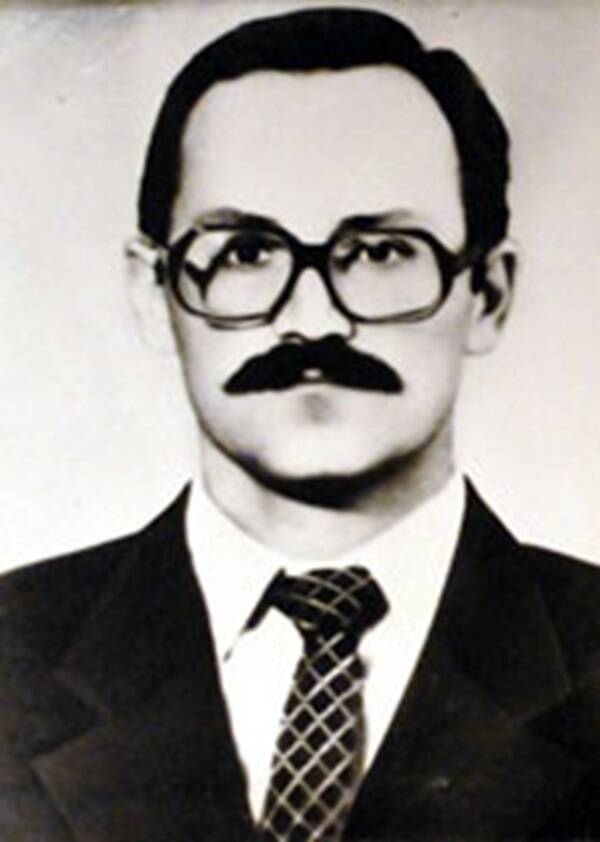
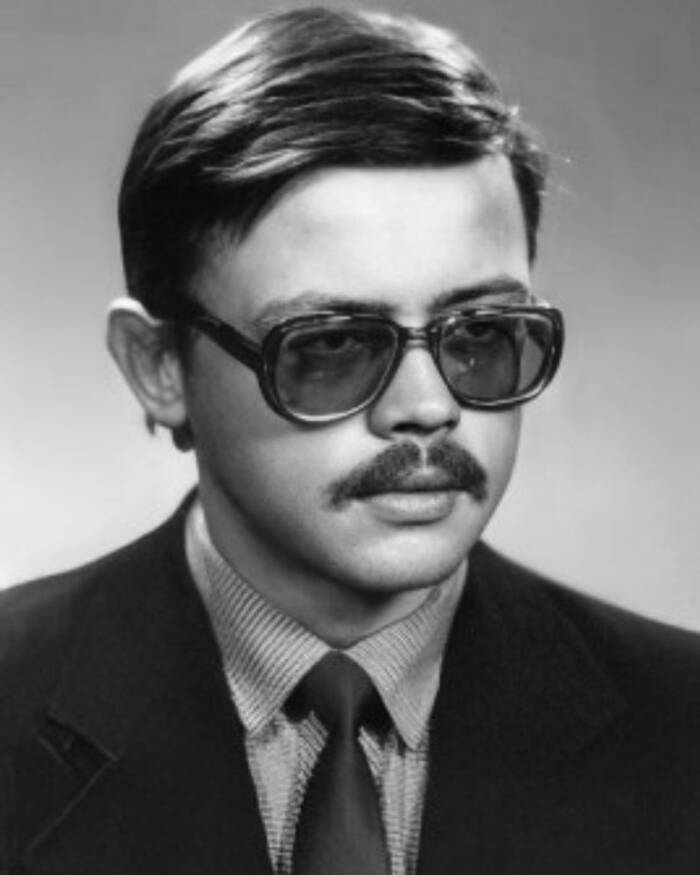
Wikimedia CommonsAleksandr Akimov, the night shift supervisor who died from radiation sickness after the Chernobyl disaster.
On April 26, 1986, a reactor exploded at the Chernobyl Nuclear Power Plant, sparking the worst nuclear disaster in world history. While thousands of deaths from cancer have been attributed to the catastrophe, around 30 plant employees and emergency responders died from radiation exposure in the immediate aftermath, including Aleksandr Akimov, a supervisor at the facility.
Akimov oversaw the night shift for Reactor Unit 4, and in the early morning hours of April 26, he and his fellow engineers were carrying out a safety test when something went wrong. The reactor stalled, and Akimov ordered an emergency shutdown. Tragically, a design flaw caused a power surge, which led to the infamous explosion.
In the hours that followed the mishap, Akimov tried desperately to mitigate the fallout, all while telling officials in Moscow that everything was fine. By dawn, however, it was clear that the situation was much worse than Akimov had initially believed — and that the radiation was already taking a toll on him.
Aleksandr Akimov died from acute radiation syndrome two weeks later. His death was reportedly the only thing that kept him from being prosecuted for the Chernobyl disaster, but a subsequent investigation determined that the reactor’s design was the main cause of the malfunction. And today, Akimov is remembered as a hero.
Aleksandr Akimov’s Role In The Chernobyl Disaster
Aleksandr Akimov was born on May 6, 1953, in the Siberian city of Novosibirsk. He went on to study at the Moscow Power Engineering Institute, graduating in 1976, and he started his career at Chernobyl Nuclear Power Plant three years later.
By 1984, he’d been promoted to shift supervisor of Reactor Unit 4. On April 25, 1986, he clocked in to oversee the night shift. A safety test was planned, and the engineers on duty were preparing to carry it out just after midnight. Anatoly Dyatlov, the plant’s deputy chief engineer, was in charge, with Akimov and reactor control engineer Leonid Toptunov present as well.
The test began at 1:23 a.m. on April 26, but while it was in progress, the reactor unexpectedly stalled. Akimov ordered Toptunov to press the emergency shutdown button, but when he did, the power surged, accelerating the nuclear reaction.
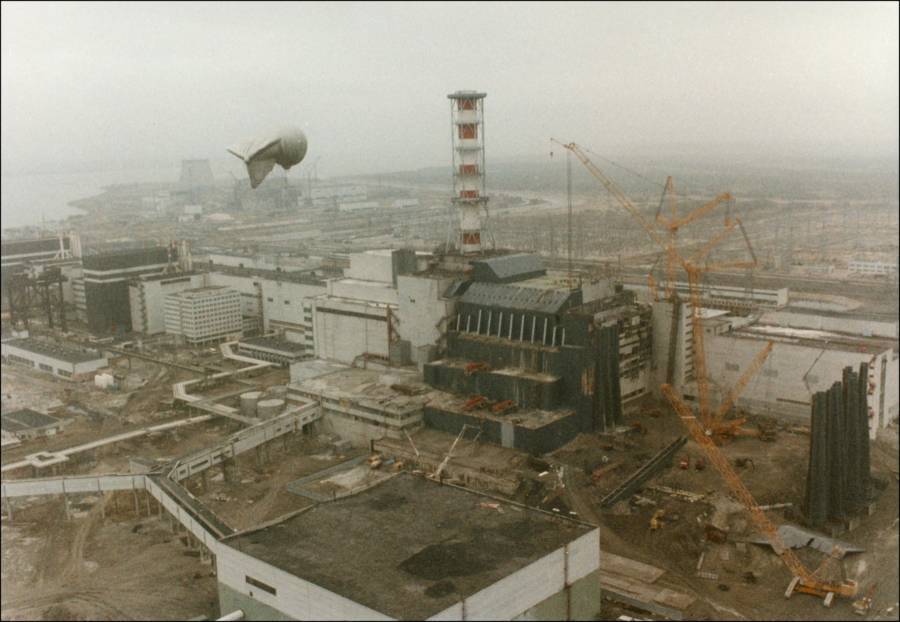
SHONE/GAMMA/Gamma-Rapho via Getty ImagesAn aerial view of Reactor Unit 4 after the explosion.
According to a 1991 report in The New York Times, Akimov’s control panel dials suddenly started glowing red. Then, there were two massive explosions.
Aleksandr Akimov sent two employees to manually lower the control rods that had stalled. When they returned, the skin on their faces had reportedly turned brown, and they told Akimov that the control rods — and much of the reactor — were gone.
However, Akimov didn’t believe them. He informed his superiors that there had been an incident, but the reactor was still intact. Viktor Bryukhanov, the director of the plant, was notified of the situation, but he in turn explained to investigators that “the radiation situation is within normal limits.”
It’s unclear why Akimov didn’t initially believe the severity of the blast — but he would soon come to realize how wrong he was.
The Immediate Aftermath Of The Explosion At Chernobyl
The first order of business was extinguishing the fires caused by the explosion before they spread to the other reactors. The responding firefighters were exposed to high levels of radiation, and many of them died in the following days and weeks, such as Vasily Ignatenko.
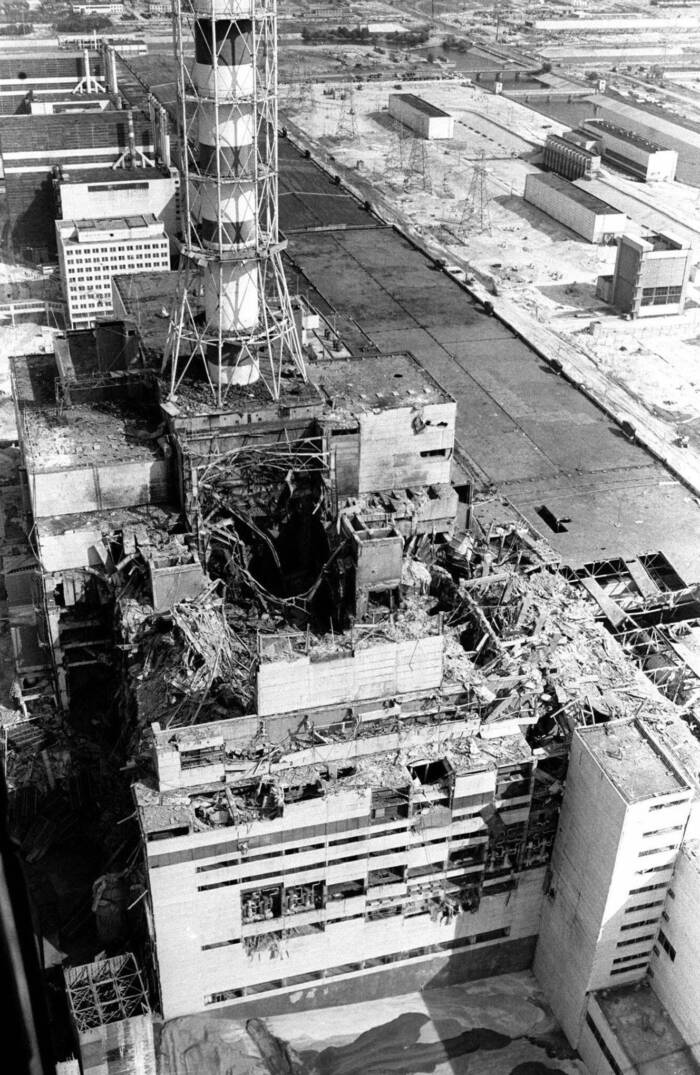
IAEA Imagebank/Wikimedia CommonsThe aftermath of the reactor explosion at Chernobyl.
Back in the control room, Akimov was slowly realizing the extent of the disaster. He knew how important it was to minimize fallout, so he and his crew started pumping water onto the exposed core to cool it. Akimov and Toptunov also spent hours manually opening water valves to increase the volume of liquid flowing to the reactor, though this proved to be futile.
By this point, several employees were already at the plant’s medical unit. Replacements were sent for Aleksandr Akimov and Leonid Toptunov, but they reportedly refused to leave their post.
In 1989, Soviet nuclear specialist Grigoriy Medvedev released Chernobyl Notebook, a documentary report that included firsthand testimony from the incident.
Alfa Fedorovna Martynova, the wife of the head of the nuclear power industry of the Communist Party of the Soviet Union’s Central Committee, recalled that “Akimov and Toptunov had already run up several times to the reactor to see the effect of the flow of water from the second emergency feedwater pump. But the fire continued to howl and howl. Akimov and Toptunov were already reddish brown from the nuclear sunburn, already nausea had upset their insides.”
“One can only bow his head in the face of their bravery and fearlessness,” Martynova continued. “After all, they condemned themselves to a certain death.”
Wikimedia CommonsLeonid Toptunov died from radiation sickness four days after Aleksandr Akimov.
By dawn, the men had no strength left. Akimov was eventually relieved by Viktor Grigoryevich Smagin. Per Chernobyl Notebook, Smagin noted that “Akimov and Toptunov, who had become puffy and had turned a deep reddish brown, spoke with difficulty. They were experiencing terrible sufferings and at the same time a feeling of bewilderment and guilt. ‘I don’t understand anything,’ Akimov was hardly able to move his swollen tongue, ‘we did everything correctly… Why?'”
Aleksandr Akimov was rushed to the hospital, first to a small facility in Pripyat and later to a larger medical center in Moscow. Within 24 hours, it was clear that he was suffering from severe radiation sickness.
The Painful Death Of Aleksandr Akimov
When Akimov’s wife visited him in the hospital the day after the disaster, she was shocked by his appearance but felt comforted that he seemed well enough to laugh with her and ask about their two young sons. As recorded in Chernobyl Notebook, she later recalled:
“I went up to the window of his ward… His face was reddish brown. When he saw me, he began to laugh, he was overexcited, he reassured me, asked me about the boys through the glass. It seemed to me that at that point he was somehow particularly glad that he had the sons. He said that I should not let them go into the street. He was even cheerful, and I felt a bit reassured.”
This reassurance wouldn’t last long, however. Akimov had been exposed to an estimated 15 to 20 Gy of radiation. A dose of just four Gy is enough to be lethal. Aleksandr Akimov didn’t have a chance.
Doctors contemplated both a bone marrow transplant and a fetal liver cell transplant, but Akimov’s condition was hopeless. He died on May 10, 1986, at age 33.
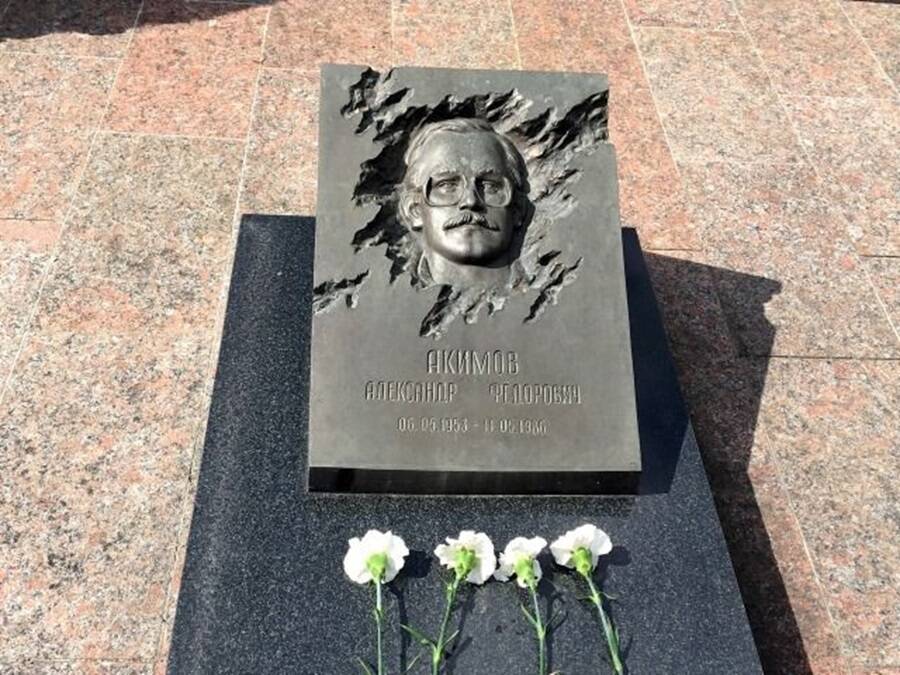
Find a GraveAleksandr Akimov’s gravestone in Moscow.
Soviet officials attempted to put much of the blame for the Chernobyl disaster on Akimov. Up until the moment of his death, prosecutors intended to charge him for his role in the incident. They claimed that Akimov and the other operators didn’t follow procedures and made poor decisions during the test that led to the reactor’s explosion.
The Chernobyl disaster has been analyzed extensively in the decades since it occurred. Countless theories have emerged about who to blame and why. However, Akimov insisted until the very end, “I did everything correctly. I do not understand why it happened that way.”
After reading about the life and death of Aleksandr Akimov, learn about these heroes who sacrificed themselves to save others. Then, see what Chernobyl looks like today.