Archaeologists excavating Celtic ruins in the town of Allonnes discovered 2,300-year-old iron shackles, as well as a religious sanctuary with coins, jewelry, and weapons laid as offerings to the gods.
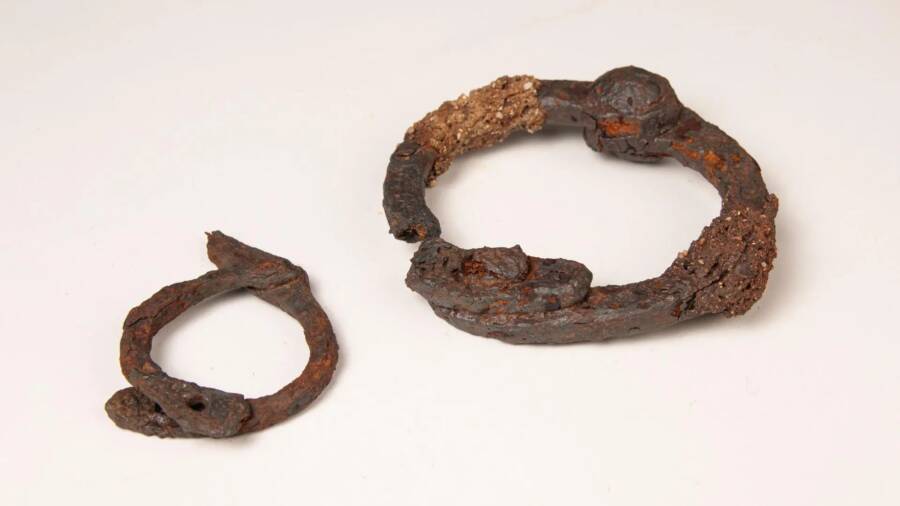
Emmanuelle Collado/INRAPResearchers believe the wrist restraint (left) was used on a woman or a child due to its small diameter.
A team of archaeologists has discovered five well-preserved, “extremely rare” iron shackles at an ancient Celtic site in northern France, alongside several weapons and assorted ritual offerings.
These finds could now shed light on what life was like for enslaved people in the region some 2,000 years ago, a little-understood subject due to the lack of historical records from pre-Roman Celtic societies.
The Iron Shackles Found Among Other Metalwork At The Celtic Ruins In Allones
Amid a two-year excavation in Allonnes, archaeologists with the French National Institute for Preventive Archaeological Research (INRAP) made the discovery of these metal goods in 2019, and have now announced the finds to the public.
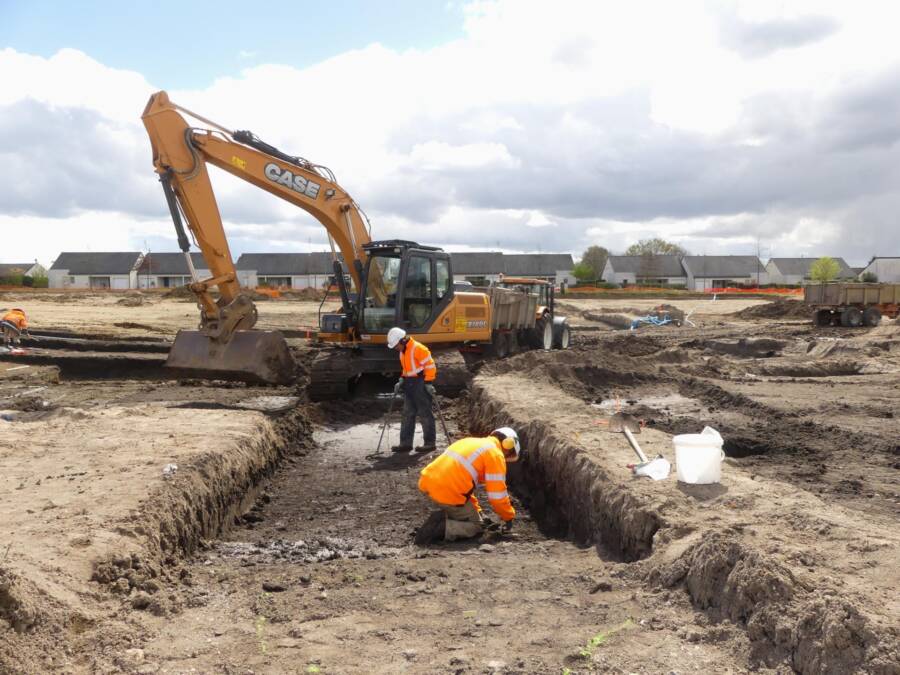
INRAPArchaeologists spent two years excavating the Celtic ruins at Allonnes.
Ancient Allonnes was a hub for artisans — including blacksmiths, coppersmiths, bronze workers and sheet-metal workers — who worked out of small outposts or shops. These sites sat at an intersection of major roads, making it an advantageous location for trade.
This settlement also had a religious complex built sometime in the third century B.C.E. where townspeople regularly made offerings to the gods, some of which were found during this dig.
The rarest finds made at Allonnes were the five iron shackles dating back 2,300 years, including a double-wrist restraint, an ankle restraint, and three other metal pieces of separate shackles.
The wrist restraint was only 2.4 inches in diameter, which suggests that it was likely made for a woman or a child. The ankle restraint weighed more than 2.2 pounds, demonstrating the literal burden that enslaved people carried thousands of years ago.
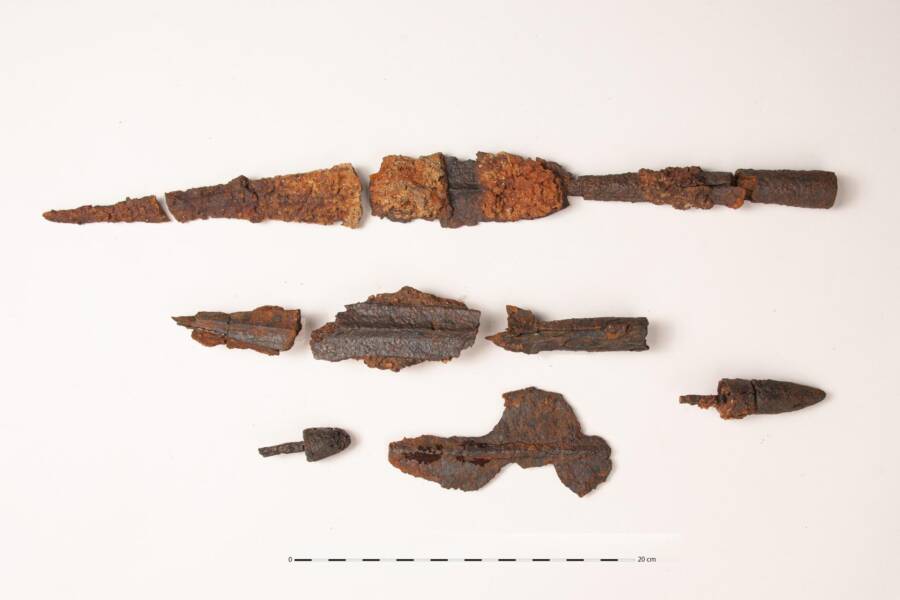
Emmanuelle Collado/INRAPIn addition to the shackles, researchers found weapons and other metal goods used as offerings to the gods.
In addition to the shackles and other metalwork, archaeologists also uncovered the site’s religious sanctuary, which they believed endured even after the Roman conquest.
The sanctuary contained offerings of rings, amulets, weapons, and clothing. Many of these offerings had been mutilated or disfigured in some way, which they determined was a custom that transformed a mundane object into a spiritual gift for the gods.
Hundreds of coins were also uncovered in Allonnes, with their mint dates ranging across five centuries and into the Roman era. About one-third of the coins had been mutilated with a file or etched with a chisel.
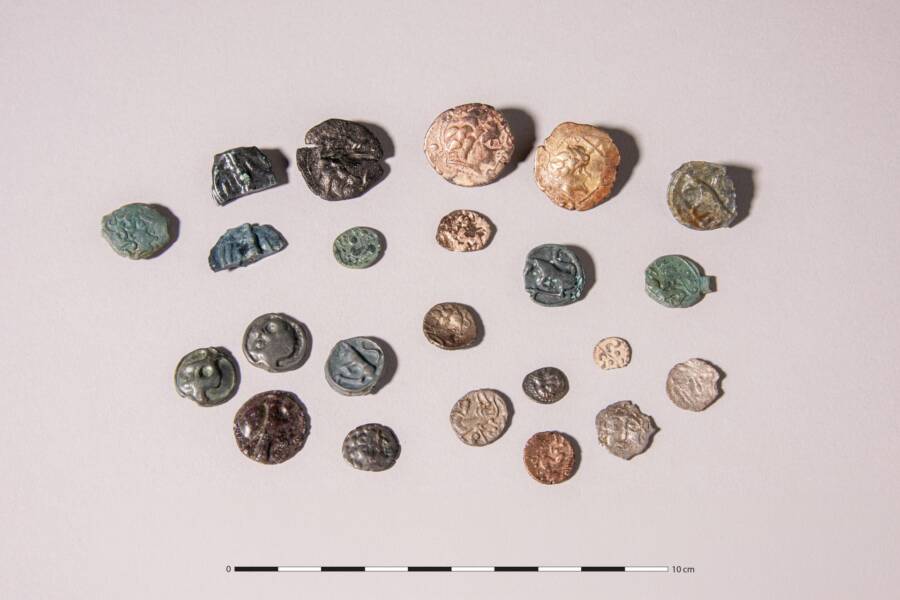
Emmanuelle Collado/INRAPThe team found that many of the coins had been inscribed, transforming these mundane objects into sacred ones.
“These mutilations reveal a ritual intention: the removal of the coin’s commercial function in order to dedicate the object to the sacred, thereby ensuring the permanence of the offering,” Isabelle Bollard-Raineau, an ancient-coin expert with the French ministry of culture, said in an interview with INRAP.
What This Discovery Reveals About The Celtic Slave Trade 2,300 Years Ago
The discovery of the shackles suggests that Allonnes, in its prime location to participate in all kinds of trade, was likely also a hub for slave trading in the Late Iron Age (around 450 to 50 B.C.E).
“The identification of restraints and weapons suggests a hierarchical social organization composed of dominant and subordinate groups—prisoners or slaves,” Thierry Lejars, a specialist in Celtic metalwork, said in an interview with INRAP.
Allonnes was occupied by the Gauls, a loose group of Celtic tribes that lived in modern-day France and some of its neighboring countries in the Iron Age. According to the statement, the Gauls might have enslaved prisoners of war, convicts, and debtors, transforming these men, women, and children into property that could be bought and sold to other owners. The enslaved people were also often forced to labor in the fields at Gallic settlements.
Because Celtic peoples did not record much of their history, the practice of slavery in pre-Roman Gaul has remained little understood. The people who lived in the lowest social classes in Gaul, including the enslaved people, are all but invisible in the historical record. The newly-found shackles will provide precious insight into the lives of these people who had been previously lost to history.
After reading about the 2,300-year-old iron shackles found in France, discover the oldest coin found in the Saxony region. Then, learn about the Druids, the ancient Celtic priests of Britain and Gaul.