The monument, which was constructed in the first century C.E. and stood along the bustling Appian Way, likely belonged to a wealthy individual who was involved in organizing gladiatorial battles.
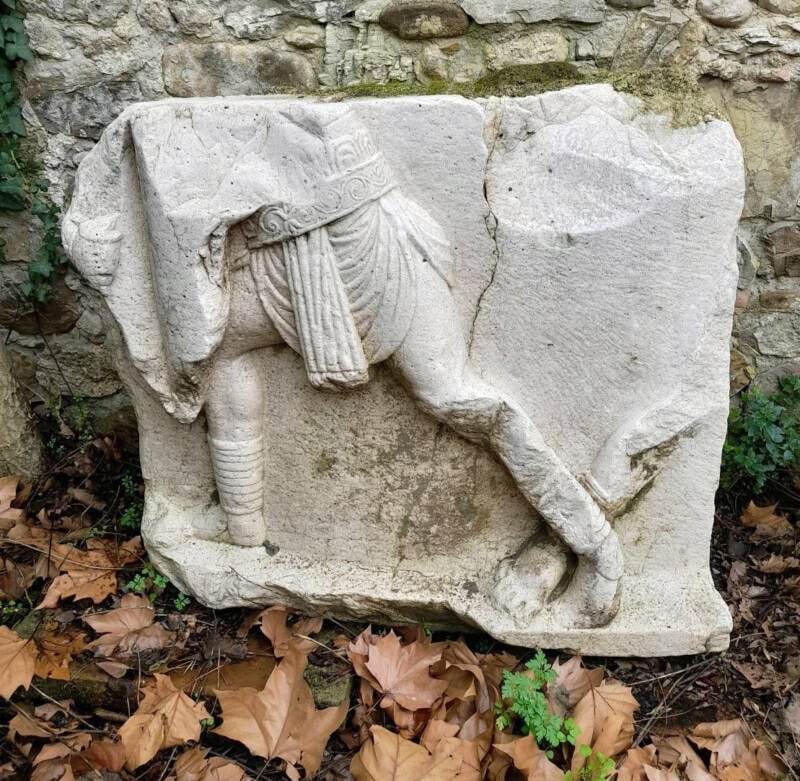
Superintendency for Archaeology, Fine Arts, and Landscape for the Provinces of Caserta and BeneventoSome of the limestone blocks pulled from the stream featured reliefs of gladiators in combat.
In 2021, the seasonal flooding of a stream in Apollosa, Italy, revealed several large, limestone blocks. A local resident reported them to the region’s Superintendency for Archaeology, Fine Arts, and Landscape, prompting archaeologists to head out and investigate. To their surprise, the stones turned out to be part of a 2,000-year-old Roman funerary monument.
Even more remarkably, the blocks featured reliefs of gladiators in combat, which was unusual for Roman tombs. Experts believe the monument was likely constructed by a wealthy elite who was involved with organizing gladiatorial games and that this structure was meant to illustrate his social status to travelers, even after his death.
The Discovery Of An Ancient Roman Funerary Monument Featuring Gladiator Reliefs
In September 2021, the Serrentella stream in the southern Italian town of Apollosa flooded its banks. When the water withdrew, it had exposed a series of limestone blocks beneath the soil. A local volunteer named Marco Zamparelli alerted the Superintendency for Archaeology, Fine Arts, and Landscape for the provinces of Caserta and Benevento. The subsequent excavation that was completed in January 2026 revealed approximately 40 blocks that once made up a Roman funerary monument.
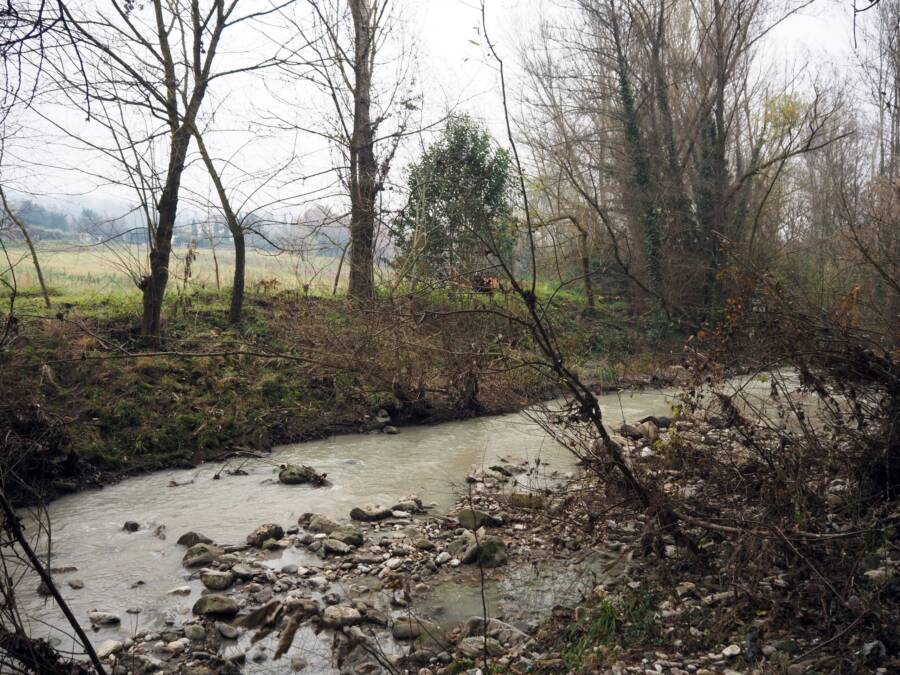
Superintendency for Archaeology, Fine Arts, and Landscape for the Provinces of Caserta and BeneventoThe Serrentella stream near Apollosa, where the ancient funerary monument was discovered.
The structure, which dates to the early first century C.E., consisted of a cylinder that was roughly 40 feet in diameter set upon a cubical base. It was constructed of elaborately decorated limestone, including a section that featured a sculpted relief of at least three gladiators in combat.
One of the figures was a Samnite gladiator, one of the earliest types of Roman gladiators who fought with weapons styled after the ancient warriors of Samnium in southern Italy. According to a statement from the Superintendency, the gladiator was “distinguishable by his curved rectangular shield, bound calves, and a belt decorated with vegetal motifs securing his loincloth.”
This type of iconography was rare on Roman tombs, and it suggests that the person who commissioned the structure may have been involved with organizing public games or worked as a lanista: an owner, manager, or trainer of gladiators. At the time, elite Romans often financed gladiatorial events to show off their wealth and gain public favor.
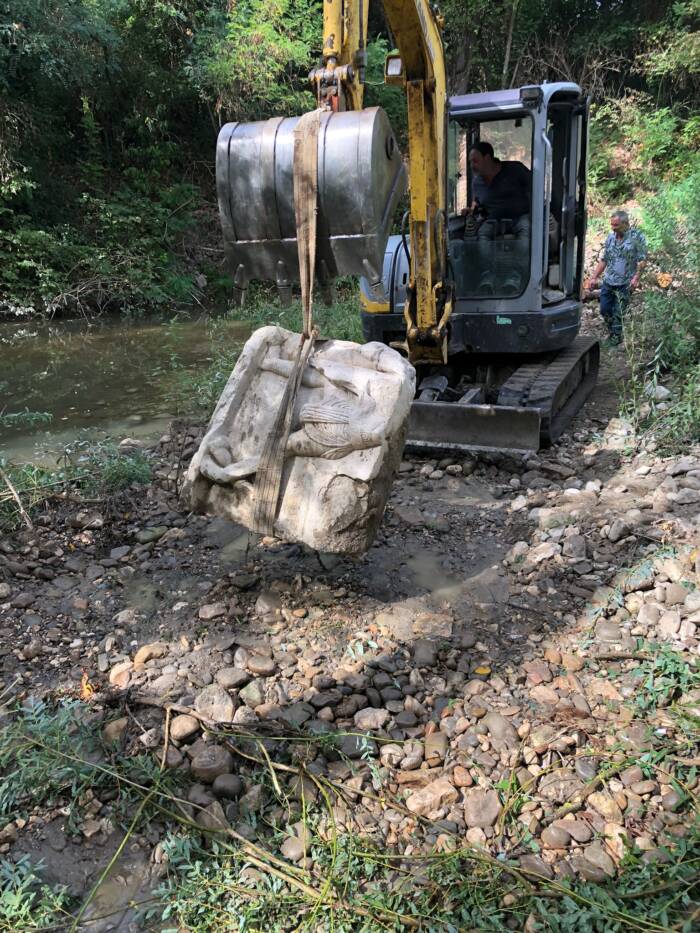
Superintendency for Archaeology, Fine Arts, and Landscape for the Provinces of Caserta and BeneventoArchaeologists found around 40 limestone blocks, and once recovered 20 in a single day.
Archaeologists also uncovered the entrance to the monument’s underground burial chamber, where they found rich frescoes covering the walls. This discovery, in addition to the monument’s location along the ancient Appian Way, is a further testament to the high social status of the tomb’s owner.
The Significance Of The Appian Way In The Ancient Roman World
The Appian Way, or Via Appia, was built starting in 312 B.C.E. As one of the first major roads of the Roman Empire, it served as a vital route for trade, travel, and military movement. It initially stretched from Rome to Capua, but it was later extended further south to Brindisi, located in the “heel” of Italy’s boot.
Roman elites often commissioned funerary monuments for themselves along this famous thoroughfare as a display of their prestige. As Superintendent Mariano Nuzzo noted in the statement, “The monument in Apollosa is not merely a significant testament to Roman funerary art, but a precious piece of the puzzle for understanding the role of the Via Appia as a cultural and symbolic infrastructure of this territory.”
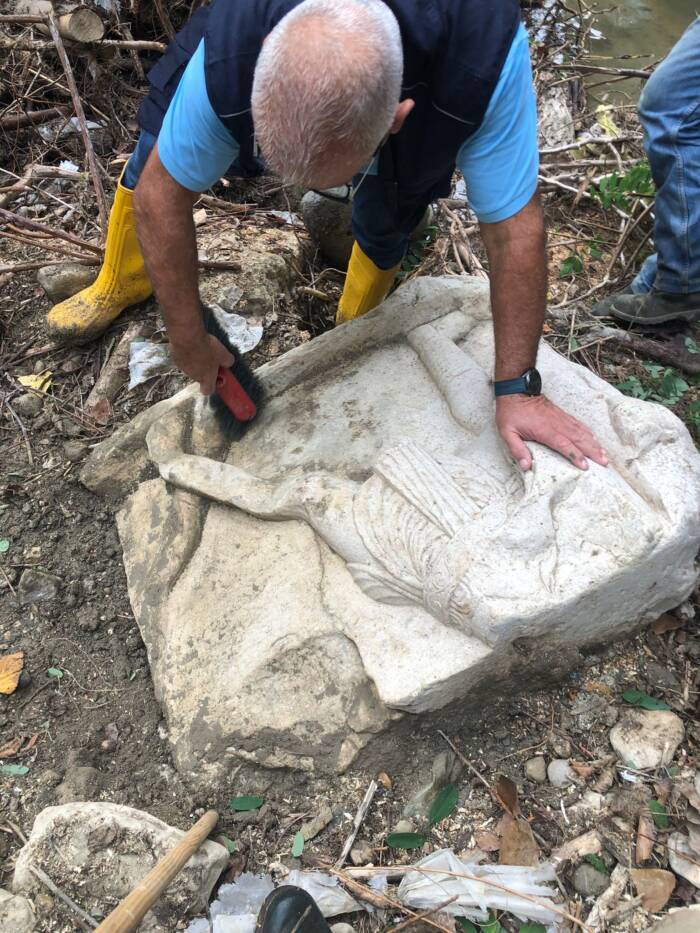
Superintendency for Archaeology, Fine Arts, and Landscape for the Provinces of Caserta and BeneventoAn archaeologist cleans dirt from one of the ancient Roman reliefs depicting battling gladiators.
Apollosa’s mayor, Danilo Parente, added, “The discovery made in Apollosa confirms the richness of the historical layering that characterizes our lands, as well as the importance of the role the Appia has played throughout the ages.”
While this ancient funerary monument was seemingly disassembled and repurposed into a retaining wall during the medieval era, it’s still revealing valuable information about the early Roman Empire and the people who lived there — from gladiators to the upper-class citizens who funded their careers — even 2,000 years later.
As the Superintendency said, “This discovery yields not only a monument but also rekindles the memory of a territory that continues, even today, to tell the grand story of the Via Appia.”
After reading about the Roman funerary monument found along the ancient Appian Way, go inside the stories of 11 famous Roman gladiators. Then, learn about nine of Rome’s worst emperors.