Measuring two feet long, these unique relics were also made of iron — even though the Iron Age wouldn't begin here for another few centuries.
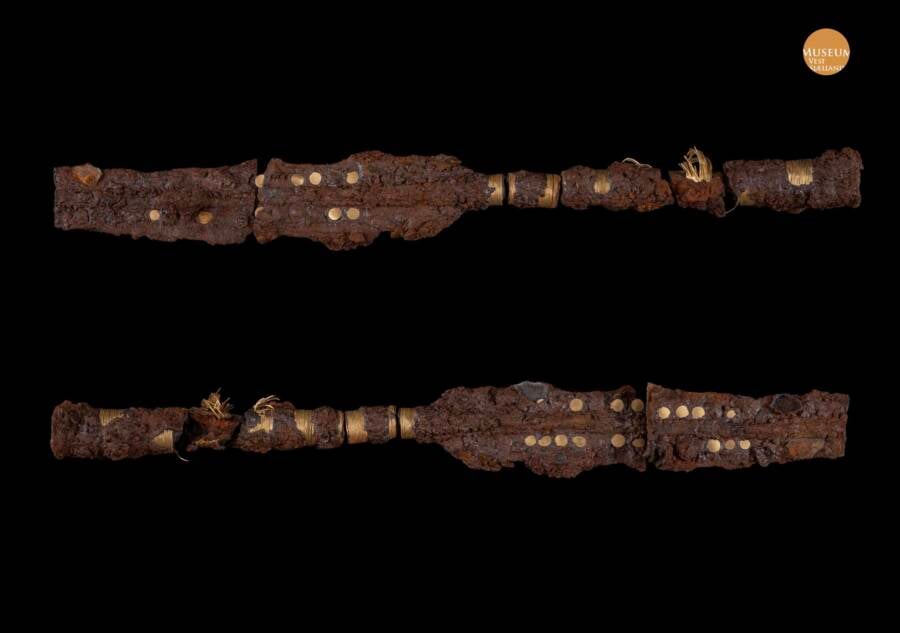
Museum VestsjællandThe pair of ancient gold-plated lances recently unearthed near Boeslunde.
Archaeologists have discovered Denmark’s earliest-known iron weapons — two gold-plated lances — at a sacred Bronze Age site near the village of Boeslunde on Zealand. This find is now offering new insights into the region’s ancient metalworking and ritual practices.
The excavation, carried out by archaeologists from Museum Vestsjælland in August 2025, initially aimed to investigate the history behind Boeslunde’s famed wealth of ancient artifacts made of gold, which includes 10 oath rings and more than 2,000 gold spirals unearthed in previous decades.
In addition to the pair of lances, researchers found a natural spring beneath where the town’s gold artifacts have been located, which may have made this area an important site for ceremonial offerings.
It was during documentation of the spring that the team identified what at first looked like just a piece of corroded metal — but proved to be part of a 2,800-year-old iron lance. Then, a second weapon was found nearby, leaving archaeologists with two lances unlike anything from this era ever found in Europe before.
The Stunning Construction Of The Ancient Lances Found In Boeslunde
“I could see immediately that it was something truly special. It felt like my head was going to explode,” museum director Lone Claudi-Hansen told TV2 East.
Radiocarbon dating of birch pitch preserved on one lance tip dated the weapons to sometime between 900 and 830 B.C.E., placing them in Bronze Age Period V and making them the oldest iron artifacts ever discovered in Denmark. Despite heavy corrosion, gold inlays remain visible along the blades and shafts. X-ray imaging of the better-preserved lance also revealed circular gold decorations, showcasing exceptional craftsmanship.
“When we started the excavation, the goal was not to find more gold, but to understand why all the gold objects were right here,” Claudi-Hansen said.
“The fact that we also came across two completely unique gold-decorated iron lances – already in the first days of the excavation – was a huge surprise. They turn out to be very early iron finds and objects that we have never seen before.”
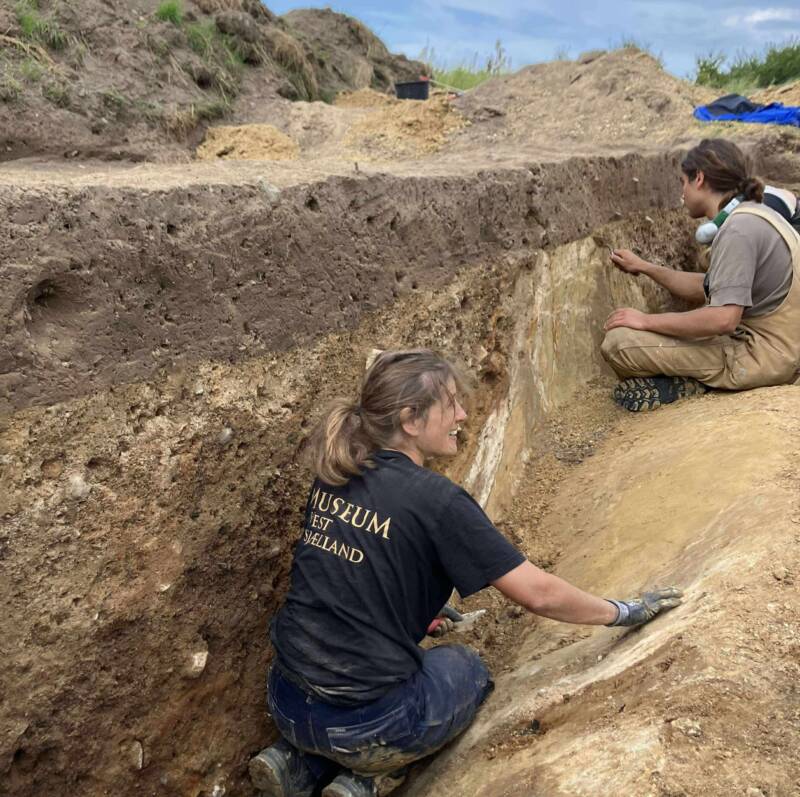
Museum VestsjællandArchaeologists from Museum Vestsjælland working at the Boeslunde site.
The combination of early ironwork with gold ornamentation is exceptionally rare in Northern Europe, with no known parallels in the region. Similar gold-plated weapons are virtually nonexistent, even in Central Europe and Greece.
What’s more, researchers now believe that they have an explanation for the high density of gold artifacts found at Boeslunde.
Boeslunde: An Ancient Ritual Site Filled With Gold Offerings
As Claudi-Hansen noted, the discovery of the spring likely explains why Boeslunde has yielded an unusually dense concentration of gold treasures dating back to antiquity. The spring, along with nearby cooking pits and gold offerings — as well as six gold bowls found at nearby Borgbjerg Banke — suggests that this area was a hub of repeated ritual activity.
Researchers believe that pieces made of precious metals were deliberately deposited in or around the water source, continuing a European tradition of ceremonial offerings at springs and wetlands.
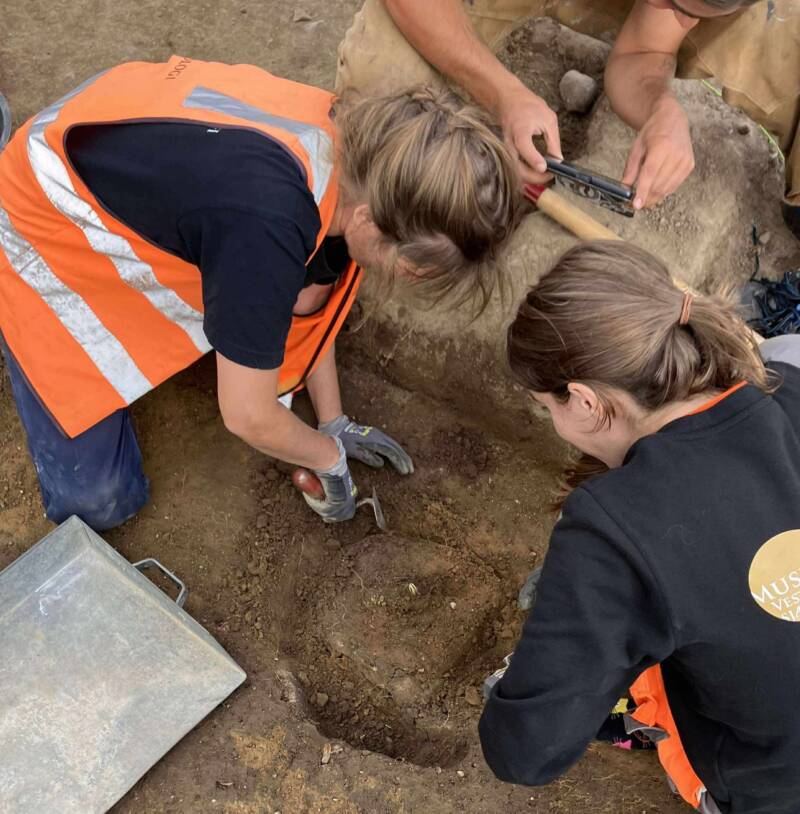
Museum VestsjællandBoeslunde was likely an important ritual site during the Bronze Age, hence the large number of gold artifacts found here in recent years.
The lances’ advanced metallurgy and decorative gold embellishments indicate Boeslunde’s significance as both a religious and economic center during the Late Bronze Age. These finds also challenge previous assumptions about the timeline of iron adoption in Denmark, suggesting sophisticated ironworking may have emerged earlier than previously thought.
With more questions to be answered, Museum Vestsjælland emphasized the site’s importance for understanding Bronze Age rituals and technological advancements. From here, further analysis of the weapons and surrounding artifacts may provide additional clues about the social and cultural practices of ancient Danish societies.
After reading about these gold-plated lances found in Denmark, check out 44 ancient artifacts that unlock the mysteries of the past. Then, explore the stories of 25 seemingly out-of-place artifacts and the truth about their origins.