1066: William The Conqueror Becomes The King Of England
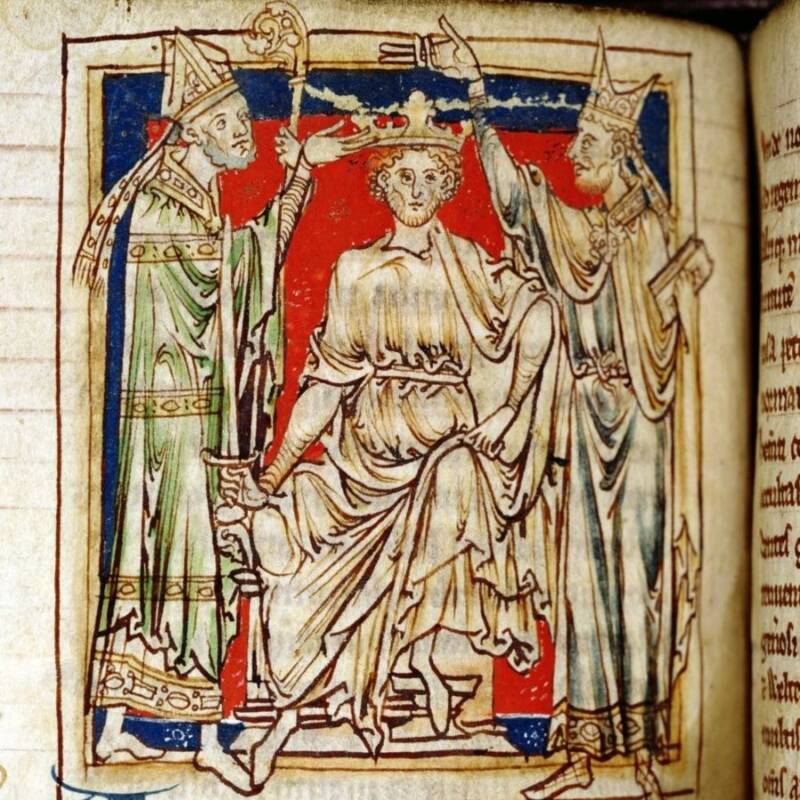
Public DomainA medieval illustration of William the Conqueror’s coronation from Matthew Paris’ 13th-century Flores Historiarum.
William the Conqueror became England’s first Norman king on Dec. 25, 1066, after invading the country and defeating the army of Harold Godwinson, the last Anglo-Saxon king.
But William wasn’t always known as the “Conqueror.” Before his successful invasion, his nickname was William the Bastard. He was the illegitimate son of Duke Robert I of Normandy, who died when William was still a child, leaving behind no legitimate heirs. William inherited his title, but not without challenges from those who wanted to seize his power.
Despite this, William proved himself a capable leader after quashing a rebellion in 1047. He unified Normandy under his ruthless command — and then he set his sights on England. Edward the Confessor, who became the king of England in 1042, had purportedly promised William the throne. But after Edward’s death in January 1066, his brother-in-law Harold Godwinson was crowned instead.
So, that September, William led his Franco-Norman army across the English Channel and set up a base in Hastings. On Oct. 14, the Battle of Hastings broke out when Harold and his men arrived to meet William’s forces.
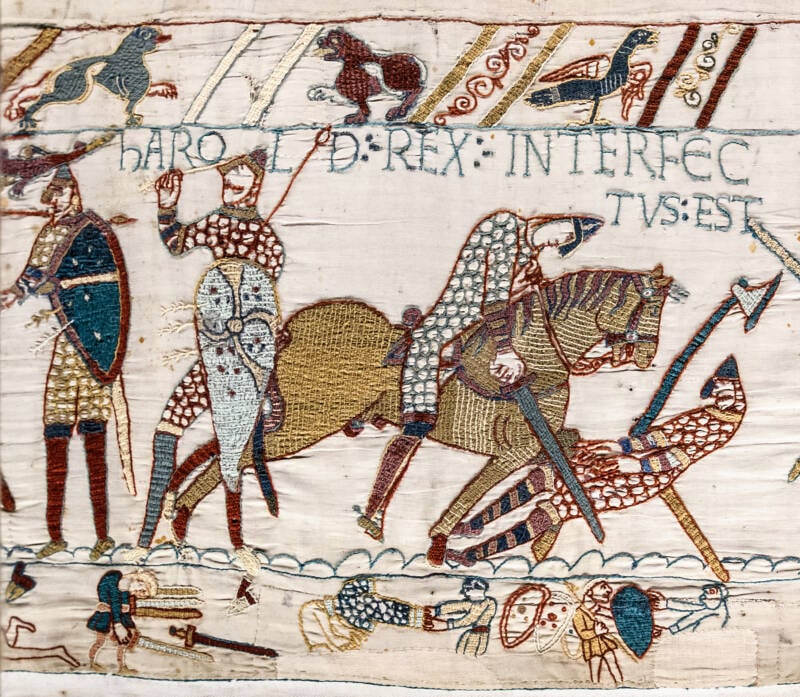
Public DomainHarold Godwinson’s death at the Battle of Hastings as depicted on the Bayeux Tapestry.
William’s army suffered heavy losses, but by the end of the day, Harold Godwinson was dead. William then marched on London, where he was crowned king at Westminster Abbey on Christmas Day.
He spent his 21-year reign putting down Anglo-Saxon rebellions, building castles, and ordering the survey of English properties that became the Domesday Book. He died in battle in 1087, and his son became King William II.