The founder of DeLorean Motor Company, John DeLorean built the famed DeLorean DMC-12 car — but things soon went downhill for him.
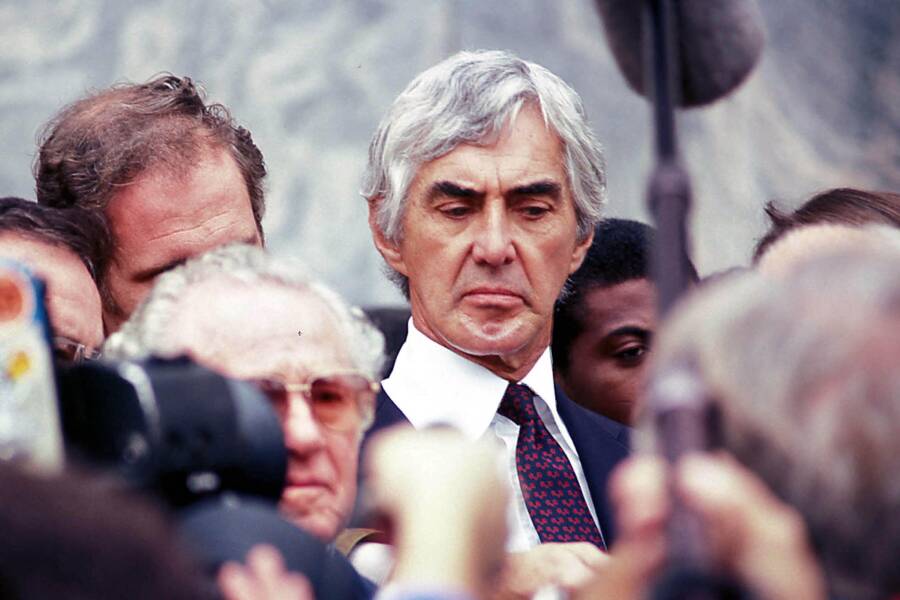
ZUMA Press, Inc./Alamy Stock PhotoJohn DeLorean, the creator of the famous car from Back to the Future.
Despite being the most iconic car of the 1980s, John DeLorean’s best-known automobile was a failure in many ways. The DeLorean DMC-12, made famous by the movie Back to the Future, was littered with production issues. It was also far too expensive for most potential buyers to afford — a staggering $25,000 at a time when the average car cost about $10,000. But the car’s failure was the least of John DeLorean’s worries.
DeLorean had risen through the ranks at General Motors before leaving to start his own automobile company. He was a force of personality who felt constrained by the buttoned-up, corporate culture of General Motors. DeLorean didn’t just want to make cars; he wanted to fashion himself into a sort of celebrity in the auto industry. Unfortunately for him, by putting himself in the spotlight, he also put a massive target on his back, especially when his company began to face severe financial troubles.
In 1982, DeLorean’s former neighbor James Hoffman called DeLorean to suggest a lucrative deal that could potentially ease some of his financial woes: bankrolling a cocaine smuggling operation.
DeLorean fatefully agreed to meet with Hoffman, unaware that Hoffman was working as an FBI informant to reduce his own sentence for drug trafficking. Hoffman had known that DeLorean was desperate for money, and Hoffman was apparently eager to use that desperation to his own benefit. Now, DeLorean, who had no prior criminal record, faced his own cocaine trafficking charges — and his public image would never recover.
John DeLorean’s Early Life And Education
John Zachary DeLorean was born on Jan. 6, 1925, in Detroit, Michigan, to Zachary and Kathryn DeLorean. His father, a Romanian immigrant, worked at the Ford Motor Co. plant as a foundry worker and a union organizer. His mother, a Hungarian immigrant, helped assemble tools at General Electric.
According to DeLorean’s autobiography — which he wrote with Ted Schwarz — he often spent time at his aunt’s house in Los Angeles while he was growing up. John DeLorean’s father was reportedly an abusive alcoholic, and his mother was eager to spend time away from him. His parents eventually divorced, and from there, he saw little of his father.
“We were poor,” John’s younger brother Chuck told Forbes in 2011. “We barely had a pot to urinate in. I’m about three and he’s about four and a half wearing clothes that my mother made out of sacks to carry beans.”

Wikimedia CommonsJohn DeLorean, pictured while in high school in 1941.
But without the language barrier that prevented his father from pursuing higher roles, John DeLorean seemed poised for much greater success.
An excellent student, he attended Cass Technical High School and later earned a scholarship at Lawrence Institute of Technology, located outside of Detroit. He was drafted to serve during World War II, and was later honorably discharged in 1946. After that, he earned undergraduate and graduate degrees from Lawrence and the Chrysler Institute.
Though DeLorean briefly sold life insurance, he soon found work as an engineer at Packard Motor Car Co., which later merged with Studebaker. From there, DeLorean moved on to General Motors, where he truly came into his own.
From General Motors To The DeLorean Motor Company
John DeLorean shined at General Motors, though he didn’t always fit in with the corporate culture there. His time spent in Los Angeles had apparently influenced him in several ways, it turned out.
DeLorean wasn’t content wearing buttoned-up shirts or letting his hair gray. Standing 6’4″, he dyed his hair jet black and wore unbuttoned shirts, standing out among his colleagues. He also mingled with Hollywood royalty, eventually dating women like Tina Sinatra, Raquel Welch, and Ursula Andress.
This lack of convention in the corporate world showed in his work. One of DeLorean’s greatest achievements at General Motors was creating what many consider the first “muscle car,” the Pontiac GTO, in 1964.
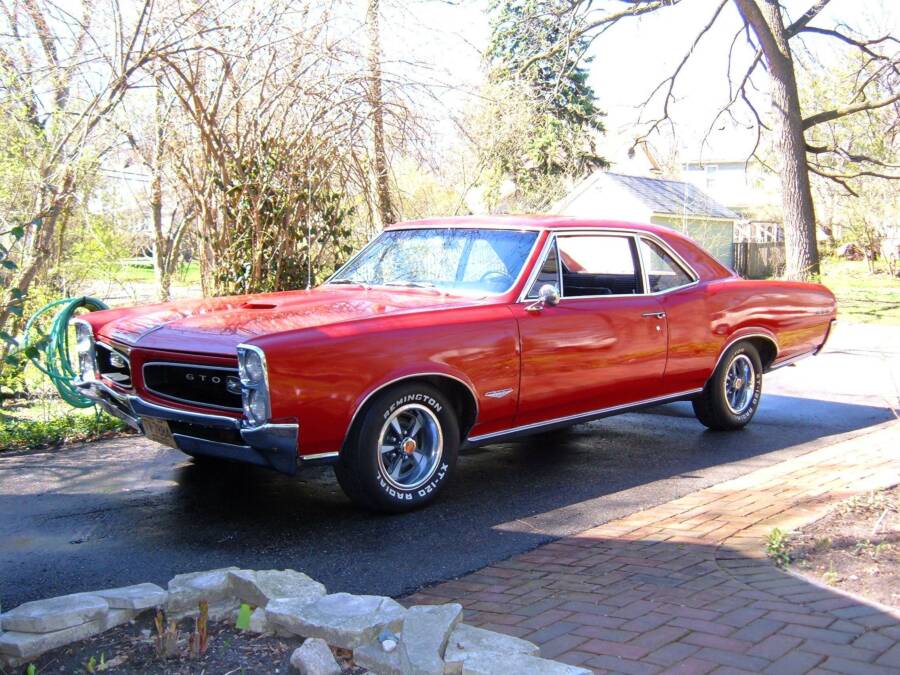
Wikimedia CommonsThe Pontiac GTO, John DeLorean’s claim to fame at General Motors.
By 1973, John DeLorean had worked his way up to vice president of General Motors, and it was widely assumed he would eventually become the company’s president. But then, DeLorean made a shocking move: He left General Motors to start his own DeLorean Motor Company.
“I had always had fantasies about what I would do if I could start my own company to design and build my ideal personal car,” DeLorean later reflected in his autobiography. “Over the years I had sketched ideas on paper, then discarded them… Yet I never had the time, the money, or the opportunity to do anything other than dream. Suddenly there was nothing stopping me from becoming a glorified backyard tinkerer.”
Even more shocking was that he wanted to produce cars not in Detroit — famously nicknamed the “Motor City” — but in Northern Ireland.
It wasn’t DeLorean’s original plan, but he learned that he could obtain hefty financial support from the British government if he worked in certain “economically depressed” areas. He decided to capitalize on the opportunity, but unfortunately for him, the risk didn’t pay off in the end.
The Stunning Failure Of The DeLorean DMC-12
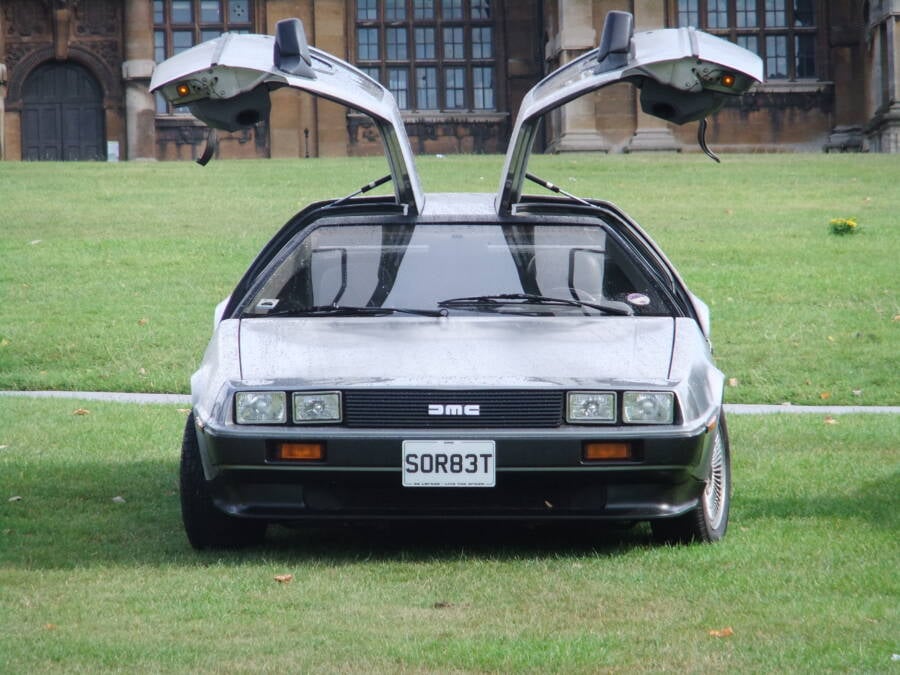
Wikimedia CommonsThe famous DeLorean DMC-12.
For the people of Northern Ireland, the DeLorean factory seemed like a godsend. Disruptive religious and political upheaval in the area had left many of the people destitute and desperate, but the economic possibilities that John DeLorean’s factory presented offered some hope.
“Hope for a renewed chance at self-respect through meaningful work with a future,” DeLorean later wrote. “Hope for a payroll, without regard for religious or political affiliations, that could help clothe and feed their children and create a demand for other businesses. The people of Belfast wanted us to succeed and worked hard toward that end.”
But because Northern Ireland was widely seen as dangerous, it was difficult to find experts from outside of the area who were willing to work there. He faced similar issues when trying to find suppliers — and this made the endeavor increasingly expensive. However, he still managed to open the plant.

Universal PicturesThe DeLorean DMC-12 car became iconic after it was featured as a time machine in the 1985 movie Back to the Future.
The first DeLorean motor vehicles came off the assembly line in 1981, though not ones that the company expected to sell. These first models, mostly unfinished, were effectively training tools for their engineers. Still, to some people, they were a sign that DeLorean was about to see massive success.
So, excitement grew around the new car. The company received thousands of orders from interested buyers — but not enough orders to justify the money they had already spent. John DeLorean wanted to produce 14,700 cars a year, which many of his critics considered unrealistic.
“What they do not realize, or choose to overlook,” he later wrote, “is that our production increases were far less than our orders and that our plant and organization could not have survived at 7,000 cars a year… What no one has said, but what I can say now in retrospect, is that we should never have gone into production at all!”
Despite all the fanfare around the car, there weren’t enough willing buyers, and the company began to struggle greatly. It’s not hard to see why, though. As Time notes, for the holiday season of 1980, the American Express catalog had been advertising a 24-karat gold-plated DeLorean for $85,000 — but as ridiculous as that was, a standard DeLorean car was still selling for around $25,000, back when the average vehicle cost $10,000.
DeLoreans were expensive cars, there was no doubt about that, turning off potential customers who wanted to save their money. But their creator’s personal troubles ultimately sealed their fate.
John DeLorean’s Cocaine Trafficking Charges — And Further Legal Troubles
By 1982, the DeLorean Motor Company was in serious trouble. Production delays, poor sales, and disappointed reviews from critics (who were expecting a lot more power from the car’s engine), left John DeLorean in a desperate place as he fervently tried to save his company. And unbeknownst to him, he was about to be arrested during an FBI sting operation.
In October 1982, a covert FBI video camera captured DeLorean looking over a suitcase full of cocaine in a Los Angeles hotel room and declaring that it was “better than gold.” He was soon arrested and accused of smuggling about $24 million worth of cocaine in order to save his failing car company.
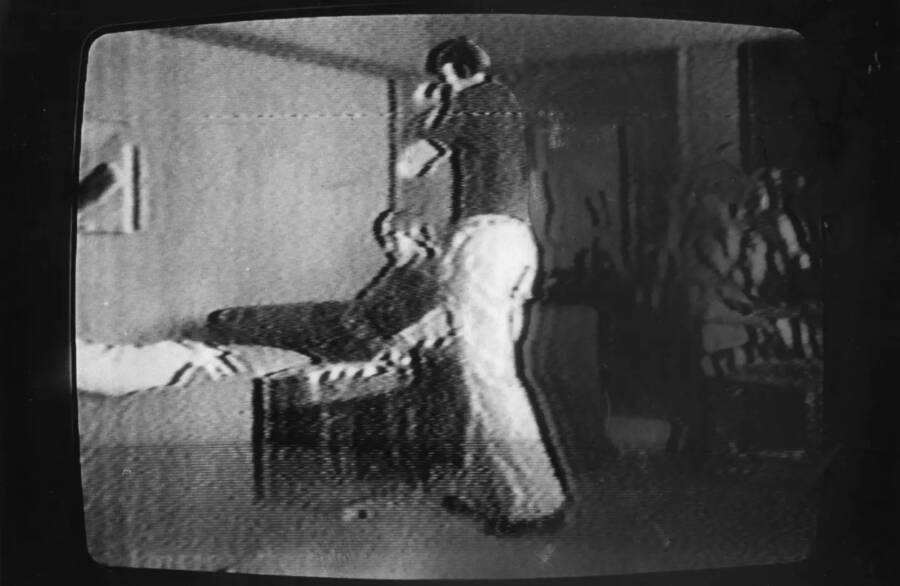
FBIThe video that captured John DeLorean with the suitcase full of cocaine.
It was all thanks to a man named James Hoffman.
“I’m going to get John DeLorean for you guys,” Hoffman had told DEA agents, according to the Los Angeles Times. “The problems he’s got, I can get him to do anything I want.”
Hoffman had once been DeLorean’s neighbor, and though the two men hadn’t seen each other in quite some time, Hoffman reached out to offer DeLorean what appeared to be a golden opportunity to right his financial situation. At the time, Hoffman was secretly working as an FBI informant to reduce his own sentence for drug trafficking, and he was apparently primed to take advantage of DeLorean’s troubles with his car company. This eventually led to DeLorean finding himself in a hotel room with a suitcase full of cocaine.
“When Hoffman and I met for the first time in the Main Brace bar, he had forced me into the dark booth because there was a hidden microphone installed there to pick up our conversation,” DeLorean later wrote. “I am convinced the tape recording made of that session has never been made public because it would prove my innocence. According to investigators, this was also the story around the Department of Justice.”
Unsurprisingly, the trial was a media circus. John DeLorean’s defense team, led by Howard Weitzman, did not deny DeLorean’s presence in the hotel room. Instead, they argued entrapment. They painted a picture of a desperate man preyed upon by overzealous federal agents and an informant who purportedly threatened DeLorean’s loved ones to ensure the deal went through.
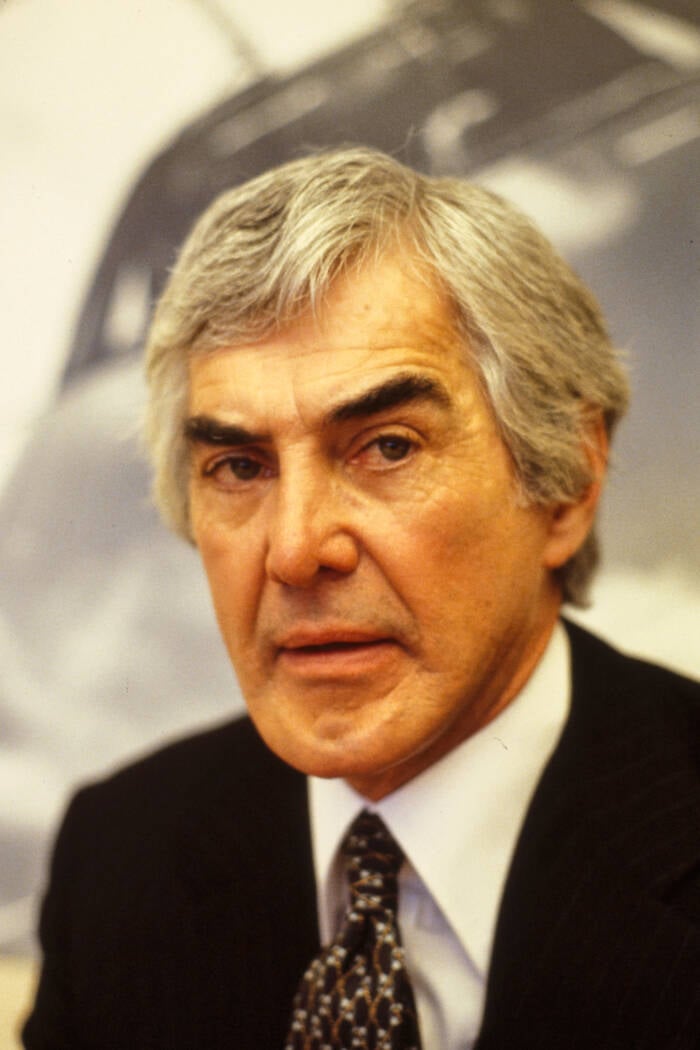
Wikimedia CommonsJohn DeLorean was labeled an “arrogant, amoral hipster” who had “one of the most warped views of right and wrong.”
Fortunately for DeLorean, the strategy worked.
On Aug. 16, 1984, DeLorean was acquitted on all counts, but the verdict was a hollow victory. The scandal had severely damaged DeLorean’s reputation, scaring off potential investors, and his company had already been declared bankrupt by that point. Production of his cars had also ceased.
DeLorean walked free, but his reputation was totaled. Shortly after he was acquitted of cocaine trafficking, he was asked if he would return to the auto industry, and he famously replied, “Would you buy a used car from me?”
Despite the success of the 1985 movie Back to the Future, which featured DeLorean’s car as a time machine, John DeLorean himself never recovered. In fact, DeLorean was soon back in court due to his questionable handling of company money. He was acquitted again by 1986, but this did little to help his reputation and public image.
Though DeLorean tried numerous times to bounce back, nothing ever seemed to come to fruition. When he died at the age of 80 in Summit, New Jersey, on March 19, 2005, following complications from a stroke, few people who knew him spoke positively about him and his legacy.
Ironically, his car remains a pop culture phenomenon to this day, and its relative rarity is part of its appeal. Since only about 9,000 DeLorean cars were produced before John DeLorean’s company went under, the vehicle is considered a valuable collector’s item today, and it’s been estimated that a fully restored film car replica could sell for $106,000.
After reading about the life of John DeLorean, explore the rise and fall of fashion pioneer John Casablancas. Then, read the wild story of Jordan Belfort, the real “Wolf of Wall Street.”