1991: The Resignation Of Mikhail Gorbachev
The Soviet Union was formed by Vladimir Lenin and the Bolshevik Party in 1922, but by the early 1990s, economic and political troubles had led several countries to declare independence. And Dec. 25, 1991, brought the final blow to the U.S.S.R.: the resignation of Mikhail Gorbachev.
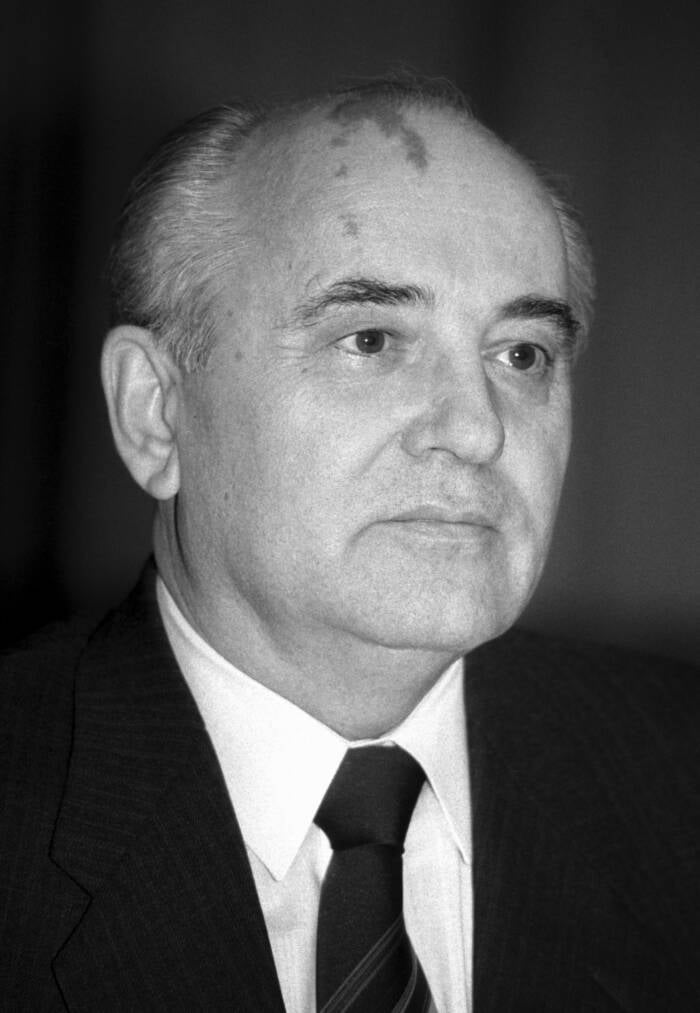
Leo Medvedev/Wikimedia CommonsMikhail Gorbachev in October 1991, two months before his resignation as president of the Soviet Union.
Gorbachev had taken power as the general secretary of the Communist Party in 1985 and president of the Soviet Union in March 1990. Under his rule, the economy had continued to decline, despite his reforms that were meant to revitalize the nation.
A coup in August 1991 attempted to overthrow Gorbachev, but he survived and remained determined to keep the Soviet Union together. But by December, it was a hopeless cause. On Dec. 21, 11 of the 12 remaining republics in the U.S.S.R. declared the dissolution of the Soviet Union and instead established the Commonwealth of Independent States.
So, on Christmas Day 1991, Gorbachev had no choice but to announce his resignation as the president of the Soviet Union. He began his speech, “Dear fellow countrymen, compatriots. Due to the situation which has evolved as a result of the formation of the Commonwealth of Independent States, I hereby discontinue my activities at the post of President of the U.S.S.R.” At the end, Gorbachev noted:
“I would like, from the bottom of my heart, to thank everyone who has stood by me throughout these years, working for the righteous and good cause. Of course, there were mistakes made that could have been avoided, and many of the things that we did could have been done better. But I am positive that sooner or later, some day our common efforts will bear fruit and our nations will live in a prosperous, democratic society. I wish everyone all the best.”
And with that, after 70 years, the Soviet Union had officially come to an end.