From 1956 to 1971, the FBI went to extreme lengths to discredit "subversive" political movements, from communists and civil rights groups to anti-war protesters and feminist organizations.
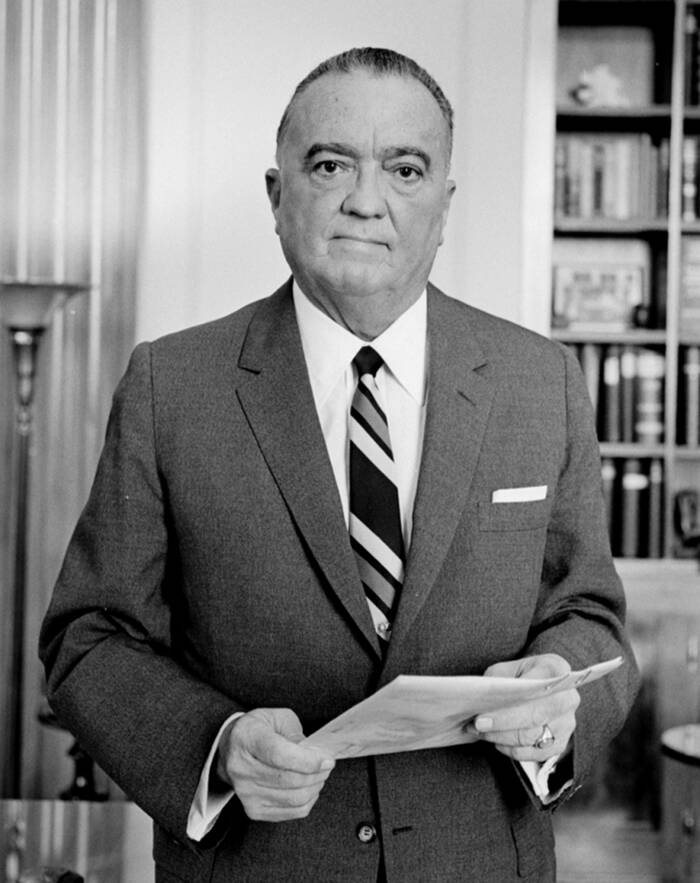
Public DomainCOINTELPRO began under the leadership of FBI director J. Edgar Hoover.
In 1956, the FBI launched a new counterintelligence program known as COINTELPRO. It was initially meant to keep an eye on the Communist Party in the United States — but it soon transformed into something much more sinister.
By the 1960s, FBI agents were working to discredit civil rights leaders, anti-war protesters, feminist organizations, and any other group they deemed “subversive.” And some of their tactics were anything but legal.
From bugging Martin Luther King Jr.’s hotel rooms to allegedly playing a role in the assassination of Black Panthers chairman Fred Hampton, COINTELPRO went to great lengths to neutralize any threat to America’s status quo.
Then, in 1971, burglars stole secret dossiers from an FBI field office and handed them over to the media. FBI director J. Edgar Hoover was forced to announce the termination of COINTELPRO — but did the program really ever come to an end?
The Origins Of The FBI’s Fight Against Communism
In the 1950s, the United States was in the midst of the Red Scare, a period of anti-Communist hysteria driven by the Cold War. Citizens and public officials alike were paranoid that Communism was taking hold in the U.S., and government agencies worked ceaselessly to eliminate any hint of the ideology on American soil.
In 1947, President Harry Truman signed an executive order requiring federal employees to be screened for any ties to “totalitarian, fascist, communist or subversive” organizations. Three years later, Senator Joseph McCarthy alleged that Soviet spies and sympathizers had infiltrated government institutions, colleges, and the media.
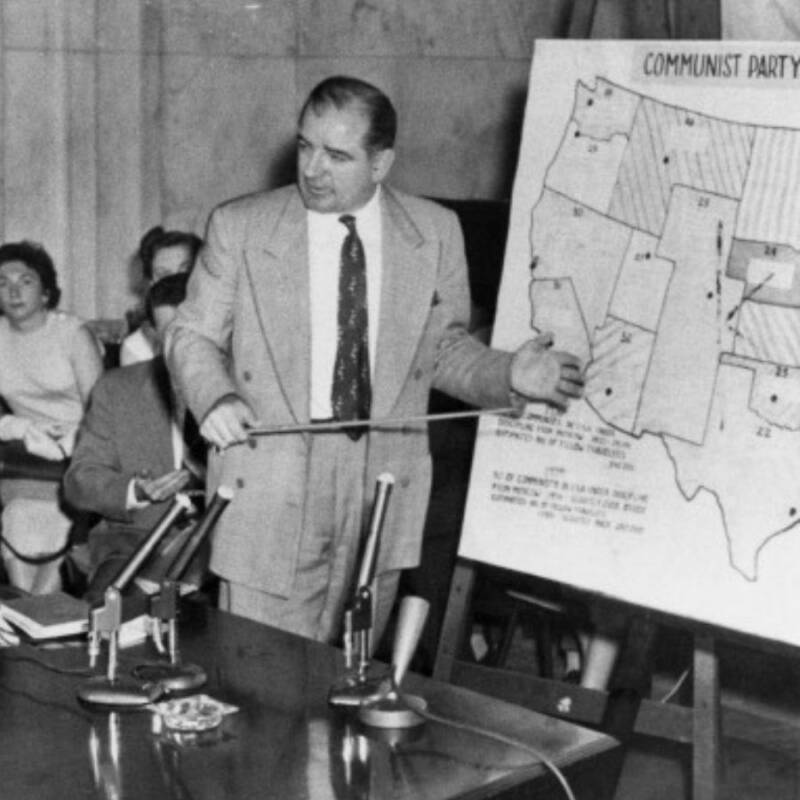
Public DomainJoseph McCarthy during the Army-McCarthy Hearings of 1954.
The term “McCarthyism” even emerged to describe the senator’s aggressive investigations of anyone believed to have ties to Communism. The Red Scare lost steam when it became clear that many of McCarthy’s accusations were unsubstantiated, but the FBI continued to closely monitor any Communist sentiments within the nation.
In 1956, the agency launched COINTELPRO, a surveillance program meant to undermine any Communist organizations. But within a few years, the FBI agents were doing much more than monitoring suspected radicals — they were actively trying to discredit anyone who questioned the status quo.
The Covert Tactics Of COINTELPRO
COINTELPRO mostly targeted left-leaning activist groups, from feminist clubs, Vietnam War protesters, and civil rights organizations to the American Indian Movement, United Farm Workers, and Students for a Democratic Society. The program also worked to dismantle the Ku Klux Klan.
Agents used a wide range of covert tactics to infiltrate, disrupt, and defame these groups. They sent anonymous letters to the KKK accusing various members of being FBI informants, sowing suspicion and discord within the organization.
They tried to break up Students for a Democratic Society by creating flyers making fun of the activists. They then distributed these papers across college campuses in the name of a fictitious right-wing group.
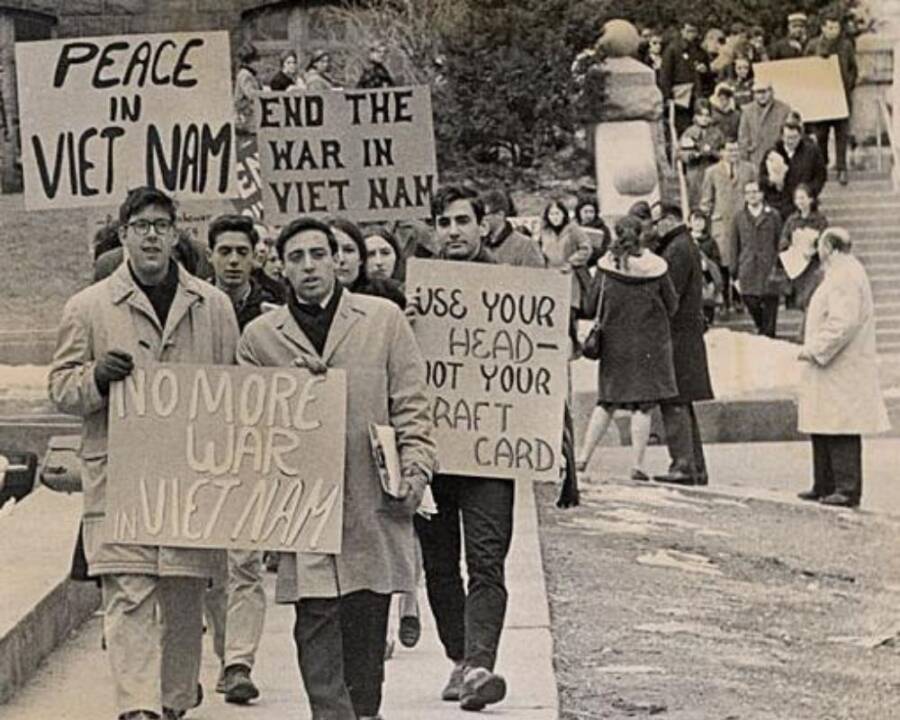
UW Digital CollectionsStudents at the University of Wisconsin-Madison protesting the Vietnam War in 1965.
In 1961, agents recruited sex workers to set a trap for the leader of a pro-Fidel Castro group, hoping he would take the bait and thus give the authorities a reason to arrest him.
The FBI’s main objective was to discredit political dissidents in a way that appeared to be organic. For instance, by planting false reports in the media, they stoked fear in the general public about the groups or individuals they were targeting.
These COINTELPRO tactics were perhaps most apparent when it came to the civil rights movement.
How COINTELPRO Targeted Martin Luther King Jr.
During the 1960s, the FBI honed in on Martin Luther King Jr. as the civil rights movement gained support across the nation. After King’s famous “I Have a Dream” speech at the March on Washington in August 1963, William C. Sullivan — the assistant director of the FBI who headed COINTELPRO — wrote a scathing memo to fellow agent Alan H. Belmont.
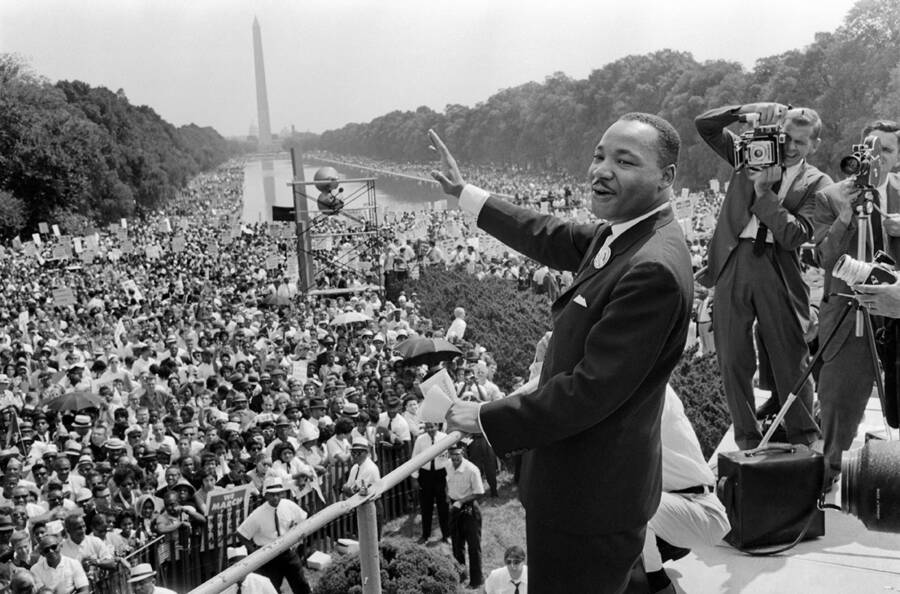
Public DomainMartin Luther King Jr. delivering his “I Have a Dream” speech in 1963.
In the letter, Sullivan stated: “Personally, I believe in the light of King’s powerful demagogic speech yesterday he stands head and shoulders over all other Negro leaders put together when it comes to influencing great masses of Negroes. We must mark him now, if we have not done so before, as the most dangerous Negro of the future in this Nation from the standpoint of communism, the Negro and national security.”
Two months later, U.S. Attorney General Robert F. Kennedy authorized the FBI to wiretap King’s hotel rooms. The agency gathered evidence of King’s extramarital affairs and held the tapes to use against him when the time was right.
That time came in November 1964, just after King was awarded the Nobel Peace Prize. As reporter and author Tim Weiner told NPR in 2012, the civil rights leader received a package that included the tapes and a chilling letter.
“[I]t wasn’t from anyone in particular, but Martin Luther King and his wife would certainly know the source of the tapes, that it had to be the FBI,” said Weiner. The letter read: “The American public… will know you for what you are — an evil, abnormal beast. So will others who have backed you. You are done. King, there is only one thing left for you to do. You know what it is.”
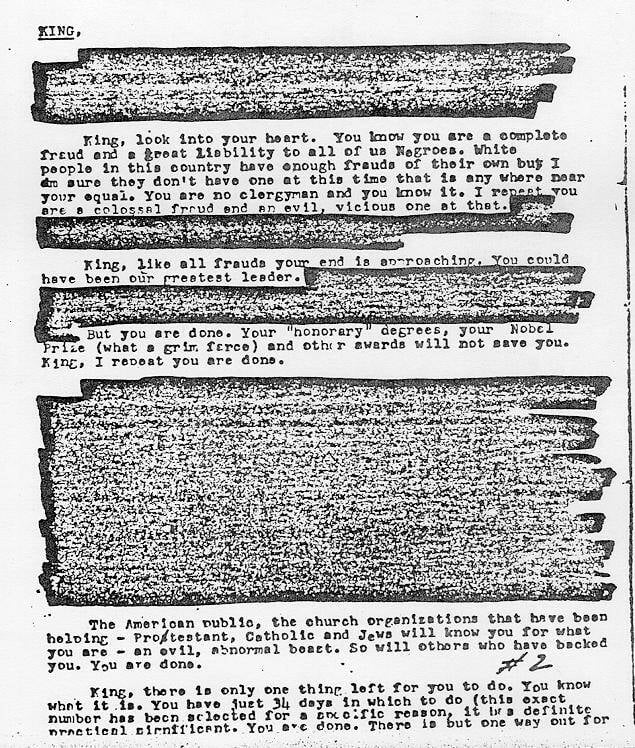
FBIA redacted version of the letter the FBI purportedly sent to Martin Luther King Jr.
After King’s assassination in 1968, COINTELPRO agents turned their attention to Fred Hampton, an activist and the deputy chairman of the Black Panther Party.
The FBI was determined to ensure that the Black Panthers didn’t gain any political power, so they used their previous covert — and sometimes illegal — tactics to take down the organization’s leadership. On Dec. 4, 1969, Chicago police stormed Hampton’s home with a search warrant for illegal weapons.
The officers claimed that violent Black Panthers inside Hampton’s residence started shooting at them, so they fired back in self-defense, striking Hampton and leading to his death. However, it was later revealed that just one shot came from the Black Panthers, while more than 90 were fired by the police.
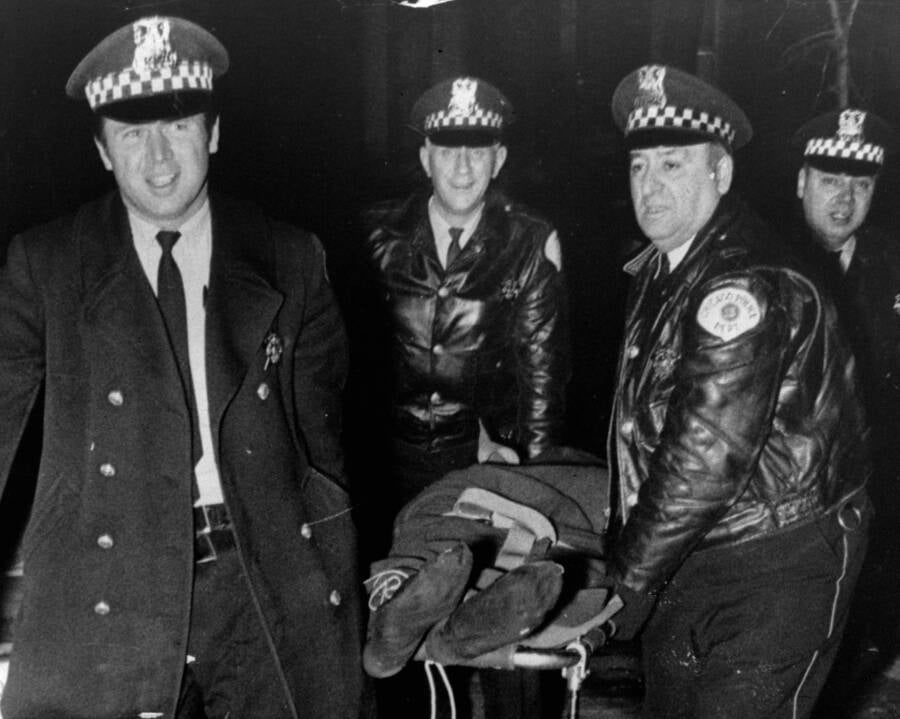
Public DomainPolice remove the body of Fred Hampton from his Chicago apartment.
It was also revealed that COINTELPRO almost certainly played a role in Hampton’s death — and it may have even been an assassination organized by the FBI itself. But this information didn’t come to light until 1971, when burglars broke into an FBI field office and found it for themselves.
The End Of COINTELPRO
On March 8, 1971, members of the Citizens’ Commission to Investigate the FBI sneaked into an office in Media, Pennsylvania, and stole top-secret dossiers related to COINTELPRO. They then handed over the information to media outlets.
The Washington Post confirmed their authenticity and then published them on the front page so the general public could see that their own government was violating their right to free speech.

Public DomainThe FBI field office in Media, Pennsylvania, where burglars found COINTELPRO documents.
Indeed, a 1976 report on COINTELPRO by the U.S. Senate’s Select Committee to Study Government Operations found: “The acts taken interfered with the First Amendment rights of citizens. They were explicitly intended to deter citizens from joining groups, ‘neutralize’ those who were already members, and prevent or inhibit the expression of ideas.”
The FBI had been caught red-handed, and J. Edgar Hoover ordered the termination of COINTELPRO shortly after. But did the program ever really come to an end? The same Senate Committee wasn’t so sure.
In the final pages of their report, they wrote:
“If COINTELPRO had been a short-lived aberration, the thorny problems of motivation, techniques, and control presented might be safely relegated to history. However, COINTELPRO existed for years on an ‘ad hoc’ basis before the formal programs were instituted, and more significantly, COINTELPRO-type activities may continue today under the rubric of ‘investigation.'”
More than 50 years later, concerns about the violation of citizens’ rights in the name of “national security” are just as prevalent, particularly surrounding the PATRIOT Act and AI-powered Flock cameras. As such, COINTELPRO isn’t simply a dark mark on the nation’s history — it’s a cloud that continues to loom over America to this day.
After learning about COINTELPRO, go inside some of the CIA’s most sinister programs. Then, discover 11 secret government operations that are almost too crazy to be real.