While digging right in the heart of Cologne, excavators uncovered ancient Roman ruins that had been hiding just below the streets for more than 1,600 years.
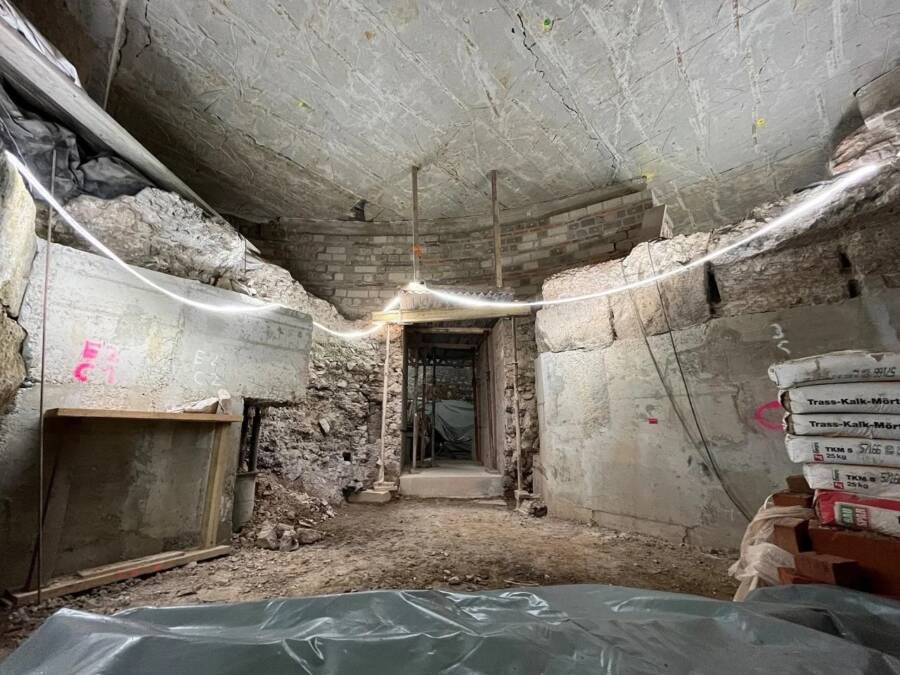
City of Cologne/Roman-Germanic Museum, Michael WiehenThe staircase was once connected to a praetorium, the official residence of the Roman governor.
During excavations related to the construction of a new museum in Cologne, Germany, archaeologists have uncovered several remarkably well-preserved ruins from the city’s ancient Roman past. Beneath the foundation of an apse from the fourth century C.E., archaeologists found both a staircase and a shrine connected to the city’s Roman governor.
Dating to the first and second centuries C.E., these finds are remarkable windows into Cologne’s Roman history — and an astounding example of how the long-gone past can remain hidden right beneath the surface of a modern city.
The Ancient Roman Staircase And Shrine Uncovered Right Beneath The Center Of Cologne
According to a statement from the City of Cologne, the Roman ruins were discovered during the construction of a new underground tour area related to the forthcoming MiQua LVR Jewish Museum. After reexamining an apse from a large 4th-century C.E. basilica in the Rathausplatz, which previously appeared to be just a mere dip in the pavement, archaeologists realized that there was more at the site than met than eye.
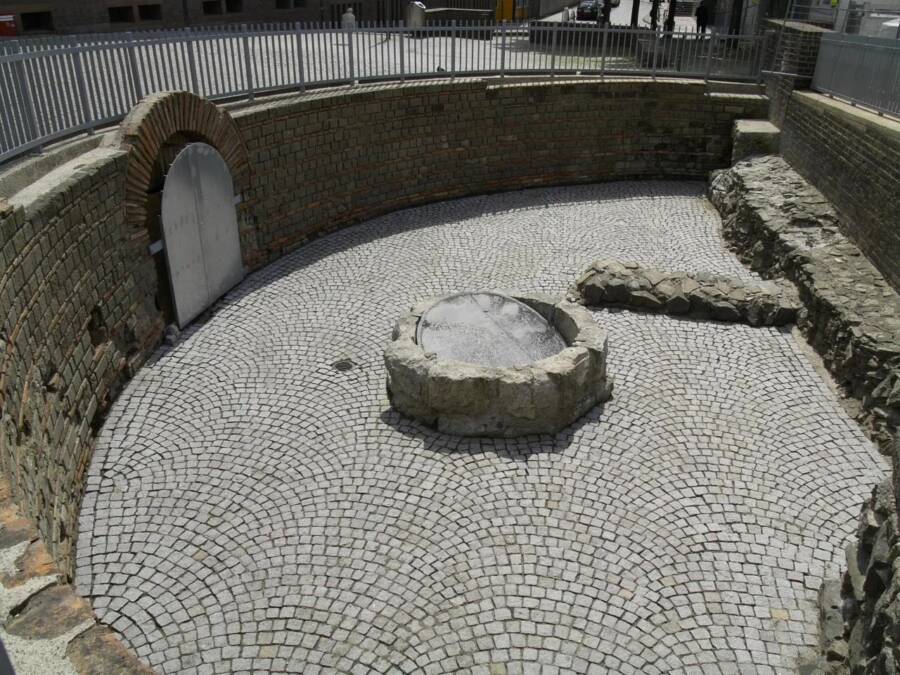
City of Cologne/Roman-Germanic Museum, Michael WiehenThe starting point of the excavation was an apse from a 4th-century basilica, which archaeologists realized was much thicker than previously known.
By looking at a cross section of the apse, archaeologists determined that it was more than 13 feet thick. It was not made of Roman cast concrete (opus caementicium), but instead a carefully crafted layer of volcanic stone, basalt, and limestone, which was then bonded with a mortar made of brick and gravel. This remained intact over many centuries perhaps because of strategic backfills of earth, possibly meant to even out the slope to the river bank.
But the more impressive Roman ruins were found at even deeper archaeological levels. It was there that archaeologists uncovered a staircase from the first century C.E. and an altar (lararium) from the second century C.E.
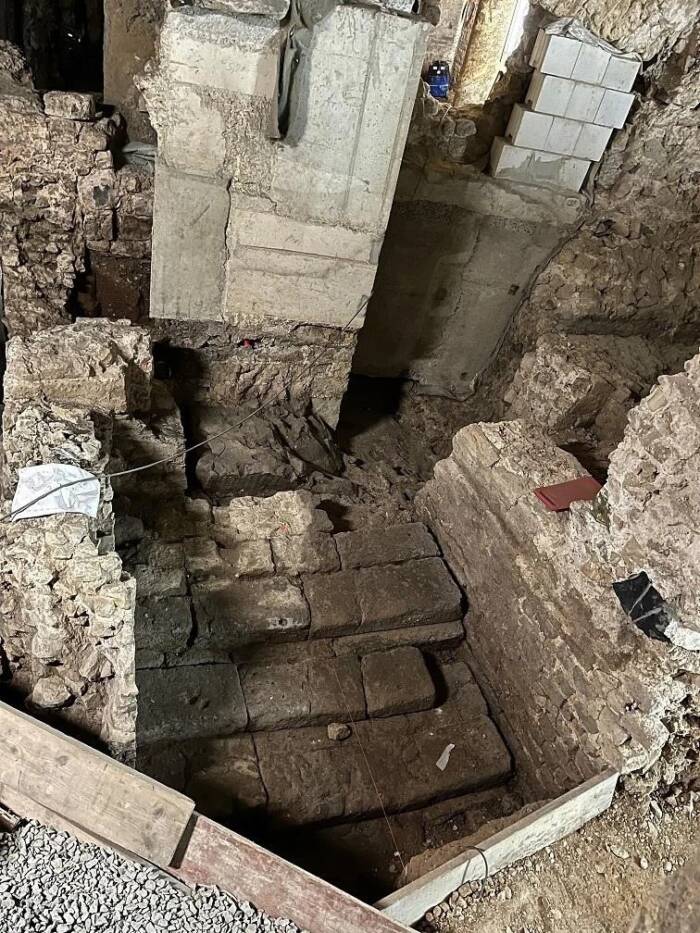
City of Cologne/Roman-Germanic Museum, Franziska BartzThe Roman staircase dates back to the first century C.E., and connected varying levels of the praetorium near the Rhine.
Both of these discoveries were connected to a praetorium, the official residence of the Roman governor. The staircase connected a lower level of the Rhine to a higher level of the praetorium itself, though it’s unknown where exactly the original staircase ended.
Meanwhile, the lararium is a niche in the wall dedicated to the household’s guardian deities, the Lares, who are represented by figurines. Here, worshippers could leave food or objects as offerings.
Though all the ruins are exciting finds, the lararium is an especially astounding discovery. Still flecked with paint, it’s more comparable to shrines found in far-off locales like Pompeii than it is to anything found north of the Alps.
The Rich Roman-Era History Of Cologne
The Roman history of Cologne began some 2,000 years ago, when the Germanic Ubii tribe struck a deal with the Romans to settle on the left bank of the Rhine. Their original settlement, the modern-day site of the historic center of Cologne, was known as Oppidum Ubiorum.
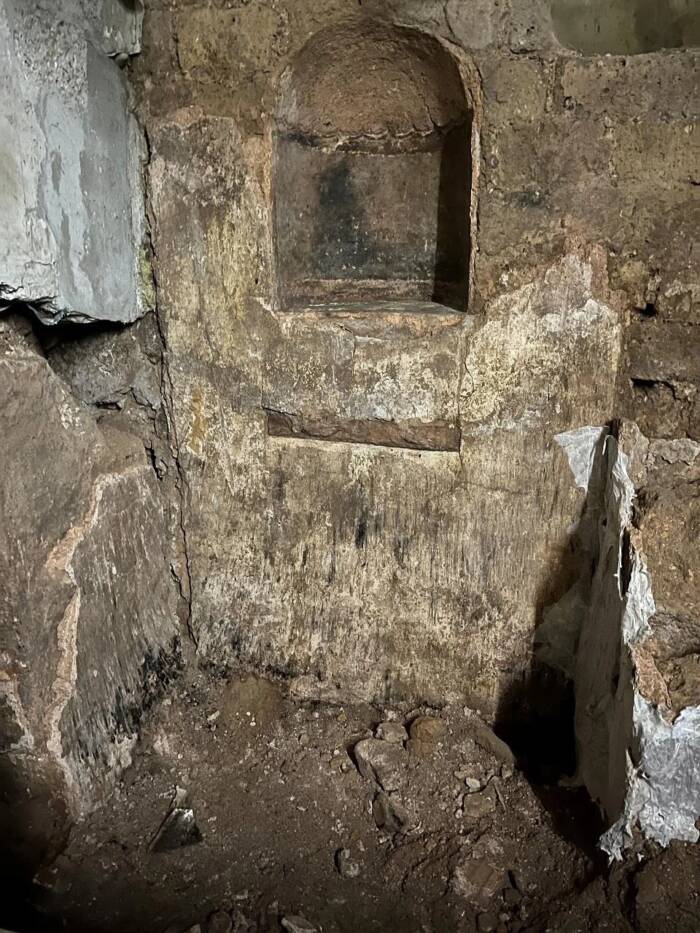
City of Cologne/Roman-Germanic Museum, Michael WiehenThe Roman shrine, or lararium, is an especially unique find for the region, with comparable examples found in faraway cities like Pompeii.
The Ubii were ultimately relocated to the right bank of the Rhine, and Oppidum Ubiorum became an important Roman military base, settlement, and center of trade. In 50 C.E., the Roman emperor Claudius agreed to make the settlement a colonia upon the request of his wife, Agrippina the Younger, who was born in Oppidum Ubiorum.
From that point on, the settlement became known as Colonia Claudia Ara Agrippinensium. As a Roman colonia, it soon had stone buildings, temples, baths, aqueducts, paved streets, and official residences like the praetorium. Indeed, the city was important enough in the region that, in 90 C.E., it became the capital of the Roman province of Lower Germany, Germania Inferior. At the time, some 45,000 people lived there.
Now, the discovery of the Roman staircase and shrines represent a fascinating reminder of Cologne’s early history, a time when the city was a new Roman colonia nestled in the far-flung reaches of the empire.
After reading about the Roman staircase and shrine that were uncovered in Cologne, go inside the complicated question of when the Roman Empire actually fell. Then, discover the wild stories behind some of the worst Roman emperors, from Caligula to Caracalla.