Greyfriars Bobby, Scotland’s Most Famous Dog
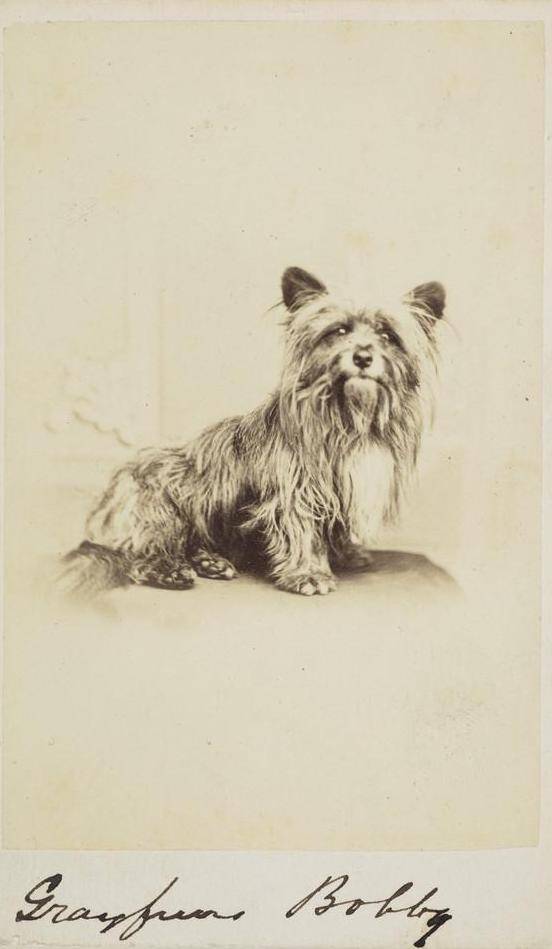
National Galleries of ScotlandA print thought to be of Greyfriars Bobby. Circa 1865.
Anyone who has been to Edinburgh, Scotland, may have noticed the statue of a small dog on the corner of Candlemaker Row and George IV Bridge. The statue was erected in honor of Greyfriars Bobby, the city’s most loyal dog.
Born around 1855, Bobby, a Skye Terrier, spent the first few years of his life under the care of a local nightwatchman named John Gray. By all accounts, Bobby and Gray, who was known to locals as “Auld Jock,” were inseparable. But in 1858, tragedy struck when Gray died of tuberculosis.
Bobby reportedly led Gray’s funeral procession to Greyfriars Cemetery. Then, after Gray was laid to rest, Bobby refused to leave his grave — despite attempts by cemetery caretakers to shoo him off.
For the next 14 years, Bobby, or Greyfriars Bobby as he came to be known, continued his vigil. At 1 p.m. each day, he would leave the graveyard to eat upon hearing the daily guns fired from Edinburgh Castle and then scamper back to the cemetery.
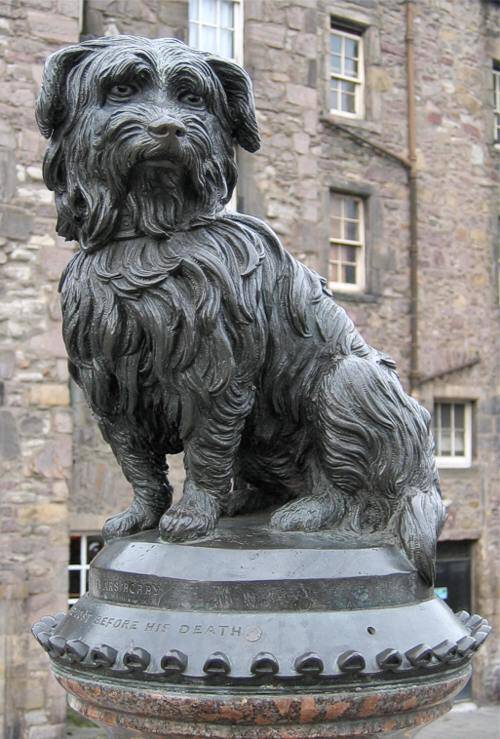
Michael Reeve/Wikimedia CommonsThis statue was erected in Bobby’s honor in 1873 and still stands in the city today.
After hearing his story, people began to flock to the cemetery to see Bobby. Locals in Edinburgh started to care for him and built a small shelter in the graveyard so he would be more comfortable. In 1867, after a law passed requiring all dogs in the city to be licensed, the Lord Provost of Edinburgh even gave Bobby a special collar with a brass plate inscribed: “Greyfriars Bobby – from the lord Provost, 1867, licensed.”
Bobby, who was just two years old when Gray died, continued his routine until his own death on Jan. 14, 1872. He was buried near his beloved owner, and the city erected a statue in his honor the following year. Today, the statue’s snout has turned coppery from all the people who have rubbed it for good luck.
Judy The Dog, A Loyal World War II Prisoner Of War
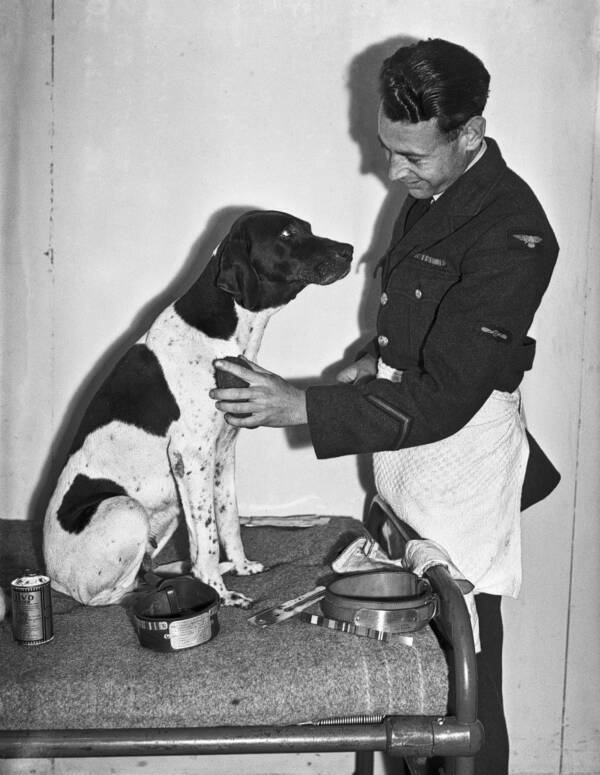
Fred Morley/Fox Photos/Hulton Archive/Getty ImagesJudy the Dog with her caretaker, Frank Williams, a British soldier who protected her while they were prisoners.
Few of the famous dogs on this list have led a life as eventful as Judy, a white English Pointer who became a British soldier and a prisoner of war during World War II.
Born in Shanghai in 1936, Judy was purchased by British Royal Navy Lieutenant Commander J. Waldergrave when she was still just a puppy. Her name “Shudi” was changed to “Judy,” and the Royal Navy’s official paperwork jokingly dubbed her “Judy of Sussex.”
Before long, Judy became a beloved crew member of the HMS Gnat. When she fell into the Yangtze River in November 1936, the ship came to a full stop so that she could be rescued. The crew soon came to appreciate Judy’s ability to sense danger. She once sounded the alarm when pirates tried to board the vessel at night, to the gratitude of the crew members.
But it was a harrowing time for a dog — or anyone — to be in Asia. In 1937, China invaded Japan. In 1939, World War II broke out when Nazi Germany invaded Poland. Before long, the war was raging in Europe and the Pacific, and Judy was transferred alongside much of her crew to the HMS Grasshopper, a 585-ton gunboat bound for Singapore.
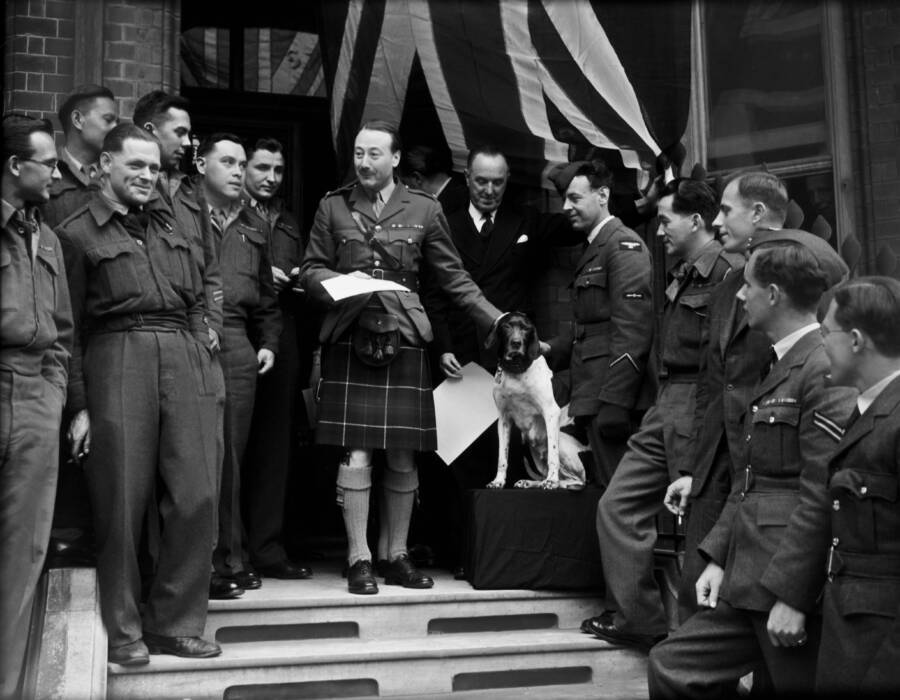
Topical Press Agency/Hulton Archive/Getty ImagesJudy receiving the Dickin Medal for bravery in May 1946.
As the war intensified, Judy continued to prove her worth. After Japan invaded Singapore in 1942, the Grasshopper was bombed by Japanese aircraft, and Judy and many of the crew members were marooned on an island, where she helped find fresh water. And when the British soldiers hiked to an Indonesian village, only to be captured by Japanese troops, they made sure to protect Judy from harm.
After hiding the loyal dog under rice sacks, a soldier named Frank Williams convinced the camp’s commander — who was fairly drunk at the time — to give Judy POW status. This protected Judy from harm, and Judy, in turn, helped keep Williams’ spirits up with her loyal and cheerful attitude.
Judy was finally liberated at the end of the war in 1945. The following year, she even received the Dickin Medal — sometimes called the “animals’ Victoria Cross” — for her bravery, making this famous dog a decorated soldier as well as the only animal imprisoned as a POW.