Hachikō, The Japanese Dog Who Never Stopped Waiting For His Owner To Come Home
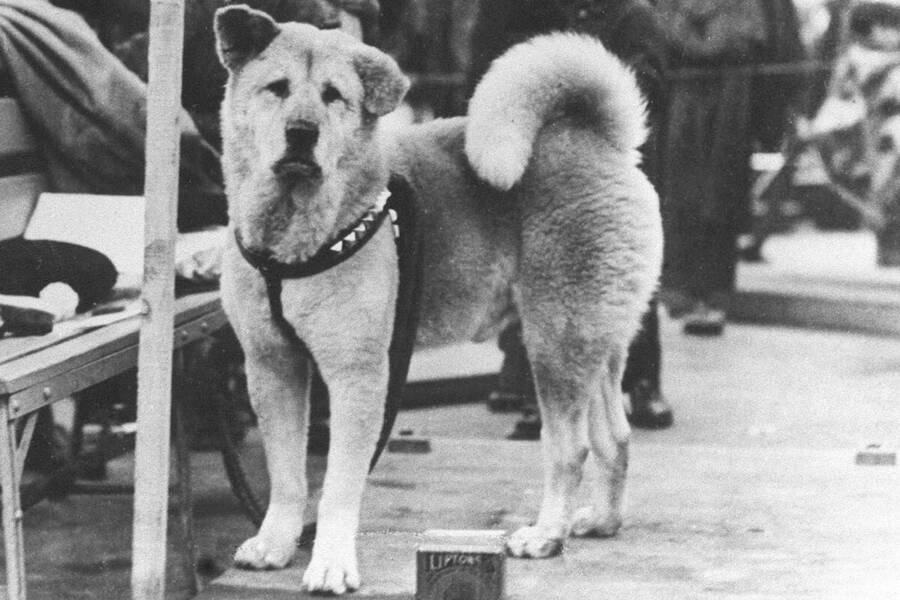
Wikimedia CommonsA photo of Hachikō, one of Japan’s most famous dogs.
Like Greyfriars Bobby, Hachikō the dog became famous for his loyalty. For 10 years, he waited at the Shibuya train station in Tokyo, Japan, for his owner to come home.
Born in November 1923 in the city of Ōdate, Hachikō was sent by train to his new owner in Tokyo, Hidesaburō Ueno, an agricultural professor who’d been on the lookout for an Akita puppy. The revered Japanese dogs are known for their intelligence, bravery, obedience, and stubbornness. But it wasn’t initially clear if Ueno would get to see Hachikō’s personality — the puppy arrived at his home close to death.
Ueno and his wife nursed the sickly pup back to health, and Hachikō started accompanying Ueno to the train station every morning alongside two other dogs. The three would spend the day near the station, waiting for Ueno to finish work and come home. But in May 1925, Ueno suddenly died of a cerebral hemorrhage when he was just 53 years old.
Though Ueno would never come home again, Hachikō continued to go to the train station every day. Waiting at the ticket gate, he would examine the faces of the passengers as they pushed by as if he were searching the crowd for his lost owner.
At first, many at the train station saw Hachikō as a nuisance. But as his story spread, people began to fall in love with the loyal dog. They sent food to the train station, wrote poems about him, and flocked to Tokyo to catch a glimpse of Hachikō as he waited for Ueno.
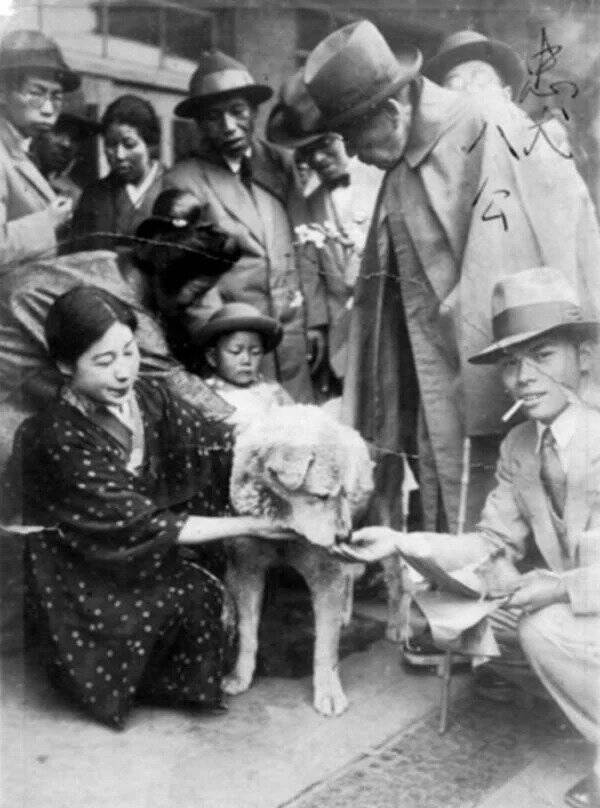
CPA Media Pte Ltd/Alamy Stock PhotoAs Hachikō’s story spread, people flocked from all over to see the loyal dog.
There was even a statue erected of Hachikō, and his death in 1935 was reported on the front pages of many newspapers. At that point, Hachikō was cremated. His ashes were placed next to Ueno’s grave in Aoyama Cemetery in Tokyo, finally reuniting the dog with his master.
Though Hachikō’s statue was torn down during World War II for its materials, a new monument was erected in 1948 at Shibuya Station. Today, the entrance nearest the statue is also an homage to Hachikō and is called Hachikō-guchi, or the Hachikō entrance and exit.
Sergeant Stubby, The Famous Dog Who Was A World War I Hero
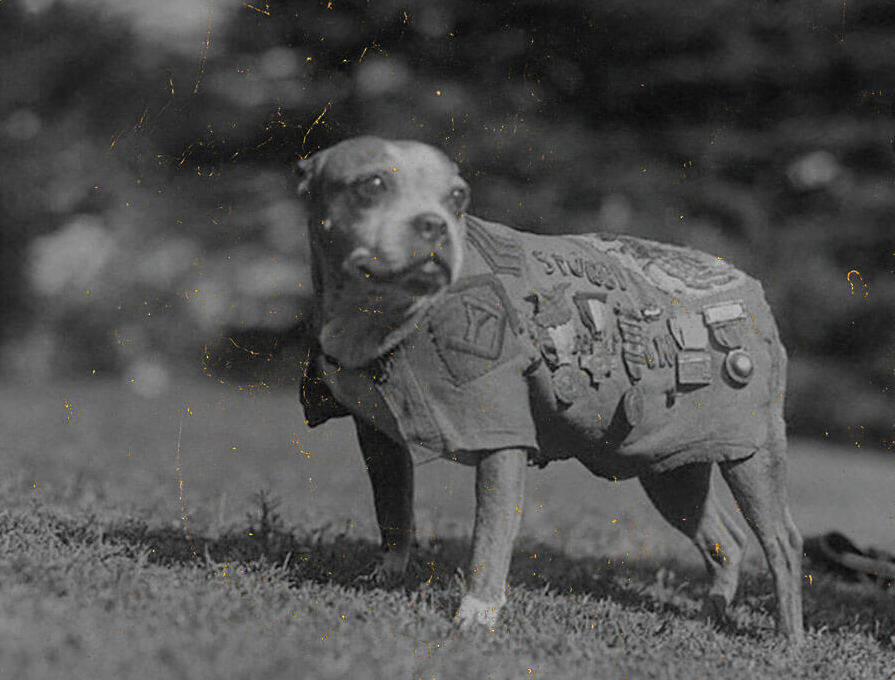
Public DomainSergeant Stubby became one of the most famous dogs of World War I after he was smuggled to Europe with the 102nd Infantry Regiment.
No one knows exactly where Sergeant Stubby came from. But this tiny, brave dog made a huge difference to his human soldiers during World War I.
As the story goes, members of the 102nd Infantry Regiment were in the middle of training at Yale University in 1917 when they noticed a puppy wandering nearby. Apparently a friendly stray, the little dog was taken in by Private J. Robert Conroy, who named him “Stubby” because of his stubby tail. The pup soon started training alongside the 102nd Infantry. He learned bugle calls and even how to raise his right paw to his eyebrow in a salute.
And when the troops shipped out to Europe to fight in World War I, they smuggled Stubby along with them.
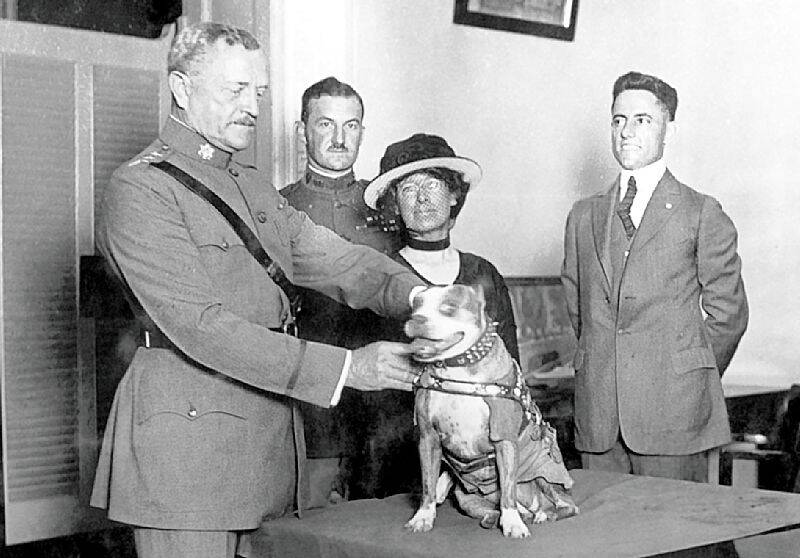
Public DomainGeneral John J. Pershing awarding Sgt. Stubby a medal. Stubby’s owner, Robert Conroy, is standing behind him in a suit.
He and the young men of the 102nd Infantry Regiment were quickly confronted with the terrifying reality of war. Machine guns rattled throughout the day, and choking mustard gas frequently rolled across the battlefields.
Stubby, though small, stepped up. He learned to sound the alarm about gas attacks, which saved soldiers who were sleeping, and he darted out into No Man’s Land to track down wounded men. The brave little dog even survived a shrapnel attack and once sniffed out a German spy who was attempting to draw a map of Allied trenches.
For this, Stubby was promoted to sergeant. He went on to shake paws with presidents, served as the official mascot of Georgetown University while Conroy studied there, and was given a half-page obituary in The New York Times when he died in 1926.
“Stubby took part in four major offensives, was wounded and gassed,” his New York Times obituary read. “He captured a German Spy and won more medals than any other soldier dog. He led the American Legion parades and was known to three Presidents. He was, indisputably, a fighting dog.”