A recent study found that every Homo naledi fossil found in a South African cave is female, raising questions about the early humans' biology and burial practices.
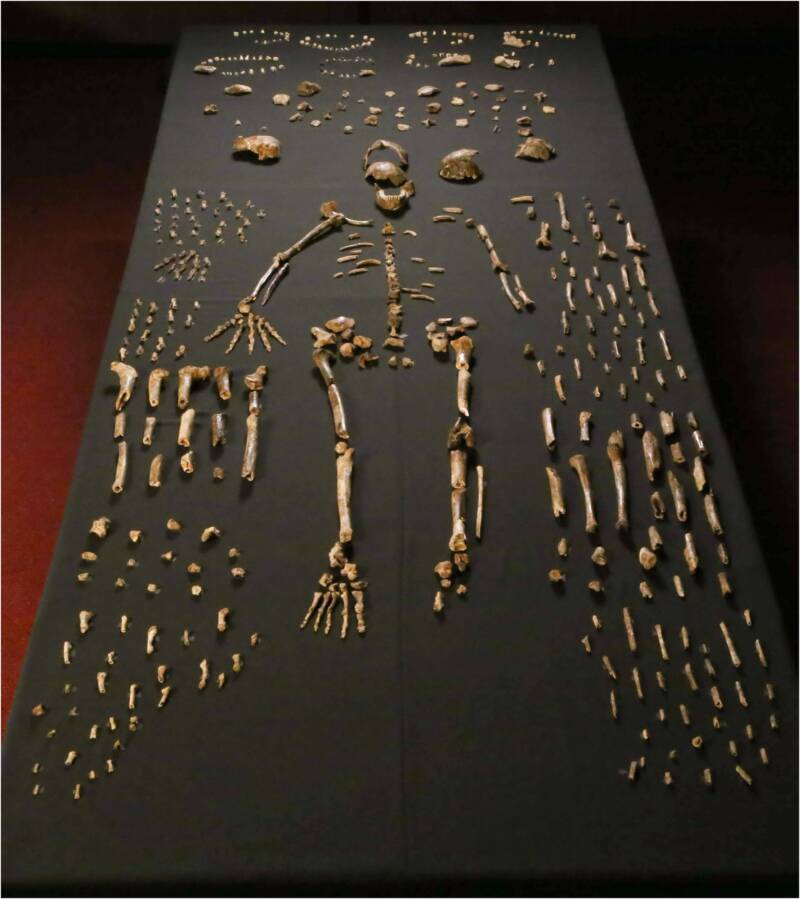
Lee Berger Research Team/Wikimedia CommonsScientists found around 1,500 Homo naledi bones in South Africa’s Rising Star cave system.
Science doesn’t usually deliver plot twists. But every so often, a result comes back so strange that even the researchers who discovered it can’t quite believe it. That’s what recently happened to a team studying an extinct human relative called Homo naledi.
Middle school science teacher Zeke Darwin (@zekedarwinscience) took to TikTok to give an in-depth explanation that garnered more than 118,000 views.
“I have goosebumps. A paper just dropped. I was gonna cover this species already. This is naledi — the strangest human species to ever exist… Things just got a lot weirder,” Darwin said in the video.
The question Darwin — and scientists — want to know the answer to is: Why are all the Homo naledi fossils female?
Homo Naledi, The Mysterious Early Human Species
In 2013, a team led by paleoanthropologist Lee Berger discovered the remains of a previously unknown hominin species deep inside South Africa’s Rising Star cave system, reachable only through a narrow vertical passage that researchers call “the chute.”
The cave has since yielded more than 1,500 bone fossils belonging to nearly two dozen individuals. The bones all date to between roughly 335,000 and 236,000 years ago, meaning Homo naledi was alive at the same time as early Homo sapiens.
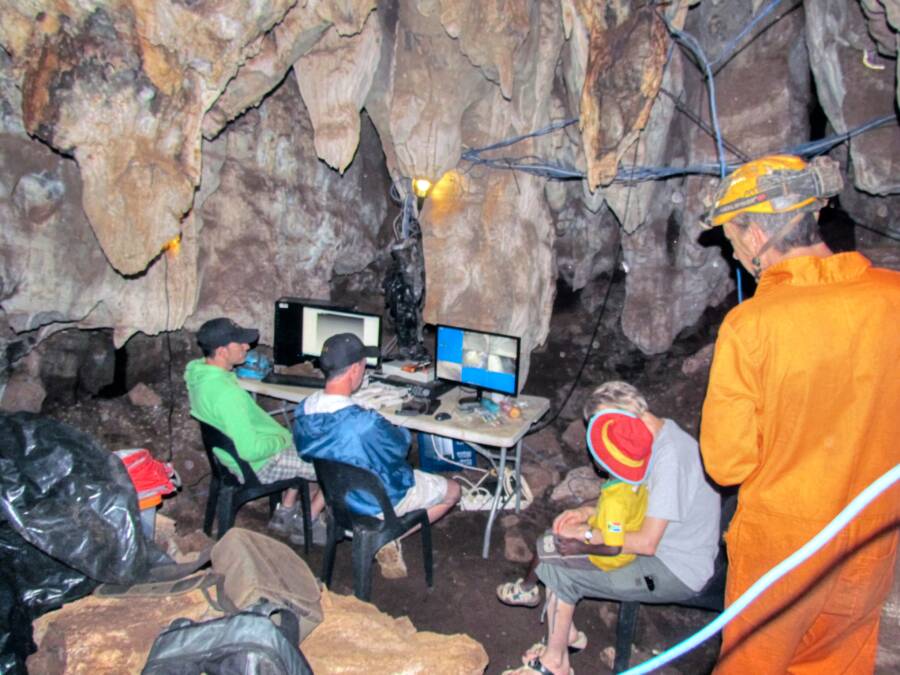
Simon Fraser University/Wikimedia CommonsResearchers in South Africa’s Rising Star cave system in 2014.
That timing is part of what makes the species so strange. Homo naledi had a brain the size of a chimpanzee’s paired with hands and limbs that looked strikingly human in some ways and primitive in others.
The fossils sparked debate at the time of their discovery. Had Homo naledi been advanced enough to purposely bury their dead deep inside the cave? Or had a tragic accident occurred that trapped dozens of individuals inside?
Scientists recently analyzed the bones in an effort to answer some of their questions — and they were left more confused than when they started.
The Discovery That Perplexed Scientists
In a new study published in the journal Cell, researchers analyzed proteins preserved in the dental enamel of 23 teeth from at least 20 different Homo naledi individuals found in the cave system. They were looking for a specific protein called amelogenin.
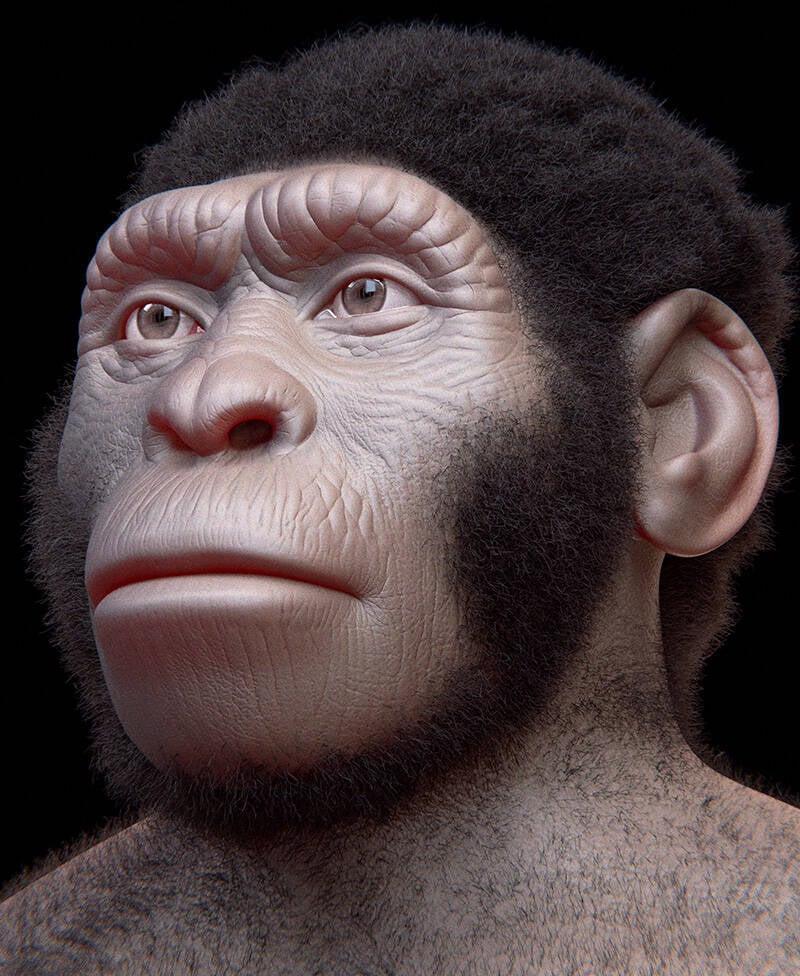
Cicero Moraes (Arc-Team)/Wikimedia CommonsA facial reconstruction of Homo naledi.
Amelogenin X, or AMELX, is found in both males and females, since it’s encoded on the X chromosome. Amelogenin Y, or AMELY, is encoded on the Y chromosome and only shows up in genetic males.
Not one Homo naledi sample contained AMELY.
“When these results came out, there were a lot of quite nervous scientists,” Berger told Smithsonian Magazine. “This was not what we expected.”
The AMELY gene has occasionally gone missing in individual human and Neanderthal males before — but never across an entire population.
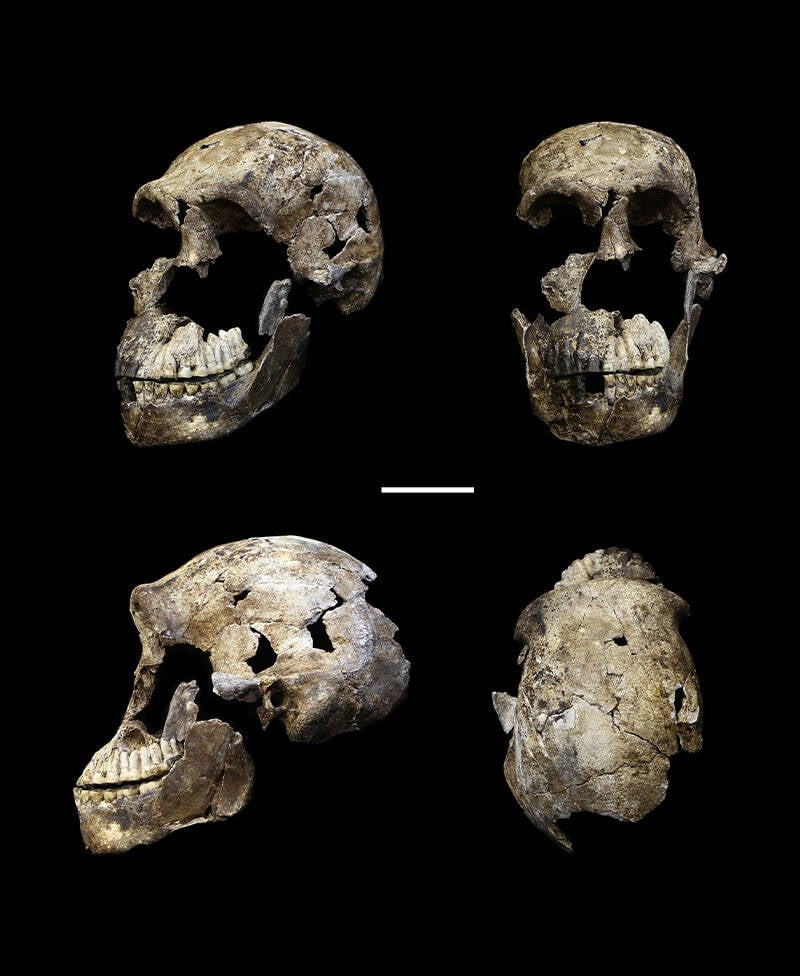
John Hawks, Marina Elliott, Peter Schmid/Wikimedia CommonsThe skull of Homo naledi held a brain that was about one-third the size of a modern human’s.
Some scientists believe the most plausible explanation is that Homo naledi sorted their dead by sex. But that’s a big claim for a species with a brain the size of a chimpanzee’s. In fact, sex-specific burial customs don’t show up in the archaeological record until roughly 5,000 years ago — hundreds of thousands of years after Homo naledi lived.
As paleoanthropologist Karen Rosenberg put it, “Something’s weird.”
However, not every expert is convinced that the Rising Star cave system was actually a burial site at all. Some believe that the Homo naledi individuals simply got trapped in the cave and died there.
It’s also possible that the population was so isolated and inbred that the AMELY gene mutated out of existence. There may have been males in the cave, after all, but this specific test wouldn’t have identified them.
In any case, this surprising discovery was significant enough that Berger’s team has paused further excavation in the cave while lab analysis continues — in part out of a sense of ethical caution about what they might be disturbing.
@zekedarwinscience WHY ARE ALL THE NALEDI FOSSILS FEMALE?!?! A new paper is adding to the mystery of the strangest human cousin… H. Naledi #animals #evolution #learning #science #archaeology
All That’s Interesting reached out to Darwin for comment via TikTok direct message and comment.
After reading about the mystery surrounding Homo naledi, learn about the oldest known footprints ever found from Homo sapiens. Then, discover what our Denisovan ancestors may have actually looked like.