Sir Jeffrey Hudson, A.K.A. Lord Minimus, Britain’s Smallest Jester
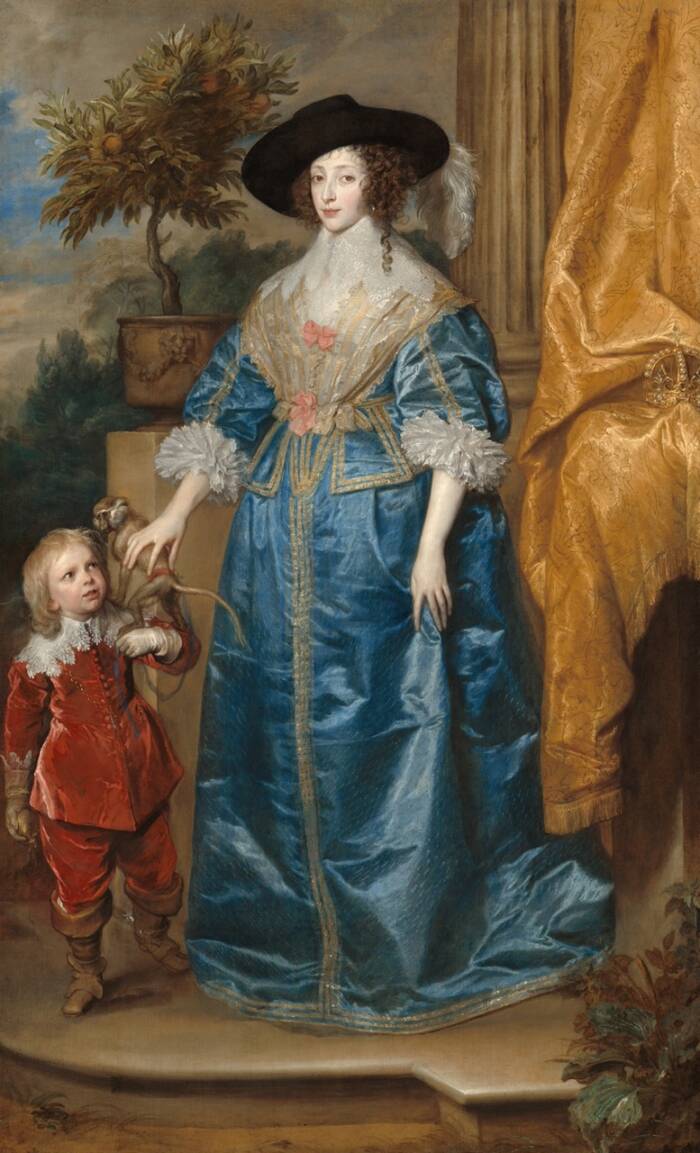
Wikimedia CommonsLord Minimus reportedly stood just 18 inches tall.
Born in 1619, Sir Jeffrey Hudson was known as both the “Queen’s dwarf” and “Lord Minimus.” He was largely considered to be one of the “wonders of the age” due to his extremely small yet well-proportioned stature. But although the man himself was tiny, his life story was anything but.
Hudson was the only dwarf in his family. Both of his parents, his three brothers, and his sister were all of average height. His size can likely be attributed to a growth hormone deficiency, although there were other theories at the time, such as that his mother had choked on a gherkin while she was pregnant.
Regardless of the cause, news of Hudson’s size spread to the Duchess of Buckingham, who then invited him to join her household. According to the biography Lord Minimus: The Extraordinary Life of Britain’s Smallest Man, the duchess introduced Hudson to Queen Henrietta Maria, the wife of England’s King Charles I, just a few months later — by having him pop out of the queen’s pie wearing a tiny suit of armor.
The queen was so delighted by Hudson’s appearance that the Duke and Duchess of Buckingham handed the small boy off to the queen as a gift.
Hudson lived in a royal residence in London alongside a man named William Evans, who was over seven feet tall, two other dwarfs, and a pet monkey named Pug. He quickly learned to charm and entertain guests with his wit. Hudson and Evans even developed a comedy routine in which the giant would pull the 18-inch-tall dwarf from his pocket.
However, Hudson’s time in the royal court was cut short in October 1644 when he challenged a man to a duel. The man arrived at the meeting spot with a large squirt gun; Hudson brought a real firearm. Hudson then shot the man in the head, killing him.
Unfortunately, the man was brother to the powerful and influential William Crofts, who demanded that Hudson be executed. The queen intervened and prevented Hudson’s death, banishing him from court instead. From then on, Hudson’s bad luck continued. Barbary pirates raided a ship he was on, kidnapping him and selling him into slavery in Africa for the next 25 years.
Hudson eventually made it back to England around 1669 — but he was then imprisoned for his Catholic faith, released just two years before his death, and buried in a pauper’s grave.
Stańczyk, The Most Famous Court Jester In Polish History
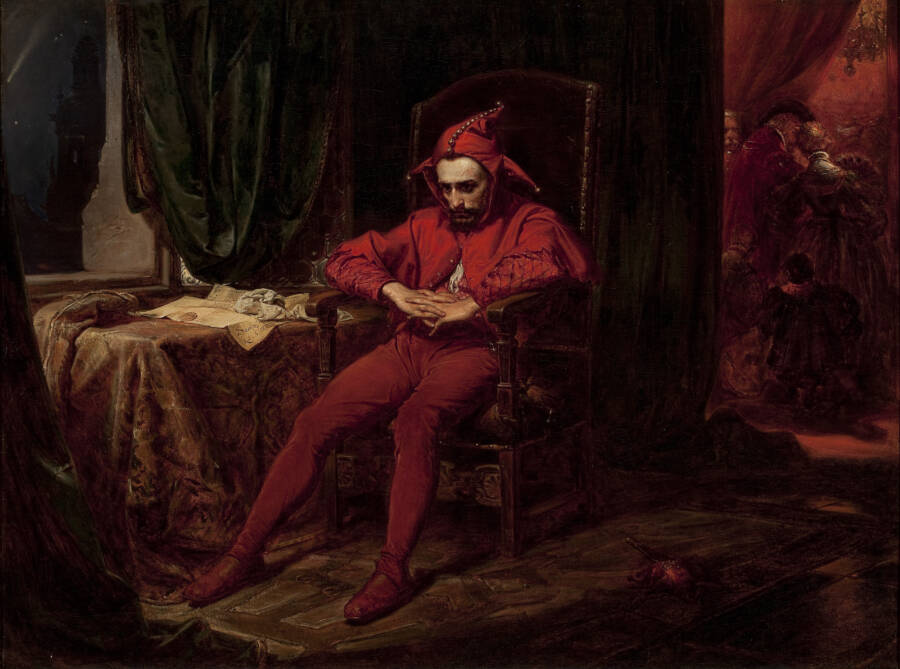
Wikimedia CommonsLittle is known of Stańczyk’s life, and even his name is up for debate.
The Polish court jester Stańczyk is arguably the most famous jester in the country’s history — that is, if he ever existed.
Stańczyk’s name is most widely known due to his portrayal in a painting by artist Jan Matejko, which depicts the jester solemnly looking at the ground after hearing the news that Russia had captured Smolensk. But by the time Matejko created his famous painting in 1862, Stańczyk’s name was already well known among the Poles.
Scholars have reached a consensus that such a jester did once exist, though the name itself is up for dispute. Contemporary sources mention a fool by the name of Stańczyk and another called Gąska.
Polish scholar Aleksander Brückner later suggested that both Gąska and Stańczyk may have been two nicknames for the same person, each stemming from the name “Stanisław Gąska,” according to the Polish Art Center.
In any case, legends of Stańczyk often portray him as a witty satirist. One famous story claims that in 1533, King Sigismund the Old asked for a bear to be released in the forest near his palace so he could hunt it. During the hunt, however, the bear charged the king, the queen, and their courtiers — including Stańczyk, who ran away.
When the king later criticized Stańczyk for fleeing, the jester reportedly responded by saying, “It is a greater folly to let out a bear that was already in a cage.” Many scholars have interpreted this reply as an allusion to the king’s treatment of the newly conquered Prussia.
Stańczyk ultimately became a symbol of Poland’s struggle for independence, with his likeness being used by a variety of artists and satirists to criticize political hypocrisy.