John Gotti, The “Teflon Don” Who Ruled Late 1980s And Early ’90s New York
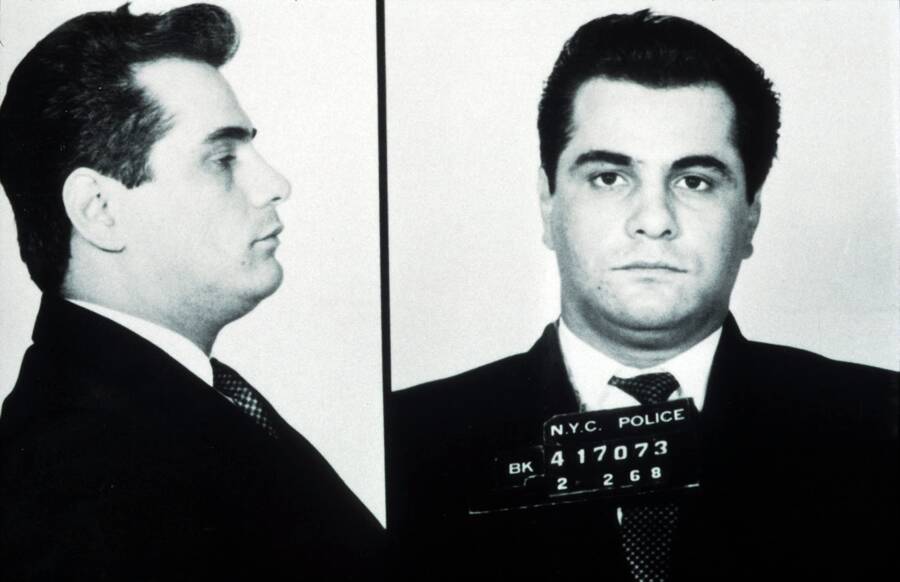
NYPDJohn Gotti pulled off one of the most infamous assassinations in Mafia history.
Infamous as the mastermind of Paul Castellano’s murder, John Gotti was also known as the “Dapper Don” for his flashy suits and the “Teflon Don” for his seemingly endless ability to avoid prison. To this day, he remains one of the most famous Mafia bosses in history.
Born on Oct. 27, 1940, John Gotti started working for the Gambino Family at the age of 12. He rose through the ranks due to his ruthless nature and his close relationship with Aniello Dellacroce, who became the Gambino Family’s underboss after the death of Carlo Gambino in 1976.
By the 1980s, however, the relationship between Gotti and the new Gambino Family boss, Paul Castellano, had grown tense. Castellano didn’t approve of Gotti’s gambling habit, heroin dealing, or erratic behavior, and Gotti was furious when Castellano, fearing attention from the FBI, failed to attend Dellacroce’s funeral after he died of cancer in December 1985.
Castellano was also facing legal trouble and had irritated some of his capos and soldiers with his reclusive nature. Gotti decided that Castellano had to go. He quietly elicited support from both inside and outside the Gambino Family, reaching out to some of his peers in the Lucchese, Colombo, and Bonanno Families.
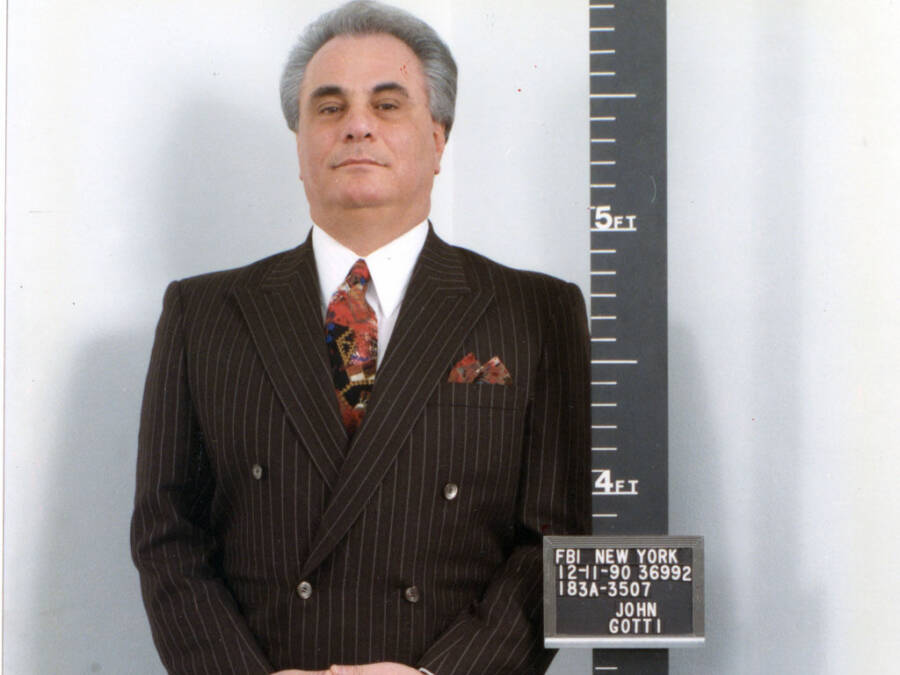
FBIThough John Gotti became the boss of the Gambino Family, he eventually died in prison.
Then, on Dec. 16, Gotti made his move. After he gave the order via walkie-talkie from a car nearby, several hitmen took out Castellano and his underboss, Thomas Bilotti, as they arrived at Sparks Steak House in Midtown Manhattan.
This officially made John Gotti a Mafia boss and the new head of the Gambino Family — but it also put him in hot water. Mob bosses like Vincent Gigante were furious that Gotti hadn’t consulted the Five Families first, which led to a failed attempt on Gotti’s life, and Gotti meanwhile faced legal woes in the form of racketeering charges.
In 1990, he was arrested and charged with a number of crimes, including Paul Castellano’s murder. And though Gotti had famously beaten all charges brought against him in the past, this time, his own underboss, Sammy Gravano, testified against him. Gotti was convicted in 1992 and spent the rest of his life in prison, eventually dying there of cancer on June 10, 2002.
Al Capone, The Infamous Chicago Mob Boss Known As “Scarface”
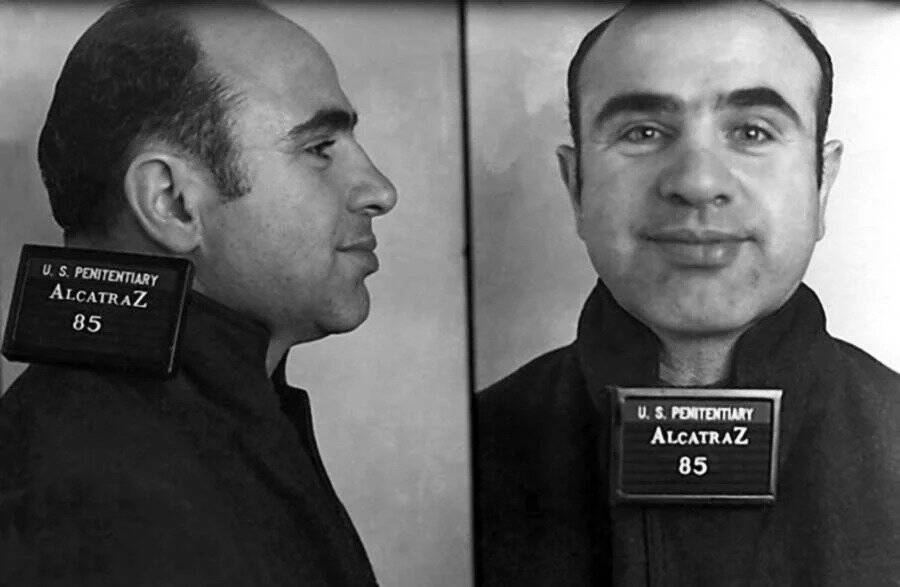
Donaldson Collection/Michael Ochs Archives/Getty ImagesMob boss Al Capone became one of the most notorious gangsters of all time thanks to his great wealth and courting of the press.
Though he ran his operation out of Chicago, not New York, Alphonse “Al” Capone became one of the most infamous Mafia bosses of all time.
Born to Italian immigrants in Brooklyn in 1899, Capone’s inroads into the mob came at a young age when he and his brother Frank Capone started running errands for gangster Johnny Torrio. Though Capone only dabbled in gang activities as a youth, he quickly gained a reputation. In 1917, a man slashed Capone in the face after he’d made a remark about the man’s sister, leaving a scar and establishing Capone’s infamous nickname: “Scarface.”
Three years later, Capone left New York to join Torrio in Chicago, allegedly after members of the White Hand gang swore to get revenge after Capone beat one of their members. Torrio became the leader of the Chicago Outfit after the assassination of “Big” Jim Colosimo in 1920, and when Torrio decided to return to Italy in 1925 after surviving his own assassination attempt, Capone effectively became the boss of the Chicago underworld.
As he oversaw bootlegging, illegal gambling, and prostitution rackets, Capone became both wealthy and well-known. Many saw the round-faced and gregarious Capone as a Robin Hood type, especially as the country soured on Prohibition laws. But Capone had a capacity for violence that shocked even his most adamant supporters.
In 1929, a number of Capone’s rivals were brutally killed in what became known as the St. Valentine’s Day Massacre. Though Capone was conveniently out of town at the time, the murders shocked the public and ramped up the government’s efforts to arrest “Public Enemy Number One.”
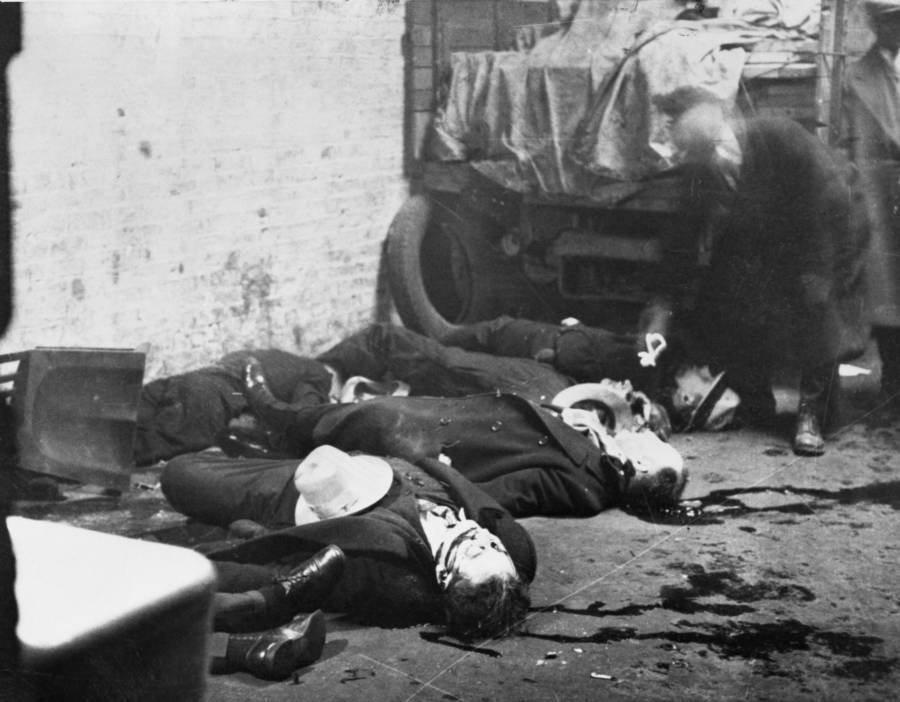
Bettmann/Getty ImagesAl Capone was conveniently out of town during the St. Valentine’s Day Massacre in 1929.
Still, Capone’s fall came in a surprising way. On June 5, 1931, he was arrested not for the St. Valentine’s Day Massacre murders or even his bootlegging activities, but on 22 counts of income tax evasion. After a stint in an Atlanta penitentiary, Capone was transferred to Alcatraz in 1934.
There, his health swiftly declined due to syphilis. Al Capone was released to a hospital in 1939 and eventually allowed to spend his final days with his wife Mae in Florida. Capone died at age 48 in 1947 as a shell of his former self.