The villa included everything from defensive walls to an agricultural storage facility to a meeting hall for local leaders, but much of it will remain shrouded in mystery until archaeologists begin to excavate.
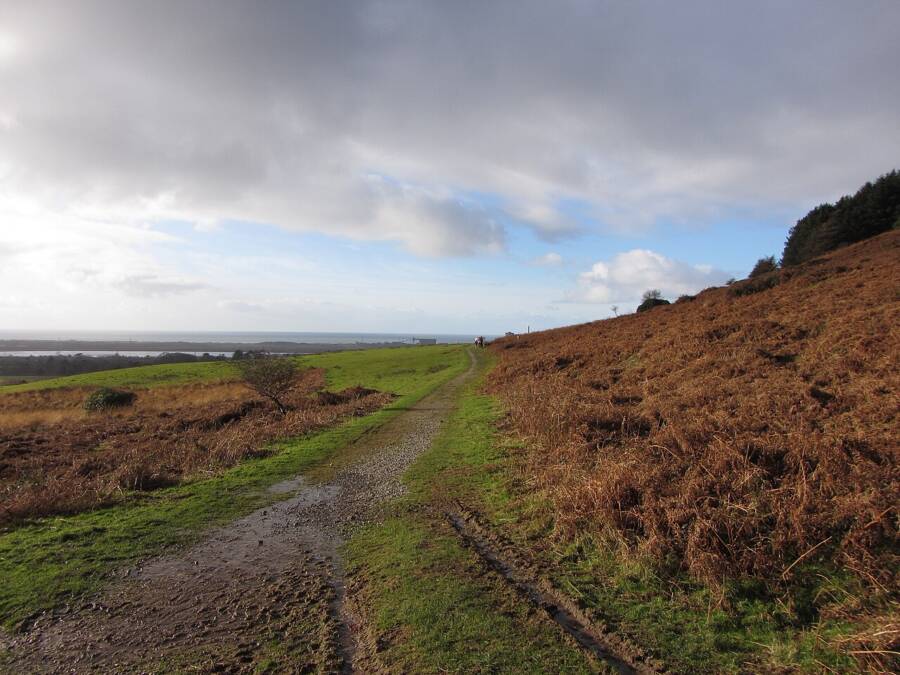
Gareth James/Wikimedia CommonsA stretch of Margam Country Park in Wales. The exact location of the villa has, so far, been kept under wraps.
Among historians, Wales has long been thought of as the distant frontier of the Roman Empire, a place where the Romans were more likely to build forts and roads than anything permanent. But a ground-penetrating scan of the area around Margam Park, near Port Talbot, has revealed the remains of an elaborate Roman villa, thought to be from the fourth century C.E.
This structure, dubbed the “Port Talbot Pompeii,” suggests that the Romans were far more established in Wales than previously known and that the region didn’t consist only of borderland outposts. Now, researchers are eager to excavate the site in order to investigate it further.
The Discovery Of An Ancient Roman Villa Beneath Margam Country Park In Wales
According to Swansea University, the villa was discovered during a project to better understand the pre-industrial heritage of Margam. While conducting a ground-penetrating survey in Margam Country Park, researchers “struck gold” when they detected the outlines of a sprawling structure underground that appeared to be a Roman villa.
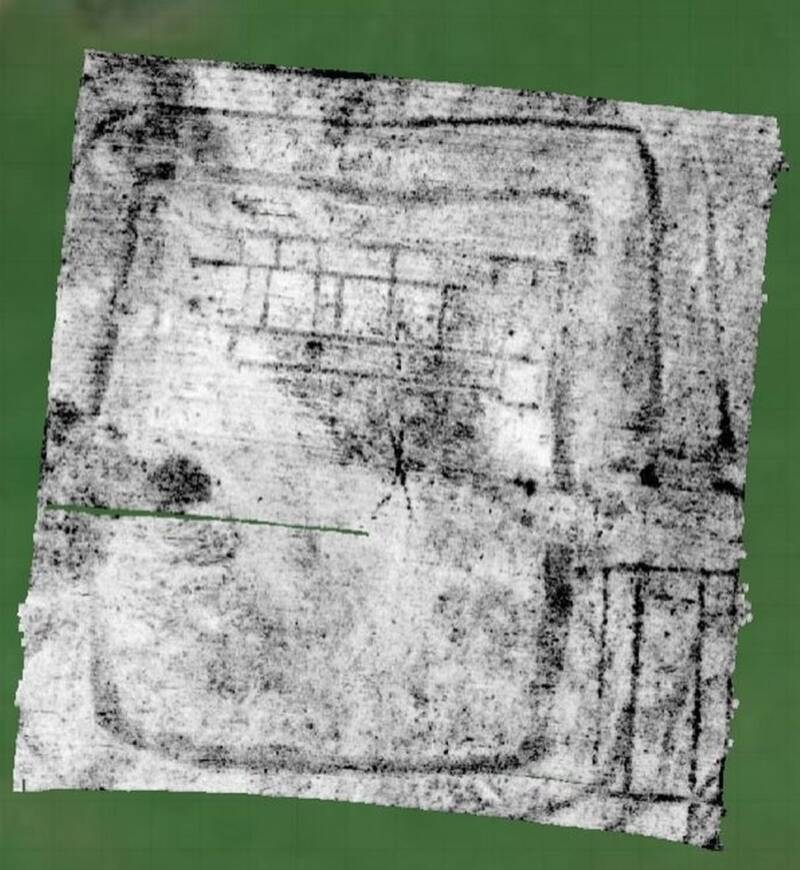
TerraDatA scan of the Roman villa that was detected beneath Margam Country Park.
“This is an amazing discovery,” said Alex Langlands, an associate professor of heritage and history at Swansea University, and the project lead for ArchaeoMargam. “We always thought that we’d find something dating to the Romano-British period, but we never dreamed it would be so clearly articulated and with so much potential in terms of what it can tell us about the elusive first millennium AD here in South Wales.”
Scans of the area — the exact location of which has been kept secret to prevent looting — suggests that the villa sat within a defensive enclosure. The enclosure itself is 141 feet by 180 feet, and was perhaps constructed as far back as the early Iron Age. The villa also includes a large building in its southeast corner, which was possibly an agricultural storage building that was transformed into a meeting hall after the fall of Rome.
“It is too early to speculate about the date range of the building, its architectural features, who constructed it, and how it fell out of use,” Langlands noted. “But from the geophysical survey alone we can start to build hypotheses about how important this site could be and what it can tell us about Margam’s long-term role in the social, cultural, and economic developments across the first millennium in Wales.”
Indeed, the discovery of the villa challenges the idea that Wales was merely a far-flung territory on the edge of the Roman Empire. Instead, this villa was a permanent structure, suggesting that the ancient Romans put down bona fide roots in this region.
The Murky History Of Roman-Era Wales
Roman history in Wales began in 48 C.E., five years after the Romans first arrived in Britain. At the time, the invading Roman armies encountered a number of formidable native tribes. In one memorable battle in 61 C.E., they fought against a combined force of warriors and druids, who terrified the Roman soldiers by shouting spells. However, they were easily defeated. “At the end of the battle, the Romans were victorious,” the Roman historian Tacitus wrote of the encounter, “and the holy oaks of the druids were destroyed.”
Indeed, Wales during the Roman era was thought of as a place of conquest — a nexus of Roman camps and roads, forts and armies. A place on the edge of the frontier, and not necessarily one of permanent structures.
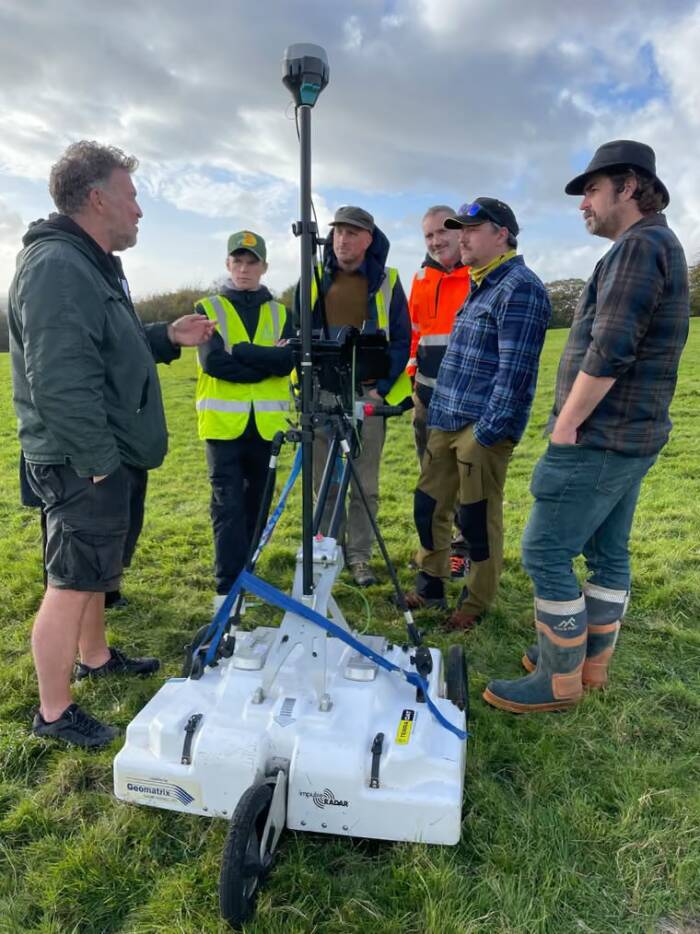
Hazel LanglandsResearchers at Margam Park as part of the project to map the Roman villa recently found there.
The villa, which Langlands estimates is from the fourth century C.E., challenges this idea. It suggests that the Roman presence in Wales was far more deep-rooted than previously known, and that the Romans were established enough to build elaborate villas similar to ones found in Britain.
What’s more, scans have so far suggested that the villa could be tantalizingly well-preserved. The park above the villa has protected it from ploughing, and researchers believe that its floors and foundations are intact. Their next step will be to excavate and finally lay eyes on these astonishing ruins.
“Margam is famous for its nationally significant monuments and for having evidence of Bronze Age, Iron Age, Medieval and Post-Medieval heritage,” Langlands stated. “But we knew practically nothing about what was going on in the Romano-British period. This is the missing piece of the puzzle.”
After reading about the sprawling Roman villa that was just detected in Wales, go inside the complicated question of when the Roman Empire actually fell. Then, discover the stories behind some of the worst Roman emperors, from Nero to Caligula.