The grave goods from the fifth to eighth centuries C.E. include ornate belts, silver jewelry, and even gems.
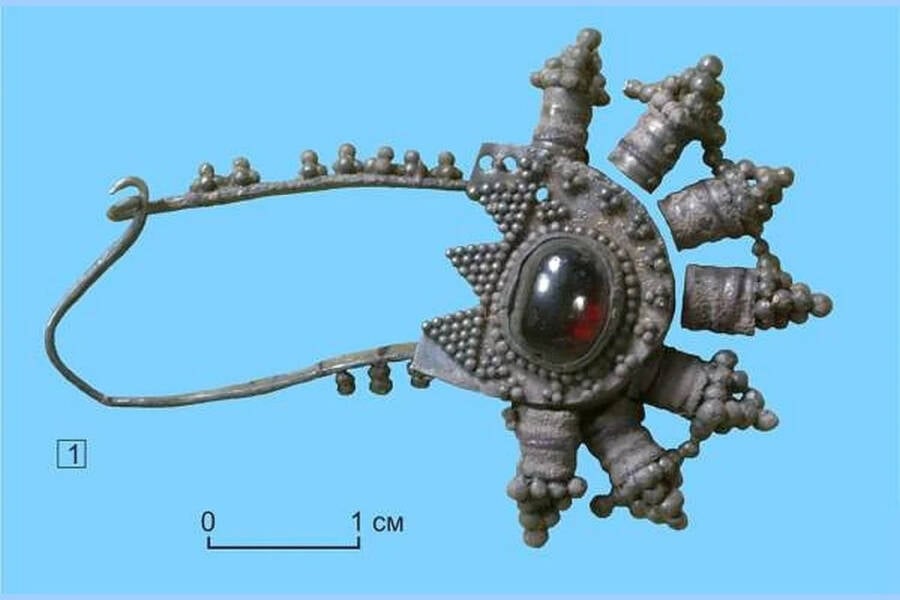
Novosibirsk State Pedagogical UniversityA silver pendant inlaid with a garnet that was found in the medieval grave of a Siberian child.
Archaeologists working in Siberia have discovered several medieval child burials containing grave goods like ornate belts and jewelry.
Researchers say these finds are shedding new light on the social structures of medieval Siberia and how status played a role even from a young age. The artifacts, experts say, were not indicative of parental love or ritual traditions — they were about publicly affirming elite identity.
Grave Goods From Siberian Child Burials Marked Their Elite Status
A study into these medieval graves and other, more recent, child burials was led by Professor Andrey Pavlovich Borodovsky of Novosibirsk State Pedagogical University, who looked into several child burial sites across Western Siberia spanning multiple historical periods.
Some of these burials dated to between the fifth and eighth centuries C.E. and revealed children interred with goods like belts, metal ornaments, and finely crafted jewelry. At one site, known as Ivanovka-6, the excavation team unearthed a silver pendant reminiscent of those found in the Byzantine world.
While this doesn’t confirm any direct contact with Byzantium, it does suggest that elites of the Upper Ob likely participated in long-distance exchange networks that stretched across Eurasia.
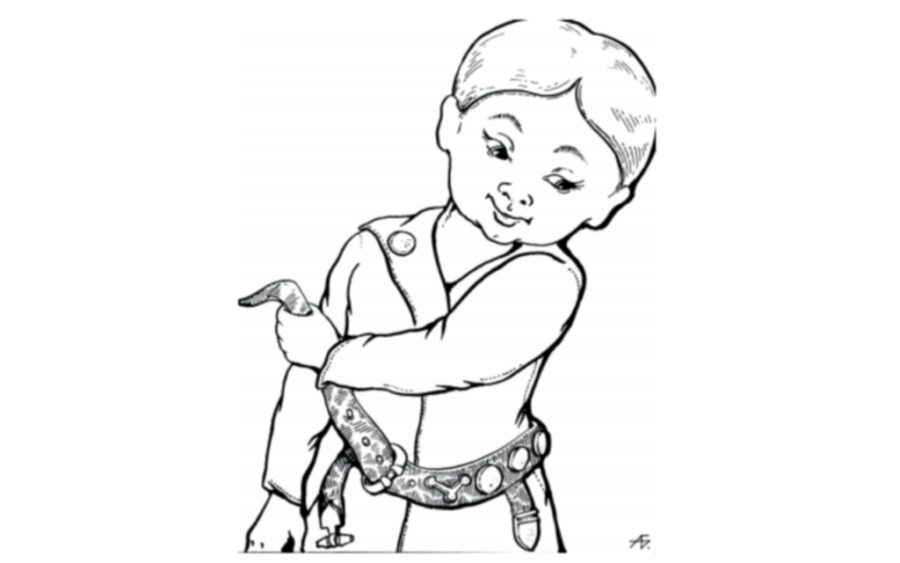
Novosibirsk State Pedagogical UniversityA drawing of an opulent belt found in one child’s grave.
That these objects were found in children’s graves is of particular note, Borodovsky said. They would typically be found buried with adults.
The artifacts, which would have been worn in life to outwardly express an individual’s high status and prestige, likely did not hold much sentimental value. So, why bury them with the children?
Historical Concepts Of Childhood Across Siberia
“What we see in these elite child burials is not sentimental excess,” Borodovsky said, “but a deliberate and highly mythologized ritual language.”
In other words, burying these symbolically high-status objects with the children of elite members of society was a way of reaffirming their social status. Borodovsky explained that early medieval societies in southern Siberia and Central Asia often told legendary stories about “royal” or heroic youths — children who were predestined to achieve greatness — and the excess of these grave goods seems to align with this interpretation.
Other evidence supports this as well. Ethnographic data, for instance, shows that among the nomadic Tuvan people, young boys were often dressed in fur coats bearing the same insignia and ranks of adult men. This was done to introduce the young boy “not only to the world of adults, but also to his social circle. Thus, the ancient traditions have survived to this day.”
As time went on, these traditions evolved, but they never fully went away. When the territory of Western Siberia became part of Russia, official uniforms became one of the most prominent markers of status.
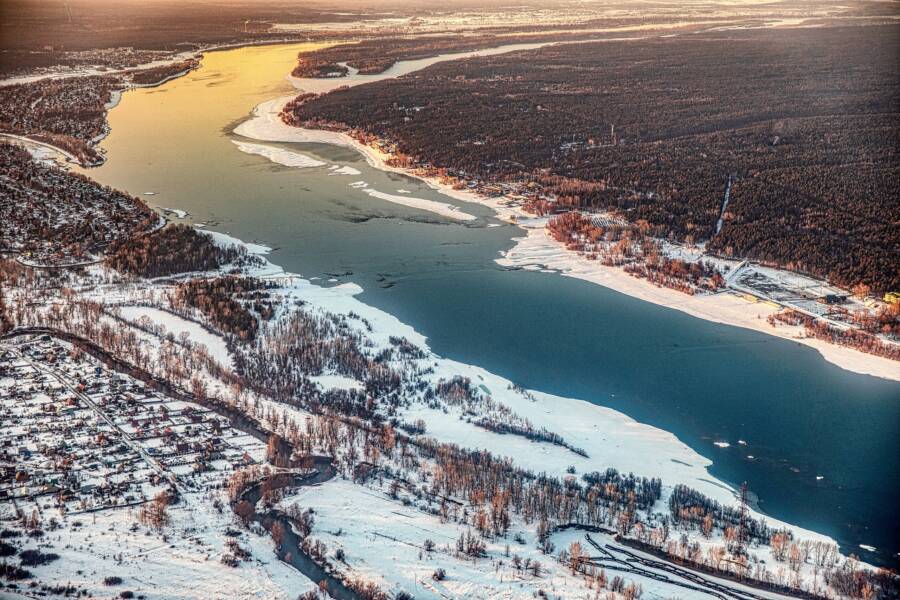
Dmitry Karyshev/Wikimedia CommonsThe graves were discovered in western Siberia. The region’s Ob River is pictured here.
For example, at the site of Fort Umrevinsky in Novosibirsk, archaeologists came across the burial of a boy between the ages of six and 12 who died in the late 18th or early 19th century. He, too, was dressed in what looked like an official uniform, reminiscent of the one worn by the Russian mining department.
All of this paints a compelling image of childhood throughout history.
“Childhood in the modern term, for a long time, did not exist — the child from infancy was built into a certain social system and was the carrier of social status,” Borodovsky said. “The modern image of childhood, when a growing child seeks autonomy or confrontation with the system in which he is brought up, thinks about his place in life, has developed only in the last 120 years.”
As such, the burials in Siberia provide a fascinating look into what childhood meant for people living in the region some 1,300 years ago.
After reading about the elite child burials in Siberia, discover some of the coldest places on Earth, from Russia to Antarctica. Then, learn about the Lykov family, who survived in the wilds of Siberia for 42 years.