Dioxin contamination, compounded by a devastating flood, made Missouri's Times Beach no longer safe for its residents. By 1982, they were warned against returning to their homes.

@blakepleasestop TikTokTikToker @blakepleasestop brought attention to Times Beach, Missouri and the tragedy that wiped it away.
The story of Missouri’s Times Beach involves one of the strangest environmental disasters in American history, and it started with something as mundane as dusty roads.
In a video that has racked up 122,000 views, @blakepleasestop lays out the story of Times Beach, Missouri — a small town that no longer exists because the U.S. government bought it, evacuated it, and demolished it.
“The town was effectively wiped off the map,” Blake says in the video.
The full story is even more unsettling than the video lets on.
What Started Out As A Resort Town Turns Toxic
According to St. Louis Magazine, Times Beach was founded in 1925 as a promotion by the old St. Louis Times newspaper. Readers who paid $67.50 for a six-month subscription received a small plot of land, and you needed at least two to build a house.
It was marketed as a resort, a weekend escape for doctors from St. Louis. But by the Great Depression, people were moving in full time. Shortly thereafter, a real community took hold. The town sat southwest of St. Louis along the Meramec River, with Route 66 running through it. Eventually, nearly 2,500 people lived there.
The trouble started at a chemical facility in Verona, Missouri, the Environmental Protection Agency (EPA) notes. During the 1960s, a company called Hoffman-Taff produced a component of Agent Orange there for the U.S. Army. The production process generated a toxic byproduct known commonly as dioxin, which is a chemical linked to cancer, reproductive and developmental problems, immune system damage, and hormonal interference.
When the facility was sold, they decided to remove the dioxin being stored on site and hired a man named Russell Bliss, a waste oil hauler, for the job.
Is This One Man Responsible For The Times Beach Disaster?
Russell Bliss mixed the dioxin with waste oil and then did what he routinely did with the waste oil: he sprayed it on dirt roads and horse arenas across the state to control dust.
According to the EPA, Bliss sprayed more than 25 locations with the contaminated mixture, and Times Beach was one of them. The city contracted Bliss to spray its unpaved roads from 1972 to 1976.
Bliss would later claim he had no idea the waste contained dioxin. Whether or not that’s true, the consequences were immediate at the sites he sprayed. At Shenandoah Stables, over 40 horses died from the toxic mixture. Birds, cats, and dogs were found dead near the arena. When the six-year-old daughter of the stable owner became seriously ill, the Missouri Department of Health and the CDC launched an investigation.
By 1974, they had traced the contamination back to Bliss. But what they still didn’t know was how far it had spread or that an entire town had been living on top of it for years.
Bliss has consistently denied knowing the materials were toxic. As St. Louis Magazine reported, he even sprayed the oil on his own farm. “If I thought it was something bad, would I spray it on my own farm where my family is?” he told CNN in 1997, in one of the few extensive interviews he’s done.
The Flood That Made Everything Worse For Times Beach, Missouri
Town officials eventually took matters into their own hands, collecting money for independent soil testing after the EPA said it might be a year before it could get to them. When the EPA heard the town was paying for its own tests, it moved immediately.
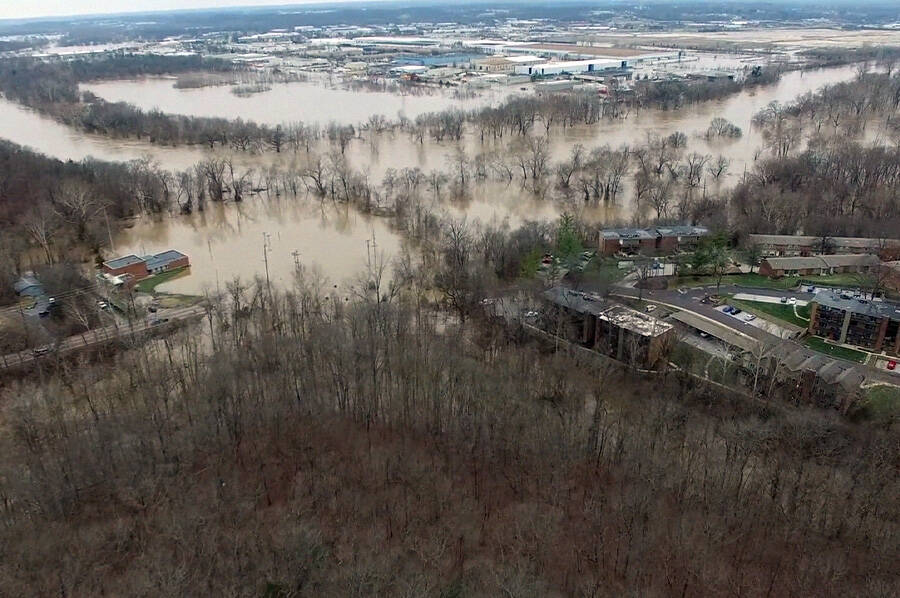
Mark Ruth YouTubeIn 1982, the Meramec River flooded, compounding the dioxin contamination crisis.
What it found was alarming: dioxin at more than 100 parts per billion. For context, the EPA considered anything above one part per billion hazardous.
Then, in December 1982, the Meramec River flooded catastrophically. Houses were ripped from their foundations. The already-contaminated soil spread across the entire town.
According to the EPA, dioxin levels were now found to be 300 times what the CDC considered safe. On December 23, 1982, residents were told not to return, an announcement that divided the town between those who wanted to stay and those who thought it best to heed the warning and leave. But a majority wanted a buyout of their property through the EPA’s Superfund.
An Unprecedented Move By The EPA
In February 1983, EPA Administrator Anne Gorsuch Burford announced — from a locked second-floor conference room in a hotel near Times Beach, with hundreds of residents gathered outside listening over loudspeakers — that the federal government would purchase every property in town using Superfund dollars.
That was 800 residential properties and 30 businesses, at a cost of $33 million. According to the Missouri Department of Natural Resources, it was one of the largest Superfund sites in U.S. history.
The cleanup that followed was massive. According to the EPA, between 1996 and 1997, an incinerator treated a total of 265,354 tons of dioxin-contaminated materials from 27 Missouri dioxin sites, including 37,234 tons of dioxin-contaminated materials from Times Beach. Homes, businesses, and even the town’s water tower were incinerated.
According to the Missouri DNR, the total cleanup cost was $110 million, $10 million of which was reimbursed by Syntex, the parent company of the facility that had produced the dioxin. The remaining ash and debris was buried in what the EPA called a “town mound.”
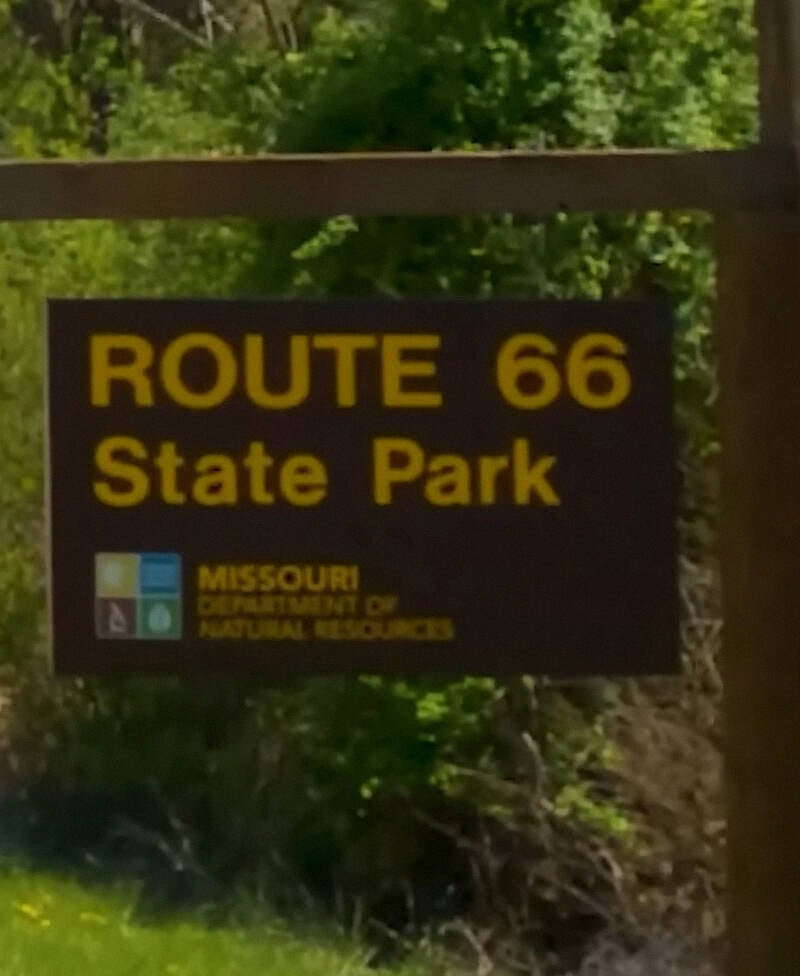
@chrishardenarchives YouTube ShortsThe former site of Times Beach, Missouri, is now occupied by Route 66 State Park.
The site was removed from the Superfund list in 2001. In 1999, Route 66 State Park opened on the former site — a 409-acre park along the Meramec River. The only Times Beach building left standing is the former Bridgehead Inn, now the park’s visitor center.
How Times Beach Changed U.S. Environmental Law
The disaster helped reshape how the United States handles toxic contamination. According to the EPA, Times Beach, alongside Love Canal in New York, was one of the key events that spurred the passage and strengthening of the Superfund law, which created a federal fund for cleaning up toxic waste sites and holding polluters accountable.
Former residents filed personal injury lawsuits against the chemical companies. Most received modest settlements, though they were required to absolve defendants of future liability. Marilyn Leistner, who served as the last mayor of Times Beach, has spent decades telling the story of what happened there.
“I saw it wipe out a whole community,” she told St. Louis Magazine. “I saw people that lived in the community lose their jobs, their churches, their homes, health problems. You can’t tell me dioxin has never caused anything. Think about that community.”
@blakepleasestop Replying to @Claire, Maguire, & Cashel let’s talk about Times Beach, MO!! The town the government bought and bulldozed due to the toxic dioxin sprayed to keep dust out of the air. #timesbeach #missouri #ghosttown
After reading about Times Beach, learn about the devastating legacy of Agent Orange, the toxic defoliant used during the Vietnam War. Then, discover how Monsanto and the U.S. government have faced pushback over Agent Orange’s lasting impact.