Located in San Pablo Huitzo in central Oaxaca, this astonishing find features friezes, carvings of faces believed to represent the deceased's ancestors, and stone figures wearing headdresses which are thought to serve as the guardians of the tomb.
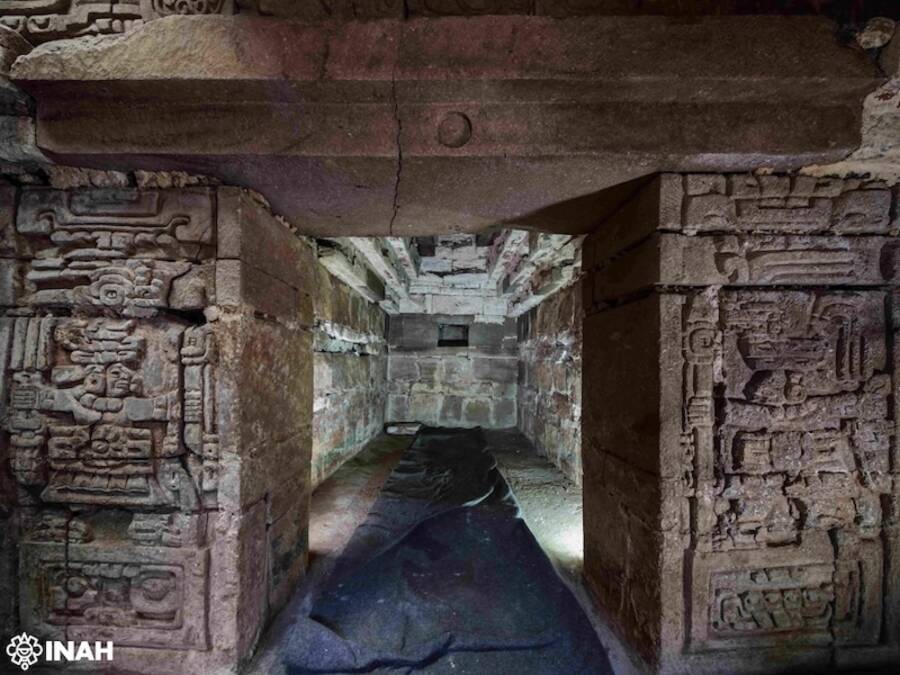
Luis Gerardo Peña Torres/INAHThe entrance to the ancient Zapotec tomb recently found in the state of Oaxaca.
During recent excavations in the Central Valleys of the Mexican state of Oaxaca, archaeologists suddenly found themselves face to face with a great owl — a stone owl, draped over the entrance to the antechamber of an ancient tomb. The archaeologists had uncovered an ornate and astonishingly well-preserved burial monument from the Zapotec culture, which Mexican officials are now hailing as nothing short of “exceptional.”
This Zapotec tomb is not only well-preserved, but extremely detailed in its carvings, murals, and other adornments. Archaeologists suspect that it was built some 1,400 years ago to honor a Zapotec lord, and it offers invaluable insights into this civilization’s social organization, funerary rituals, and overall worldview in the pre-Hispanic era.
The Ancient Zapotec Tomb Discovered In The Mexican State Of Oaxaca
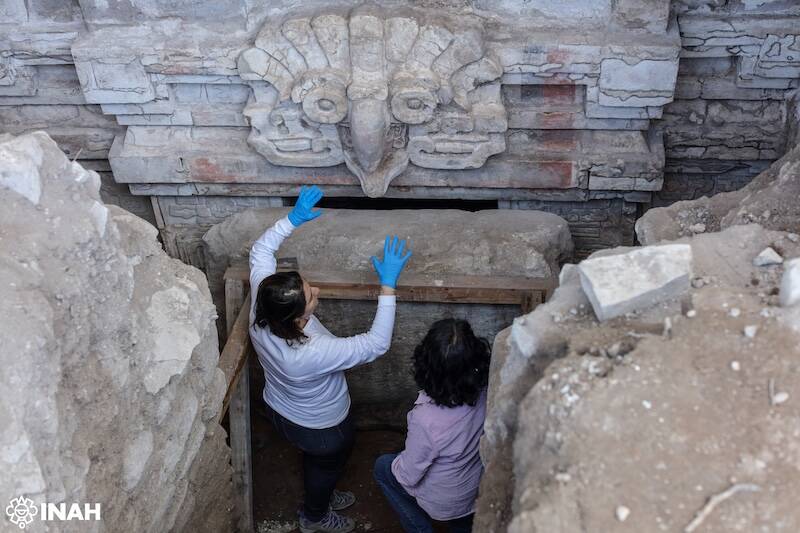
Luis Gerardo Peña Torres/INAHArchaeologists exploring the Zapotec tomb, which has been called Mexico’s most important historical discovery in many years.
According to a statement from Mexico’s National Institute of Anthropology and History, the Zapotec tomb was found during excavations in the municipality of San Pablo Huitzo. It first came to archaeologists’ attention thanks to an anonymous tip about looting in the area that was received in 2025.
Though it dates to roughly 600 C.E., the tomb is incredibly well-preserved, and is already being hailed as one of the most important archaeological discoveries in Mexico’s recent history.
“It is the most important archaeological discovery of the last decade in Mexico,” said Mexican President Claudia Sheinbaum Pardo, “due to its level of preservation and the information it provides.”
Archaeologists believe that the tomb was constructed for an important Zapotec lord. At the entrance of the tomb’s antechamber is an owl — a bird that symbolized both night and death in Zapotec culture — whose long beak drapes down over the stuccoed and painted face of a man. This man, likely the person to whom the tomb was dedicated, possibly came to be seen as a liaison between his descendants and Zapotec deities.
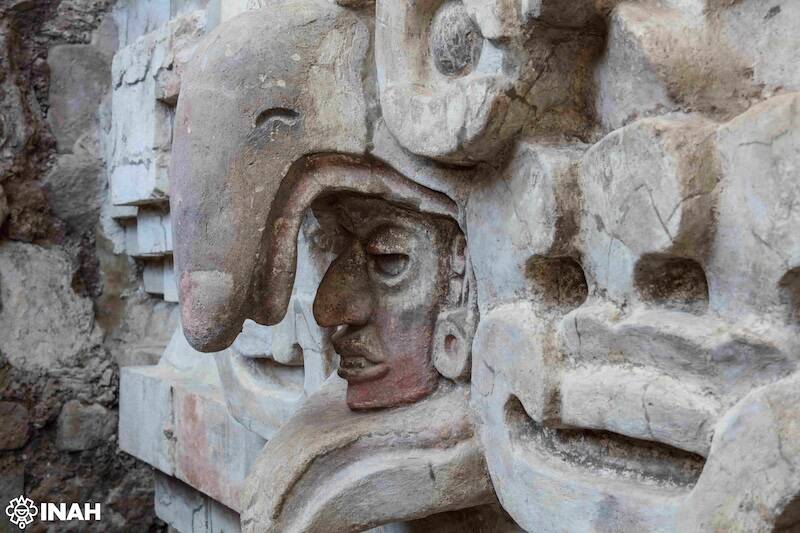
Luis Gerardo Peña Torres/INAHAt the tomb’s antechamber is a stone owl whose beak drapes over the face of a man, likely a Zapotec lord who was later seen as a messenger between his descendants and Zapotec deities.
At the threshold of the tomb is a lintel (a horizontal support beam) that includes a stone frieze engraved with calendrical names. Meanwhile, alongside the vertical jambs, there are engravings of a man and a woman, both wearing headdresses and holding artifacts, who may be the guardians of the tomb. And inside the burial chamber are sections of “an extraordinary mural painting” of “ochre, white, green, red and blue colors,” depicting a procession of people carrying bags of copal, a sacred tree resin.
The tomb thus provides a fascinating look at the Zapotec civilization, which existed in Oaxaca from 700 B.C.E. until roughly 1500 C.E.
The Rise And Fall Of The Zapotec People From Antiquity To The Spanish Conquest
The Zapotec people primarily lived in the modern state of Oaxaca. They believed that their civilization had first emerged from the area’s caves, or perhaps that they were once trees or jaguars that then became people. They called themselves Be’ena’a, or “The People,” though they also became known as “Be’ena Za’a” or “Cloud People.”
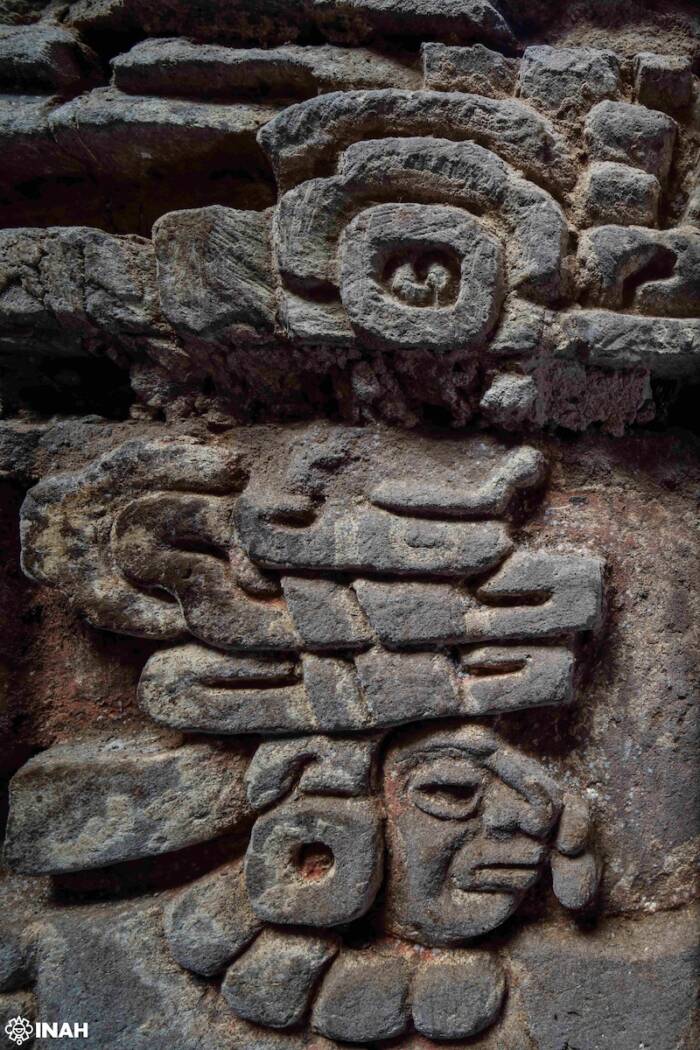
Luis Gerardo Peña Torres/INAHDetails of the ornate carvings found in the Zapotec tomb.
City-dwelling people, the Zapotec constructed ornate buildings, tombs, and ball courts, and worshipped a pantheon of different gods. They developed their own form of writing, followed a unique calendar, and used a “bar and dot system” of numerals.
Their culture reached its apex between the third and eighth centuries C.E. — during which time this tomb was constructed — but they were soon dominated by the Mixtecs. And finally, at the dawn of the 16th century, the Spanish arrived.
As such, the tomb found nestled in Oaxaca’s Central Valleys is a stunning remnant of what Zapotec culture was like before it was all but snuffed out by colonial conquest. Well-preserved, ornate, and full of symbolic imagery, it tells a fascinating story about the Zapotec civilization.
“This is an exceptional discovery due to its level of preservation and what it reveals about Zapotec culture: its social organization, its funerary rituals, and its worldview, preserved in its architecture and mural paintings,” said Mexico’s Secretary of Culture, Claudia Curiel de Icaza.
“It is a compelling example of Mexico’s ancient grandeur, which is now being researched, protected, and shared with society.”
After reading about the extremely well-preserved Zapotec tomb found in Mexico, discover the terrifying story of Mictlantecuhtli, the Aztec god of death. Then, go inside the chilling story of the Guanajuato Mummies, Mexico’s “screaming” corpses.