On April 11, 1952, 52 people drowned after Pan Am Flight 562A crashed near Puerto Rico. Now, researchers have located the wreckage 2,000 feet below the surface.
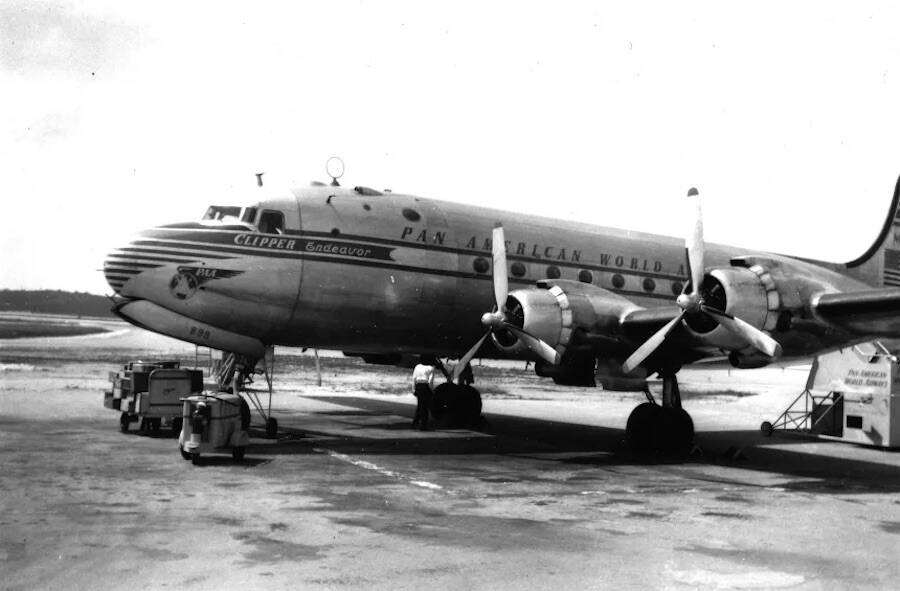
Pan Am Historical FoundationAlthough everyone on board survived the initial crash of Pan Am Flight 562A on April 11, 1952, 52 people drowned in the immediate aftermath.
At the beginning of any commercial flight, the attendants will perform pre-flight safety demonstrations — ones that, if you’ve flown many times, you could probably repeat from memory. Passengers are told what to do in the event of a crash or a water landing while attendants demonstrate emergency procedures as they stand in the aisle.
And though these demonstrations may feel as though they’ve simply always existed, there was a time when they did not — then one incident changed everything. The reason we have these demonstrations today all comes down to one horrific crash that took place 74 years ago.
On April 11, 1952, the Clipper Endeavor flying Pan Am Flight 562A was on its way to New York from Puerto Rico when the pilot was forced to conduct a crash landing in the Atlantic Ocean after multiple engines failed. The crash left 52 people dead and inspired the creation of pre-flight safety demonstrations, but the aircraft was never found — until now.
The Crash Of Pan Am Flight 562A On April 11, 1952
It was Good Friday when five crew members and 64 passengers in San Juan boarded the Clipper Endeavor, a Douglas DC-4 plane headed to New York’s Idlewild Airport (now John F. Kennedy International Airport).
Shortly after the plane took off, two of its four engines lost power. Pilot John C. Burn immediately changed course and began heading back to San Juan, but the plane started plummeting toward the ocean.
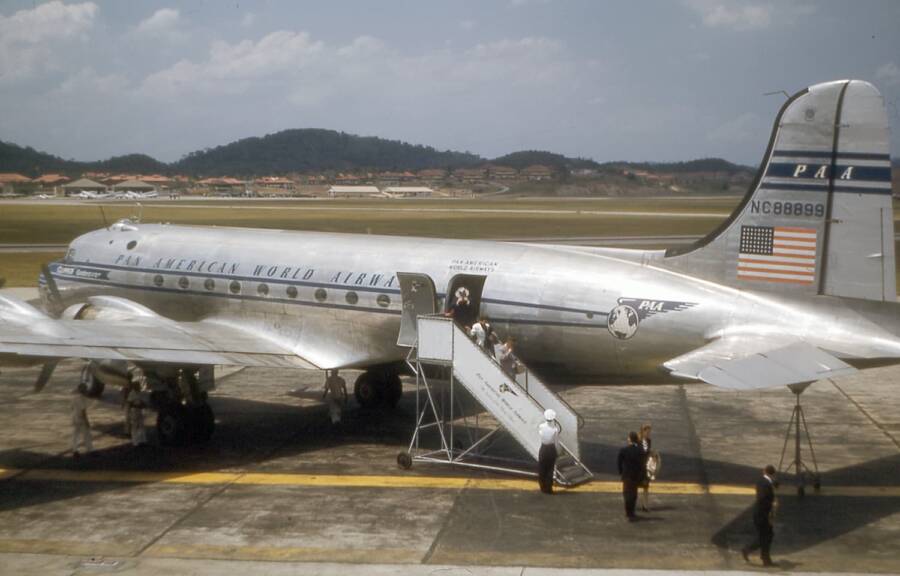
Clint Fewell/czimages.comOnly 17 people survived the crash of Pan Am Flight 562A.
In order to make the aircraft lighter and buy some time, the crew began dumping fuel. But it wasn’t enough and Burn was forced to make a crash landing in the Atlantic. In total, the flight was only about eight minutes long.
Everyone on the plane initially survived the crash, which had torn off the tail of the plane but left the cabin intact. But in the moments that followed, chaos ensued.
Because there had been no emergency briefings or coordinated procedures for evacuation, panic took over — and 52 people drowned as the plane flooded and sank within just a few minutes.
The U.S. Coast Guard and Air Force were able to save 12 passengers and all five crew members amidst the chaos.
The crash, known in Puerto Rico as “La Tragedia del Viernes Santo” (“The Good Friday Tragedy”), prompted the Civil Aeronautics Board (a predecessor of the Federal Aviation Administration) to implement safety reforms like pre-flight emergency demonstrations, making this a crucial turning point in aviation history.
The Discovery Of The Clipper Endeavor Off The Coast Of Puerto Rico
For more than 70 years, the wreck of the Clipper Endeavor was lost deep in the Atlantic Ocean. But, in a statement released on July 21, investigators with the Air/Sea Heritage Foundation say it’s been found.
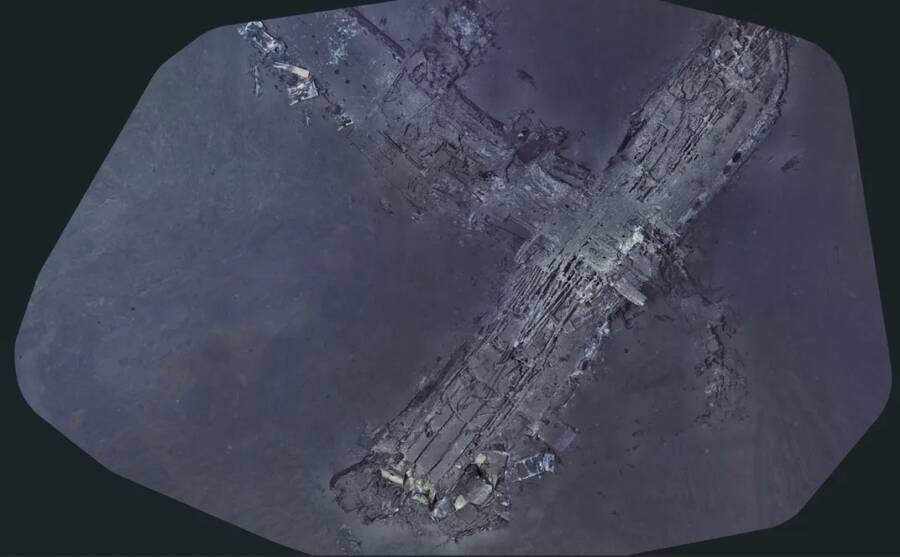
Air/Sea Heritage Foundation and Deep Sea VisionThe team discovered the wreck about five miles off the coast of northern Puerto Rico using high-resolution sonar.
The remains of the aircraft were discovered about five miles off Puerto Rico’s northern coast, resting on the ocean floor about 2,000 feet below the surface. During their investigation, they took hundreds of thousands of underwater photographs of the plane.
Russ Matthews, president and co-founder of the organization, said he’s glad to bring some closure and attention to this story and that he “was astonished that such an important story had largely faded from public memory.”
Matthews began searching for this long-lost aircraft in 2019, conducting surveys in the ocean off San Juan and looking through investigation reports related to the crash.
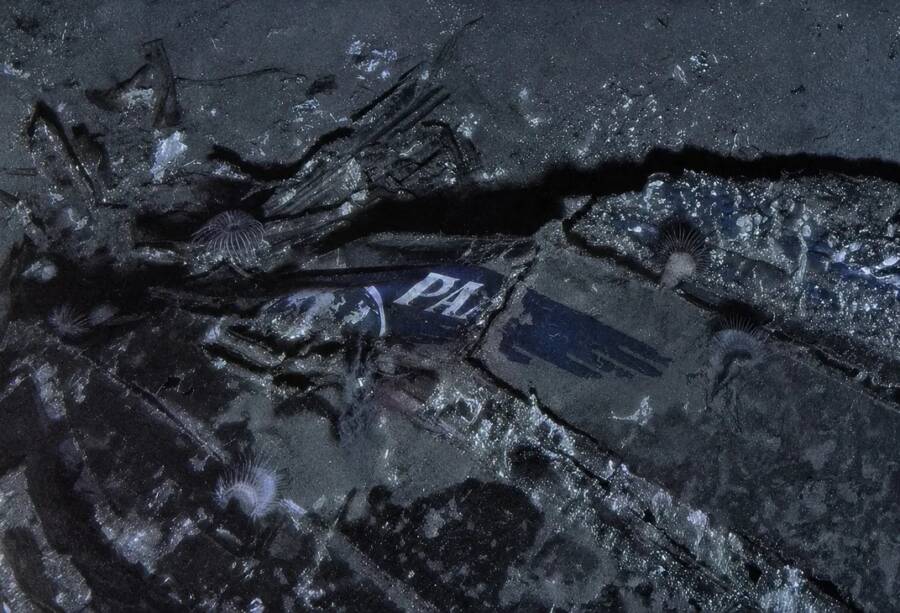
Air/Sea Heritage Foundation and Deep Sea VisionThe main body of the plane was largely intact, with the Pan Am logo still visible.
In 2024, Matthews collaborated with Josh Gates, the host of the Discovery Channel’s Expedition Unknown, on a search for the plane. This year, the pair learned that a research ship, equipped with an autonomous underwater vehicle nicknamed “Miss Millie,” would be exploring near the suspected site of the wreck.
The team had Miss Millie scan the ocean floor with high-resolution sonar for around 30 hours, until, on June 2, the vehicle found the wreck.
The photographs show that the plane’s main body is still largely intact. The landing gear and main cabin windows of the Clipper Endeavor are still visible, as is the Pan American World Airways logo and part of the plane’s name.
The team told CNN that there are no plans to disturb the wreck site, noting that the site is a “grave” for those that perished after the crash. They are planning, however, to work with the Puerto Rican government to coordinate protections for the site and construct a memorial for the victims.
Gates also told CNN that there are two known survivors alive today: a now-102-year-old woman who helped open the plane door to let passengers out, and a baby, found floating on the ocean’s surface and brought back to life by rescuers.
After reading about the wreck of Pan Am Flight 562A, learn about Alexander Kliuyev, the Soviet pilot who tried to land a plane blind, killing 70 people. Then, discover the Uruguayan Air Force Flight 571 crash, where survivors were forced to turn to cannibalism while awaiting rescue.