Although rumors about Polybius and the strange effects the video game had on players have spread for decades, nobody has ever found an arcade machine or any other evidence that the game is real.
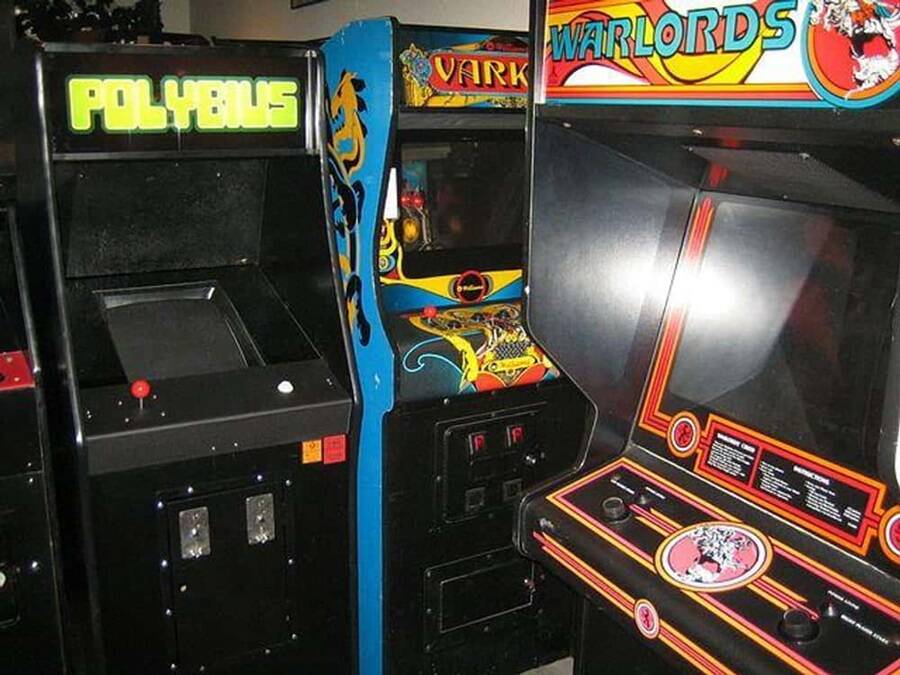
Newsilver95/Wikimedia CommonsA recreation of the legendary arcade game Polybius.
For decades, rumors have circulated of a strange game that supposedly appeared in several arcades around Portland, Oregon, in 1981. It was so unsettling that it allegedly caused seizures, hallucinations, and even mysterious disappearances. The game was called Polybius.
Although there is no concrete proof of the video game’s existence, the Polybius urban legend has survived for more than 40 years. But unlike similar myths, the story isn’t just about a lost game or a forgotten developer.
The tale involves government experiments, psychological manipulation, and “men in black” who collected players’ data. As the theory goes, what appeared to be an ordinary arcade game was anything but.
Something sinister was hiding inside.
The Urban Legend Of The Polybius Game
In the early 1980s, arcades were a perpetual hub of teenage activity. Kids crowded into rooms full of cabinet machines with games like Pac-Man, Donkey Kong, and Asteroids. Then, rumors of a new game started to spread, and it quickly earned a reputation for all the wrong reasons.

Public DomainThe alleged intro screen of Polybius.
According to legend, Polybius appeared suddenly in Portland arcades in 1981. The cabinet was plain and black, but the screen was alive with graphics that formed smooth, hypnotic lines and geometric shapes shifting at rapid speeds.
Players reported that the game was simple yet deeply immersive, drawing them in with an intensity unlike any other arcade experience. Many said it was addictive in a way that went beyond normal competition. It seemed as if it were engineered to make them keep pressing the start button.
The Polybius arcade game took its name from the Greek historian Polybius, who lived in the second century B.C.E. He is best known for creating the Polybius square, a method of encoding Greek letters into numbers to send secret messages. Was his modern namesake concealing something equally cryptic?
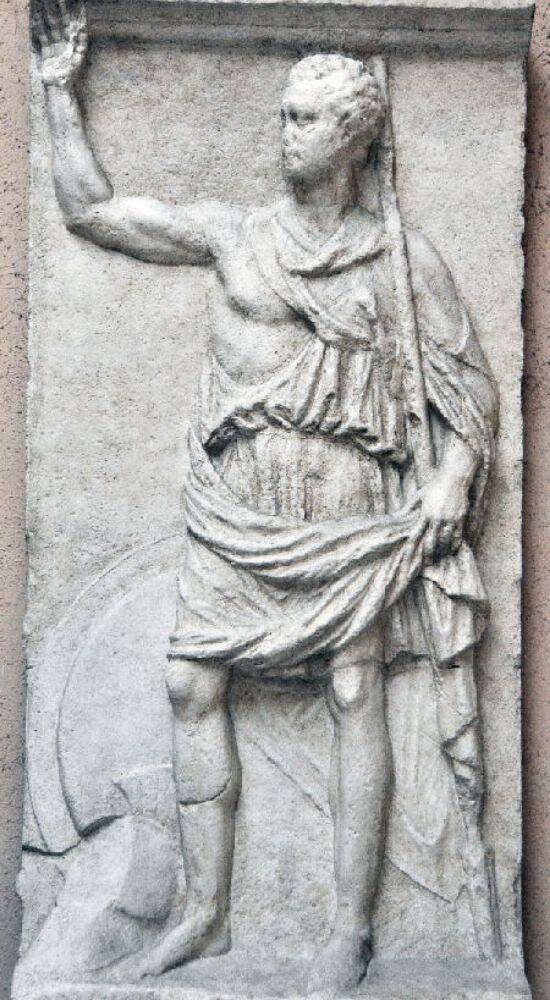
Jona Lendering/Museum of Roman CivilizationA plaster cast of a relief from a stele unearthed in Greece in 1880 that’s believed to depict the historian Polybius.
There are claims that the Polybius game contained subliminal content. Flashing messages allegedly appeared spontaneously on the screen. They were hard to notice but were said to affect players’ minds, pulling them into obsession or distress.
The stories surrounding Polybius quickly escalated. Teenagers reportedly developed migraines, nausea, and dizziness after extended gaming sessions. Common complaints included insomnia, vivid nightmares of flashing lights and abstract shapes, and even seizures triggered by the intense graphics. Other players supposedly reported memory loss and a creeping sense of dread that lingered long after leaving the arcade.
The most extreme accounts claimed that kids collapsed at the machine — and some even disappeared after becoming obsessed.
Then, as quickly as it had appeared, the game vanished.
‘Men In Black’ And Government Conspiracies
The Polybius urban legend took a darker turn with reports of officials in black suits visiting arcades around Portland. Witnesses supposedly stated that the mysterious men didn’t play or repair the game — they simply inspected the arcade cabinets. In fact, they seemed to be government agents who observed players’ reactions and collected data.
Shortly after these “men in black” were spotted, Polybius machines could no longer be found anywhere in the area.
In the decades since, rumors have spread that the men were CIA agents who planted Polybius in arcades as part of MK-Ultra, the U.S. government’s secretive Cold War mind-control program.
Proponents of this theory pointed to the game’s title screen, which reportedly listed the developer as “Sinneslöschen,” a German term that translates to “sense delete” or “sensory deprivation.” Polybius wasn’t entertainment, they claimed, but rather an experiment.
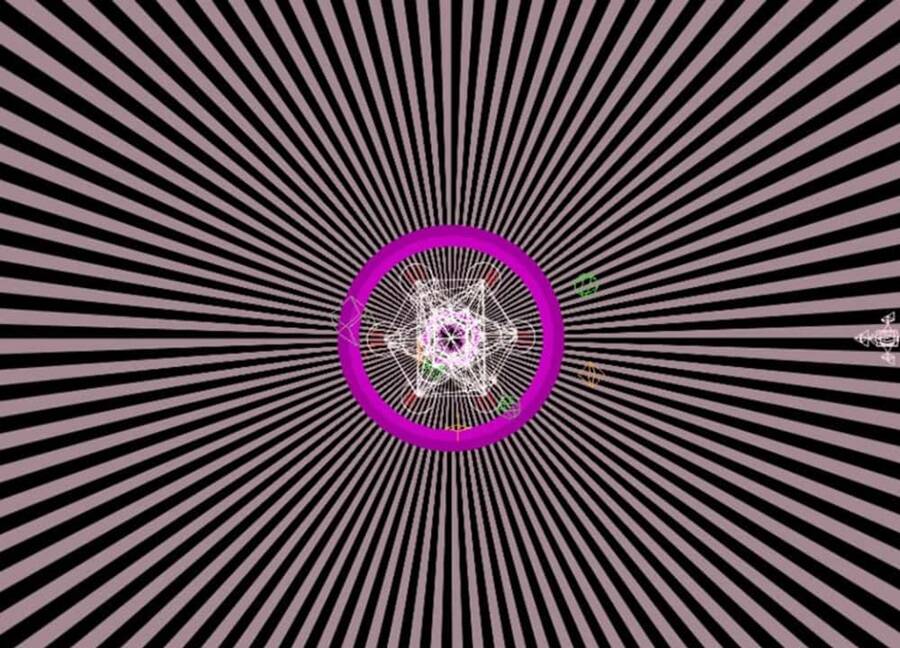
Alonsitis Duff/YouTubeA screenshot from a video claiming to show the gameplay of Polybius.
It turns out that government agents were active in Portland arcades at the time. In 1981, the FBI seized game cabinets that had been turned into illegal gambling machines. Ahead of the raid, they examined the cabinets to see if they’d been tampered with and wrote down the names of the top scorers listed on the screen to contact them as potential witnesses.
However, there’s no evidence that they investigated a game called Polybius — or that it ever existed at all.
Did The Polybius Game Really Exist?
Just like the stories of the “men in black” stemmed from real events, so did rumors of a video game that had bizarre effects on players.
In 1981, two Portland teens became ill after marathon gaming sessions. One boy reportedly suffered a migraine after playing Tempest and collapsed in a stranger’s yard. Another played Asteroids for 28 hours straight while trying to break a record and started experiencing intense stomach pain.

John Sunderland/The Denver Post via Getty ImagesBoys look on as their friend plays an arcade game. 1981.
The following year, 18-year-old Peter Bukowski dropped dead while playing Berserk. As reported by The Albuquerque Tribune at the time, he had a heart attack brought on by “myocardial inflammation.”
These events startled parents in the new age of video games. Many were already skeptical of their impacts on developing minds and concerned that children would become addicted.
Much like the “Satanic Panic” of the decade, these worries conflated into a tale of a much larger boogeyman. Over the years, all of these unrelated events melded into the single Polybius urban legend.
Indeed, there’s no evidence that Polybius existed at all. It was never mentioned in trade magazines, catalogs, or newspaper reports from the time.
In fact, the earliest reference to the game came from the website coinop.org in 1998. The post included an alleged image of the title screen but little other confirmation that the arcade game was real.
Otherwise, the first known written mention of Polybius didn’t appear until a September 2003 issue of GamePro magazine. The publication outlined the theory surrounding the game, ending with: “Unfortunately, the main thing that’s missing is proof.”
GameProThe 2003 article in GamePro magazine that covered the Polybius urban legend.
In 2006, a commenter on coinop.org claimed to have worked for the company that allegedly developed the Polybius game. He said that he and his colleagues were unaware of the machine’s mind-altering effects. While the website later debunked the comment, the man’s story only fueled the mythology.
In the years since, independent developers have released games under the name Polybius. Replica machines were built, online videos circulated of fake gameplay, and references appeared in TV shows and documentaries. However, no authentic Polybius game cabinet has ever surfaced, and the original code has never been recovered.
The entire story is almost certainly a fabrication, but Polybius lives on as one of the most mysterious digital myths of our time.
After reading about the legend of the Polybius game, go inside 13 of the most terrifying games ever made. Then, look through 44 photos that capture the height of Pokémania.