While stationed in Budapest, Raoul Wallenberg did whatever he could to save Hungarian Jews from the horrors of the Holocaust — but he tragically disappeared just as World War II was coming to an end.
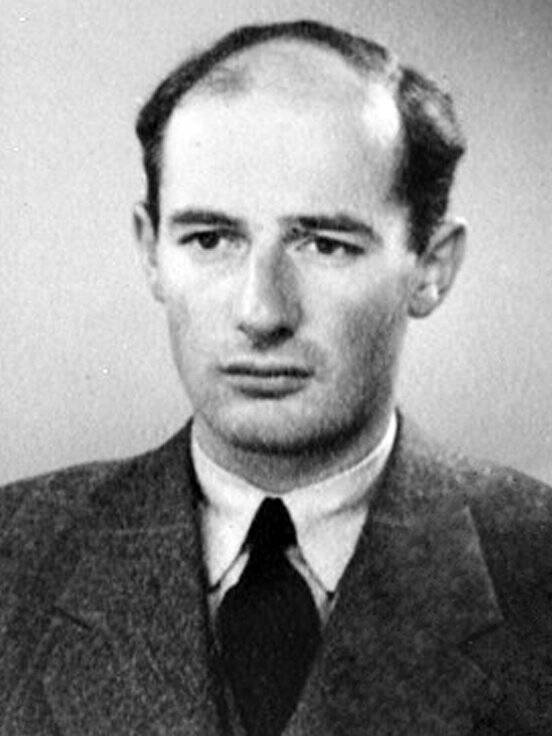
USHMM Photo ArchivesAfter saving tens of thousands of Jews, Raoul Wallenberg disappeared into a Soviet prison.
In 1944, Nazi Germany invaded Hungary — and quickly began to send Hungarian Jews to concentration camps. Over just a couple of months, more than 400,000 people were deported, most of whom were killed at Auschwitz. And during this period of terror and violence, a Swedish diplomat named Raoul Wallenberg did whatever he could to save Hungary’s Jewish population.
Using protective passports, forged documents, and a network of safe houses, Wallenberg managed to save an estimated 100,000 people. But after the war, Wallenberg vanished entirely.
Last seen with Soviet officers, the 32-year-old diplomat is believed to have died while in Soviet custody. But he’s far from forgotten.
Raoul Wallenberg’s Path To Nazi-Occupied Hungary
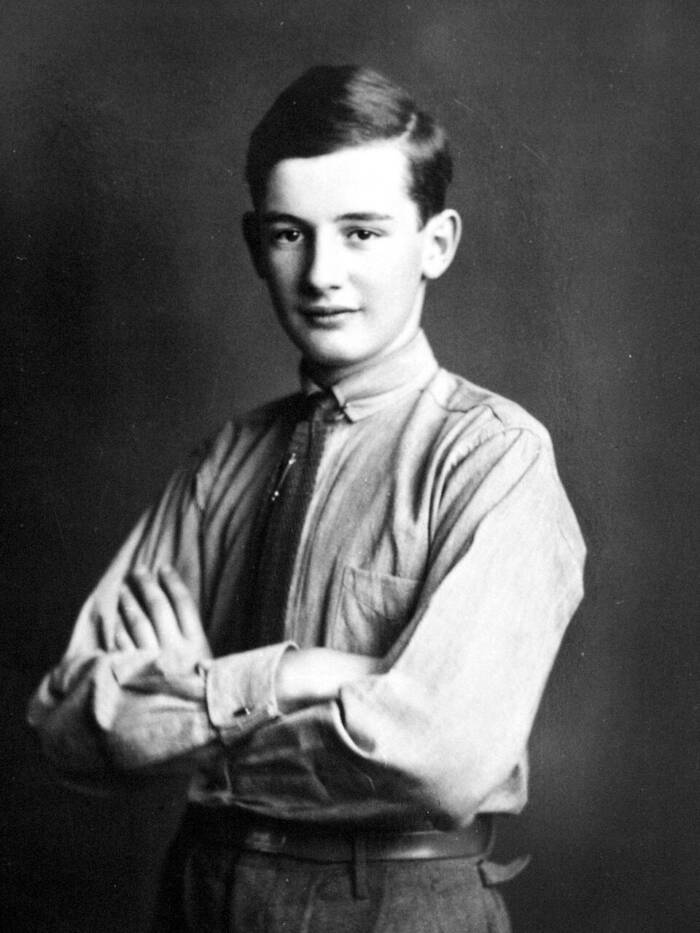
Public DomainRaoul Wallenberg as a boy.
Born on Aug. 4, 1912, in Stockholm, Sweden, Raoul Wallenberg grew up in a wealthy family. His grandfather was a diplomat, and Wallenberg learned to speak English, French, German, and Hungarian, in addition to his native Swedish. After studying in Paris, Wallenberg also attended the University of Michigan in the United States, and graduated in 1935.
Back in Sweden, Raoul Wallenberg worked at an import-export company. He spent his 20s traveling across Europe, and witnessed the rise of Nazism. Indeed, things in Europe were changing rapidly. World War II began in 1939, and, one by one, European countries began to fall to Nazi Germany.
Then, in March 1944, the Nazis invaded Hungary — a former ally — when Hungary sought to switch sides. According to the United States Holocaust Memorial Museum, almost 440,000 Hungarian Jews were deported by that July. They were largely sent to Auschwitz, where 320,000 were murdered.
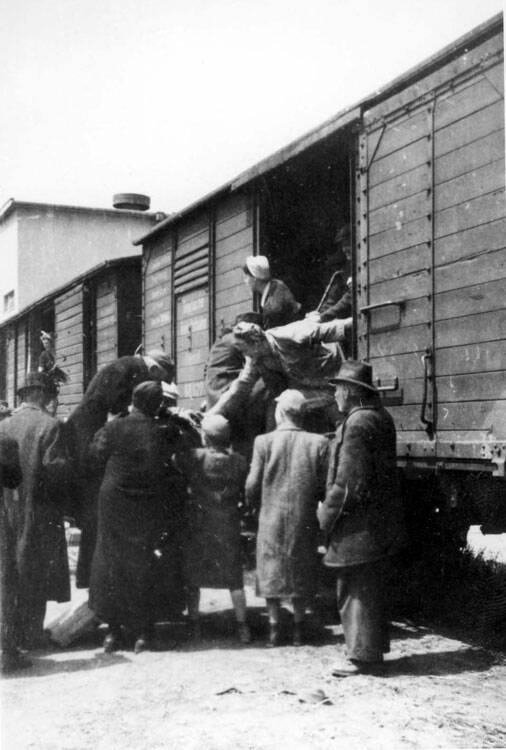
Yad Vashem Photo ArchivesIn just a few months, the Nazis deported over 400,000 Hungarian Jews to concentration camps, where most were killed.
Around the same time, the United States created the War Refugee Board, which sought to work with neutral countries to fund refugee projects, and to save European Jews. As the Raoul Wallenberg Institute reports, Wallenberg was recommended to the organization by his boss, a Hungarian Jew, who declared that the 31-year-old was the “right man for the job.”
Although he had never held a diplomatic post, Raoul Wallenberg accepted the appointment. He arrived in Budapest on July 9, 1944, carrying a list of names: 650 Jews with a connection to Sweden that he hoped to save.
How Raoul Wallenberg Saved Thousands Of Hungarian Jews
At first, Raoul Wallenberg’s task was straightforward: he would issue protective passports, known as a Schutzpass, to Jews living in Budapest. Anyone with a passport had the status of a Swedish citizen, which protected them from deportation to a concentration camp.
But Wallenberg didn’t limit his activities to just 650 people. Instead, he made 1,000 copies of the passports — then 4,500 copies (if not even more).
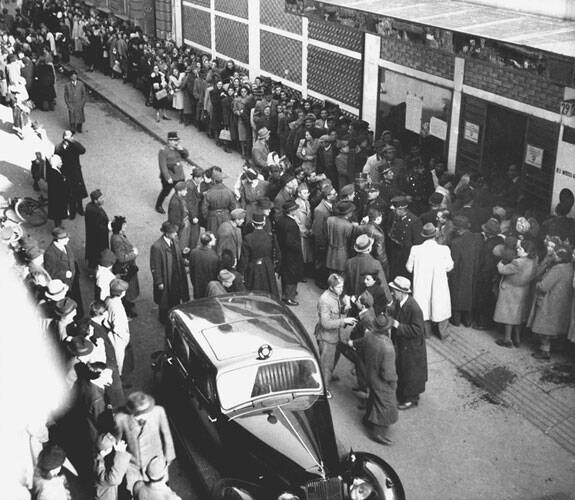
Yad Vashem Photo ArchivesJews swarmed the Swedish embassy in occupied Budapest, hoping for protection.
Yet things in Hungary had become much more dangerous for Jews. As Yad Vashem reports, Hungarian Jews were being killed in the streets, or dragged to the Danube River, where they were shot to death or drowned. For Wallenberg, even protecting thousands felt small in the face of this threat.
So he took action. Wallenberg created 32 “safe houses” in Budapest, where Jews could shelter under Swedish protection. He used War Refugee Board and Swedish funds to create hospitals, soup kitchens, and nurseries. He also enlisted young Jews who looked Aryan to pose as “guards,” or even as members of the fascist Arrow Cross organization, which had seized power.
When the city’s remaining Jews were sent on “death marches” to camps on the Austrian border, Wallenberg and his allies followed in cars, handing out food and clothing. He would also approach the column and shout Jewish names at random. If the called-upon had a passport, they went with Wallenberg. If they didn’t, his associates would quickly create one.
“I’ve taken on this assignment, and I will never be able to go back to Stockholm without knowing inside myself that I’d done all a man could do to save as many Jews as possible,” Wallenberg once remarked.
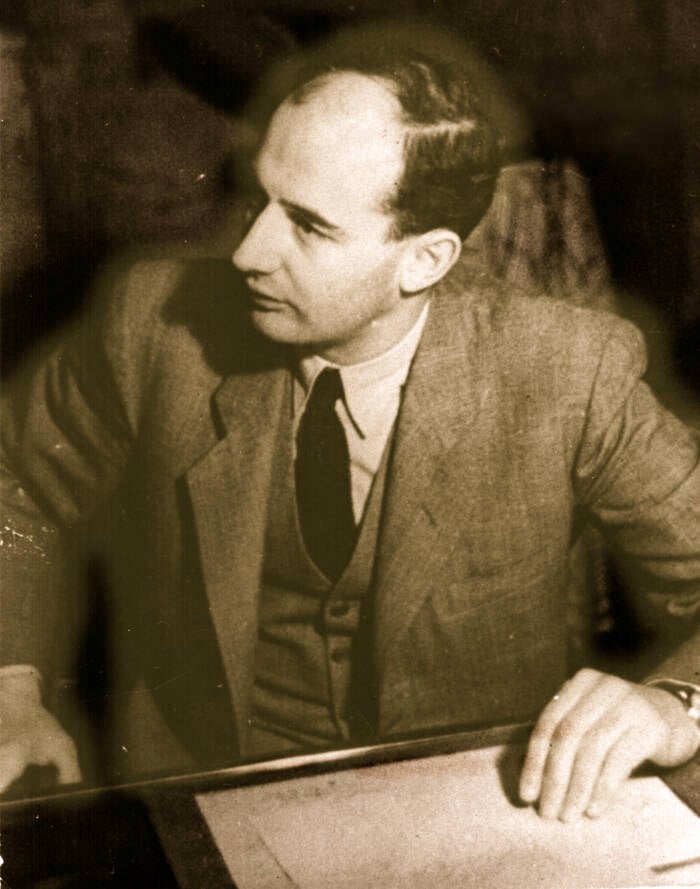
Public DomainRaoul Wallenberg sought to save as many Hungarian Jews as possible.
But though Raoul Wallenberg saved as many as 100,000 Jews in Hungary, there was one person he couldn’t rescue: himself.
The Disappearance Of The Swedish Diplomat — And His Remarkable Legacy Today
By 1945, the tide of World War II had turned. The Soviet Army marched on Budapest, and by January the Soviets had besieged the city. Wallenberg remained, and was last seen on Jan. 17, in the company of Soviet soldiers.
“I don’t know whether I am being taken as a guest of the Soviets,” the 32-year-old remarked as he was led away, “or as their prisoner.”
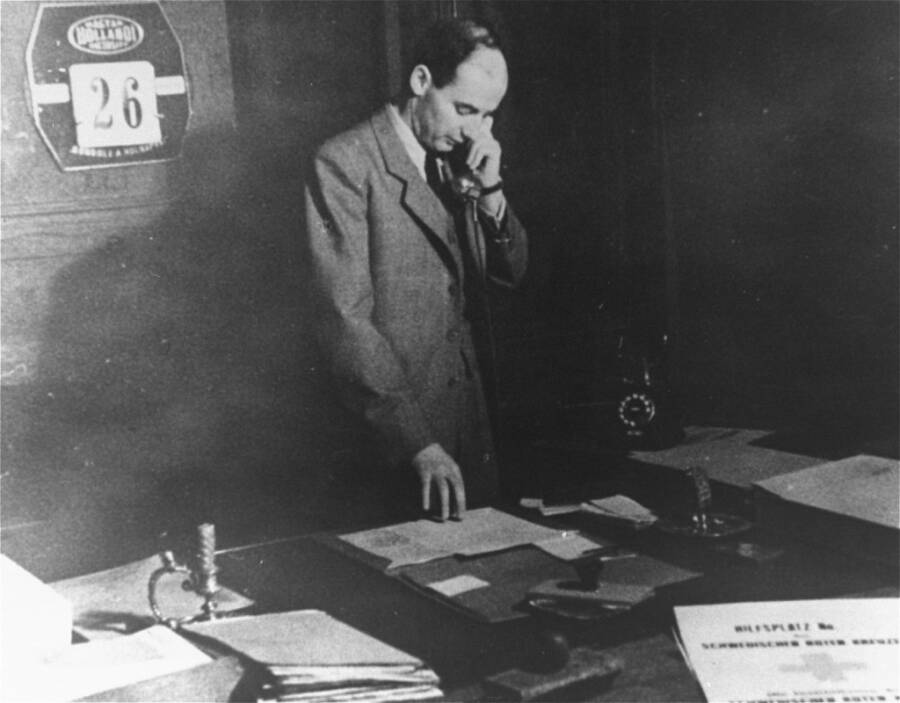
United States Holocaust Memorial MuseumRaoul Wallenberg is presumed to have died in 1947, but his exact fate is unknown.
The answer soon became clear: Raoul Wallenberg was never seen alive again. He was presumably imprisoned on suspicion of espionage, because of his connections to American organizations like the War Refugee Board. But his exact fate is unknown to this day.
For years, the Soviets claimed to have no knowledge of Wallenberg, though some former Soviet prisoners believed they had crossed paths him in Soviet prisons.
By the 1960s, the Soviets had begun to suggest that the 32-year-old had died of a heart attack, though a Swedish-Russian investigation in 2000 found that this was unlikely. Wallenberg was declared dead in 2016, but his remains have never been found. Only his diplomatic passport and cigarette case, which resurfaced in Moscow 1989, have ever been recovered.
But Raoul Wallenberg is far from forgotten.
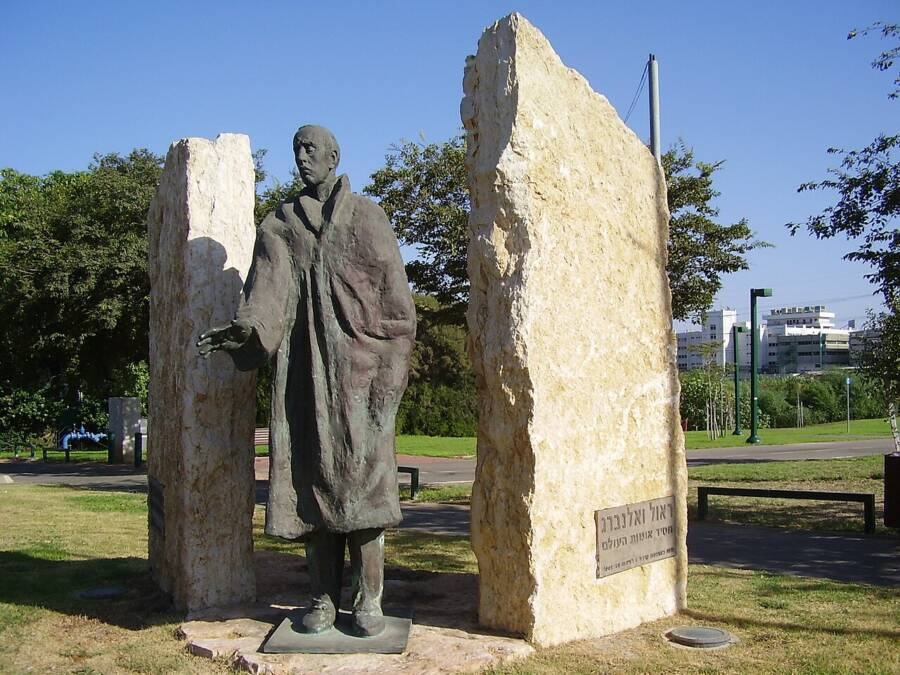
Avishai Teicher/Wikimedia CommonsA monument to Raoul Wallenberg in Tel Aviv, Israel.
Though little knew of his heroism in the years immediately after the war, a 1980 article from journalist Elenore Lester in New York Magazine revived his story. The following year, President Ronald Reagan declared Wallenberg an honorary U.S. citizen, making him only the second person to receive the honor after Winston Churchill.
Wallenberg “had little in common” with the people he saved, Hungarian-born U.S. Congressman Tom Lantos, who was saved by Wallenberg himself, remarked in 2008. He continued: “[Wallenberg] was a Lutheran, they were Jewish; he was a Swede, they were Hungarians. And yet with inspired courage and creativity he saved the lives of tens of thousands of men, women and children by placing them under the protection of the Swedish crown.”
After reading about Raoul Wallenberg and how he risked his life to save thousands of Hungarian Jews during the Holocaust, learn about other little-known heroes of the Holocaust. Then, discover the incredible story of the Jewish parachutists who risked everything to take down the Nazis.