The researchers dated the soles, made of esparto grass, to three different time periods, ranging from the 4th century B.C.E. to the 1st century C.E., proving that this specific type of sandal was used across many centuries.
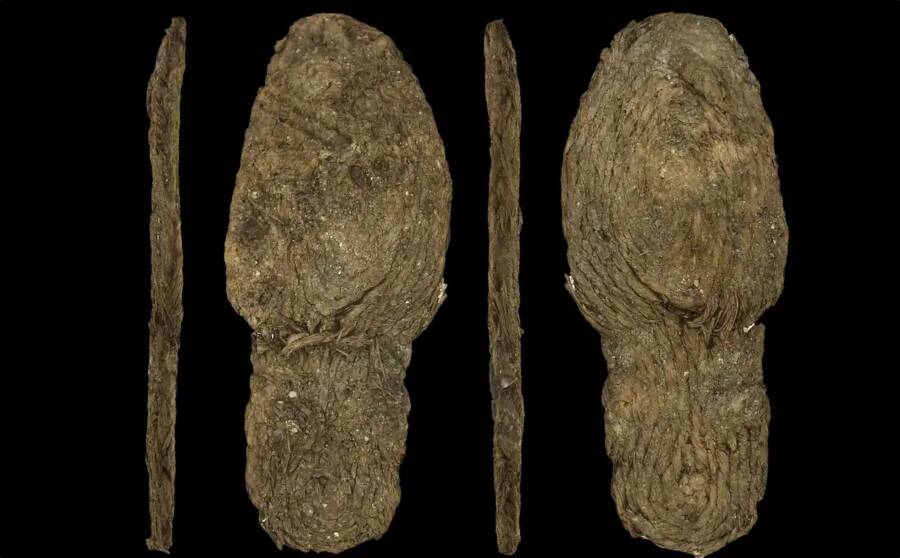
University of GranadaFound at the Urium mining site in Minas de Riotinto, these astonishingly well-preserved pieces of footwear were made with esparto grass between 2,000 and 2,400 years ago.
Archaeologists just found ancient sandal soles made from braided esparto grass at the remains of a former mine in southwestern Spain — and some date back a whopping 2,400 years.
Researchers said that the discovery, which remains unparalleled in the Iberian peninsula, shows how footwear traditions in the region stayed consistent between the Iron Age and the Roman era.
The Discovery Of Sandals Worn At The Urium Mine Some 2,000 Years Ago
The discovery and analysis of the sandal soles was recently described in the journal Pyrenae by a team of University of Granada researchers.
The eight pieces of footwear were found in Nuevo Filón Norte 1 sector of the Urium mining site in the town of Minas de Riotinto. The Urium mine is a part of a large complex of ancient Roman mines.
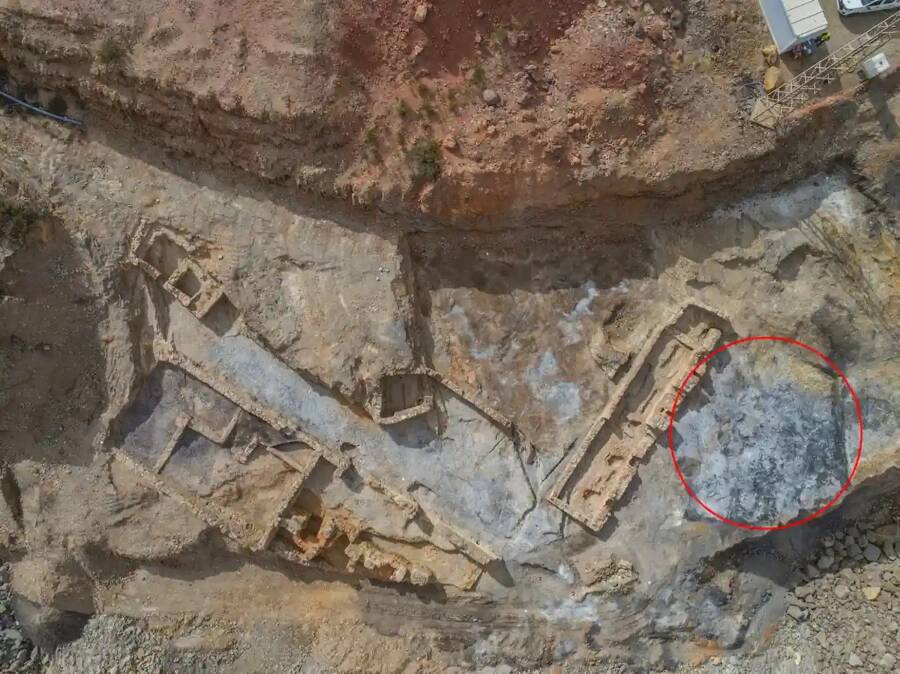
Bustamante-Álvarez, M. et al. 2026The sandals were found in the Nuevo Filón Norte 1 sector of the ancient Urium mining complex in southwestern Spain.
Researchers unearthed the pieces from two piles of ash — the result of cleaning the furnaces used in the mines to extract the metals in their purest form. The ash played a crucial role in keeping the sandal soles well-preserved and defending their plant fibers from decay by maintaining a dry and highly alkaline environment. This rare preservation of the sandals’ organic material allowed for an unprecedentedly detailed analysis of ancient footwear this old.
This organic material consisted of braided esparto grass (Stipa tenacissima), a strong but flexible plant that is abundant in southwestern Spain.
Researchers at the site also found mining tools like ropes and baskets made from these same plant fibers, and they were likewise well preserved due to the site’s specific environmental conditions.
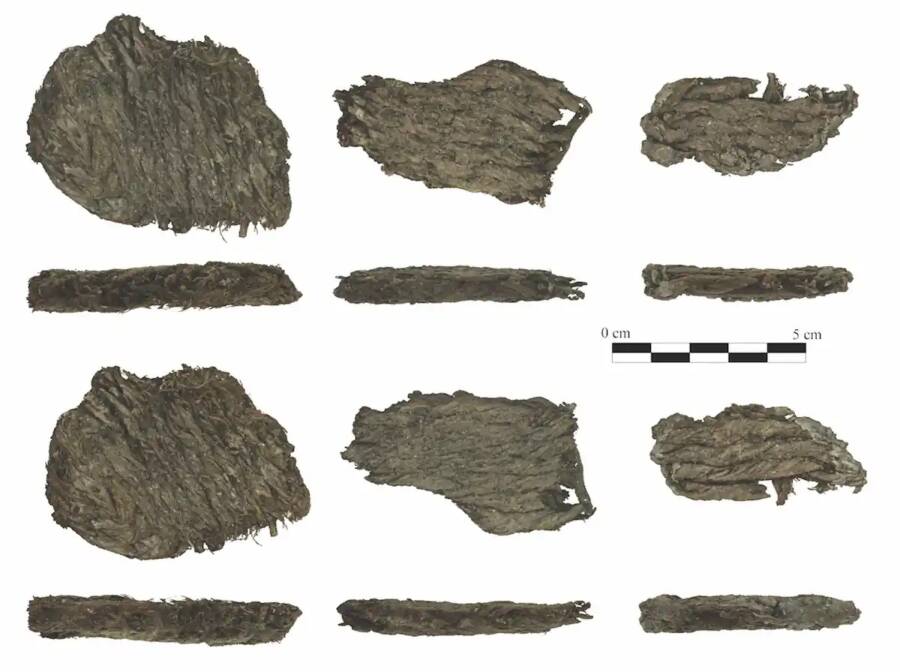
Bustamante-Álvarez, M. et al. 2026The researchers were able to recreate the manufacturing process of the sandals, revealing their fine craftsmanship.
Researchers noticed that the soles of the sandals showed wear and tear in the forefoot and heel areas, and that most of the sandals were missing the cords that secured them to the foot. All of this suggests that the sandals were worn for long periods, and only discarded once they began to fall apart.
After conducting carbon-14 dating on three of the sandals, the researchers determined that they came from three different time periods. One piece is from the 1st century C.E., one is dated to between the 2nd and 1st centuries B.C.E, and the oldest is from somewhere between the 4th and 2nd centuries B.C.E.
What This Discovery Reveals About Ancient Footwear In Roman Hispania
This discovery represents one of the largest collections of Roman-era footwear made from plant fibers that’s ever been found in the Iberian Peninsula. Now, researchers hope that they’ll be able to compare this find to ancient artifacts unearthed at other mining sites elsewhere in ancient Hispania.
For now, this find is allowing researchers to uncover the ancient techniques that people in the Iberian Peninsula used to craft various goods from esparto grass. Furthermore, these discoveries are revealing that certain footwear traditions were used in these mines across many centuries, from the Iron Age and into the Roman era.
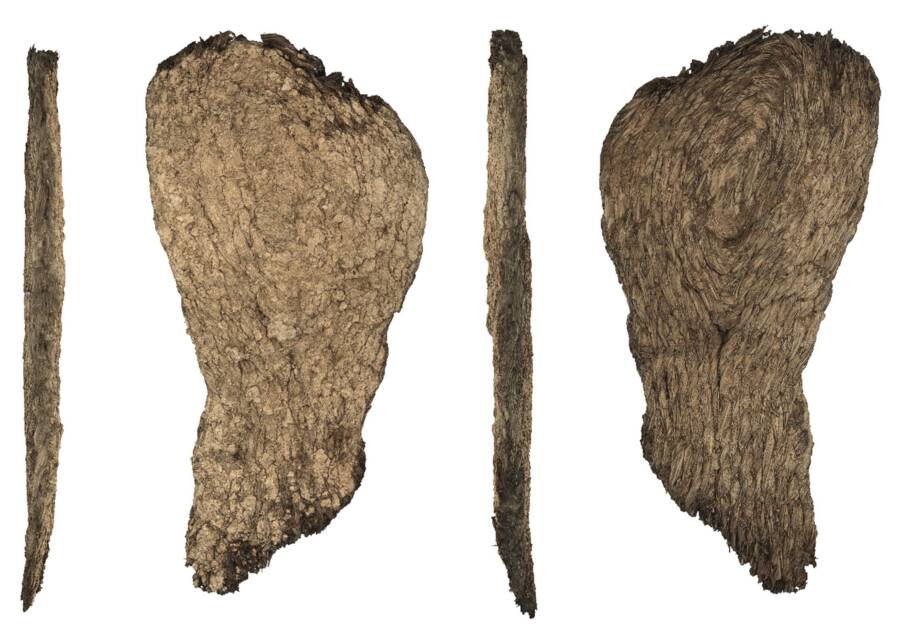
Bustamante-Álvarez, M. et al. 2026Some are missing the straps that secure the sole to the foot and others show heavy wear on the heels, but these sandals otherwise look almost exactly as they did when these mines were operational some two millennia ago.
The use of esparto grass in ancient contexts is difficult to analyze due to the fact that it rarely survives over thousands of years. But this new find allows researchers to see how esparto was used day in and day out in ancient Hispania.
Researchers were even able to reverse engineer the manufacturing process used to make these sandals — a process that required an advanced level of technical knowledge.
The analysis revealed that the sandals were constructed according to a specific, consistent plan wherein the strongest and thickest ropes were used for the parts that would withstand the most pressure, while the thinner cords were used for tying those parts together. This suggests to researchers that skilled craftsmanship and a deep knowledge of esparto grass were needed to make these sandals.
This level of craftsmanship stayed consistent across several centuries in these mines, as the same types of soles stayed in use for hundreds of years, from the Iron Age to the Roman era.
While archaeological work in these ancient mines will now continue, researchers have already made important headway in understanding the everyday life of a miner in ancient Hispania.
After reading about the discovery of eight sandal soles in an ancient mine in Spain, learn about the oldest shoes found in Europe. Then, discover this Roman shrine to Minerva found in an ancient Spanish quarry.