The Who concert disaster took place during the Cincinnati stop on the band's comeback tour, when 11 fans lost their lives in a stampede outside Riverside Coliseum.
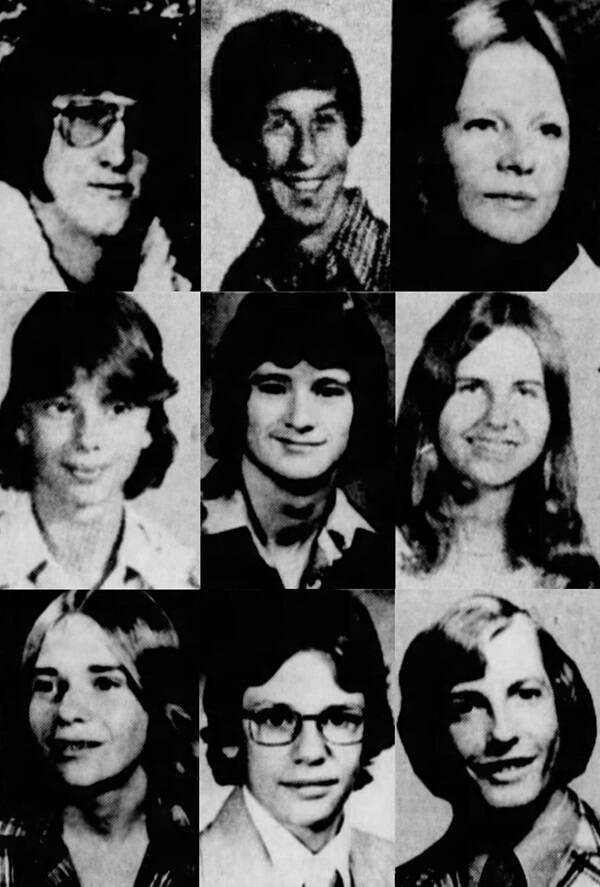
Public DomainNine of the 11 victims of The Who concert disaster
For thousands of young fans, Dec. 3, 1979, was supposed to be an unforgettable night. The English rock band The Who had come to Cincinnati to as part of their comeback tour, and thousands of people had eagerly flocked to the Riverfront Coliseum. But before the show had even begun, The Who concert disaster turned the jubilant night into a tragedy.
That night, the mood quickly shifted from excitement into confusion and panic when the crowd, eager to snag unreserved seats inside, stampeded toward the venue. Eleven fans were crushed to death in a disaster that would forever change the way concerts were run in America.
This is the sad true story of The Who concert disaster.
A Crowd Gathers In Cincinnati To See The Who
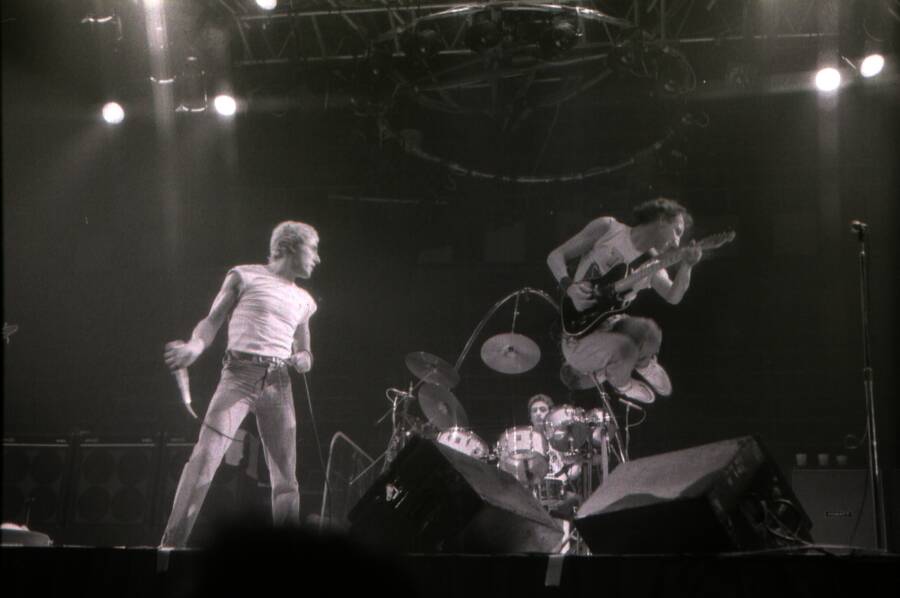
Wikimedia CommonsThe Who performing in Toronto in 1980.
The Who concert disaster took place on Dec. 3, 1979, when thousands of rock fans poured into downtown Cincinnati to see The Who perform at Riverfront Coliseum. The legendary British band was midway through its U.S. tour, their first since drummer Keith Moon’s death in September 1978. Drummer Kenney Jones had taken Moon’s place behind the kit.
The show had sold out months earlier, with all 18,348 tickets claimed. Many of those tickets were general admission, known as “festival seating” — a first-come, first-served system where those who entered earliest got spots closest to the stage. As such, fans had started gathering at noon. By 3:00 p.m., the crowd had expanded into the thousands.
Festival seating had already proven dangerous in the past. In 1977, a Led Zeppelin concert at the same venue ended with dozens injured after the crowd surged toward locked doors. Still, the system remained, even though the arena’s employees knew that it was chaotic and dangerous.
“We didn’t call it festival seating,” a Riverfront Coliseum employee remarked to Rolling Stone in 1980. “We called it animal seating, because when they came in, they came in like a herd of cattle”
The concert was scheduled to begin at 8:00 p.m. By 7:00 p.m., roughly 8,000 people were packed tightly together outside the west gate plaza, slowly inching forward in anticipation. But not all of the Coliseum’s entry doors were opened. Only two doors on the far-right side of the main entrance allowed fans inside, purportedly because there weren’t enough ticket takers. Thousands thus stood pressed against locked glass doors.
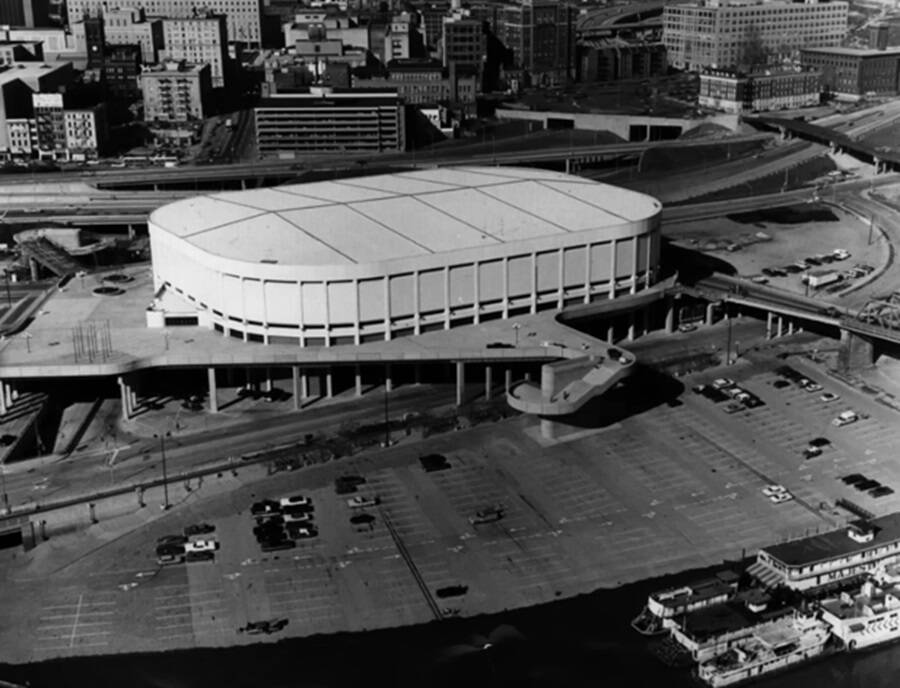
YouTubeThe Riverfront Coliseum in Cincinnati, Ohio.
“There was just a lot of energy going on,” The Who concert disaster survivor Mike Simkin recalled to WCPO Cincinnati in 2019. “The crowd got bigger, more boisterous. Next thing you know, you’re kind of fighting to keep your feet on the ground a little bit, you’re moving involuntarily a little bit.”
And then came the sound of music.
WCPO reports that the crowd mistakenly believed that the music meant the concert was beginning, but according to The Who’s manager, Bill Curbishley, the sound was actually from a trailer for Quadrophenia, The Who’s new film. However, many in the crowd outside the Coliseum panicked, believing that they were missing the concert. And at approximately 7:15 p.m., one set of glass doors shattered as the tightly packed crowd surged forward.
Those in the rear could not see what was happening at the front and continued pushing into the Coliseum, unaware their momentum was crushing the people trapped ahead. The Who concert disaster had began.
The Who Concert Disaster Of 1979
In the chaos and terror that followed, fans were knocked to the ground and buried beneath others. Those behind continued to push as people were pinned below, creating a suffocating stampede.
At times, survivor Tammy Hart Fales recalled to WCPO, her feet left the ground entirely. She was carried by the crush, unable to control her steps. When she fell, she feared she would not get back up. In front of her, she saw a teenager’s face turning blue in a pile of bodies on the pavement.
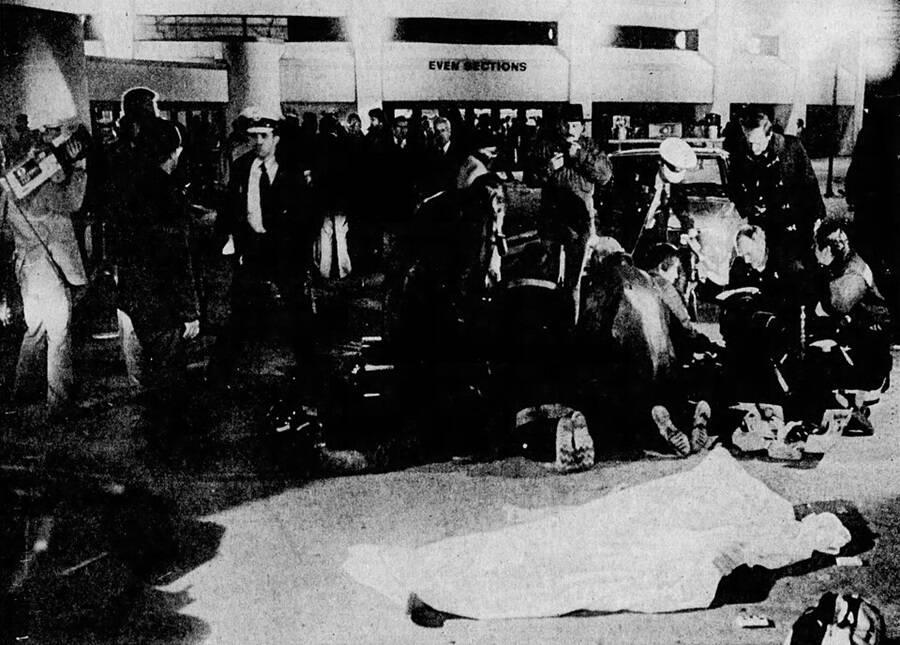
Wikimedia CommonsA sheet covers one of the victims of The Who concert disaster.
“The whole thing was just so intense,” Lisa Grippa, who was 16 during The Who concert disaster, told Rolling Stone in 2022. “As we were getting pushed, we were stepping on beer cans, coolers, people’s blankets, and then at one point… one of our friends, he fell. And he was a big guy. We had to lock arms to get him up. He would have died if we hadn’t helped him up.”
The pressure became so intense that people were pushed through plate-glass windows. Others were lifted and carried forward by the force of the crowd, cascading forward as they struggled to get air.
When police were finally able to reach those trapped near the doors, it was too late. Twenty-six people were injured, and 11 concertgoers had died from compressive asphyxiation. The victims ranged in age from 15 to 27.
Three were students from Finneytown High School: Jacqueline Eckerle and Karen Morrison, both 15, and Stephan Preston, 19. Also killed were Walter Adams Jr., Peter Bowes, Connie Sue Burns, David Heck, Teva Rae Inlow Ladd, Philip Snyder, Bryan Wagner, and James Theodore Warmoth.
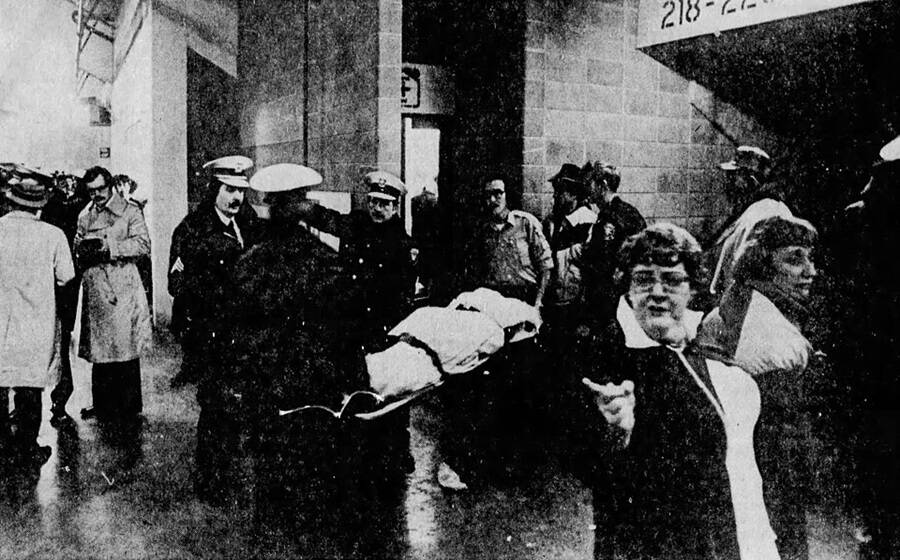
Wikimedia CommonsPolice officers remove a victim’s body from the lobby of Riverfront Coliseum.
They had come for music, but they never made it inside.
Fire officials urged that the concert be canceled. But Curbishley argued that doing so might cause the crowd to riot. And so, the show went on.
The Who took the stage as planned, unaware that just outside the doors, victims’ bodies were being carried away. Neither the band nor most of the people in the crowd knew that people had died until after the final encore.
The Aftermath Of The Who Concert Disaster
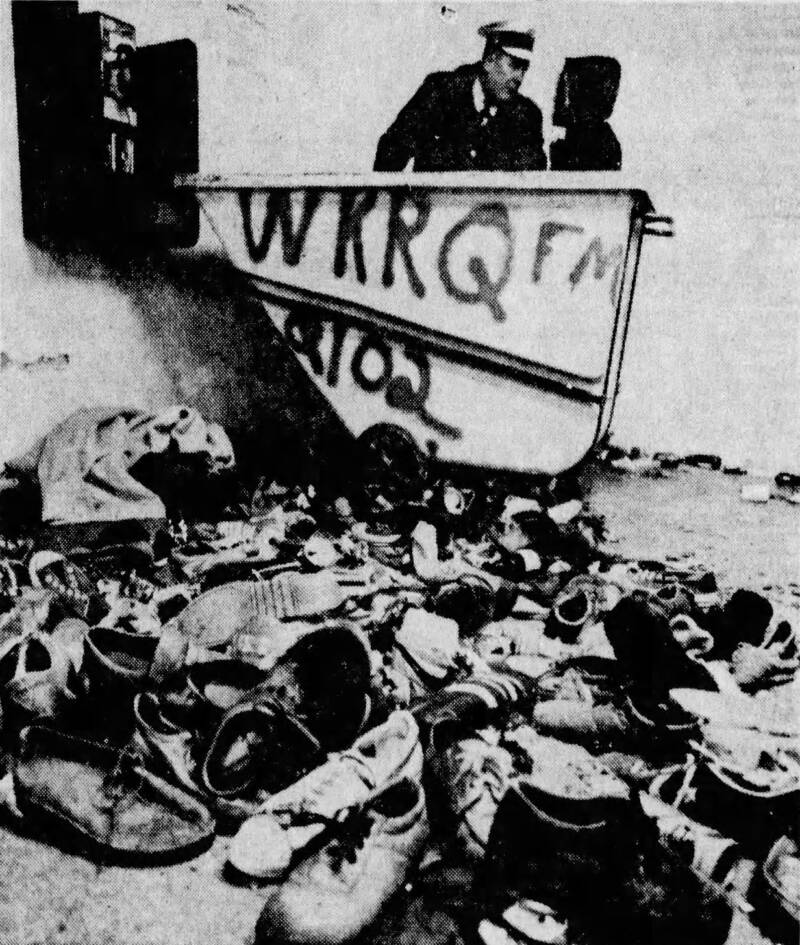
Wikimedia CommonsAbandoned belongings from fans following The Who concert disaster.
In the aftermath, the tragedy dominated national headlines. CBS Evening News aired a segment examining violence at rock concerts. Questions were raised about festival seating, venue management, and crowd control.
The victims’ families filed lawsuits against the band, concert promoter Electric Factory Concerts, and the city of Cincinnati. In 1983, settlements awarded approximately $150,000 to each family of the deceased, or about $473,600 today. The city also took steps to prevent another such tragedy from happening by banning festival seating, though the ban was lifted (with new safety regulations such as spacing rules) in 2004.
For the families, policy changes did not undo the loss. In 2010, the P.E.M. Memorial was established to honor those who died in the disaster. And in 2018, The Who frontman Roger Daltrey visited Finneytown High School and met with The Who concert disaster survivors and family members.
Years later, guitarist Pete Townshend reflected on that night.
“I went through two phases,” he said. “One was tremendous upset and concern. But the other was incredible anger that we had been performing while this was going on.”
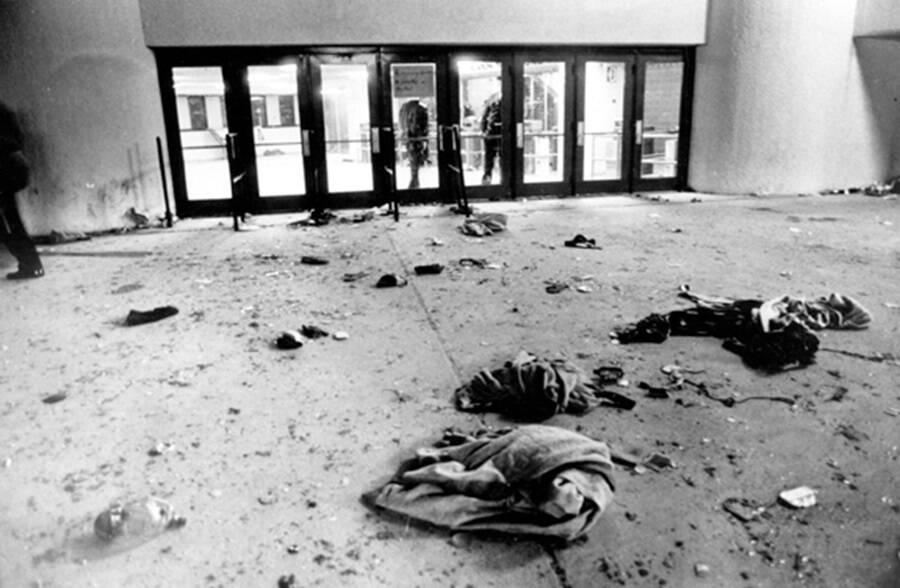
University of CincinnatiThe tragic aftermath of The Who concert disaster.
The band did not return to Cincinnati for 43 years, something that members have expressed regret over. On May 15, 2022, 43 years after The Who concert disaster, The Who returned and performed at TQL Stadium. Students from Finneytown High School joined them onstage, and the names and photographs of all eleven victims were displayed across the stadium’s screens during an 11-minute instrument introduction to “Love, Reign o’er Me”.
After learning about The Who concert disaster, read about the Altamont Speedway free concert where four people died during the Rolling Stones’ set. Then, check out 33 photos from the Woodstock ’99 disaster.