Legendary rock drummer Keith Moon died in London on September 7, 1978 after accidentally overdosing on a sedative meant to help with his alcoholism.
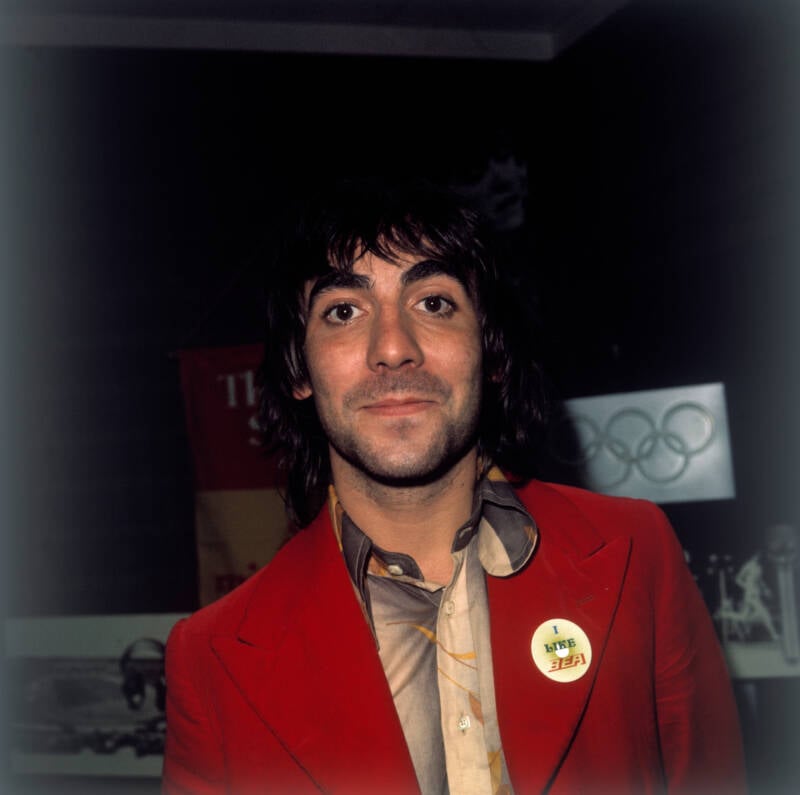
United Archives GmbH/Alamy Stock PhotoKeith Moon’s drinking and drug abuse made his public appearances frequently erratic and unreliable.
As the pounding heartbeat of The Who, Keith Moon didn’t just keep time; he assaulted it. Moon lived his life with the same chaotic velocity that came to define his drumming. But sadly, this fast-paced way of living would also lead to Keith Moon’s death in 1978.
By then, he had many nicknames, including “Moon the Loon” — an apt moniker for a man who portrayed himself as the indestructible court jester of rock music. But behind Moon’s manic grin and over-the-top antics lay a fragile man who fought demons that no amount of applause could silence.
Then, on Sept. 7, 1978, that chaos reached its tragic end in a London apartment — ironically, the same one where “Mama” Cass Elliot had died four years prior — when Keith Moon died. The drummer was just 32 years old, but years of sustained alcohol and drug abuse had caught up to him.
Still, many wondered how the boy from Wembley had fallen into such a sorry spiral. Keith Moon was undeniably a genius on the drums, but a genius who walked the razor’s edge between immortality and oblivion. Eventually, the party had to come to an end.
How A Boy From Wembley Became The Drummer For The Who
Long before he cemented himself as one of the greatest rock drummers in history, Keith John Moon was a restless boy from Wembley, a suburb of London. Born to Alfred and Kathleen Winifred Moon on Aug. 23, 1946, the future rocker showed hints of his wild side even at a very young age.
As a child, he was hyperactive and imaginative in ways that made school difficult. As biographer Tony Fletcher wrote in Dear Boy: The Life of Keith Moon, Moon’s art teacher had described him in a report as “Retarded artistically. Idiotic in other respects.” His music teacher, however, noted the young boy had “great ability, but must guard against a tendency to show off.”

Wikimedia CommonsKeith Moon in Germany, 1967.
After failing his 11-plus exams, Moon eventually decided he wasn’t meant for a life of academics. He dropped out of school at the age of 14.
He played drums in a variety of local bands, but his golden opportunity came in 1964, when the now-17-year-old heard a band called The Who and approached them at a gig, bragging that he could play better than their current drummer. What followed, according to the band’s official biography, was Moon’s impromptu audition at the Oldfield pub in Greenford. Moon played with such energy that he destroyed the drum kit — but fatefully got himself a job as The Who’s new drummer.
Before long, Keith Moon proved himself to be one of the most interesting drummers in rock. His rolling tom fills, refusal to play standard hi-hat rhythms, and chaotic interplay with guitarist Pete Townshend made it so the drums did more than simply keep time. Instead, Moon turned the drums into a lead instrument. As the band’s bassist, John Entwistle, once remarked, Moon made the drums “sing.”
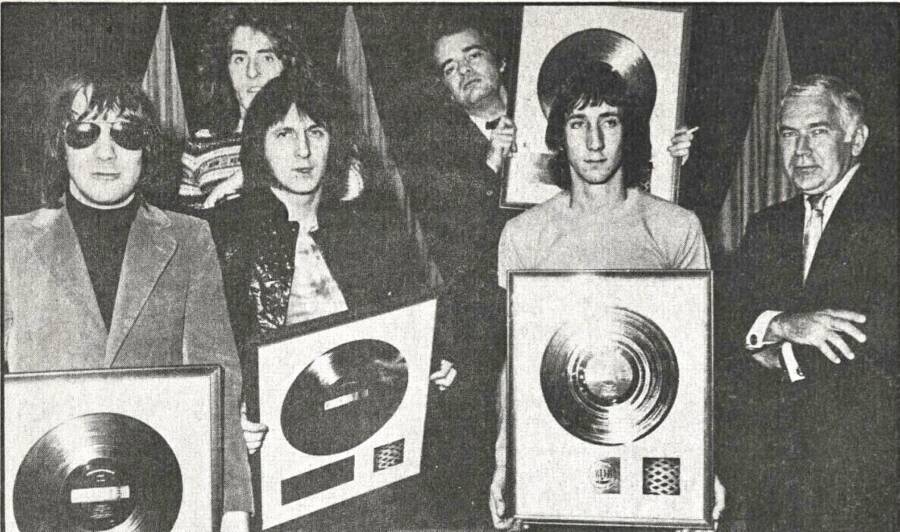
Wikimedia CommonsThe Who with their manager Kit Lambert, holding gold records for their 1969 album Tommy.
But it wasn’t just his skills behind the kit that kept Moon’s name in the headlines.
Keith Moon’s Offstage Antics — And Sad Downward Spiral
Keith Moon’s drumming helped bring The Who international fame. But Moon’s off-stage persona was equally legendary — and increasingly dangerous.
By the 1970s, his nickname of “Moon the Loon” had become something of a self-fulfilling prophecy. Moon was the court jester of rock and roll, known for his elaborate pranks and destructive streaks. He infamously blew up toilets with cherry bombs, nailed all the furniture in a hotel room to the ceiling, and allegedly once drove a car into a swimming pool.
However, the laughter often masked a darker reality.
Moon’s lifestyle was fueled by a voracious appetite for drugs and alcohol. What began as “social drinking” during the filming of That’ll Be the Day in the early ’70s spiraled into severe alcoholism. Moon’s behavior became erratic and violent, leading to the breakdown of his marriage in 1973.
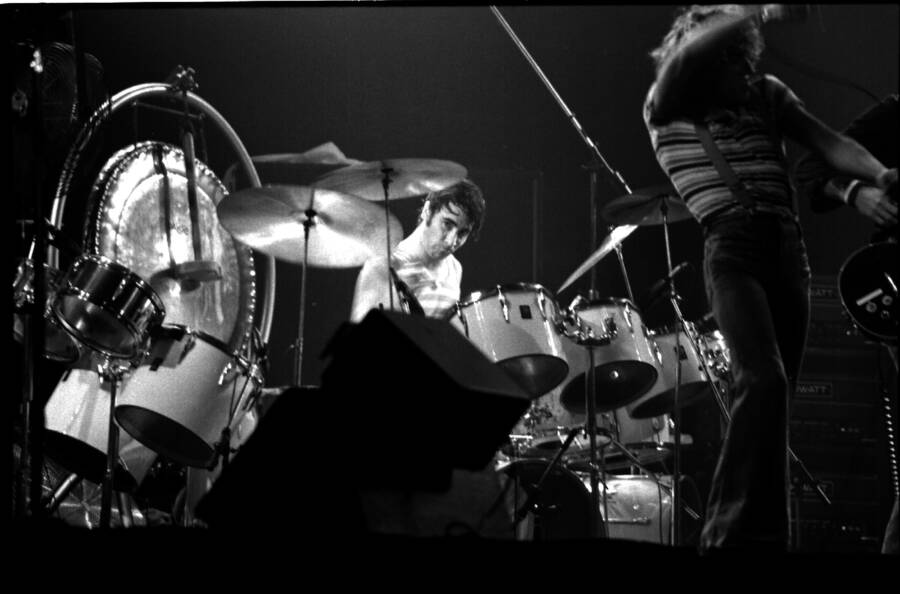
Wikimedia CommonsKeith Moon with The Who at Maple Leaf Gardens, 1976.
“You’d come offstage and still be buzzin’,” Moon once stated in 1978, per Far Out. “Then you’d go to a party and it’d get out of hand, get wild. Things get broken. If you’re sitting around after a show and there’s something you don’t like, you just switch it off by throwing a bottle through the screen.”
By the mid-1970s, Moon’s alcohol and drug abuse began to affect him physically. He gained weight and lost the sharp, athletic edge that his drumming had become known for. Several times throughout The Who’s tours, he even passed out on stage.
In an attempt to keep him him functional, the band had even hired a “handler” to travel with him, but Moon proved too unpredictable. And this destructive lifestyle sadly led to Keith Moon’s death in 1978.
The Death Of Keith Moon From An Accidental Overdose
Come September 1978, Keith Moon had moved back to London following a chaotic stint in Los Angeles — and there were signs he was trying to stabilize. He had started dating Annette Walter-Lax, a Swedish model, and was taking Heminevrin, a sedative meant to curb alcohol cravings.
On the evening of Sept. 6, 1978, Moon attended a party hosted by Paul McCartney to celebrate the launch of the film The Buddy Holly Story. According to Louder Sound, Moon was in relatively good spirits, dining with the McCartneys and telling guests about his plans to marry Walter-Lax. Most remembered that Moon was even relatively sober, and that he didn’t overdo it on the free champagne.
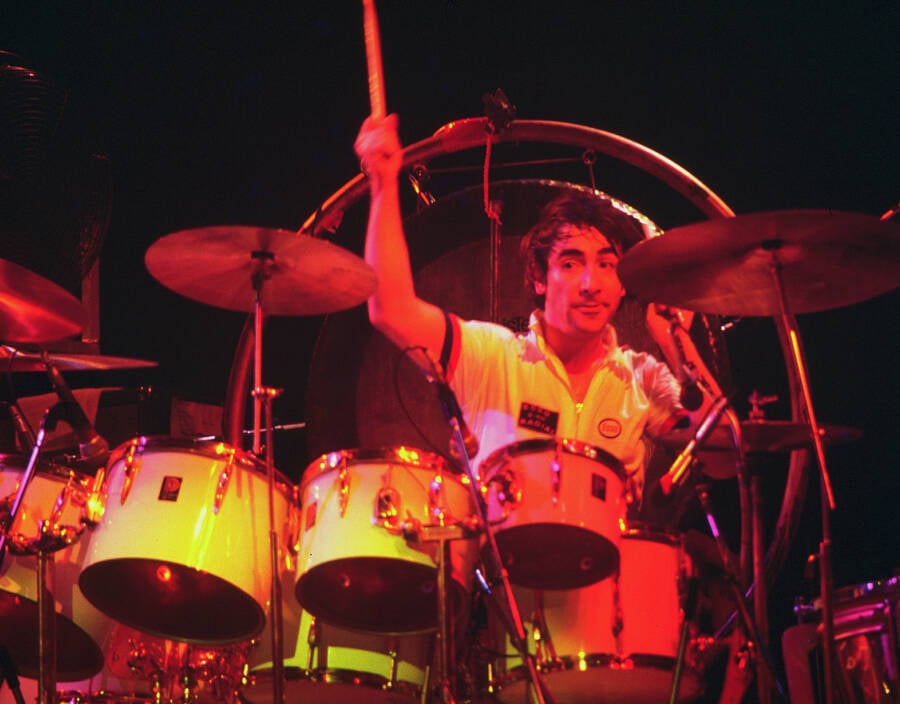
Wikimedia CommonsKeith Moon drumming in The Who, 1974.
He and Walter-Lax returned to Moon’s apartment around 4:00 a.m., where Moon took a handful of Heminevrin and went to bed. He woke again at 7:30 a.m., argued with Walter-Lax, then took more Heminevrin and went back to sleep.
When Walter-Lax checked on Moon that afternoon, he was unresponsive. She immediately called for help, but it was too late — Keith Moon died later that day at the age of 32.
An autopsy revealed that Moon had 32 Heminevrin pills in his system. Only six had been digested — enough to cause death — while the remaining 26 were still in his stomach. The coroner ruled the death an accidental overdose and, indeed, his bandmates don’t believe that Moon meant to die by suicide.
“It was a silly mistake,” Townshend stated in the 2007 documentary Amazing Journey. “He just always took pills in handfuls. It was just a habit that he had.”
Sadly, this habit — and his life of excess — led to Keith Moon’s death. While Moon is remembered today as one of rock’s greatest drummers, he’s also seen as someone who died sadly far too soon.
After reading about the death of Keith Moon, read about the death of other rock and roll legends like Elvis Presley or Janis Joplin.