Brachycephalus lulai is less than half an inch long and lives in a three-square-mile area of southern Brazil's Serra do Quiriri mountain range.
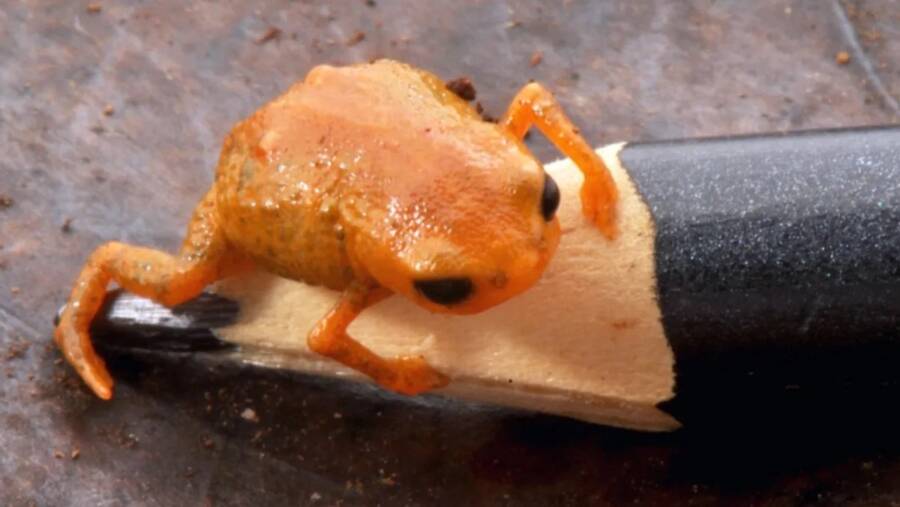
Luiz Fernando RibeiroBrachycephalus lulai on the tip of a pencil.
Deep in the cloud-covered mountains of southern Brazil, researchers have identified a new species of pumpkin toadlet — a group of tiny, brightly colored frogs known for their bold hues. It’s been dubbed Brachycephalus lulai.
According to a new study published in the journal PLOS One, this frog, which measures less than half an inch in length, is highly endemic and lives only in the leaf litter of a small section of the Serra do Quiriri mountain range.
This is just the latest discovery to reveal how much of Brazil’s biodiversity remains hidden in plain sight — and why conservationists are so keen to protect the region.
A Frog So Small It Fits On A Pencil Tip
Researchers have been attempting to catalog all of Brazil’s Brachycephalus species for several years now, but that task is easier said than done. Despite their vivid orange shade — a warning to predators — these tiny frogs are incredibly difficult to spot among the leaf litter.
So, how did scientists find B. lulai?
By listening. Males of the species make unique mating croaks, which helped lead researchers directly to them.
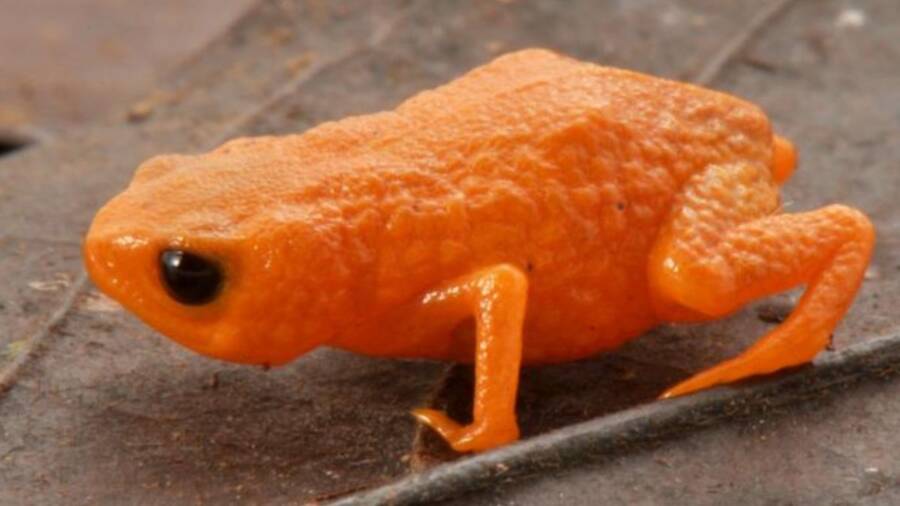
Luiz Fernando RibeiroB. lulai lives in one of Earth’s most threatened ecosystems.
After collecting the specimens, researchers analyzed them in a lab, studying their features and conducting genetic sequencing. They concluded that they had indeed discovered a new species, which they named Brachycephalus lulai, after Brazilian president Luiz Inácio Lula da Silva.
“Through this tribute,” the scientists wrote in their paper, “we seek to encourage the expansion of conservation initiatives focused on the Atlantic rainforest as a whole, and on Brazil’s highly endemic miniaturized frogs in particular.”
Indeed, this discovery is sparking conversations about conservation in the South American country.
The Importance Of The Discovery Of ‘B. Lulai’
While B. lulai was classified as being of “least concern” from a conservation standpoint, other frogs in the same region are endangered, which has ignited debate about how to protect the creatures from habitat loss.
Brazil’s Atlantic Forest, where B. lulai was found, is one of the most threatened biomes on the planet. Centuries of deforestation, agriculture, and urban expansion have reduced it to a fraction of its original size, leaving many species isolated in small, fragmented pockets of habitat. Every new discovery in this region serves as a reminder of how much could be lost before it’s ever even documented.
Tiny amphibians like pumpkin toadlets are especially vulnerable. Their survival depends on stable microhabitats — moist leaf litter, intact forest floors, and clean water sources — all of which are disrupted by even minor environmental changes.
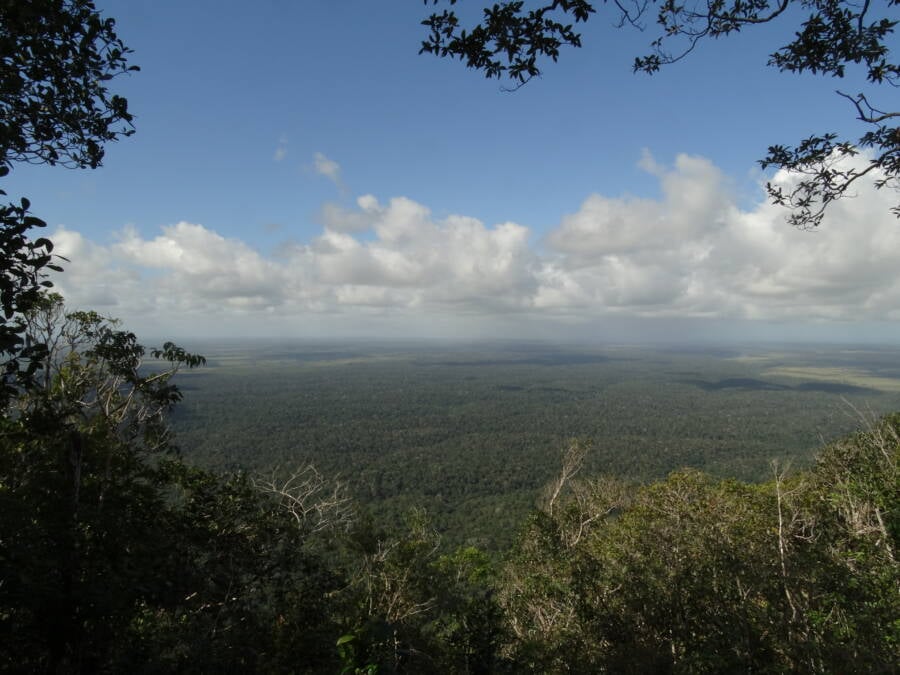
Daniel Souza Lima/Wikimedia CommonsA view over Brazil’s Atlantic Forest.
Because they are so sensitive to temperature, humidity, and pollution, amphibians often serve as early warning indicators of ecological decline. The presence of a previously unknown species suggests that these forests are full of biological discoveries, but it also raises concerns about how many undiscovered species may already be on the brink.
Pumpkin toadlets in particular are known for their unusual evolutionary traits, from their bright coloration to their reduced hearing abilities and bioluminescent bones. Each new species adds another piece to the puzzle of how these frogs evolved such unique characteristics — and how they continue to adapt to their environment.
Understanding these evolutionary pathways can help researchers trace how species respond to environmental stressors, which is increasingly important in an ever-warming world.
Documenting new species also strengthens the case for conservation. When scientists can point to unique, endemic animals found nowhere else on Earth, it becomes harder for policymakers to ignore the ecological value of these forests.
A single tiny frog may not seem like much, but discoveries like this one help build the scientific and public momentum needed to protect the last remnants of Brazil’s Atlantic Forest.
After reading about this new toadlet species discovered in Brazil, learn about the electric blue tarantula found in Thailand. Or, discover the long-tongued moth species found in Madagascar.