What happened on this day in history: Franklin Delano Roosevelt is born, Mahatma Gandhi is assassinated, Bloody Sunday rocks Northern Ireland, and more of what happened on this date in history.
1649: Charles I Is Beheaded
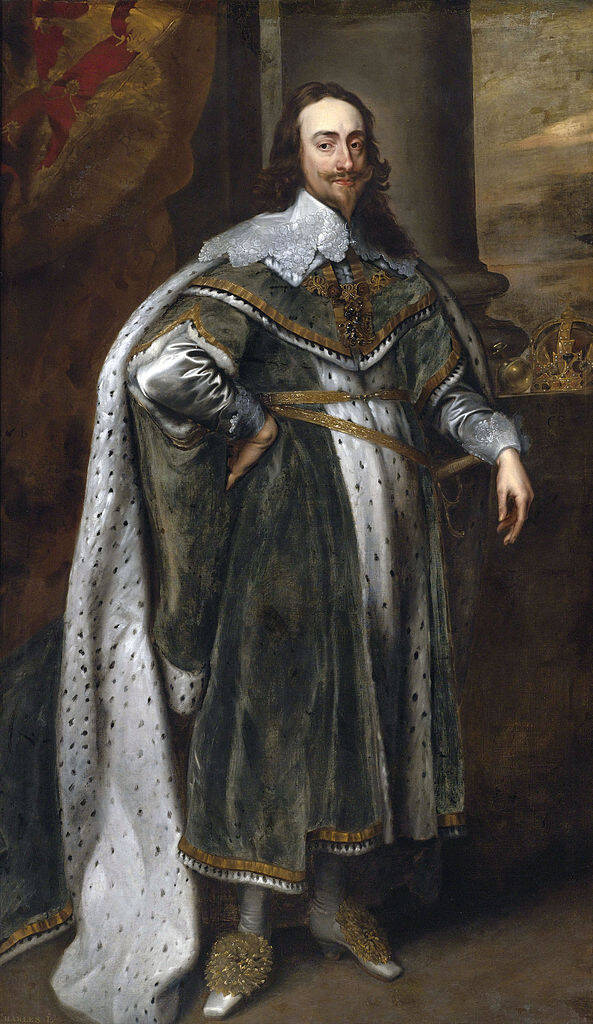
Public DomainThough England became a republic after Charles I’s execution, it later returned to a monarchy with Charles’ son as king.
King Charles I of England is beheaded in London at the age of 48. A strong believer in the divine right of kings, Charles’ reign was marked by his distrust of Parliament, which eventually led to the English Civil War. After his eventual defeat, Charles was found guilty of treason and was executed. But after a brief stint as a republic, England restored the monarchy in 1660 with Charles’ son, Charles II, as the king.
1835: America’s First Presidential Assassination Attempt Takes Place
Andrew Jackson survives the first presidential assassination attempt in American history when he fends off an attack by would-be assassin Richard Lawrence in Washington, D.C.
1882: Franklin Delano Roosevelt Is Born
Franklin Delano Roosevelt is born in Hyde Park, New York. The 32nd president of the United States — and the longest-serving American president — Roosevelt was first elected in 1933 and remained in power until his death in 1945. He served amid a number of major historical events, including the end of the Great Depression, the attack on Pearl Harbor, and America’s involvement in World War II.
1933: Adolf Hitler Is Named Chancellor Of Germany
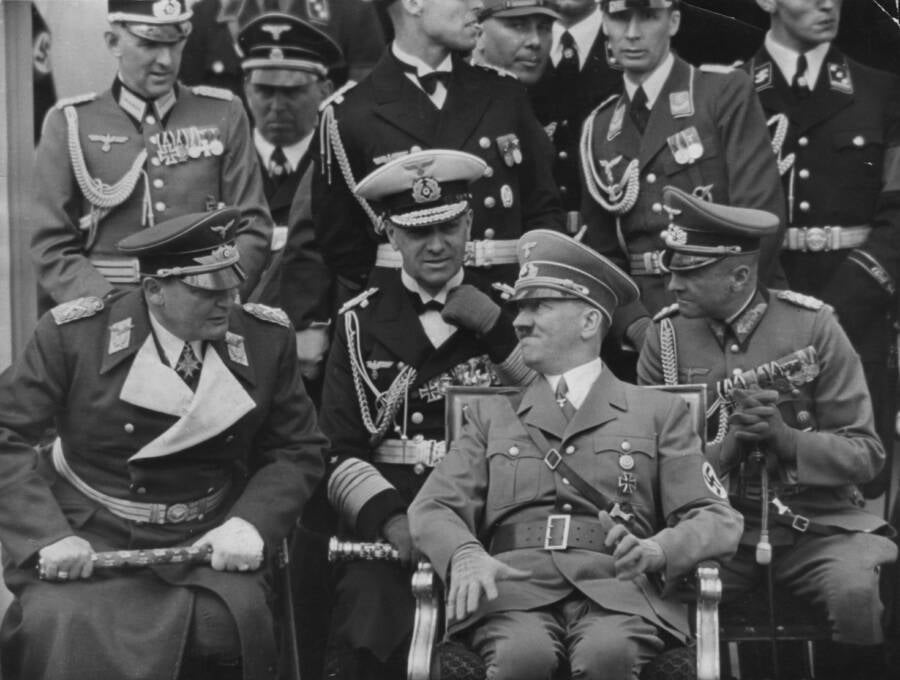
Fox Photos/Hulton Archive/Getty ImagesHermann Göring, far left, exchanges a word with Adolf Hitler, second from right, during Hitler’s 50th birthday parade in Berlin on April 20, 1939.
Adolf Hitler is named chancellor of Germany by President Paul von Hindenburg. Von Hindenburg and others hoped that making Hitler chancellor would temper his growing power following the Nazis’ success in the 1932 elections. The idea was, now that Hitler was fully part of the system, the non-Nazis in government might be able to rein him in.
Instead, Hitler’s chancellorship acted as a springboard and the Nazi leader became Germany’s de facto dictator when he assumed the presidency, which he merged with the chancellorship, in August 1934. With that, Hitler’s rise to power was complete and the stage for World War II and the Holocaust was set.
1948: Mahatma Gandhi Is Assassinated
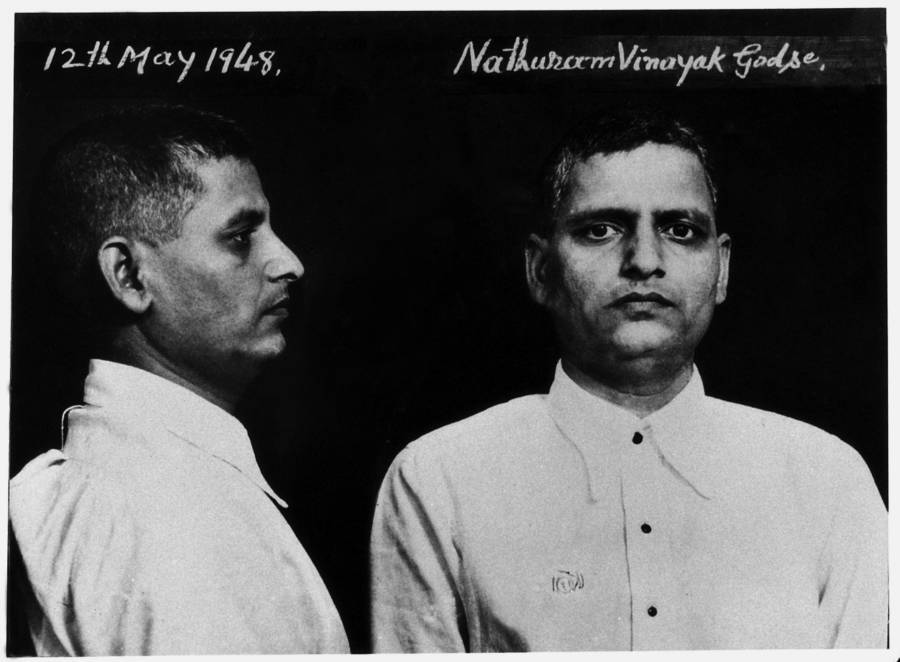
Mondadori Portfolio via Getty ImagesNathuram Godse, the man who assassinated Mahatma Gandhi.
Mahatma Gandhi is assassinated by Hindi extremist Nathuram Godse. An activist, writer, and leader of India’s independence movement, Gandhi spent his final days urging Muslims and Hindus in India to live together in peace. Such efforts outraged some, including Godse, who despised Gandhi’s tolerant attitude toward other religions.
1956: Martin Luther King Jr.’s Home Is Bombed
Segregationists bomb the Montgomery, Alabama, home of Dr. Martin Luther King Jr., who was becoming one of the most prominent leaders of the American civil rights movement. He had started to build a national reputation during the Montgomery Bus Boycott of 1955 — and drew the attention of angry segregationists. Though his wife and seven-month-old daughter were inside his home at the time of the bombing, they were unhurt.
1969: The Beatles Play Their Final Concert
When music started coming from the roof of Apple Records’ London headquarters at 3 Savile Row around 12:30 p.m., passersby on the street were initially startled and confused. Soon enough, however, everyone realized that they were hearing an impromptu concert from none other than The Beatles, the most famous band in the world.
Crowds quickly began forming on both the street below and the rooftops nearby — then the police arrived. The band fully expected the police to show up and were in fact hoping for the public spectacle of being dragged away mid-performance.
As officers finally reached the roof while the band was playing “Get Back,” Paul McCartney began improvising lyrics about their arrival and adding them to the song on the spot. And when one officer turned off George Harrison’s amplifier midway through, he turned it right back on and kept playing.
1972: Bloody Sunday Takes Place In Northern Ireland
British paratroopers open fire on a crowd of protestors in Londonderry (Derry), Northern Ireland, killing 14 people and injuring at least 15 more. The massacre, dubbed Bloody Sunday, erupted following months of tension between the British government and citizens of Northern Ireland, who opposed the arrests of suspected members of the Irish Republican Army without giving them a trial.
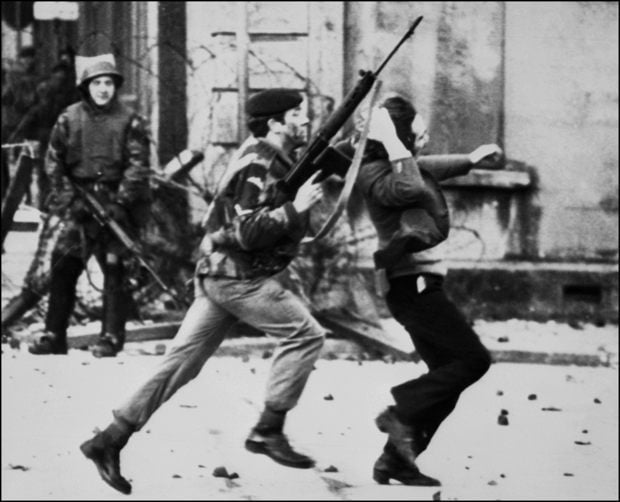
THOPSON/AFP/Getty ImagesA British soldier drags a Catholic protester during Bloody Sunday.
A government inquiry into Bloody Sunday in 2010, known as the Saville Report, found that the shooting was unjustified and that none of the victims had posed any threat to the soldiers.