The statue of Hermes, found in present-day Turkey, likely once adorned the ancient city's bouleuterion, or assembly house.
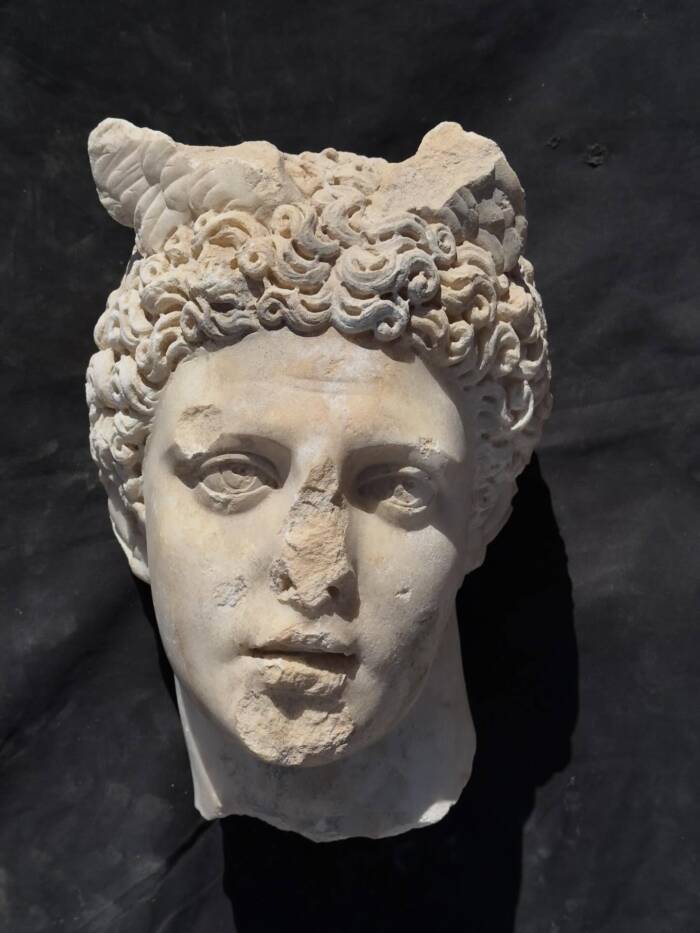
General Directorate of Cultural Heritage and MuseumsThe Hermes head is believed to be roughly 1,900 years old.
During excavations in the ancient Greek city of Laodicea, located in present-day Turkey, archaeologists found themselves face-to-face with a familiar figure: the head of Hermes, a god worshipped by both the Greeks and Romans.
The Hermes statue head, expertly carved and believed to be roughly 1,900 years old, likely once adorned an important civic building in Laodicea. The discovery of the artifact underlines the regional power of Laodicea, which is believed to have been one of the most important ancient cities in Turkey’s Lycus Valley.
The 1,900-Year-Old Hermes Head Found In Laodicea
According to a social media post from Turkey’s General Directorate of Cultural Heritage and Museums, the Hermes statue head was found during excavations overseen by Turkey’s Ministry of Culture and Tourism as part of the country’s “Heritage for the Future” initiative. Archaeologists located the artifact in the entrance corridor of the Laodicea’s bouleuterion, a public building where a civilian council met to discuss the issues of the day.
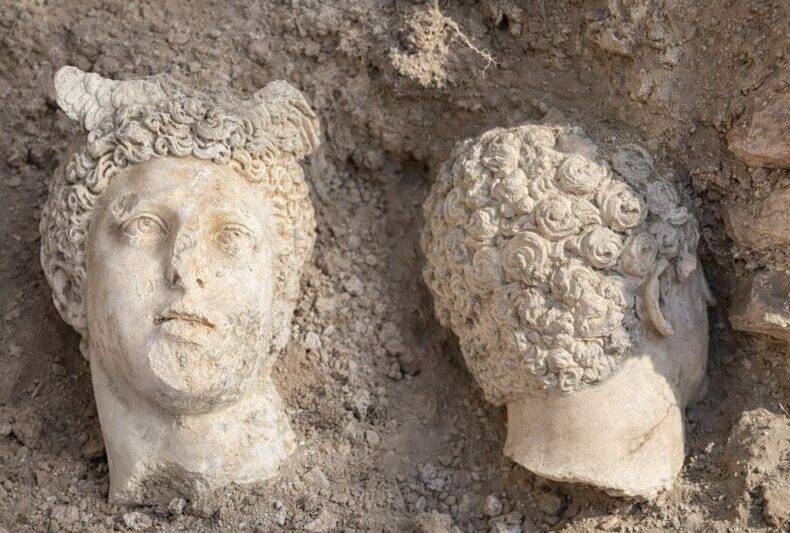
General Directorate of Cultural Heritage and MuseumsThe Hermes head was found near the city’s bouleuterion, suggesting that it once adorned this important civic building.
Based on the style of the Hermes head, a “Hermes Andros” depiction, experts believe that it dates to the second century C.E. It was expertly carved out of white marble from the ancient city of Dokimeion (present-day İscehisar), and archaeologists marveled at the fine details of its eyes, curls, and facial features. But the statue is more than an astounding piece of art.
Its placement, outside an important civic center in Laodicea, is also a nod to the city’s prominence in the ancient world.
The Importance Of Laodicea In Antiquity
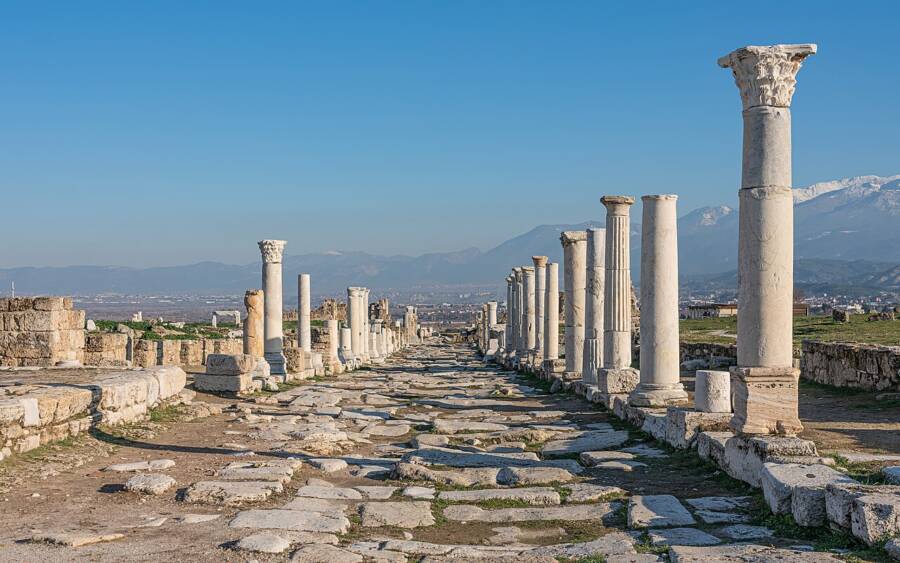
A. Savin/Wikimedia CommonsRuins in the ancient city of Laodicea, once a bustling metropolis in present-day Turkey.
Founded in the third century B.C.E. as a Hellenistic city, Laodicea reached its heyday during the Roman period. During that time, its population soared to an estimated 80,000, and its citizens enjoyed the amenities that came with living in a powerful Roman city. Wealthy from trade, banking, and textiles, Laodicea had baths, stadiums, theaters, and administrative complexes, like the bouleuterion. And its citizens, flush with wealth, were enamored with Greek art. As such, monuments with Greek influence were built in the city.
The Hermes statue seems to be one example of this admiration. Hermes, the herald god of Greeks and Romans who represented messengers, travelers, thieves, and merchants, was also linked to ideas of communication and diplomacy. Thus, the placement of his statue near the entrance of the bouleuterion, a place of civic discussion and decision-making, was apt.
It’s also indicative of Laodicea’s wealth, embrace of contemporary artistic trends, and cultural importance in the Lycus Valley.
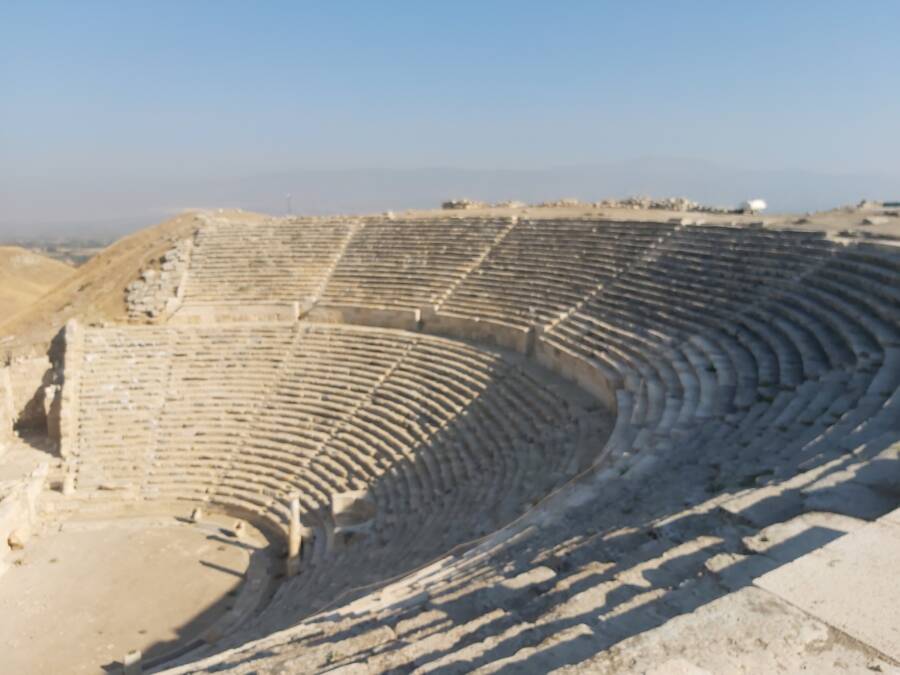
Basak/Wikimedia CommonsAn impressive ancient theater in Laodicea, another indication of the city’s wealth and power in antiquity.
Indeed, the city was so wealthy that it minted its own coins, which depicted Zeus, Asclepius, Apollo, and, later, Roman emperors. After a devastating earthquake in 60 C.E., which virtually destroyed the city, its citizens even rejected financial aid from the Roman emperor Nero, seemingly preferring to pay for the reconstruction out of their own pockets.
Laodicea was also important during the rise of Christianity, and St. John cited the city as the location of one of the “Seven Churches of Asia.” However, the city’s good fortunes did not last forever.
During the late Byzantine period, it was frequently sacked by Turks and Mongols, and the city was abandoned in the 13th century. Since then, only the bone-white ruins that dot the landscape hint at its former greatness.
But excavations of the city are revealing more and more about its culture and history. The Hermes statue is thus an important and exciting find, a clear indication of Laodicea’s former might. During its heyday in the Roman period, the Hermes head would have greeted all those who passed into the bouleuterion, civilians tasked with forging the city’s golden future.
After reading about the 1,900-year-old Hermes head that was found in the ancient city of Laodicea in Turkey, discover the incredible stories behind some of ancient Greece’s most powerful gods, from Zeus to Hades. Or, look through these surprising facts about life in ancient Greece.