Archaeologists excavating the ancient ruins of Metropolis near İzmir, Turkey just uncovered a statue head that dates back at least 2,000 years and is equipped with sockets for eerily lifelike eyes.
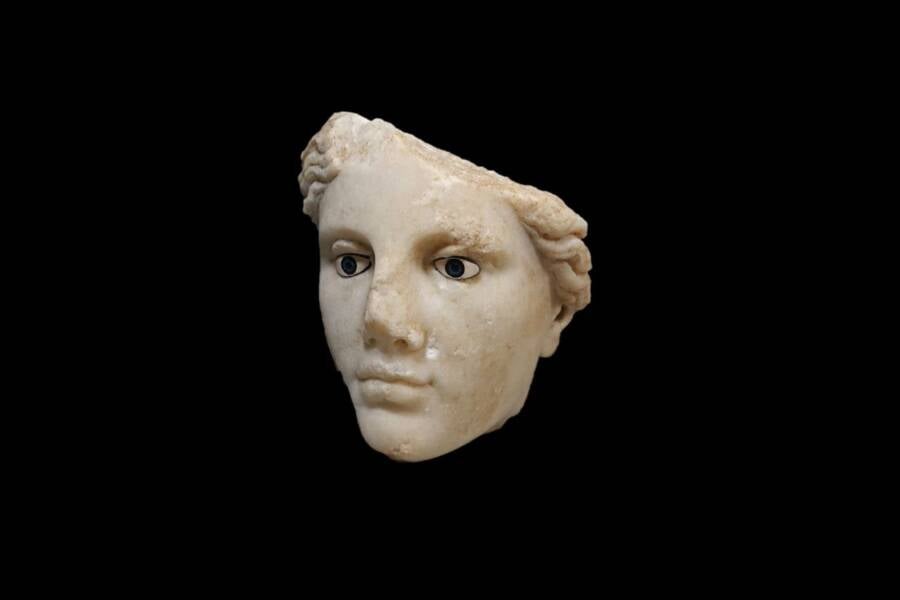
AA PhotoThe marble statue head found in western Turkey, believed to depict the Greek goddess Hestia, as seen after it was cleaned.
Archaeologists in Turkey have uncovered a marble statue head from the Hellenistic period that is believed to depict the Greek goddess Hestia.
The discovery was made during excavations at the ancient ruins of Metropolis near Izmir. Archaeological work at the site, also known as the “City of the Mother Goddess,” has been ongoing since 1989.
The earliest-known settlement of the area goes back to the Neolithic period, though it especially flourished in the Greek era more than 2,000 years ago. This new find may help deepen archaeologists’ understanding of the region at this time, as well as reshape notions about local craftsmanship.
The Ancient Hellenistic Statue Head Believed To Depict Hestia
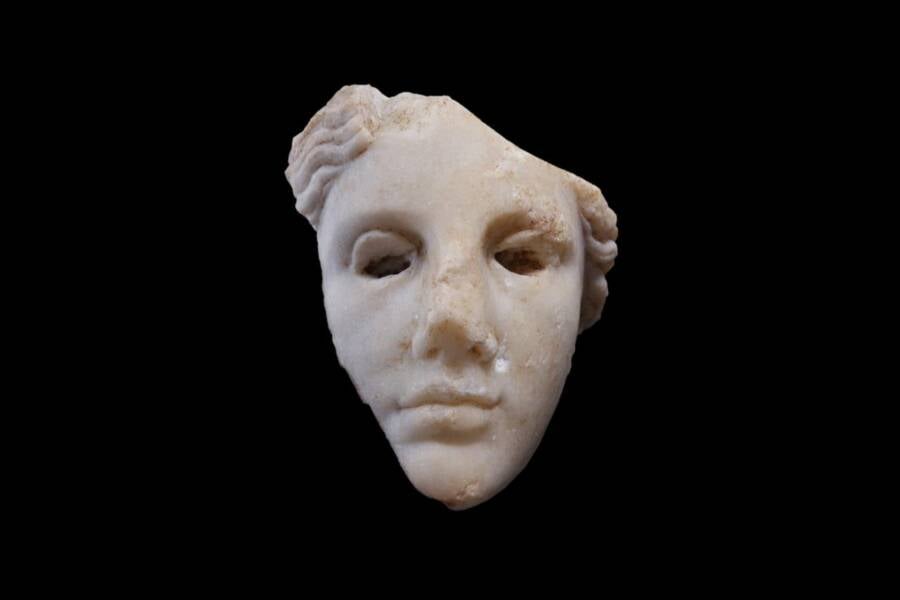
AA PhotoThe marble head was found in the ruins of a commercial building in the ancient city of Metropolis.
The marble statue head was found in a commercial building in the ancient city, according to Türkiye Today. The statue’s detailed features, including its hair, suggest that it’s from the Hellenistic period. The other clue that points to this era is the way in which the head was constructed out of two separately carved pieces that were then joined together.
The Hellenistic period refers to the time in Greece, the Eastern Mediterranean, and the Middle East that unfolded between the death of Alexander the Great in 323 B.C.E. and the death of Cleopatra in 30 B.C.E.
“The dimensions suggest that this head belonged to a monumental statue,” Serdar Aybek from Dokuz Eylul University, who’s been directing excavations at Metropolis since 2007, told Arkeonews. “It provides valuable evidence for the level of sculptural expertise and artistic ambition present in Metropolis during the Hellenistic period.”
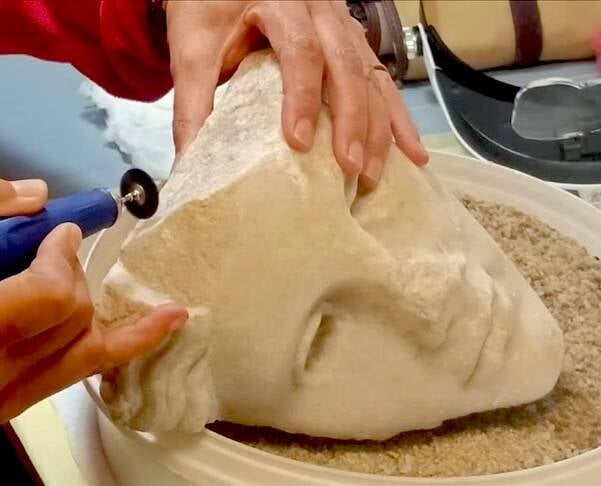
Provincial Directorate of Culture and TourismOne of the most unique deities in the Olympian Pantheon, Hestia was worshipped as the goddess of the hearth and home, yet she featured in none of the famous Greek myths.
Archaeologists have furthermore suggested that the head depicts the Greek goddess Hestia. The daughter of Cronos and Rhea, Hestia does not appear in many of the popular Greek myths. However, she played an important role in society as goddess of the sacred hearth, representing home, family, and social stability.
Upon closer examination of the head’s features, the team of archaeologists found that a cavity in the pupil area of the eye was purposefully added. This feature wasn’t uncommon in other ancient Greek statues. In place of a carved pupil, sculptors would place colorful stones to create brighter, more vivid eyes.
Where This Statue May Have Once Sat In The City Of Metropolis
It’s possible that archaeologists had already identified the torso that goes with this newly-discovered head. The team points out that a previously-unearthed Hestia torso from the Bouleuterion building (legislature assembly house) in Metropolis matches the dimensions of this head.
Archaeologists believe that the two pieces together may have formed a monumental Hestia statue. However, further examination is required to confirm this hypothesis.
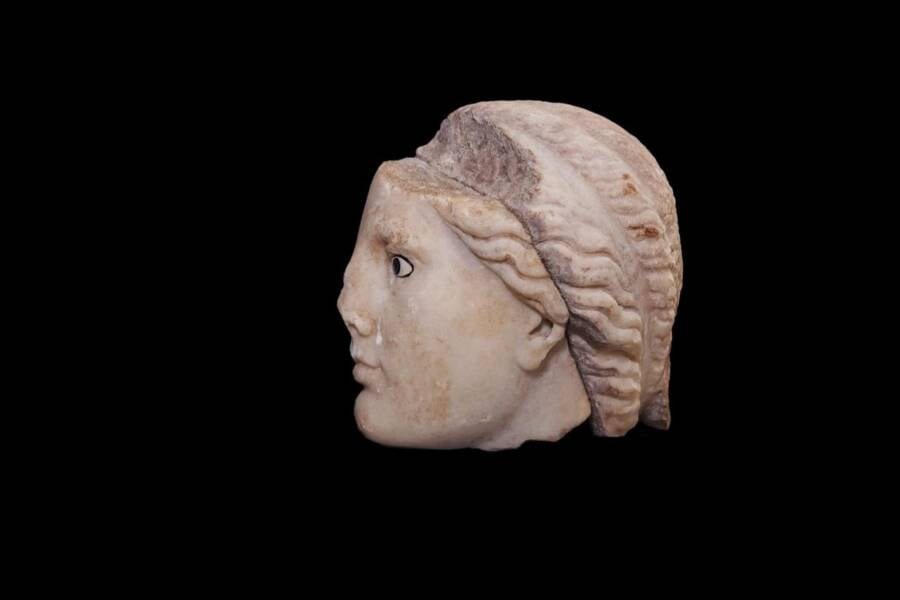
AA PhotoA profile view of the ancient Hellenistic statue head found in Turkey.
However, if the torso and the head do belong together, it could help archaeologists understand the intersection of religious and civic architecture in Metropolis during the Hellenistic period.
Excavations at Metropolis remain ongoing as part of Turkey’s “Heritage for the Future” Project. From theaters to council buildings to bath complexes, this historic city has provided no shortage of glimpses into the region’s storied past.
Archaeologists are hopeful that, as studies into the statue and its meaning continue, it will reveal itself to be an especially important find in the world of Hellenistic archaeology.
After reading about the statue head found in Turkey, see the 2,000-year-old headless statue found in a garbage bag in Greece. Then, learn about the surprising story behind the Venus de Milo.