After excavating everything from the ruins of a large-scale smelting facility to plentiful iron goods like arrowheads and knives, researchers are convinced that they've finally located the lost city of Marsmanda.
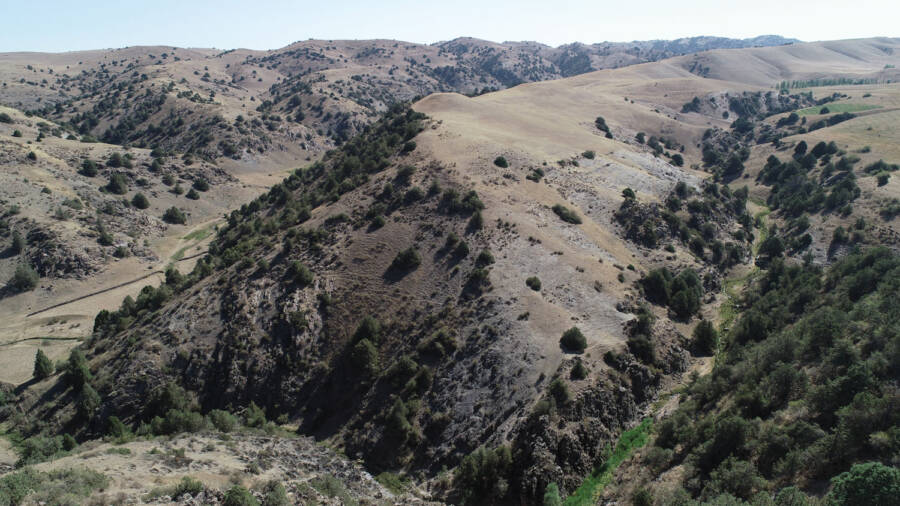
Michael FrachettiThe mountainous region of Tugunbulak, where archaeologists now believe the Silk Road city of Marsmanda once sat.
When archaeologists traveled to the mountains of Uzbekistan in 2011, they were hoping to find evidence of Bronze Age people who’d lived in the region some 4,000 years ago. Instead, they found a sea of artifacts which dated not to the Bronze Age, but to the Middle Ages. Now, they believe that they’ve uncovered evidence of a “lost” Silk Road city at the site, a metropolis known as Marsmanda that has eluded experts for decades.
Though Marsmanda appears in 10th-century Arab texts, where it’s hailed as an advanced producer of prized iron goods and weapons, the city has never been located. However, archaeologists now believe that — by using both LiDAR technology and old-fashioned archaeological techniques — they’ve uncovered this Silk Road city some 6,500 feet above sea level.
The Possible Discovery Of Marsmanda In The Mountains Of Uzbekistan
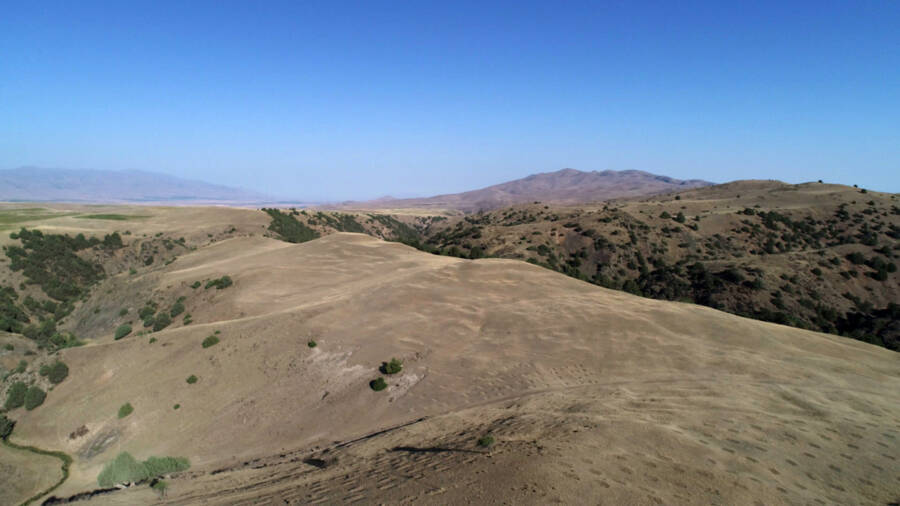
Michael FrachettiTugunbulak, which archaeologists now believe is the lost Silk Road city of Marsmanda, as seen by drone in 2018.
The discovery of what could be Marsmanda came entirely by accident. According to a report from Smithsonian, Michael Frachetti, an archaeologist at Washington University in St. Louis, and Farhod Maksudov, the director of Uzbekistan’s National Center of Archaeology, first traveled to Uzbekistan’s Malguzar Mountains in 2011 in hopes of finding evidence of Bronze Age people who might have once lived in the region.
Instead, at a site called Tashbulak, they found a sea of ceramic artifacts from the 8th to 11th centuries — long after the end of the Bronze Age. These artifacts dated to the time of the Silk Road, a network of trade routes that connected the Far East with Eurasia and Europe until the mid-15th century.
From there, the archaeologists learned about an even larger site just nearby called Tugunbulak. By using both LiDAR technology and hands-on archaeological work, they determined that the settlement once spread out over 300 acres — twice the size of Pompeii — and contained both large fortified structures and hundreds of smaller structures between them. Archaeologists believe that Tugunbulak was likely a thriving metropolis, a center for making iron goods like weapons and tools.
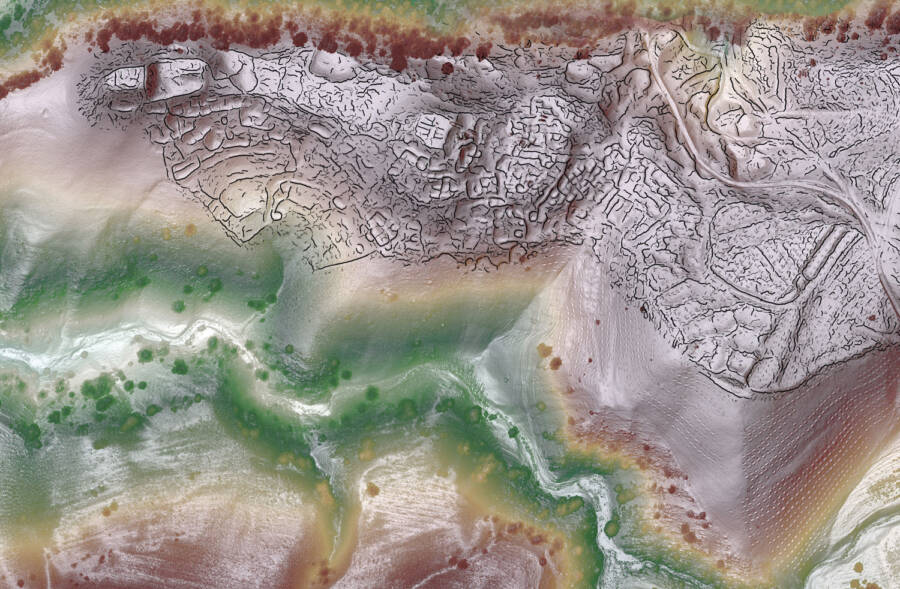
SAIE lab/J. Berner/M. FrachettiA LiDAR map of Tugunbulak, which exposed a sprawling network of buildings.
What’s more, they believe that this site was once Marsmanda, the Silk Road city that was mentioned in historical accounts but eventually lost to time.
The Mysterious History Of Marsmanda, Lost City Of The Silk Road
But what do experts actually know about Marsmanda? Medieval sources described it as the place “where the rivers froze.” The 10th-century Arab geographer Ibn Hawqal further described it as a cold “mountainous city that has no gardens and no vineyards” that nevertheless had “pretty meadows and pastures, blooming [flowers], and beautiful places for strolling.” Ibn Hawqal also noted that the site drew people from “faraway places” because of its ironworks.
Indeed, archaeologists suspect that Tugunbulak — or Marsmanda — would have been busiest during the summer months, when people took advantage of the mild weather to travel to the mountains, meet others, and trade. At the site, archaeologists have uncovered evidence of once-thriving iron workshops, as well as artifacts like jewelry, ceramics, and beads.
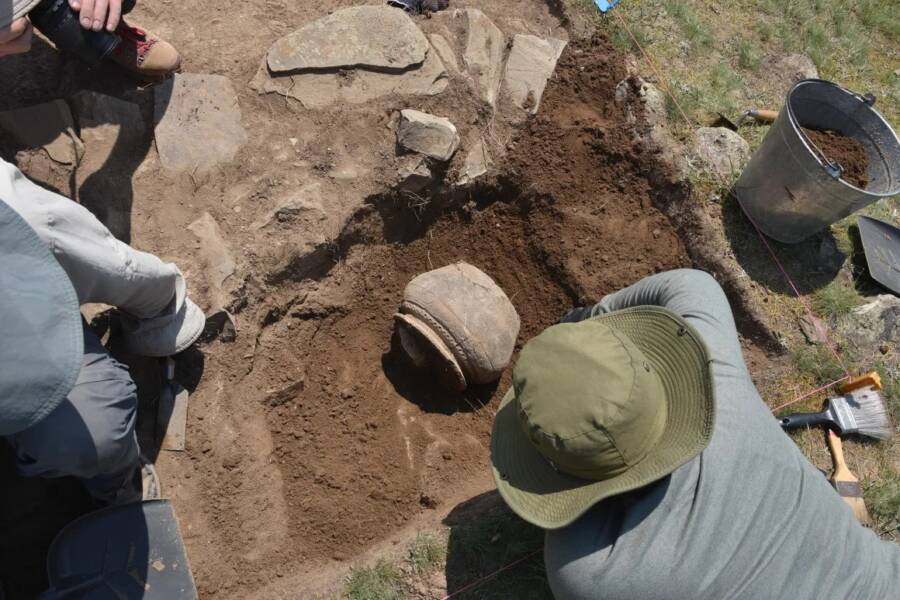
Michael FrachettiExcavations at Tugunbulak in 2022. Archaeologists have found a number of exciting artifacts at the site, including jewelry and ceramics.
But what makes the site truly remarkable are the insights it offers about life in the region at the time. Historians have long assumed that the Silk Road wound its way through lowland cities. But the existence of Tugunbulak, and Tashbulak, suggest that the trade network also extended into the mountains.
What’s more, Marsmanda upends conventional ideas about the Silk Road, which claim that Central Asia was an untamed land of rural nomads and raiders prone to attacking the merchants attempting to link the economies of China and Europe. Instead, the state-of-the-art facilities at Marsmanda likely supplied everything from swords to axes to plows for everyone from the Scythians to the Huns to the Mongols for hundreds of years.
Eventually, however, archaeologists believe that this settlement was abandoned around 1050 C.E. for unknown reasons. Drought, deforestation, or competing ironworks could have all played a role.
Nevertheless, there is still plenty to learn about Tugunbulak and Tashbulak, and their possible connection to the lost Silk Road city of Marsmanda. In addition to sifting through the discoveries they’ve made at the sites over the past several years, archaeologists also hope to return in 2026 to continue excavations.
Then perhaps more of this fabled city’s lost story will finally come to light.
After reading about Marsmanda, the lost Silk Road city that may have just been discovered in Uzbekistan, learn the story of the Hippie Trail, the counterculture pilgrimage that flourished in the 1960s and 1970s, and followed many old Silk Road paths. Then, look through this collection of fascinating ancient ruins from around the world.