The Cadaver Synod, One Of History’s Strangest Events
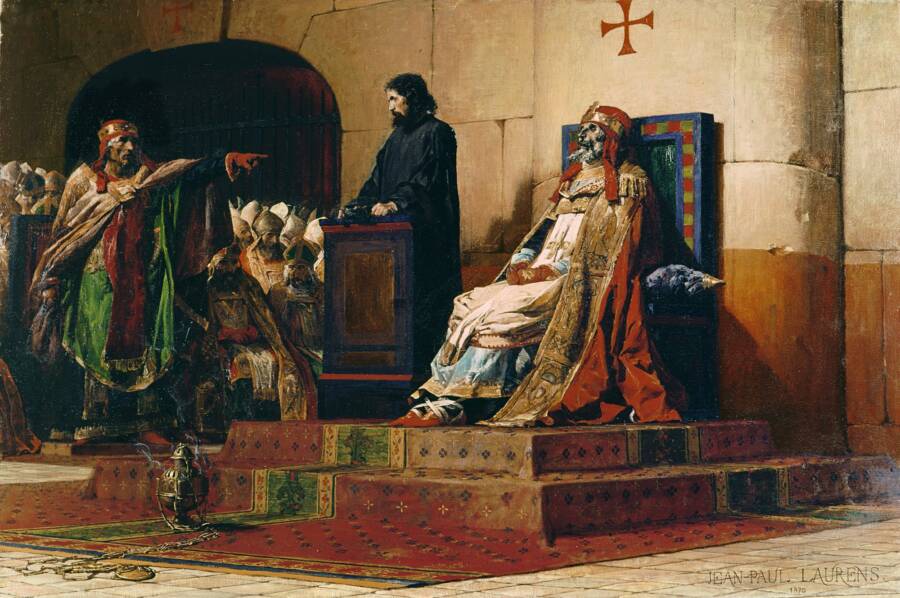
Public DomainJean Paul Laurens’ 1870 depiction of the Cadaver Synod.
In January 897, Pope Stephen VI ordered the corpse of his predecessor, Pope Formosus — who had died nine months earlier in April 896 — to be exhumed, dressed in papal vestments, propped up in a chair, and put on trial.
However, the gruesome proceedings, known as the Cadaver Synod, naturally horrified the people of Rome and ultimately led to Stephen’s own violent demise. So, why did the pope order the trial in the first place? The answer: Roman politics.
Formosus had risen to the papacy in 891 during a chaotic period when clergy formed different factions, and he had previously been excommunicated by Pope John VIII for allegedly ruling in multiple places at once and campaigning for the papacy. Though he was reinstated and eventually became pope himself, Formosus made powerful enemies through his shifting political alliances.
Stephen VI’s motivations for the trial were likely self-serving. Stephen had become pope while still holding another bishopric in Anagni — which was notably against church law. Formosus had been the one who originally appointed Stephen as Bishop of Anagni, so by nullifying Formosus’ papacy — and therefore his appointment — Stephen could potentially legitimize his own position.
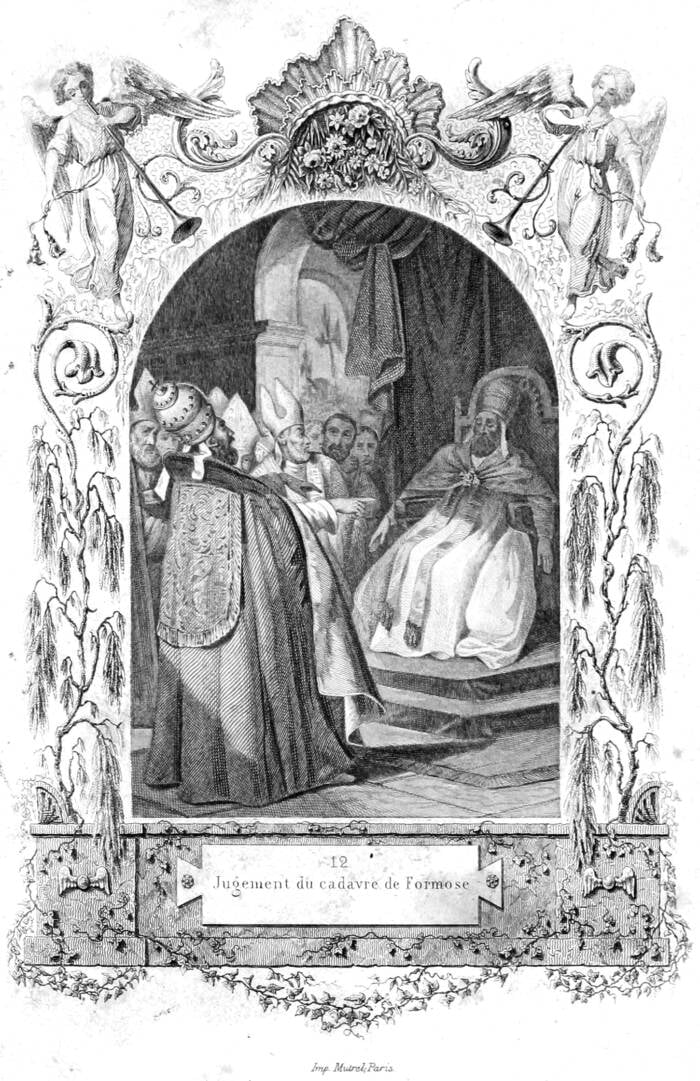
Public DomainThe macabre trial was not popular among Rome’s citizens.
During the trial, as Formosus’ rotting corpse sat in the chair, Stephen accused him of breaking canon law by holding multiple bishoprics, perjury for accepting the papacy after allegedly promising not to pursue church positions, and breaking an oath to remain a layman.
But as Stephen’s accusations flew, an earthquake shook Rome, which many interpreted as a sign of God’s displeasure. Regardless, the trial continued. Formosus was found guilty on all counts. His papacy was declared null, he was stripped of his vestments, and he had three fingers cut off from his blessing hand. His corpse was thrown into the Tiber River — a disposal method typically reserved for Rome’s most detested criminals.
Of course, this weird historical event backfired catastrophically.
The trial was deeply unpopular, turning Stephen’s supporters against him and ultimately leading to his imprisonment and strangulation in August 897. Formosus’ body was recovered, and he was buried in St. Peter’s Basilica, finally putting an end to the Synodus Horrenda — the Horrible Synod.