The Great Beer Flood Of London
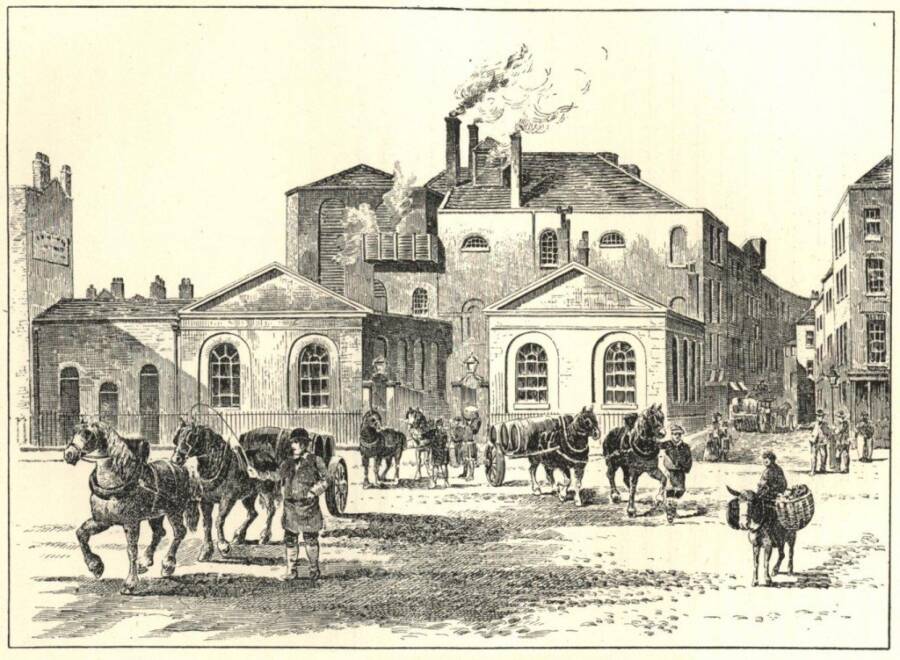
Public DomainA coroner’s inquest determined that eight people died “casually, accidentally, and by misfortune.”
On Oct. 17, 1814, in the London slum of St. Giles, a massive vat containing over 150,000 gallons of beer ruptured at the Horse Shoe Brewery on Tottenham Court Road, triggering a catastrophic chain reaction and resulting in what is now known as the London Beer Flood.
The initial rupture caused a domino effect, bursting several other enormous vats and releasing up to 388,000 gallons of beer in total — enough to fill more than half of an Olympic-sized swimming pool. This massive wave of porter, which reached heights of 15 feet, crashed through the brewery’s walls and flooded the surrounding streets of one of London’s poorest neighborhoods.
As it swept through the cramped, densely populated slum, the beer wave demolished two houses completely and damaged several others. The flood poured into basement dwellings where many impoverished families lived, trapping residents in confined spaces. Eight people died in the disaster, including women and children attending a wake.
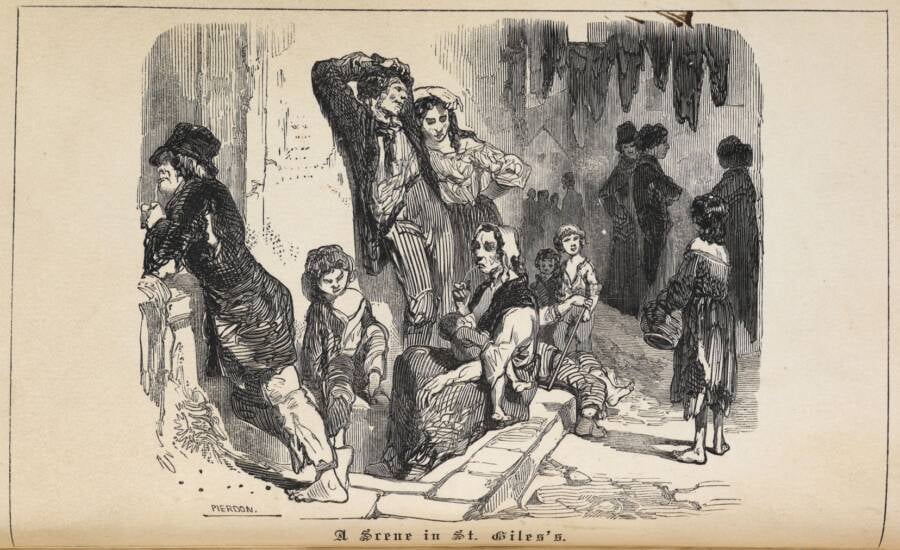
Public DomainAn 1850 illustration of life in the slum of St. Giles.
The aftermath was just as chaotic, too.
With the streets flooded with beer, crowds quickly formed to scoop up the free alcohol into whatever containers they could find, be it pots, pans, or their own boots. Some people reportedly drank so much of the beer that they fell ill, though there aren’t any verified accounts of additional deaths from alcohol poisoning.
An inquest was held shortly after to investigate the disaster, but it was ultimately ruled an act of God — an unavoidable accident with no one held criminally responsible. The brewery itself suffered massive financial losses, not just from the destroyed beer but from the excise taxes they had already paid on it. Parliament, however, eventually granted them a refund on the taxes, preventing their bankruptcy.