The 1916 Jersey Shore Shark Attacks That May Have Inspired Jaws
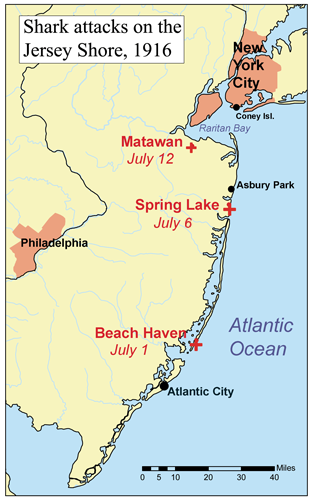
Wikimedia CommonsA map of where the 1916 Jersey Shore shark attacks took place.
This 12-day feeding frenzy known as the Jersey Shore shark attacks of 1916 provides yet another connection between real life and Jaws, which was said to be based in part on this story. In July 1916, along the Jersey Shore, a series of shark attacks left four people dead, and struck fear into the hearts of countless people across America.
It was a very hot summer, so naturally, people were attracted to the beachside resorts along the Jersey Shore. Adding to the sheer number of vacationers was also a polio epidemic that was moving through New York City. People wanting to escape the heat and polio alike flocked to the beaches of New Jersey.
But things started to change on July 1, 1916 when Charles Vansant, a 25-year-old man from Philadelphia, decided to take an evening swim. While calling to his dog who was on the shore, Vansant’s calls suddenly turned to screams.

Find A GraveCharles Vansant was the first victim of the 1916 shark attacks.
When a lifeguard finally pulled the man out of the water, the back of his right thigh had been ripped off, and bone was visible from his hip to his knee. Tragically, Vansant bled to death on the hotel manager’s desk before the ambulance could arrive.
But that was just the beginning. More attacks would follow in the subsequent days. On July 6, 27-year-old Charles Bruder had his left leg bitten off above the knee and his right leg bitten off below the knee. He died from his injuries, making him the second victim of the attacks.
Meanwhile, news began to spread about the attacks, prompting beachgoers to panic. Beachside resorts were beginning to lose major business. People didn’t want to vacation at a beach where a mysterious sea creature might kill them — because in the beginning, there was indeed speculation as to what type of beast could possibly even cause such incidents.
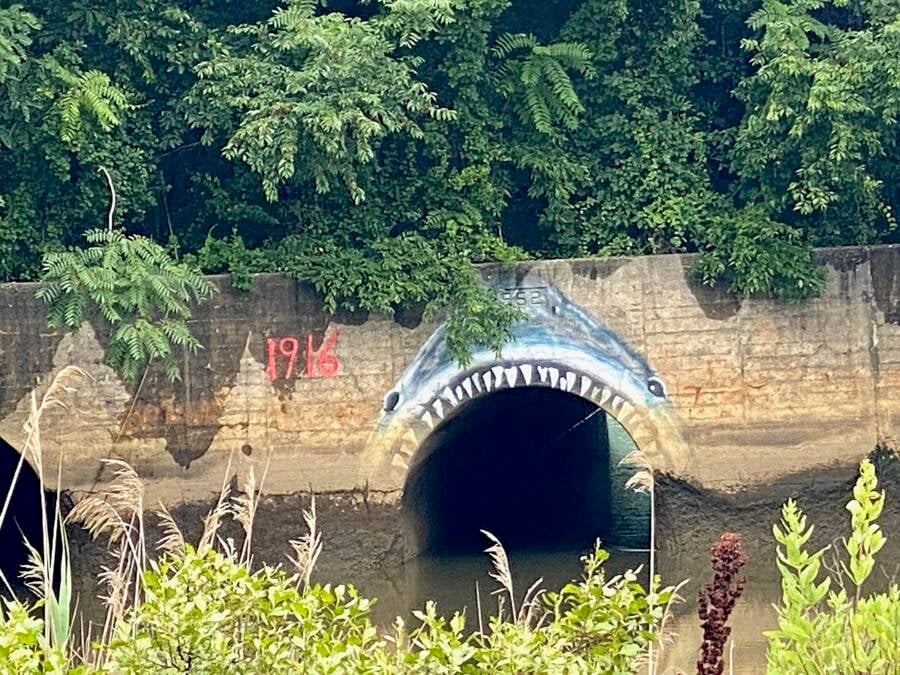
Wikimedia CommonsDespite the panic at the beach resorts, the remaining attacks took place in a more inland creek.
The next three attacks occurred farther inland at Matawan Creek on July 12. A trip to the creek for 11-year-old Lester Stillwell and his friends ended in disaster. Both Stillwell and the man who came to help him, Stanley Fisher, died after a shark attacked them.
That same day, a 14-year-old boy named Joseph Dunn was swimming in the creek. He too was bitten by a shark, just as he was attempting to exit the water. Luckily for him, Dunn survived, making him the only survivor of the 1916 attacks.
Before this series of attacks, it was often debated how dangerous sharks really were to humans. However, this 12-day panic seemed to single-handedly change the perception of how safe a human could be while swimming in shark-inhabited waters.