While descending Everest after a successful summit, Hannelore Schmatz succumbed to the harsh conditions — and her frozen corpse remained on the side of the mountain for years afterward.
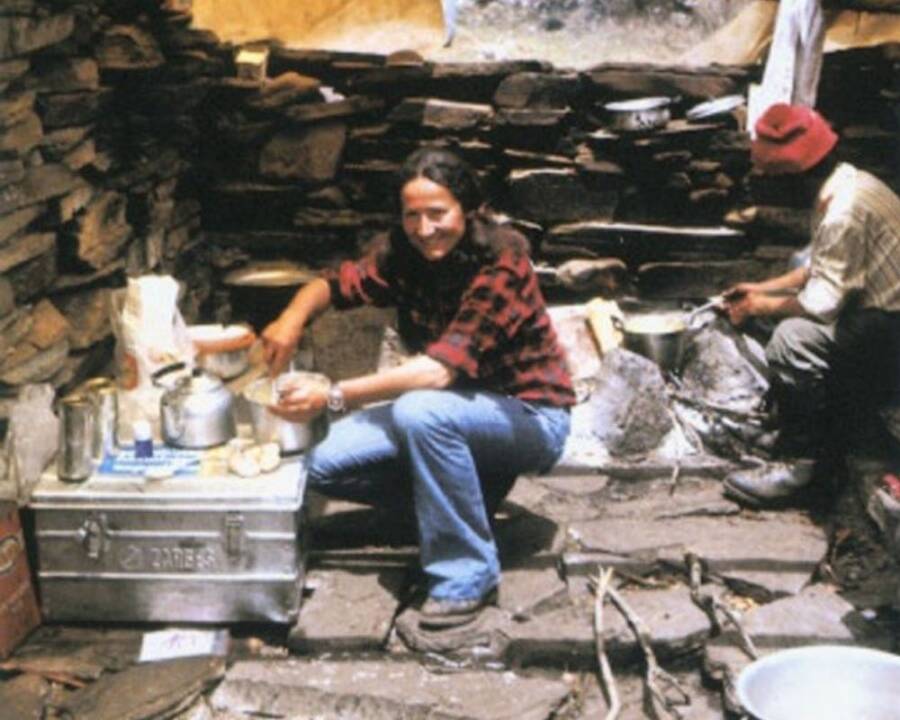
Gerhard Schmatz/Andrey Buzik/Wikimedia CommonsHannelore Schmatz was the fourth woman to summit Mount Everest — and the first woman to die there.
In October 1979, Hannelore Schmatz set out to do what just three other women had ever accomplished: summit Mount Everest. She had climbed some of the world’s highest mountains with her husband, Gerhard Schmatz, and Everest was the next one to cross off the list.
Against all odds, Schmatz reached the peak on Oct. 2. Then, things took a tragic turn.
During the descent, Schmatz and one of her fellow climbers, Ray Genet, became exhausted. They stopped to rest against the guidance of their Sherpa guides, and Genet soon succumbed to hypothermia. Schmatz then continued on — but she collapsed and died before reaching the next camp.
For years following her death, Hannelore Schmatz’s frozen corpse sat along the path to the peak, serving as a grisly warning for other mountaineers attempting the same feat that killed her.
Preparing To Climb The World’s Highest Mountain
Hannelore Schmatz wasn’t new to the world of mountain climbing. Her husband, Gerhard Schmatz, was the first European to climb all Seven Summits — the highest mountain on each of the seven continents. He introduced her to some of Earth’s tallest peaks after they wed in 1962.
In 1973, they summited Manaslu in Nepal, the world’s eighth-highest mountain that rises to 26,781 feet above sea level. Upon their return, Gerhard ambitiously decided to apply for permission to climb Mount Everest.
The Schmatzes didn’t hear back for four years. In the meantime, they continued to climb mountains, from Terich Mir in northern Pakistan to Lhotse, Earth’s fourth-highest mountain that is directly next to Everest. Just after returning from Lhotse, Gerhard and Hannelore Schmatz learned that their application had been approved, and they started planning their return to Nepal.
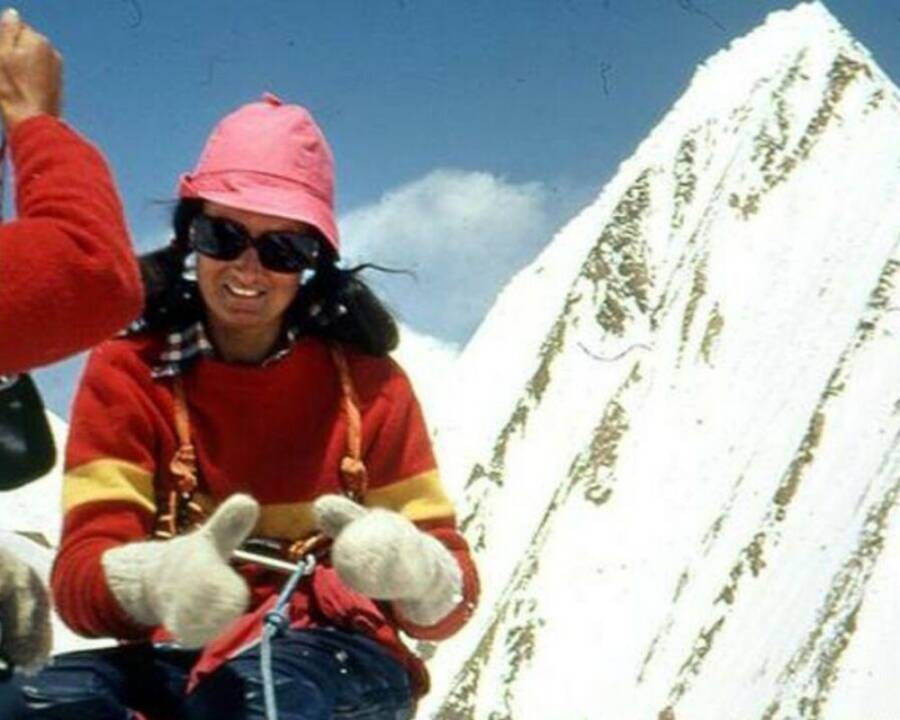
YouTubeHannelore Schmatz had climbed several of the world’s highest mountains before she attempted to summit Everest in 1979.
Their permit was for the autumn of 1979, so they had two years to prepare. Gerhard later wrote that Hannelore was “an absolute genius when it came to procuring and transporting expedition supplies,” so she oversaw most of the technical and logistical preparations for their journey.
Finally, the time came for them to travel to the Himalayas. They were joined by six other mountaineers: Nick Banks, Hans von Känel, Tilman Fischbach, Günter Kämpfe, Hermann Warth, and Ray Genet. They also hired five Sherpas to assist with the expedition. They began their hike to Base Camp at the end of July.
Their journey to the summit took two months, with each step bringing Hannelore Schmatz ever closer to her goal.
The Fourth Woman To Summit Mount Everest
By Sept. 4, the group had reached Base Camp and overcome their first major obstacle, the Khumbu Icefall. They continued on, making it to Camp II at an altitude of around 20,600 feet and climbing the steep Lhotse Face to reach Camp III. Their next goal was South Col, located on the ridge that connects Mount Lhotse and Mount Everest at an altitude of roughly 26,000 feet — the gateway to Mount Everest’s “Death Zone.”
According to Gerhard, Hannelore had initially intended to stop at this point. “Even before the start of the expedition,” he wrote, “Hannelore had repeatedly stated that the South Col was her goal.” However, throughout the course of the journey, “it had become clear that she, like all other participants, was in excellent physical condition, [so] she also wanted to attempt to reach the summit.”
They reached South Col on Sept. 24, and after a short delay due to bad weather, they continued their ascent. Gerhard went first with Hermann Warth, Hans von Känel, and two Sherpas. “We wanted to take on the task of breaking trail and thus not burden Hannelore with it,” Gerhard explained. The second group consisted of the remaining men and one Sherpa, and Hannelore Schmatz brought up the rear with the final two Sherpas. This way, if she wanted to turn back, she could do so without impeding the other climbers’ progress.
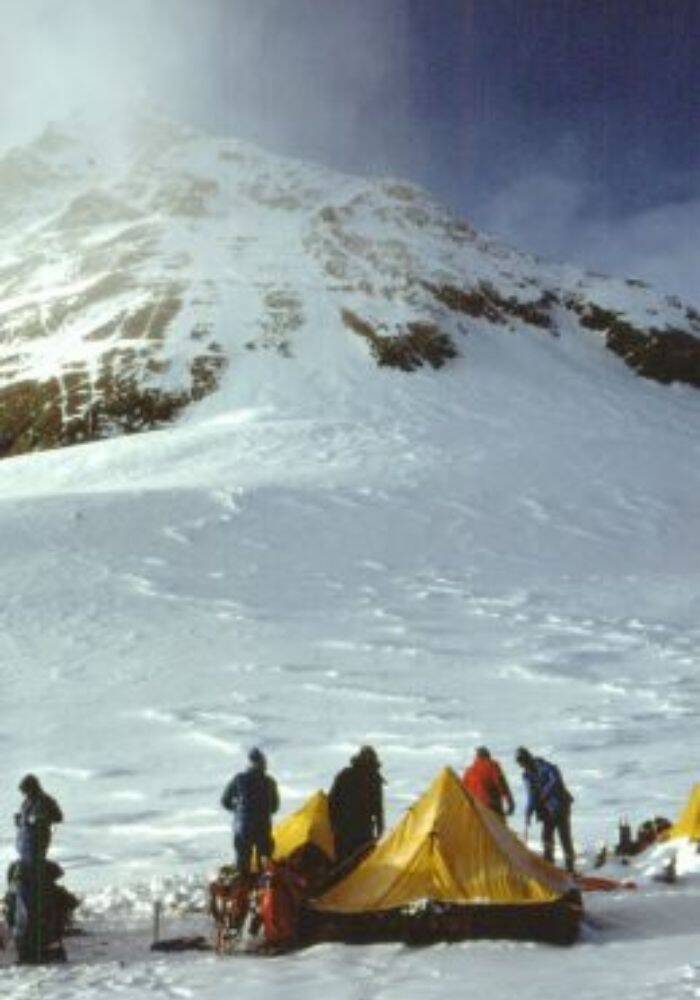
Gerhard Schmatz/Schmatz OnlineA photo Gerhard Schmatz took of their camp at South Col during the expedition.
On the morning of Oct. 1, Gerhard’s group began their final push to the summit. They reached the peak around 2 p.m. and returned to South Col that same evening.
Everyone else was planning to summit the mountain the following morning, but Gerhard warned Hannelore that conditions were deteriorating. “We urged her to abandon her plan to also attempt the summit,” he said — but she was determined.
So, on the morning of Oct. 2, 1979, Hannelore and the remaining climbers set off. “We kept looking anxiously at the sky, as the weather was visibly deteriorating,” Gerhard recalled. “We didn’t think our companions would continue the ascent and expected them to turn back. In the evening, our predictions proved wrong.”
The mountaineers did reach the peak of Mount Everest around 6 p.m. Hannelore Schmatz had done it. She was the fourth woman to summit Everest.
Sadly, she would never leave the mountain.
The Tragic Death Of Hannelore Schmatz
Since Hannelore Schmatz and her fellow climbers hadn’t reached the summit of Everest until evening, their journey back to South Col was a race against nightfall. During the descent, Schmatz and Ray Genet became exhausted. They decided to bivouac — make a temporary camp with little to no shelter — so they could rest. The Sherpas warned them against this, as they were still in the Death Zone, and advised them to push on to South Col.
However, Genet was out of oxygen, and he had reached his breaking point. He stayed — and he succumbed to hypothermia within hours.
Hannelore Schmatz and the Sherpa who had remained behind, Sungdare, were forced to leave Genet’s body and continue their descent. But it was too late. Schmatz’s body couldn’t handle the physical toil in the frigid conditions. Around an altitude of 27,200 feet, she told Sungdare, “Water, water.” Then, she collapsed.
At 39 years old, she became the first woman to die on Everest.
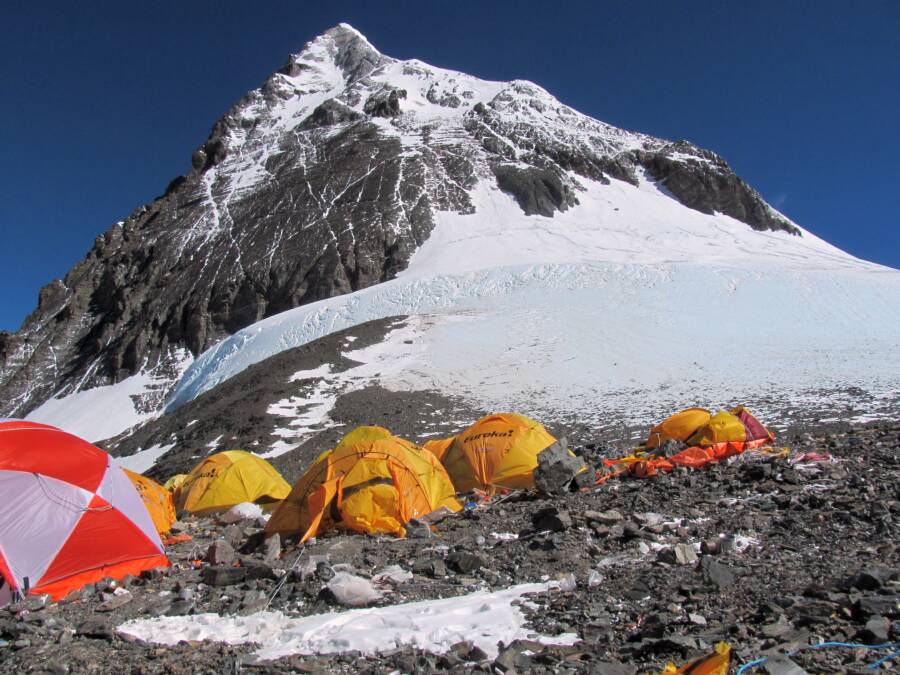
Tirthakanji/Wikimedia CommonsA camp on South Col with Everest towering in the background.
Sungdare remained with her body, resulting in the loss of most of his toes and fingers from frostbite.
At the time of Schmatz’s death, Tilman Fischbach and Sherpa Ang Nawang were on their way back up to see if they could assist their fellow climbers. Sungdare told them the “incomprehensible” news, and they all made their way to camp, leaving Schmatz’s corpse behind.
Hannelore Schmatz’s Legacy In Mount Everest’s ‘Death Zone’
Gerhard Schmatz later wrote, “I was so stunned that I only vaguely grasped the scope and tragedy of what had happened… Hannelore and I had been closely connected for 20 years, not only in daily life, but also, and especially, in dangerous situations in the mountains of the world on almost every continent.”
Despite Hannelore Schmatz’s experience and skill, however, the lethal conditions on the world’s highest mountain were simply too much. “The team came home,” said Gerhard. “But I alone without my beloved Hannelore.”
Her corpse remained at the very spot where she’d drawn her final breath, mummified by the extreme cold right along the path that thousands of other climbers would take during their attempts to summit Everest.
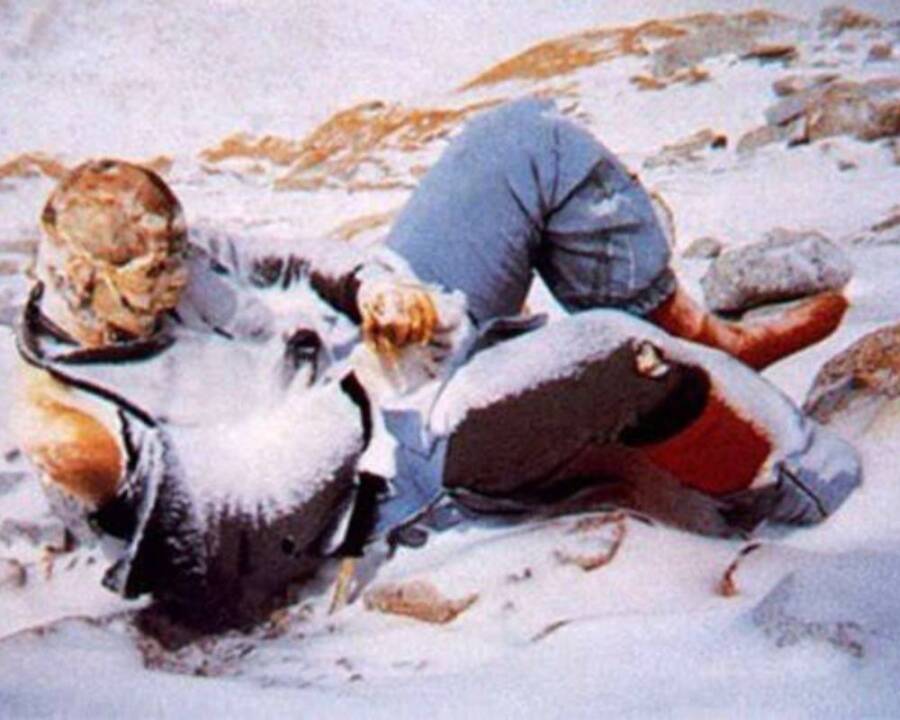
YouTubeHannelore Schmatz’s corpse remained on Everest for several years before the high winds on the mountain blew it over a slope.
Norwegian mountaineer Arne Næss described passing Schmatz’s body in 1985, as recorded in Lene Gammelgaard’s book Climbing High:
“I can’t escape the sinister guard. Approximately 100 meters above Camp IV she sits leaning against her pack, as if taking a short break. A woman with her eyes wide open and her hair waving in each gust of wind. It’s the corpse of Hannelore Schmatz, the wife of the leader of a 1979 German expedition. She summited, but died descending. Yet it feels as if she follows me with her eyes as I pass by. Her presence reminds me that we are here on the conditions of the mountain.”
In 1984, two men died while trying to recover Schmatz’s body during a police expedition. Not long after, the wind blew her remains over the edge of the slope, and Hannelore Schmatz was forever lost to the elements.
After reading about the death of Hannelore Schmatz, go inside the story of Beck Weathers and his incredible Mount Everest survival story. Then, learn about Rob Hall, the experienced mountaineer who died just after summiting Everest for the fifth time.