The Haludovo Palace Hotel: Croatia’s Ill-Fated Luxury Resort
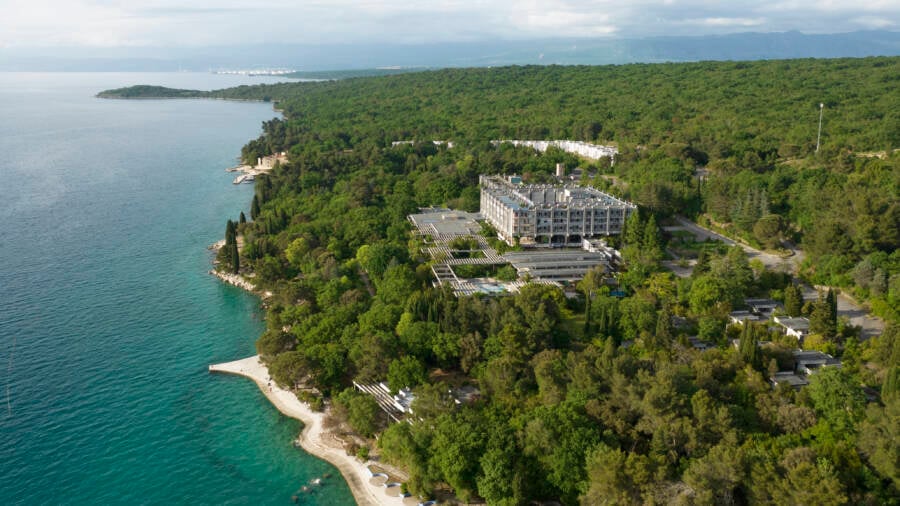
Wikimedia CommonsThe Haludovo Palace Hotel faced economic struggles before being shut down amidst a civil war.
On the Croatian island of Krk sits the remains of the Haludovo Palace Hotel, one of the most audacious and doomed hospitality ventures of the 1970s.
According to Wired, the hotel was created by Penthouse magazine founder Bob Guccione, who envisioned it as a luxurious casino resort in what was then Yugoslavia. Guccione had also, of course, been hoping to outshine his competitor in the adult magazine space, Hugh Hefner.
Haludovo Palace Hotel, on paper, was exactly the sort of envy-inducing property that Guccione had originally imagined. It featured high-end restaurants, tennis courts, and to top it all off, Yugoslavia’s first legal casino (which was only open to foreign visitors in the country).
Guccione invested millions into the hotel. It boasted lavish interiors with expensive furnishings, sparkling chandeliers, and cutting-edge amenities. But the main draw was the casino. Gambling was still illegal everywhere else in Yugoslavia, which made Haludovo Palace Hotel quite the unique destination.
To sell wealthy Europeans and Americans on his hotel, Guccione marketed it as a sort of hedonistic escape: Adriatic beauty meets Las Vegas entertainment. He wanted to attract high rollers, celebrities, or anyone seeking excess in an exciting new place. Unfortunately for Guccione, he didn’t find as many interested guests as he’d hoped.
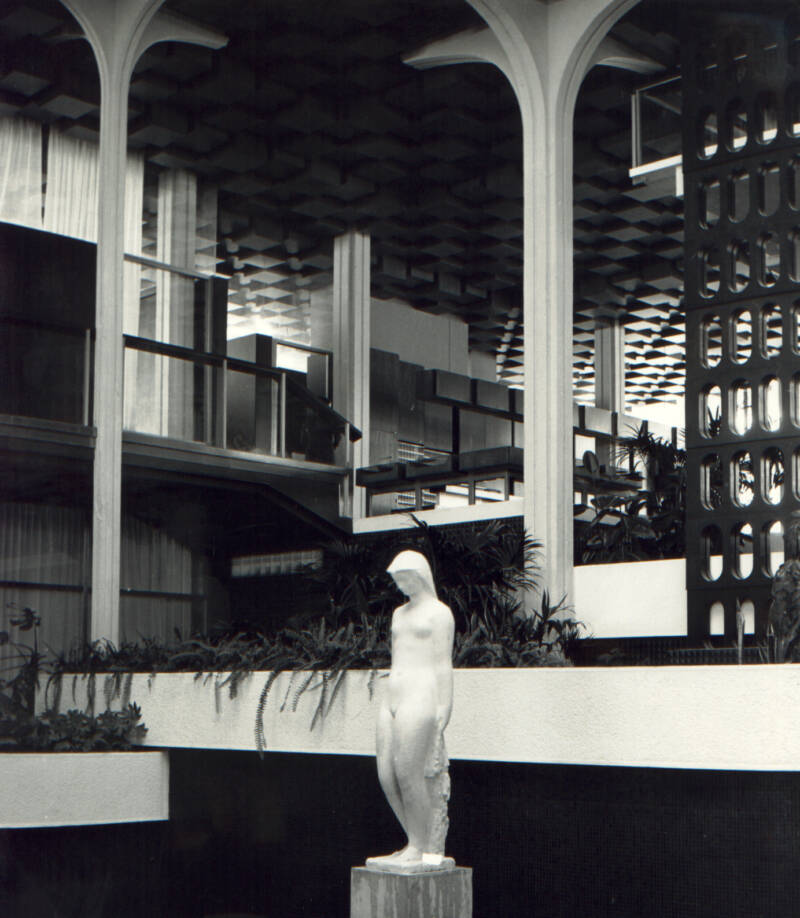
Wikimedia CommonsThe main hall of Haludovo Palace Hotel, when it was first built.
According to the Daily Mail, Guccione had invested $45 million into his palace of “Peace and Porn,” only for the whole thing to fall flat on its face. One issue was the extravagant running costs, but another issue was that there weren’t enough wealthy Western gamblers interested in visiting.
In 1991, the resort was forced to close as civil war broke out in the country and tourism in the region quickly evaporated.
Since then, the hotel has stood abandoned, with no entrepreneurs willing to try and rebuild — and risk the same financial fate as Guccione.