Found in the northern Italian region of Liguria, the boy was likely out hunting when he encountered either a cave bear or a brown bear that viciously mauled him to death.
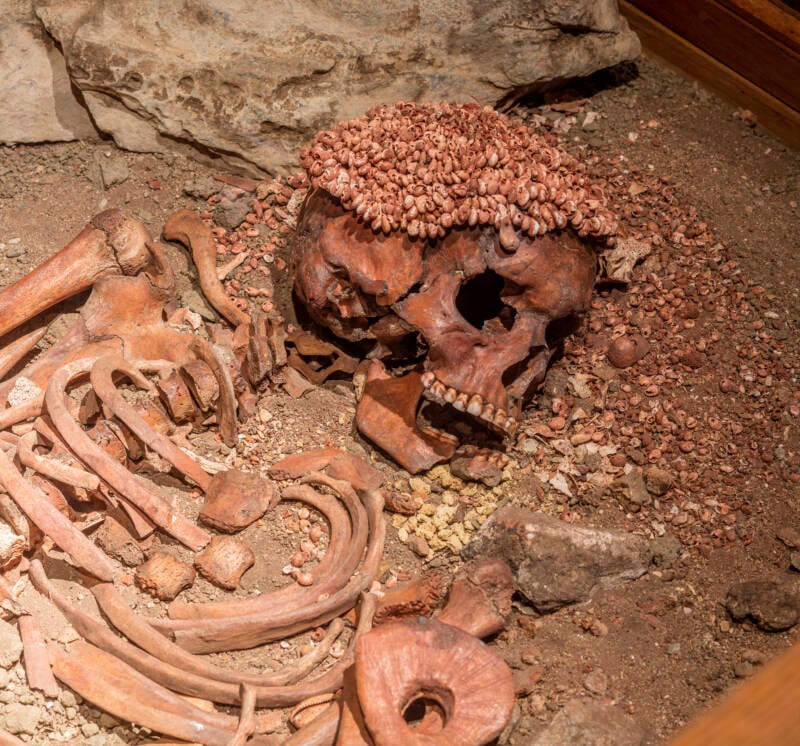
Ligurian Archaeological MuseumThe remains of the prehistoric teenager found inside Italy’s Arene Candide Cave who was dubbed “Il Principe.”
In the 1940s, archaeologists found the remains of a Stone Age teenager inside an Italian cave. The remains were remarkable both because the boy had been laid to rest with an ornate cap made of shells, and because he had seemingly suffered a violent death. Now, a new study of his remains has confirmed that he was fatally mauled by a bear.
The study thus offers intriguing insights into the dangers that Stone Age people in this region faced, as well as the way they buried their dead after a tragedy.
“Il Principe”: The Teenage Boy Mauled By A Bear In Stone Age Italy
The remains of the Stone Age teenager were initially discovered in 1942 in the Arene Candide Cave in Italy. He was called Il Principe (“The Prince”) because he had an especially lavish burial. The boy had been buried with a flint blade, ivory pendants, and an intricate cap made of hundreds of shells and deer teeth. Archaeologists suspected that he had been killed by a wild animal, but they weren’t sure what kind — until now.
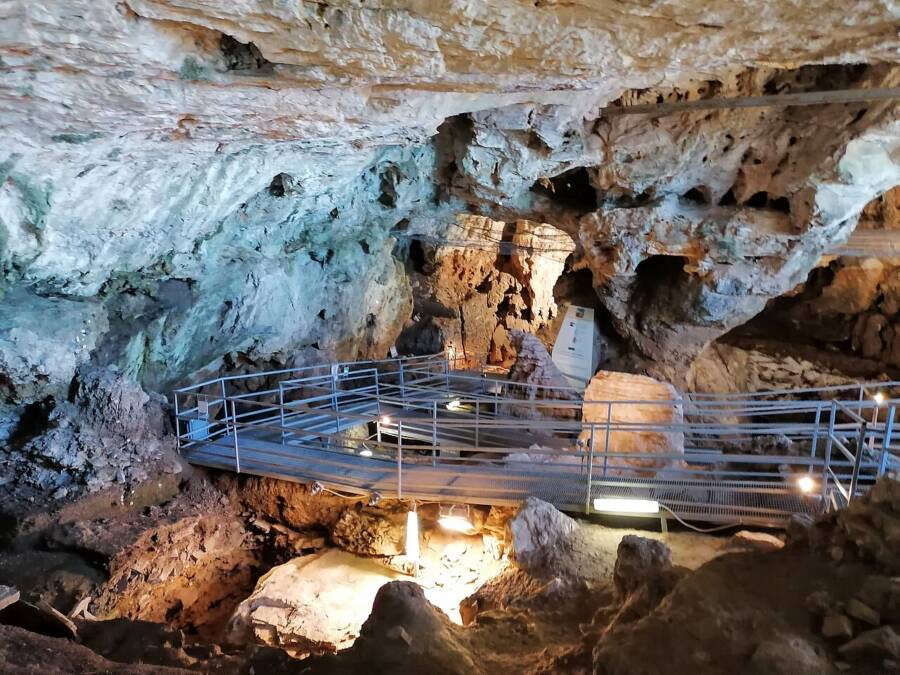
Capricornis crispus/Wikimedia CommonsThe interior of Arene Candide Cave, where “Il Principe” was found in 1942.
According to a study published in the Journal of Anthropological Sciences, researchers used a method known as optic magnification to analyze the teenager’s injuries. The boy had been thoroughly mauled: his clavicle was broken and his mandible was dislodged. The attacking animal had also left a groove on his skull, bitten his ankle, and even broken his pinky toe.
“Given the overall traumatic pattern, a bear attack… remains the most plausible explanation,” the researchers wrote in their study.
They believe that “The Prince” was attacked by either a brown bear (Ursus arctos) or the now-extinct cave bear (Ursus spelaeus). But though badly wounded, the teenager surprisingly seemed to have survived for a few agonizing days before finally succumbing to his wounds.
“Given the extent of the bone injuries, it is surprising that this adolescent forager survived even for this brief time,” the researchers wrote. “The bite or paw smack that fractured the mandible and the clavicle, likely the cranial vault, and possibly the cervical vertebrae, must have fortuitously spared major blood vessels… which would have caused a rapid death… Given the estimated survival time, death may have occurred due to secondary brain injury, internal hemorrhage, or multiple organ failure.”
The teenager’s survival, even for just a few days, also suggests that he was likely cared for by his community after the attack. And while he could not be saved, his community seemingly chose to honor him in death.
The Elaborate Burial Of The “Prince” Of Arene Candide
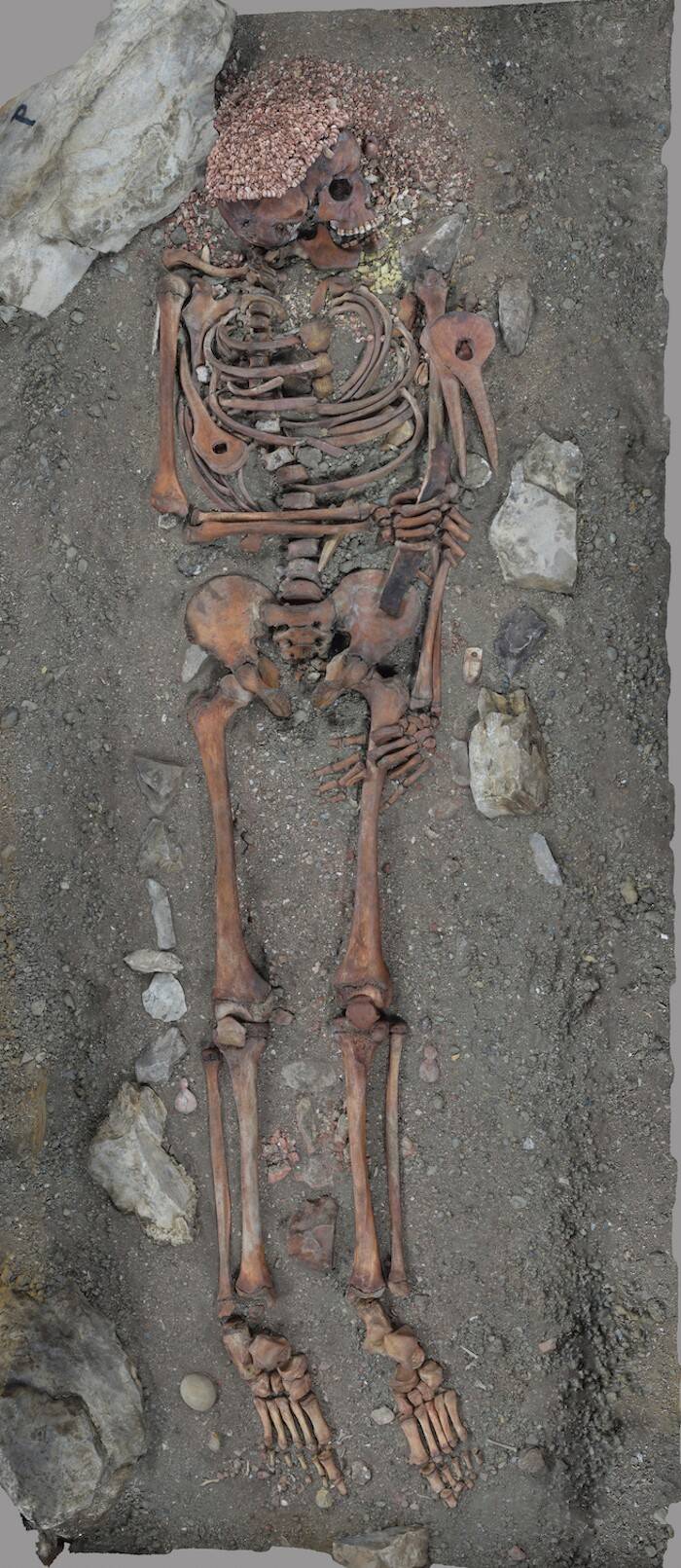
Stefano Sparacello et al., in Journal of Anthropological SciencesThe burial of this prehistoric teenager was especially elaborate, suggesting his community greatly mourned his death.
“What can be observed is that the Principe’s group invested significant time and resources in his funerary treatment,” the researchers explained.
The Stone Age teenager’s community of Gravettian people (a hunter-gatherer group that existed 33,000 to 24,000 years ago) decorated his grave with “hundreds of pierced shells,” “mammoth ivory pendants,” and a blade made from flint from the far-off French Vaucluse region. The elaborate burial suggests that the teenager was an important person, or that the gruesome manner of his death deeply shook his community.
“The violent event and the long agony may have been reflected in the elaborate burial,” they wrote, “following the presumed Gravettian use of formally burying exceptional individuals and exceptional events.”
Thus, the remains of the Stone Age teenager tell a story about both the environmental dangers of the Gravettian world, and how these prehistoric people mourned their dead.
And while such examples of prehistoric animal attacks are rare in the archaeological record, they are not unprecedented. Last year, the study of a Copper Age burial of a teenage boy similarly found that the teenager had survived a lion attack, then was cared for by his community for some months before he died of his wounds.
Discoveries like these shed light on how prehistoric communities dealt with tragedy, and mourned their dead in the wake of a terrible loss.
After reading about the Stone Age teenager who was fatally mauled by a bear nearly 28,000 years ago, discover the disturbing stories of pets who killed their owners. Then, learn about Grizzly Adams, the 19th-century mountain man who trained wild bears.