Audrey Munson was America's original "triple threat." Unfortunately, her story went from triumph to tragedy as mental illness consumed her life.
In a time before movie stars were widespread and television hadn’t yet been invented, Audrey Munson was one of the most famous faces in New York City. Remembered today as “America’s first supermodel,” Munson served as the artist’s model for some of the city’s most renowned sculptures.
Her figure can still be seen today atop the Manhattan Municipal Building, inside Frick Mansion, and overlooking various parks and plazas across the city. But hardly anyone remembers her name.
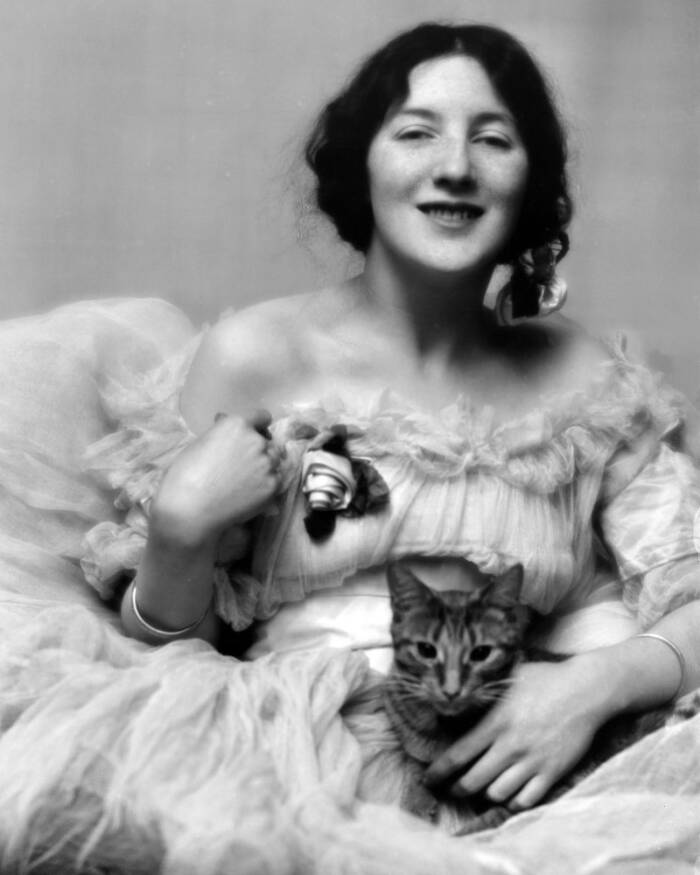
Public DomainAudrey Munson, “America’s first supermodel,” in 1915.
That’s because, after posing for hundreds of sculptures and appearing in four silent films, Munson was involved in a series of scandals that led to her downfall. Then, when she was 40, she was admitted to a psychiatric facility to be treated for depression and schizophrenia.
She spent the rest of her life there, and when she died in 1996 at age 104, Audrey Munson was buried in an unmarked grave.
This is the tragic story of the forgotten model who was once one of the most famous women in America.
Audrey Munson’s Rise To Fame
Audrey Munson was born into an average family in Rochester, and her childhood was largely unremarkable. Her parents divorced when she was young, and she moved with her mother to Rhode Island.
In 1909, when Munson was 17, she decided to pursue her dream of appearing on Broadway. She and her mother rented a residence in New York City, and Munson was cast in a few small roles in various shows.
But her big break came in a way she didn’t expect. As the story goes, she was shopping on Fifth Avenue when she was spotted by a photographer named Felix Benedict Herzog. He introduced her to several of his fellow artists, including sculptor Isidore Konti.
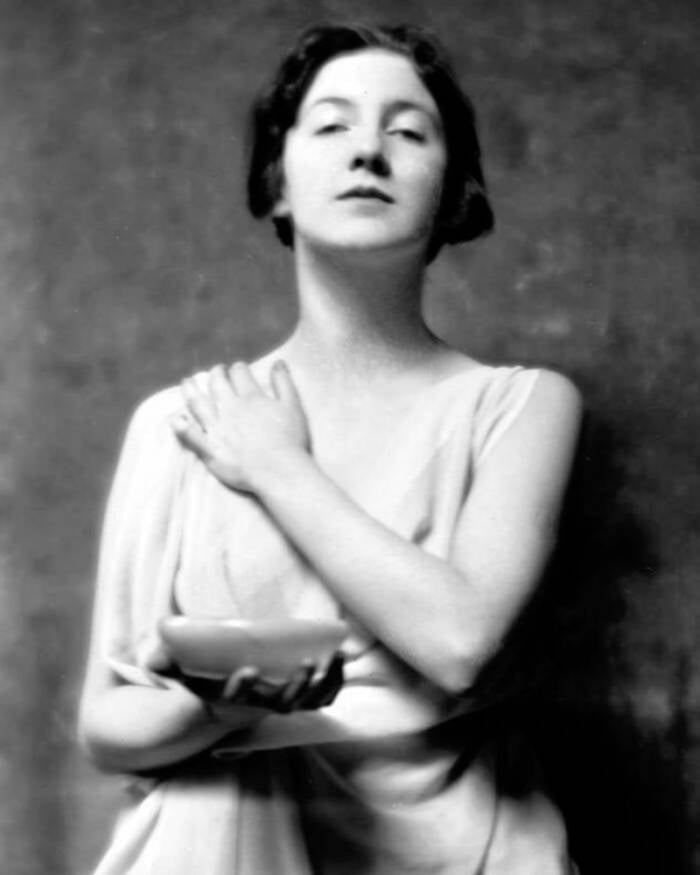
Public DomainAudrey Munson posed for hundreds of sculptures throughout the 1910s.
By the end of the year, Munson was posing for Konti in his studio as an artist’s model. Her first credit was in Konti’s marble sculpture Three Graces, which was placed in the new ballroom of the Hotel Astor in Times Square.
Munson found work quickly after that, posing for sculptures that appeared across the city. In 1913, she stood as the model for Adolph Alexander Weinman’s Civic Fame, the gilded bronze statue that still stands atop the Manhattan Municipal Building to this day. It’s the second-tallest female figure in New York, second only to the Statue of Liberty.
That same year, The Sun reported, “Over a hundred artists agree that if the name of Miss Manhattan belongs to anyone in particular it is to this young woman.”
By 1915, Audrey Munson’s fame had spread beyond New York City. She was selected to model for hundreds of sculptures for the upcoming Panama-Pacific International Exposition in San Francisco, earning her another nickname: “Panama-Pacific Girl.”
The Richmond Times-Dispatch repeated The Sun’s praise of Munson in August 1915:
“Long after she and everyone else of this generation shall have become dust, Audrey Munson, who posed for three-fifths of all the statuary of the Panama-Pacific exposition, will live in the bronzes and canvasses of the art centers of the world.”
But just four years later, Munson’s star began to fade.
A Career Rocked By Scandals
In 1919, Audrey Munson and her mother were living in a boarding house in the Upper West Side that was owned by a man named Dr. Walter Wilkins. The elderly doctor fell in love with Munson — and he decided to murder his wife so he could be with the young model.
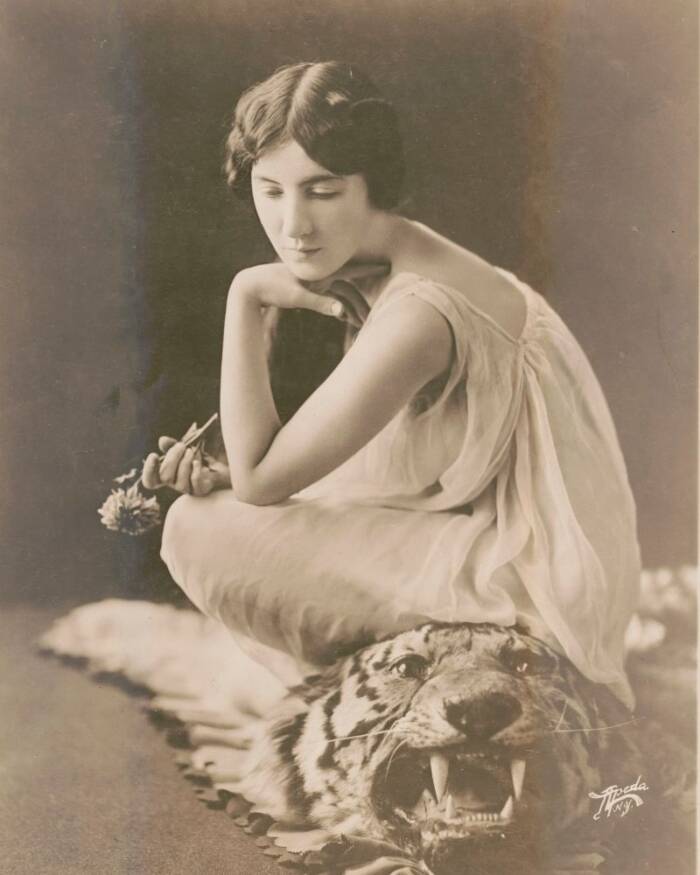
Public DomainAudrey Munson was known as “Miss Manhattan,” “American Venus,” and the “Panama-Pacific Girl.”
Munson claimed she had no knowledge of Wilkins’ intentions, but detectives grew suspicious when she and her mother fled New York for Canada. In the end, Wilkins was sentenced to death, but Munson wasn’t implicated in any sort of crime.
Still, she had trouble finding work after the scandal. By 1920, she was reported to be working as a ticket taker in Syracuse while her mother sold utensils door-to-door to make ends meet.
Munson’s mental health soon took a drastic downturn as well. According to a 2021 article in The Washington Post, she became convinced that Jewish millionaires were to blame for the fall of her career and even wrote to Congress demanding legal protection from “being persecuted by Hebrews.”
Her roles in silent films invited further criticism. Munson appeared in four movies between 1915 and 1921. She was shown onscreen fully nude in Inspiration, becoming one of the first actresses to do so in a non-pornographic film. And in 1921, she was arrested on morals charges for her nude scenes in a different movie, though she was later acquitted.
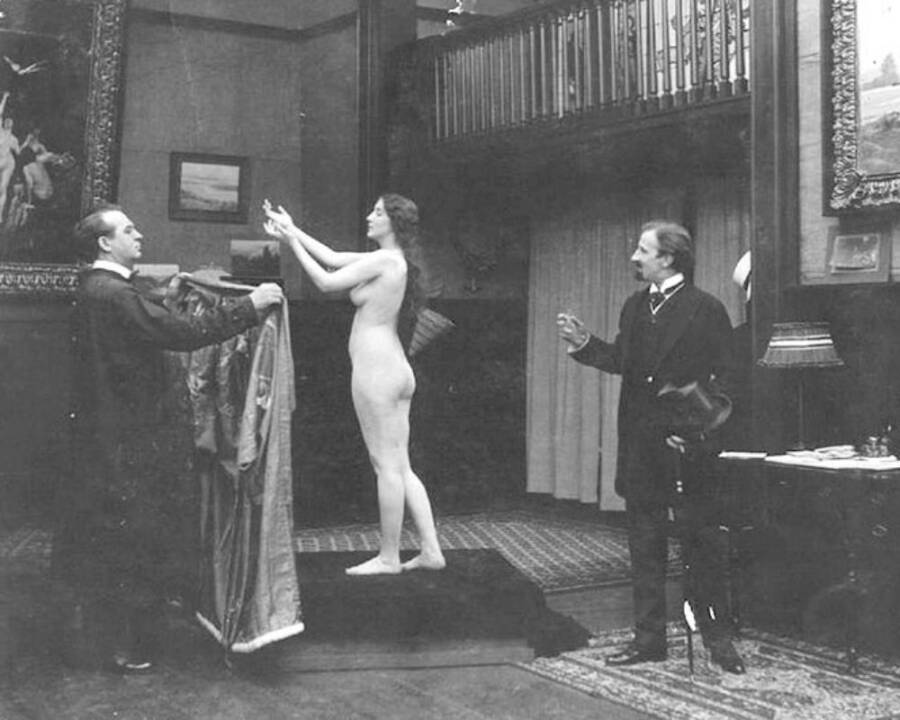
Public DomainOne of Audrey Munson’s nude scenes in the 1915 film Inspiration.
She attempted suicide the following year, and her mental state continued to decline throughout the 1920s. By 1931, Munson’s mother had petitioned to have her committed to an asylum. And on her 40th birthday, Audrey Munson was sent to the St. Lawrence State Hospital for the Insane.
The Tragic Later Years Of Audrey Munson
Munson remained in the psychiatric facility for the next 64 years. After her mother died in 1958, she received no visitors for more than two decades. The “American Venus” had been forgotten.
Audrey Munson died on Feb. 20, 1996, at age 104. She was buried in New Haven, New York, but she didn’t have a headstone for another 20 years. When her grave marker was finally erected in 2016 after fundraising efforts, a small celebration was held at New Haven Town Hall.
Valerie Burditt, one of Munson’s caretakers, told Oswego County Today at the time, “The thing that strikes me most about Audrey was her soul. Audrey was a beautiful woman, but she also had a soul that didn’t quit. It was peaceful, and it was loving, and it was kind, and most of all, it was pure. And never in my life have I met a soul like Audrey’s.”
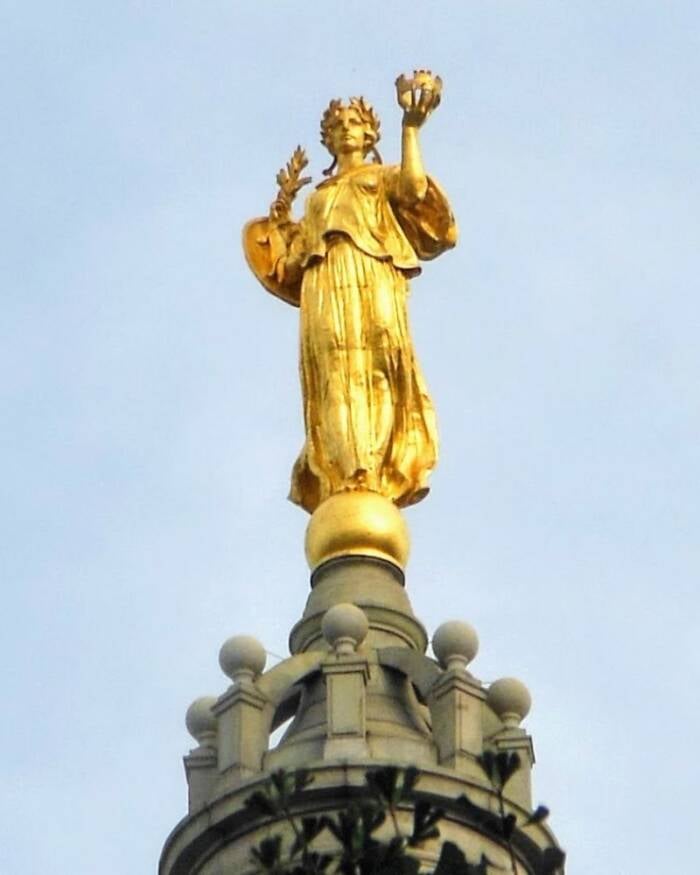
PortableNYCTours/Wikimedia CommonsCivic Fame is believed to be the second-largest female figure in New York City after the Statue of Liberty.
In the decades since Munson’s death, scholars have argued whether she should ever have been admitted to a psychiatric facility at all. Per a 2022 article in The New York Times, Andrea Geyer wrote in Queen of the Artists’ Studios: The Story of Audrey Munson, “It is unclear whether she was in fact mentally ill or a tragically misunderstood artist and feminist.”
Indeed, Munson had argued about the exploitation of models, some of whom barely earned the equivalent of minimum wage today. She believed that she and her peers were undervalued by the sculptors who profited so greatly from their bodies.
At the same time, Munson’s antisemitic rants and suicide attempts suggest that she did need some sort of help — though perhaps not six decades locked away in an asylum.
Today, not many people know Audrey Munson’s name. The woman who was once lauded as “America’s first supermodel” has been relegated to small plaques around New York City. But her image still looms over Manhattan, where she quietly observes the city that made her — and broke her.
After learning about Audrey Munson, read about the life of Frances Farmer, Hollywood’s original “bad girl.” Then, read the stories of seven iconic pinup girls.