The key discovery was an extensive series of stone slabs for flooring and roadways that were laid in the years just after the Romans took control of the area, circa 15 B.C.E.

Jordi Amorós/AGER ArchaeologyStone slabs that once made up the surface of the public forum in the ancient Roman city of Barcino were found beneath the streets of Barcelona.
Renovation work on a hotel in Barcelona has revealed stunning traces of the city’s ancient past. More than eight feet beneath the streets, archaeologists uncovered pavement slabs from the forum that was once the center of life in the Roman colony of Barcino.
These stone slabs are the first clear evidence of the forum’s surface ever found — and the discovery is completely remapping the ancient city.
Uncovering The Ancient Roman Forum Beneath Barcelona
In 2023, expansion work began on the Gran Hotel Barcino in Barcelona’s Gothic Quarter. While digging a pit for a new elevator, workers struck a stone slab, according to a statement by the Barcelona Archaeology Service.
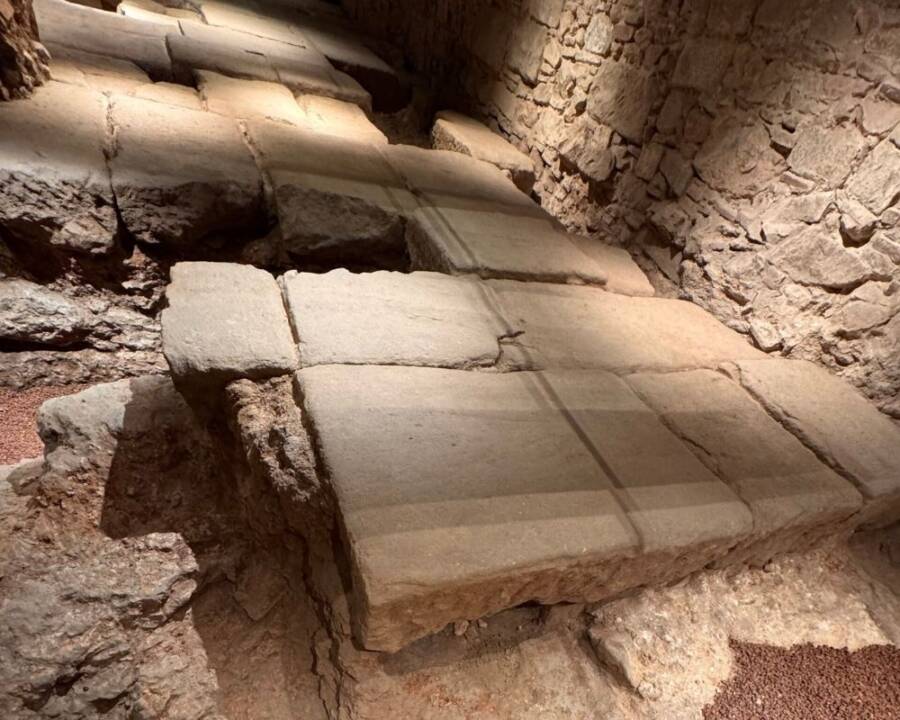
Anna Làzaro/Barcelona Archaeology ServiceThe thickness of the stone slabs ranged from seven inches to more than a foot.
The discovery “completely changed the nature of the project,” and what started as a minor excavation of an area smaller than a parking space transformed into a massive dig covering more than 800 square feet.
Over the next two years, archaeologists uncovered what was once the surface of the public forum in the Roman colony of Barcino, the predecessor of modern Barcelona. This forum was located at the center of the city, and all of the major political, administrative, and religious buildings were located within it. Prior to this discovery, the only surviving ruins from the forum were four columns from the Temple of Augustus.
The slabs varied in size, with some stretching nearly five feet in length, and were made of stone quarried from the nearby hill of Montjuïc. It’s unclear whether they formed the floor of public buildings or the exterior plaza, as they’re the first example of this type of pavement ever found in the city.

J Irigoyen/Wikimedia CommonsPrior to the discovery of the pavement slabs, the ruins of the Temple of Augustus were the only remnants of Barcino’s forum.
In addition to the slabs, archaeologists discovered two wells connected by a siphon. They may have been part of a decorative fountain, as fragments of marble imported from the far-flung reaches of the Roman Empire — Greece, Anatolia, Egypt, and the Italian town of Carrara — were uncovered nearby.
While the surface of the forum is an exciting discovery in itself, even more revealing is its layout, which is changing what historians know about the map of ancient Barcino.
The History Of The Roman Colony Of Barcino
The Roman colony of Barcino on Spain’s Mediterranean coast was founded by Emperor Augustus between 15 and 10 B.C.E. Like any other city or military camp in the empire, it was built around two main streets: the cardo, which ran from north to south, and the decumanus, which ran from east to west.
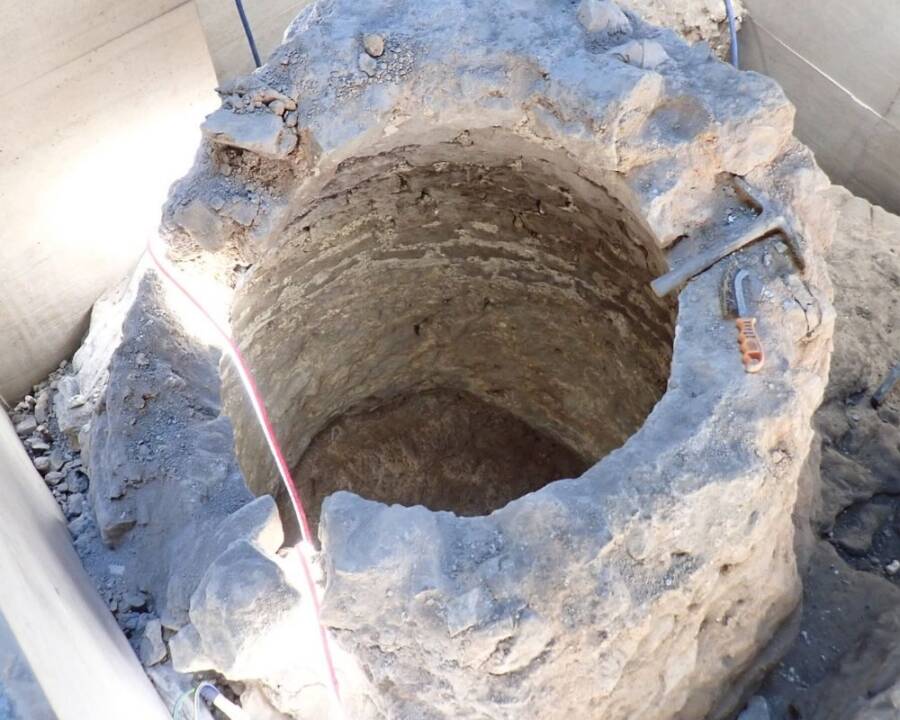
Jordi Amorós/AGER ArchaeologyOne of the two wells discovered during the excavation of the forum.
The forum was located at the intersection of these two thoroughfares, but until now, experts believed that it lay parallel to the cardo. However, the pavement slabs revealed beneath the hotel run parallel to the decumanus instead.
Now, archaeologists say the forum was actually turned 90 degrees from its previously determined orientation. The Temple of Augustus may have also been rotated, totally remapping this area of Barcino.
What’s more, the excavations revealed how Barcino — and later Barcelona — changed over time. At the beginning of the fifth century C.E., around the time the Visigoths arrived in the region, some of the slabs were removed and seemingly reused in other construction projects. They were replaced by ceramic material.

Anna Làzaro/Barcelona Archaeology ServiceThe ruins of the forum were incorporated into the new design of the Gran Hotel Barcino.
Over the next 200 years, additional walls appeared, suggesting the forum became a more domestic space. Then, in the 14th or 15th century, a Gothic residence was constructed on the site along with a grain silo.
These extraordinary discoveries have been preserved and incorporated into the basement of the Gran Hotel Barcino, where guests will be able to get a close-up look at the city’s rich history. As the Barcelona Archaeology Service noted, this find represents “the value of preventive archaeology as an essential tool for preserving a heritage that is the only source of knowledge of the ancient city, before it is irretrievably lost.”
After reading about the remains of the Roman forum found beneath the streets of Barcelona, look through 33 photos of the Sagrada Familia, Barcelona’s world-famous church. Then, see some of the most astounding Roman ruins outside of Italy.