1776: George Washington Crosses The Delaware River
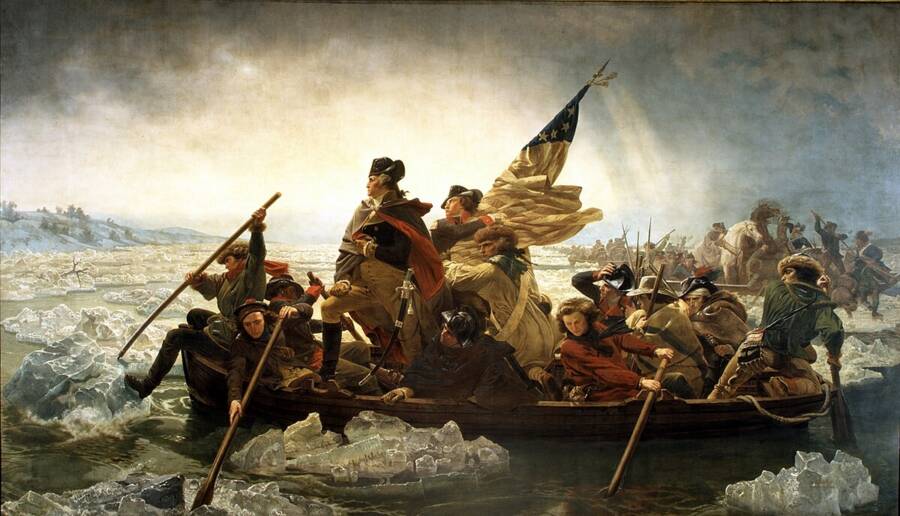
Public DomainEmanuel Leutze’s 1851 oil painting, Washington Crossing the Delaware.
Late on the night of Dec. 25, 1776, General George Washington made a decision that may have changed the outcome of the Revolutionary War. He led his troops across the icy Delaware River, carried out a surprise attack on the Hessian soldiers camped on the other side, and secured a key American victory that boosted the colonists’ morale and raised confidence in Washington’s ability to lead the Continental Army.
Washington’s army had suffered several major losses leading up to the winter of 1776, and the British had recently captured New York City. The initial enthusiasm for the fight for independence had worn off, and soldiers were starting to feel that their sacrifices might be fruitless.
As Christmas Day approached, Washington and the Continental Army had set up camp in eastern Pennsylvania, while a garrison of Hessian forces was located just across the Delaware River in Trenton, New Jersey. Washington knew that his men needed a victory, and he was worried that the Hessians would cross the river themselves and push the colonists back even further, so he began to plot an assault.
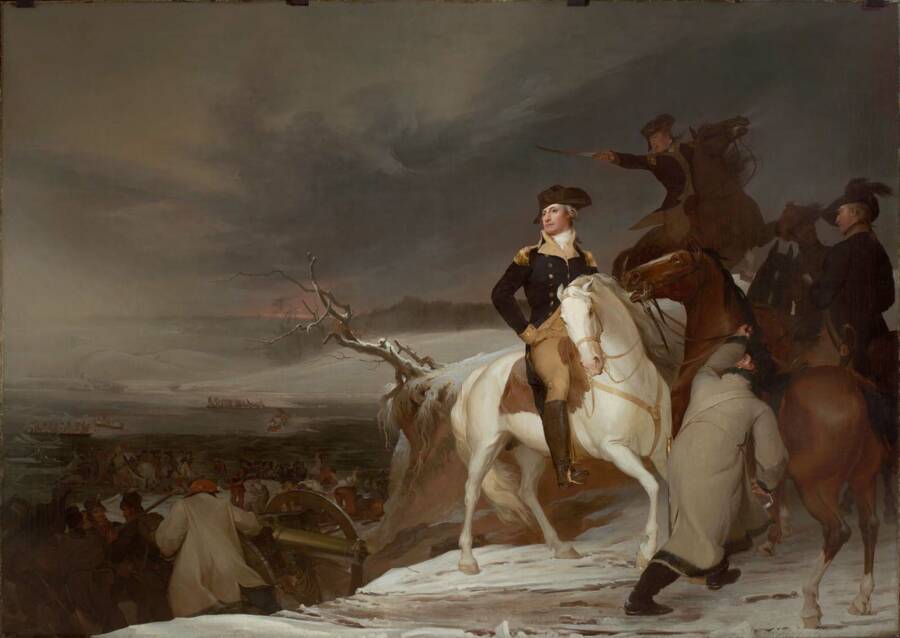
Public DomainThe Passage of the Delaware (1819) by Thomas Sully.
To catch the soldiers off guard, he planned to attack on Christmas, after they’d been celebrating all day. So, on the evening of Dec. 25, Washington and roughly 2,400 troops started to make their way across the Delaware.
Their progress was hampered by a vicious winter storm and ice jams in the water. Snow blew so fiercely that the men couldn’t see the opposite shore, and it took much longer than anticipated to get everyone across the water. Still, by 4 a.m. on Dec. 26, the army was ready to march on the Hessians — and they swiftly defeated them at the Battle of Trenton that very morning.